












































You are using an out of date browser. It may not display this or other websites correctly.
You should upgrade or use an alternative browser.
You should upgrade or use an alternative browser.
reloading bench, lets see it!
- Thread starter langbanger
- Start date

tungngroove2000
CGN Regular
- Location
- Beautiful BC
What happened to the original bench photos thread?
nothing it's right here, search and ye shall find!!
http://www.canadiangunnutz.com/forum/showthread.php/848736-Show-your-reloading-benches
Bluedevil25
CGN Regular
- Location
- Saskatoon, Sask.
I use this for my reloading table:

Then use an old Black & Decker Workmate for my press:
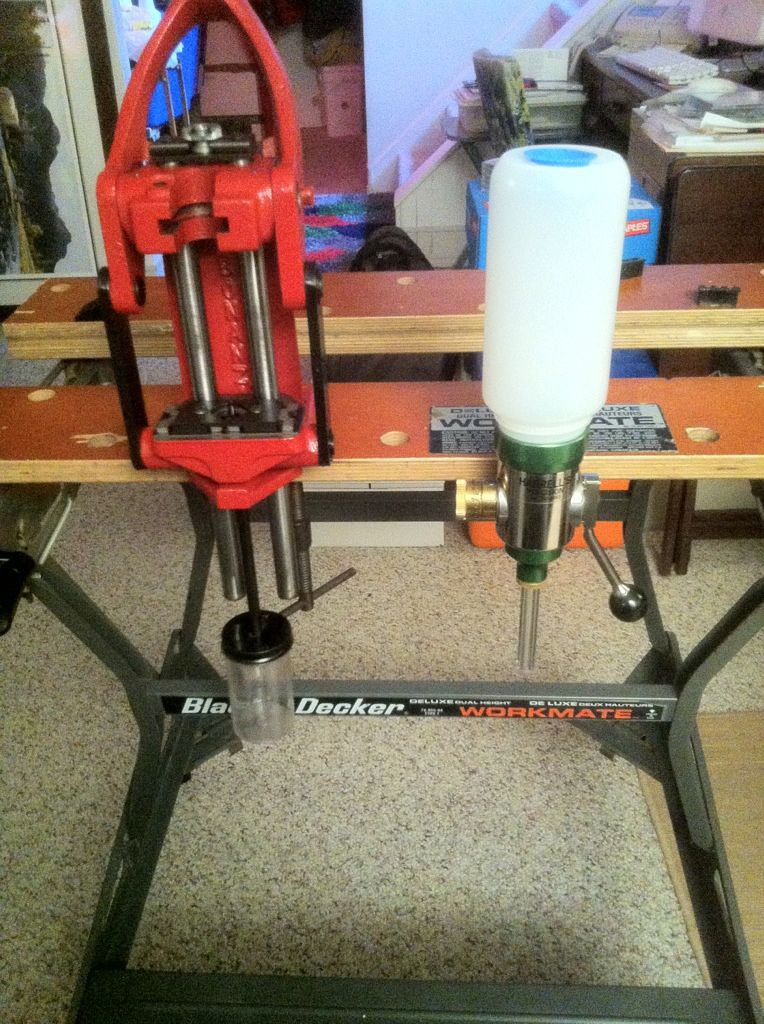

Then use an old Black & Decker Workmate for my press:

tungngroove2000
CGN Regular
- Location
- Beautiful BC
Sorry, I'm not the best with the search engine. I just assumed it would have been a sticky. Thanks for the link, its exactly what I'm looking for.
no need to apologize...perhaps it SHOULD be a sticky!!! I'm all for it. good luck with your bench

If I can offer one word of advice, it's to build it way bigger than you think you'll need. I went 6' long with mine and wish it was bigger. There never seems to be enough room. Don't overlook the value of drawers and cupboards as well.
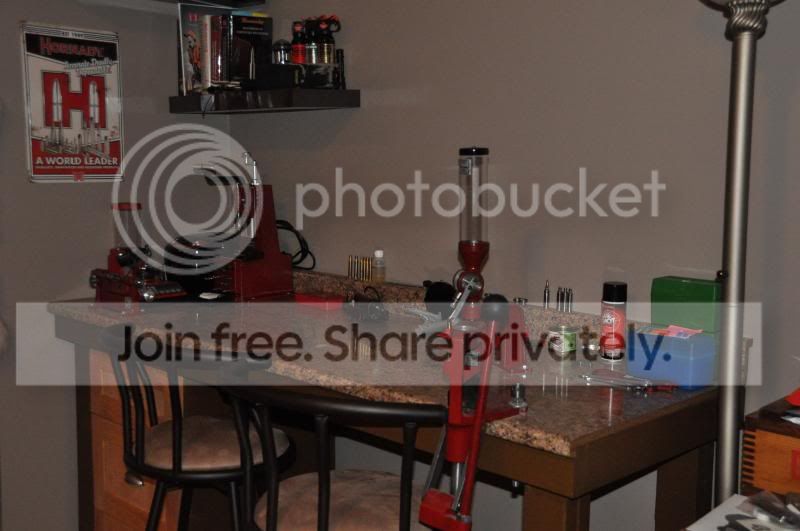

- Location
- Somewhere on the Hudson Bay Coast
Mine is usually less well organized but here are some elements you might consider:
An overhead light fixture prevents working in a shadow,
A shelf at eye level makes reading a balance beam scale more precise,
A bench top should not flex under the strain of the press, so be sure to build a strong framework,
Anchor or weigh down the bench so it can't move,
A backing makes it more rigid,
Use bolts to assemble the structural parts,
You need a bench top overhang to allow for the linkage articulation of many presses,
An inset steel plate along the forward edge can be a useful working surface, and studs can be welded to it for mounting the press,
Plan on the height to prevent fatigue while working, my bench height is 4' as I prefer standing,
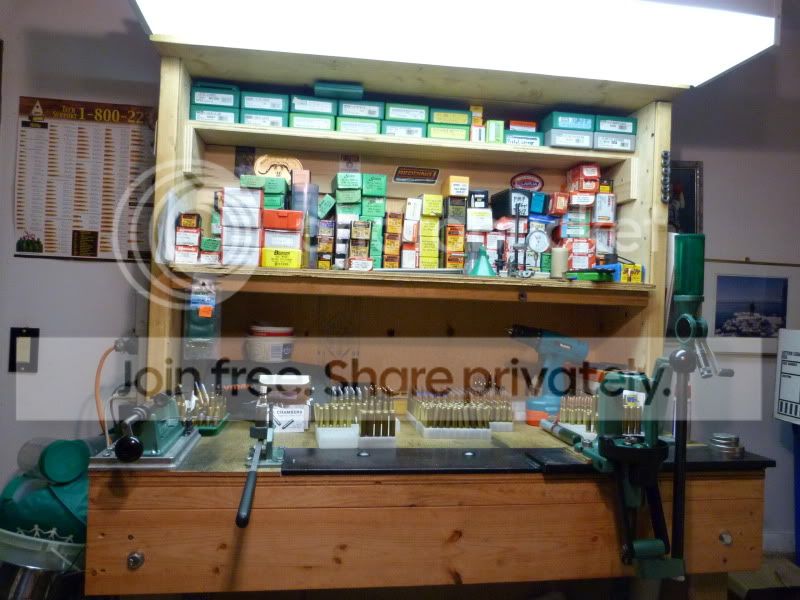
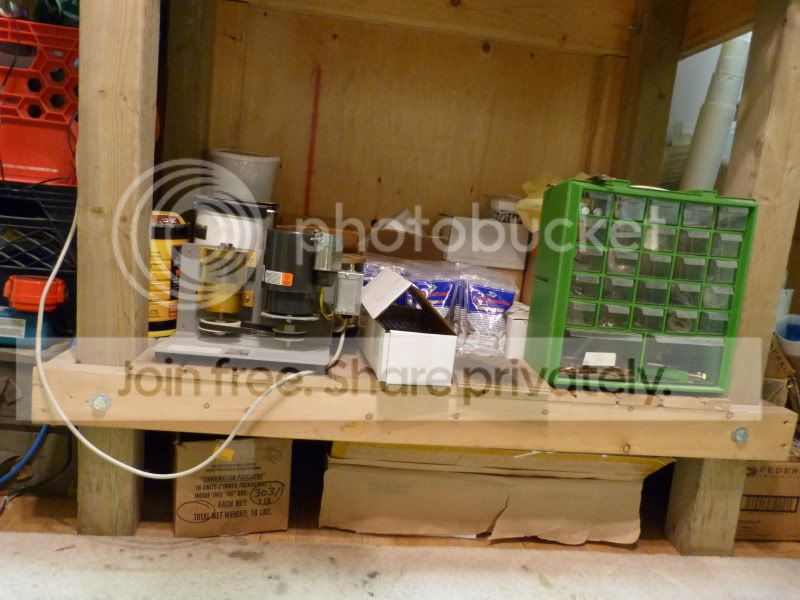
but here are some elements you might consider:An overhead light fixture prevents working in a shadow,
A shelf at eye level makes reading a balance beam scale more precise,
A bench top should not flex under the strain of the press, so be sure to build a strong framework,
Anchor or weigh down the bench so it can't move,
A backing makes it more rigid,
Use bolts to assemble the structural parts,
You need a bench top overhang to allow for the linkage articulation of many presses,
An inset steel plate along the forward edge can be a useful working surface, and studs can be welded to it for mounting the press,
Plan on the height to prevent fatigue while working, my bench height is 4' as I prefer standing,


woodenpigeon
Regular
- Location
- SW Ontario


- Location
- big sky country
I love these posts.
Here's mine from the heart of Calgary, AB looking down on the Bow River:
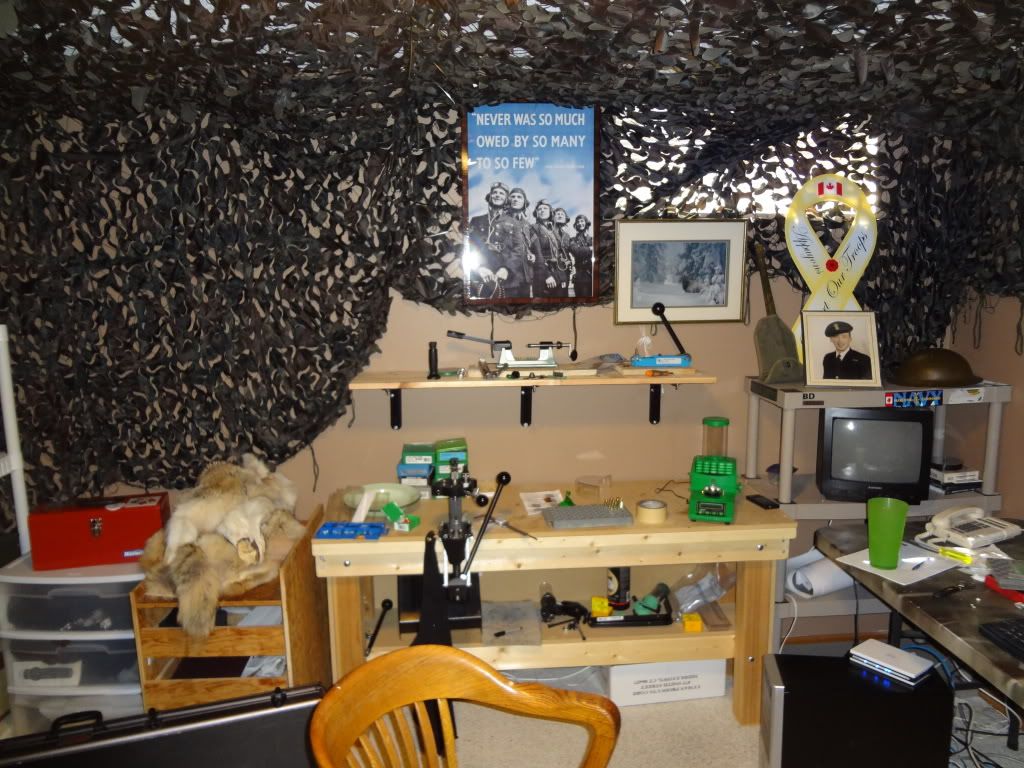
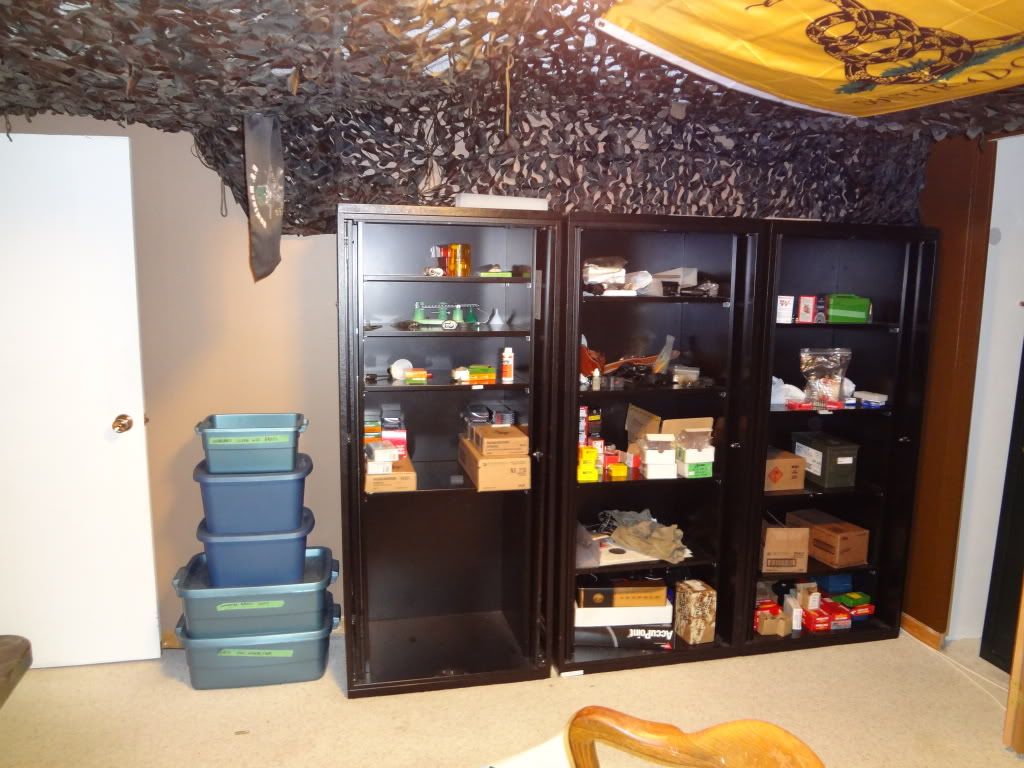
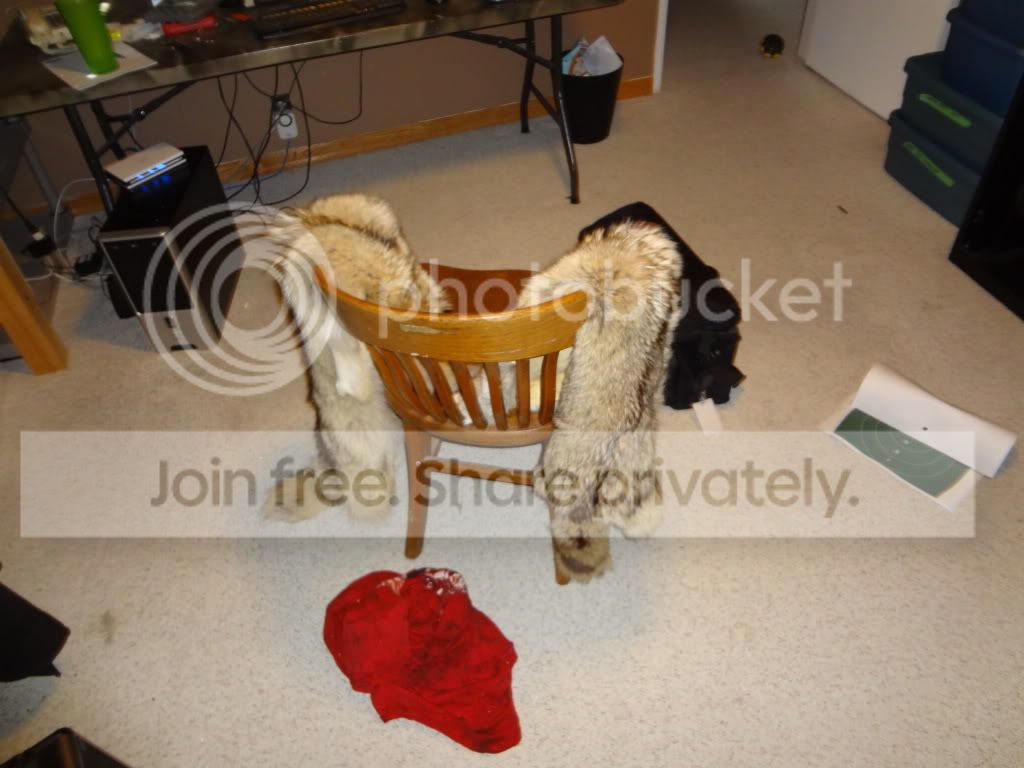
Here's mine from the heart of Calgary, AB looking down on the Bow River:
- Location
- big sky country
If I can offer one word of advice, it's to build it way bigger than you think you'll need. I went 6' long with mine and wish it was bigger. There never seems to be enough room. Don't overlook the value of drawers and cupboards as well.
10-4.


Curious as to why you lock your presses?

Curious as to why you lock your presses?
Just noticed that! Maybe his wife so he stops spending so much time at the bench.
Just noticed that! Maybe his wife so he stops spending so much time at the bench.
Now that's hilarious! Hope my wife doesn't see this...

- Location
- Prince Albert, Sk
Loading bench, work bench and powder storage.
All 2x6 frame anchored to the wall studs.
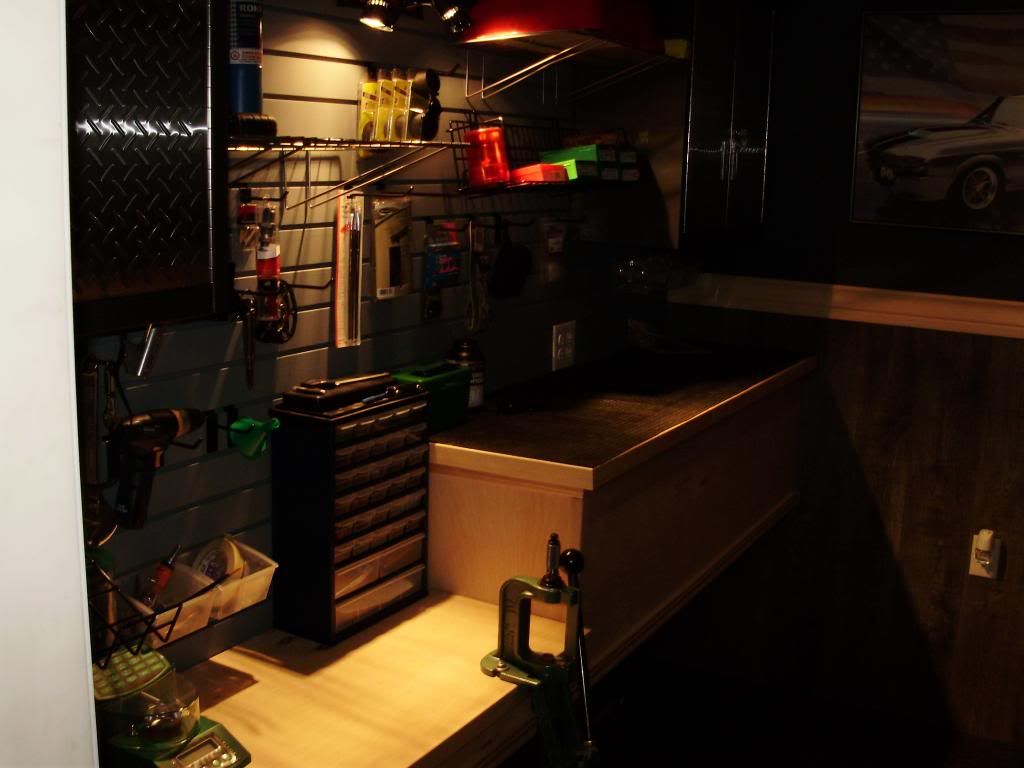
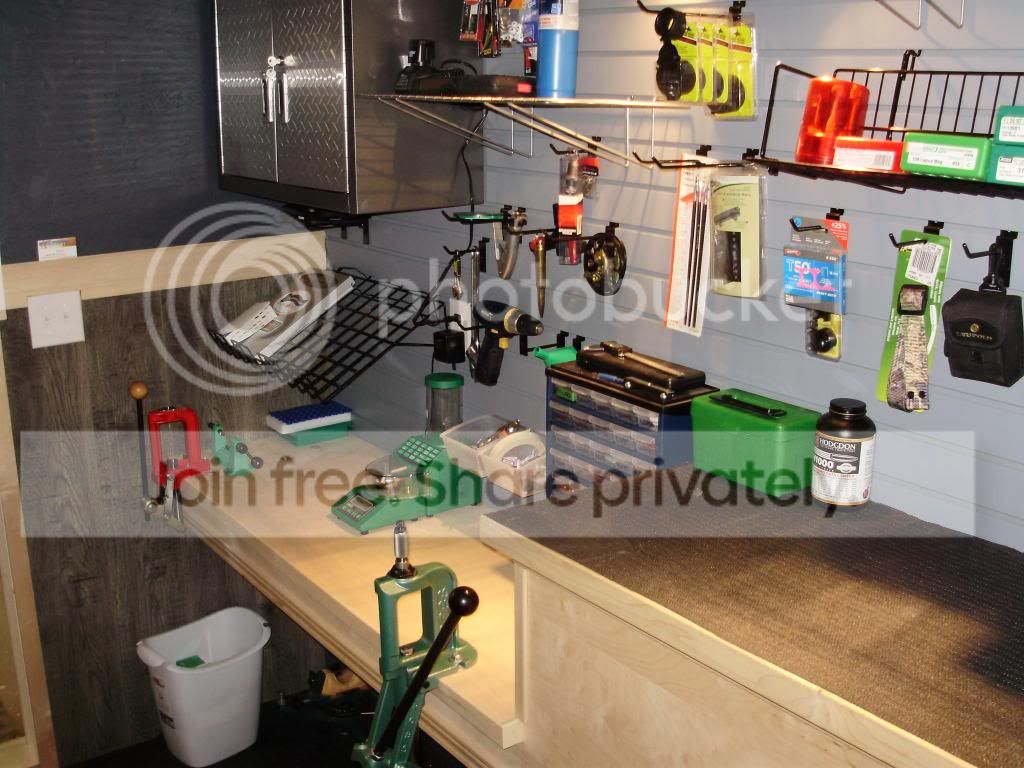
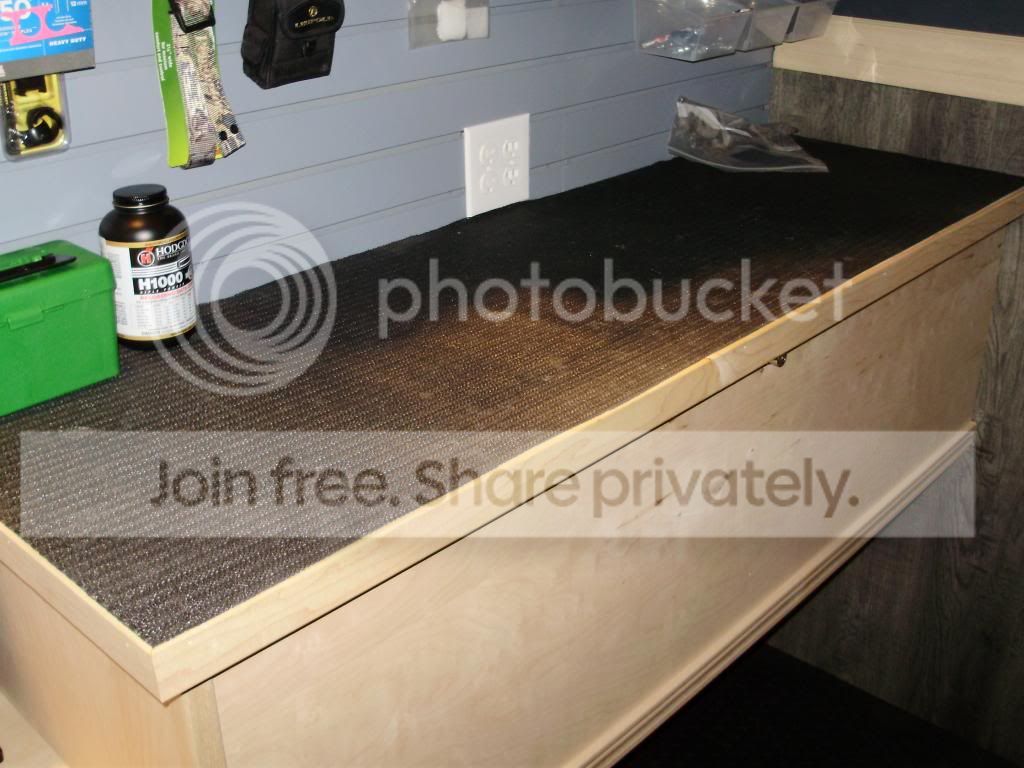
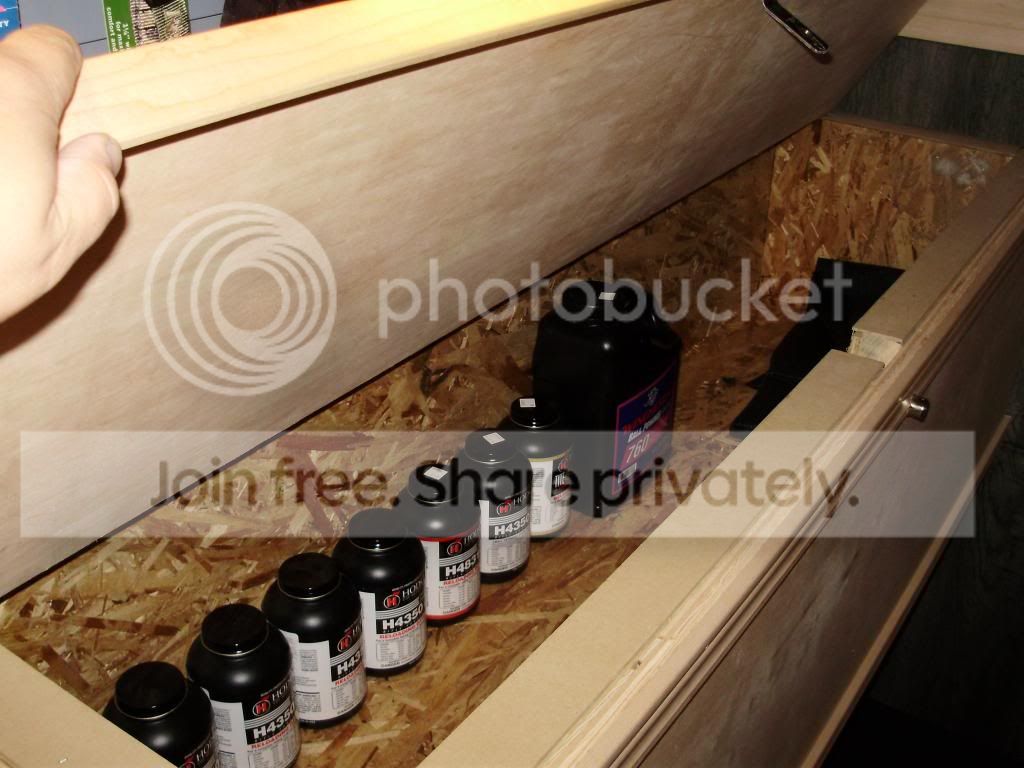
All 2x6 frame anchored to the wall studs.


Where's catnthehatt when you need him, he's got one of the nicest setups I've seen. For me, I want my reloading space to be some place I enjoy spending time at and it looks nice and offers plenty of workspace. I've seen some pictures of tiny tables in corners of basements and wonder how guys that say they reload a lot can make do with something like that. I haven't been reloading all that long but knew if I was going to be serious about it that I needed a nice workspace. I'd say make it big, aesthetically pleasing and functional.

- Location
- Somewhere on the Hudson Bay Coast
Where's catnthehatt when you need him, he's got one of the nicest setups I've seen. For me, I want my reloading space to be some place I enjoy spending time at and it looks nice and offers plenty of workspace. I've seen some pictures of tiny tables in corners of basements and wonder how guys that say they reload a lot can make do with something like that. I haven't been reloading all that long but knew if I was going to be serious about it that I needed a nice workspace. I'd say make it big, aesthetically pleasing and functional.
Everyone's circumstances are different, and not everyone has space for a sprawling gun/reloading room nor would want one if they did. Those who are just starting out probably have heard about guys that load ammo at the kitchen table with a Lee Loader, and the minimum room requirement is what encouraged them to jump in. That was me in my teens, so I've been there, done that, have the T-shirt, but I quickly recognized the limitations of that and slowly, over time, took on shares in RCBS. Interestingly though, I recently obtained a small arbor press and a set of Wilson dies for my SAKO .222 Magnum, so its almost like going back to a Lee Loader without the hammer. This little outfit could be easily taken to the cabin when I wanted to work up loads out there as I was shooting. Of course, now I have to buy more die sets. Every now and then I'm tempted to take a big gulp of the Dillon Kool-Aid, which is not space friendly, and would require a major restructuring of my current loading room. And I'm looking seriously at bullet swaging, which will probably require expanding to the hot room in the garage.






















