












































Question for first time reloading Swedish mauser

Gillen1

CGN frequent flyer
Rating - 100%
239   0   0
Location
London,Ontario
Hi everyone,

I am new to reloading, and tonight was my first time loading anything at all.

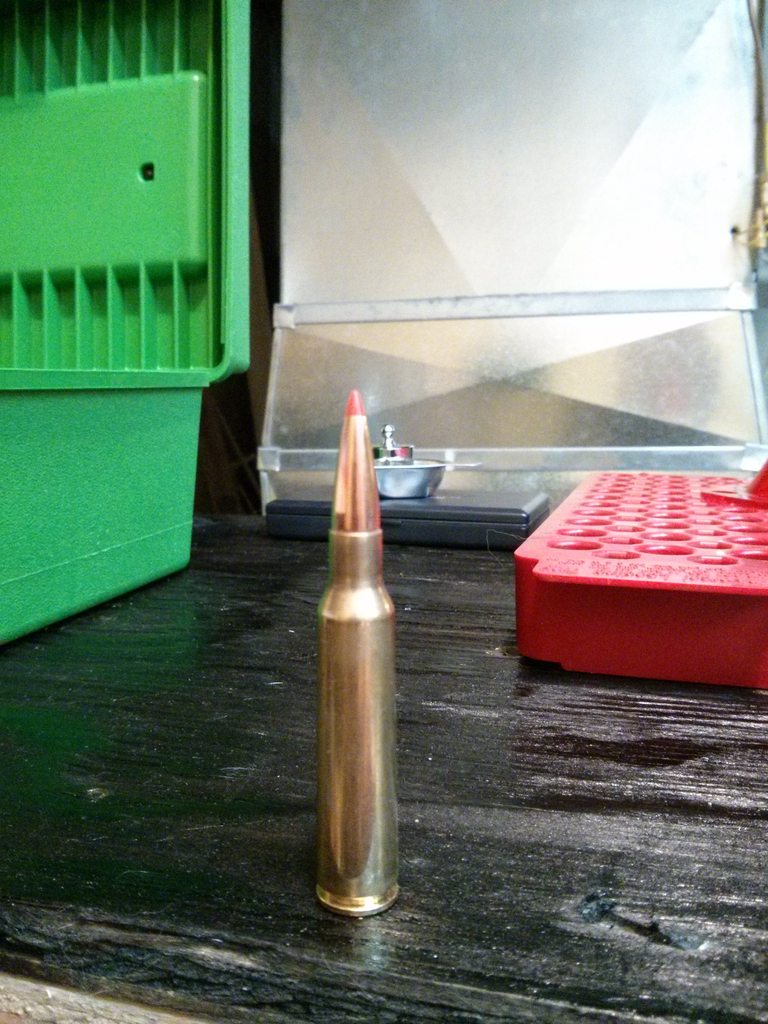
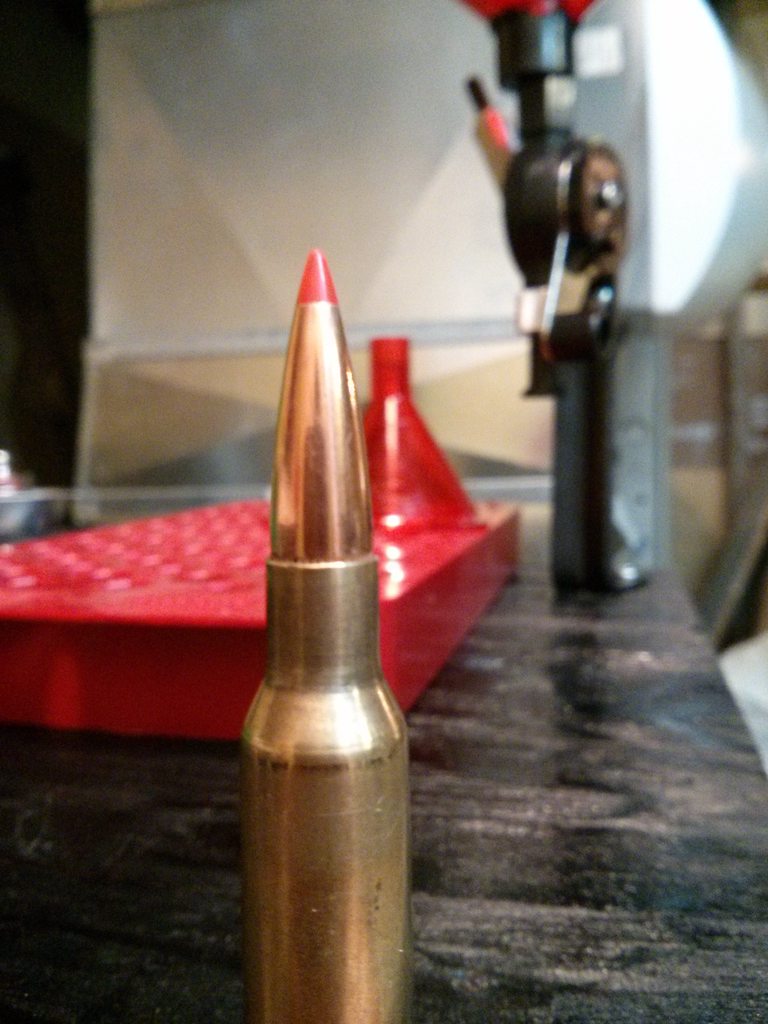
For my first time in my Swed. Muaser I used 32.5 grains of IMR 4895 with a 140gr Hornday SST and PPU once fired cases that I have collected from shooting commercial ammo. Also, CCI 200 large rifle primers
Lx1cwDNh.jpg
wKwK9UGh.jpg


Now I load everything up, and when I went to go test a round in the rifle, I noticed that when closing the bolt down with a round in, it was a lot tighter than when I chamber a commercial PPU round. is this to be expected? I can't figure out why this could be? Is the neck on the casing expanding and need to be re sized?


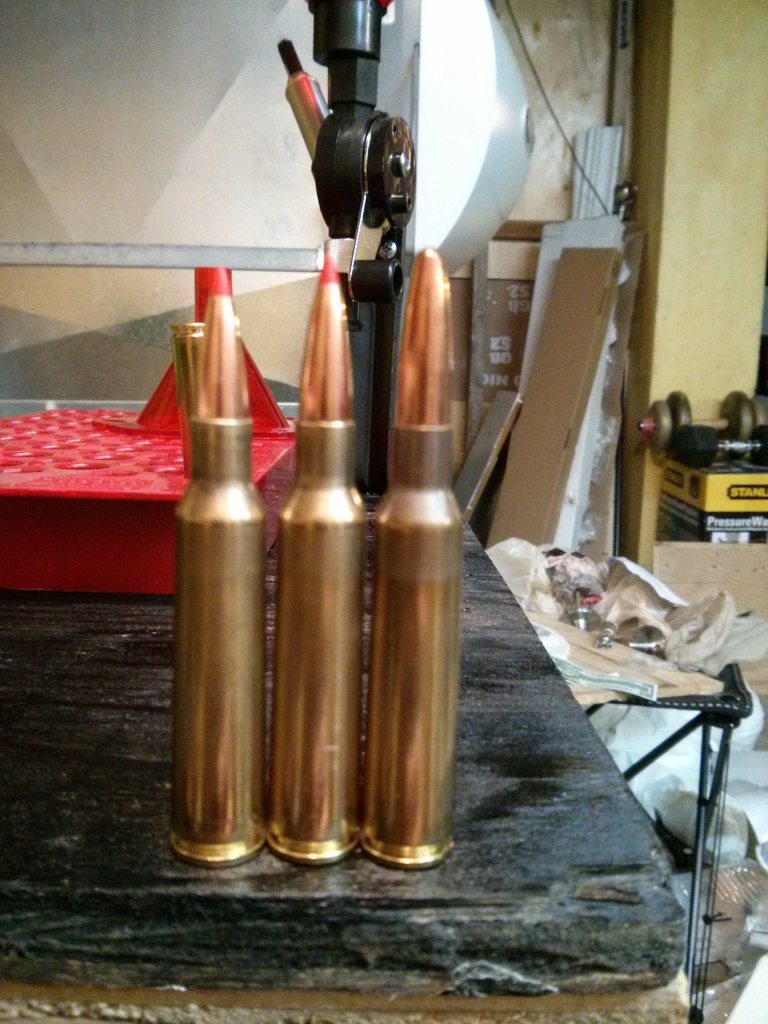
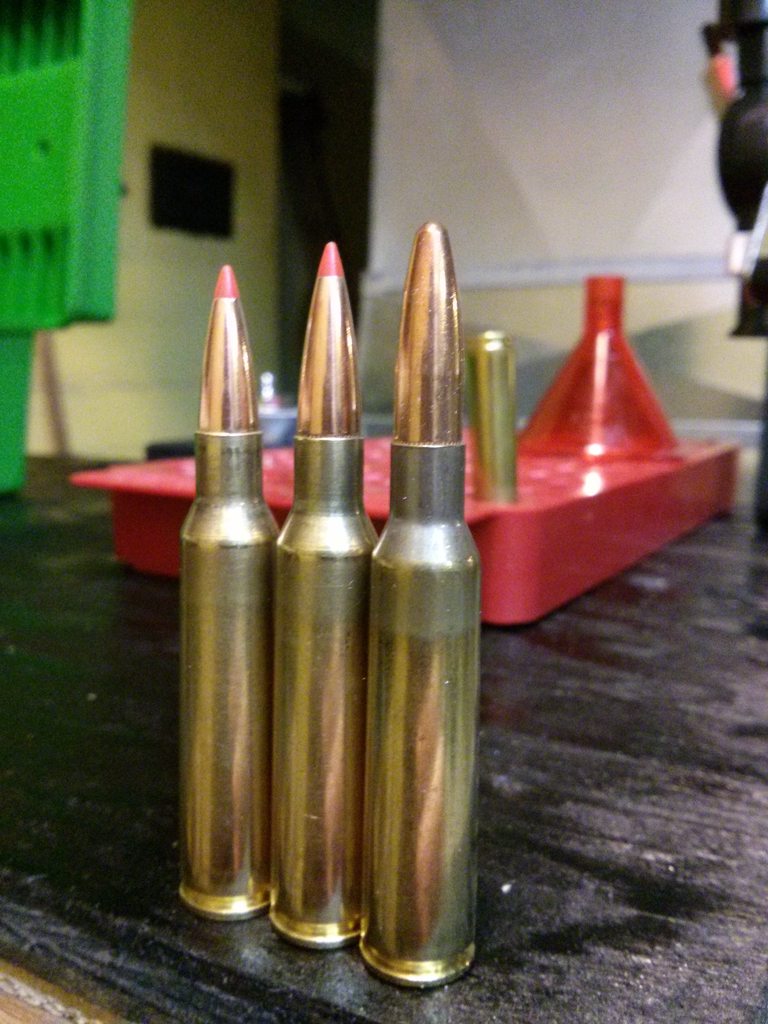
Now another question is that my first few were seated a bit lower than I had originally wanted. Are they still safe to shoot?
Hq71YRAh.jpg
jkXRr7ch.jpg


Any input would be great. I plan on shooting these in the next little while unless I'm told otherwise!
 
That Swede has a very long throat. You can likely seat your bullets out as far as you can still fit the loaded cartridges into the magazine well.

Those cases don't look to be full length resized.

The thing with once fired brass, is that not all chambers are created equal. They may be larger diameter and a few thousandths of an inch deeper than the chamber in your rifle. Those cases will be fire formed to fit that chamber. If you full length resize and trim, you will be fire forming the brass to the dimensions of your chamber and your problem should go away.

If it doesn't, even though it's unusual for a milsurp chamber, your rifle may have a tight chamber and you just might have to get a set of small base dies.

Have you tried new brass in the chamber???? If it's OK, then just full length resize and trim.

When reloading brass fired in a different rifle than your own, always full length resize the cases and trim them to minimum length. Deburring the flash holes is also recommended but won't have anything to do with chambering.
 
How did you adjust your sizing die? Did you set it to full length resize or did you try to neck size? It is always a good idea to try to chamber a case or two after resizing to be sure you are set up properly.
 
I believe I just neck sized it. I was pretty much following along with what the loading instructions were in the packet that came with the loading kit.
 
As far as seating them too far and whether you can fire them or not --- the 2 SST's beside each other visibly look quite a bit different to me. That equates to a lot in the realm of reloading from my experience. If you have a puller I'd just pull them out and try again. If you don't have a puller you should probably look at getting one - it will come in handy :)
 
All the brass has been fired from my rifle, that's the strange part. Also what are small base dies?

Small base dies are made to resize brass down to the minimum dimensions, so the brass will chamber more easily. They're intended for use with semi-autos, levers, etc; anything other than a bolt action rifle....

BTW, a good habit to get into is to make up a dummy round (no primer or powder) to test chambering, fit in the magazine, overall length... with a new caliber / bullet before loading up any actual ammo.
 
I believe I just neck sized it. I was pretty much following along with what the loading instructions were in the packet that came with the loading kit.

Are the dies labelled neck size? I set up all my rifle dies so the die contacts the shell holder, and the press arm requires a pull (not just the press handle's own weight) to complete its stroke.
 
You probably have to set your die a little bit lower to just touch the shoulder. Make up a dummy round and play around until you are comfortable with how the bolt closes. Without looking up your load, where is it re the recommended min -max for that powder?
 
I just looked at the Hodgdon site and you are below their minimum starting point. Any reason for such a low starting point? I would start at around 34.5 and work up. to their max. Where did you get your load data. I have had good luck with H 4831 and I have just loaded up some with rel 22 I have to test them as soon as it warms up a bit.
 
I am using the lyman 49th reloading manual, and for the 140 grain bullet, this is the suggest starting grain. I am as new as can be, so this is why I went with it.


I just looked at the Hodgdon site and you are below their minimum starting point. Any reason for such a low starting point? I would start at around 34.5 and work up. to their max. Where did you get your load data. I have had good luck with H 4831 and I have just loaded up some with rel 22 I have to test them as soon as it warms up a bit.
 
I may have found the solution. Before I de prime the spent case, it fits in the chamber just fine. So what I did was take a turn off the depriming die so it wasn't touching the shell holder when the arm was extended. I made a dummy round like this and it went in the gun and the bolt locked a whole lot easier. My theory is that while de priming, the case is getting pushed down to much causing a bulge slightly around the neck and causing the casing to be a bit bigger in the chamber.


Do you think the cartridges I already made would be un safe to shoot?


Guess I will be adding a bullet puller to my list of reloading tools!
 
When it come to steel vs brass, steel wins every time. You were set up to full length resize when your die touches the shell holder. You will not bulge the shoulder then because the die is pushing the shoulder in and won't allow it to bulge out. You may have your deprime pin protruding too much and it is bottoming out on the base of the case and not permitting a full stroke, or you are short stroking and stopping once the primer comes out and the extra resistance is felt when you complete the resizing of the case.
To bulge a shoulder, usually the seating die is set too deep and trying to crimp the case into the bullet without a crimp groove. The way I set my seating die is to put a case in the holder and raise completely up in the press (no bullet just the case) screw in the die until you feel it touch the case mouth. Back it out at least 1 turn and lock there.Back out the seater and insert a bullet in the case measure result and keep lowering the seater slowly until desired length is obtained. Your loads should be ok but not consistant with different lengths. Make 5 rounds at min, 5 more at .5 gr more powder repeat to max. Test fire and your rifle will tell you what it likes.
 
Well - You should always check to see if a sized, unloaded case fits before completing the reloading process. NNY brass is hard to work with, as the brass is thick and hard - you really need to crank it when sizing.
Finally if sized cases fit, and loaded ones do not then the bullet is causing interference. If you're loading to the cannelure then the cartridge is not too long. I had some NNY brass years ago with very thick necks - once the bullet was seated, the neck became oversize and bound in the chamber - bad news.
 
I belive I have it fixed. When de priming, I must not have been pulling down far enough after the primer fell out. I have taken apart all the rounds I had made, and re made them and all problems are fixed!

I really appreciate everyones help!
 
Good to hear. Lesson learned, just because the primer fell out it is not yet resized, keep on pushing until the shell holder touches the die. Glad we could help.
 
Back
Top Bottom






















