I might be doing some camping on crown land this summer way deep in the wood . Very deep. Almost mountain deep. The thought was to take my cz 858 and do a bit of target shooting and something crossed my mind. Big furry angry bears that magically appear out of nowhere.#
With that in mind, I am about to become hoplessly addicted to shotguns now. I have been sniffin around and just want something basic and cheap that will get the job done in case of unexpected grizzly anger.#
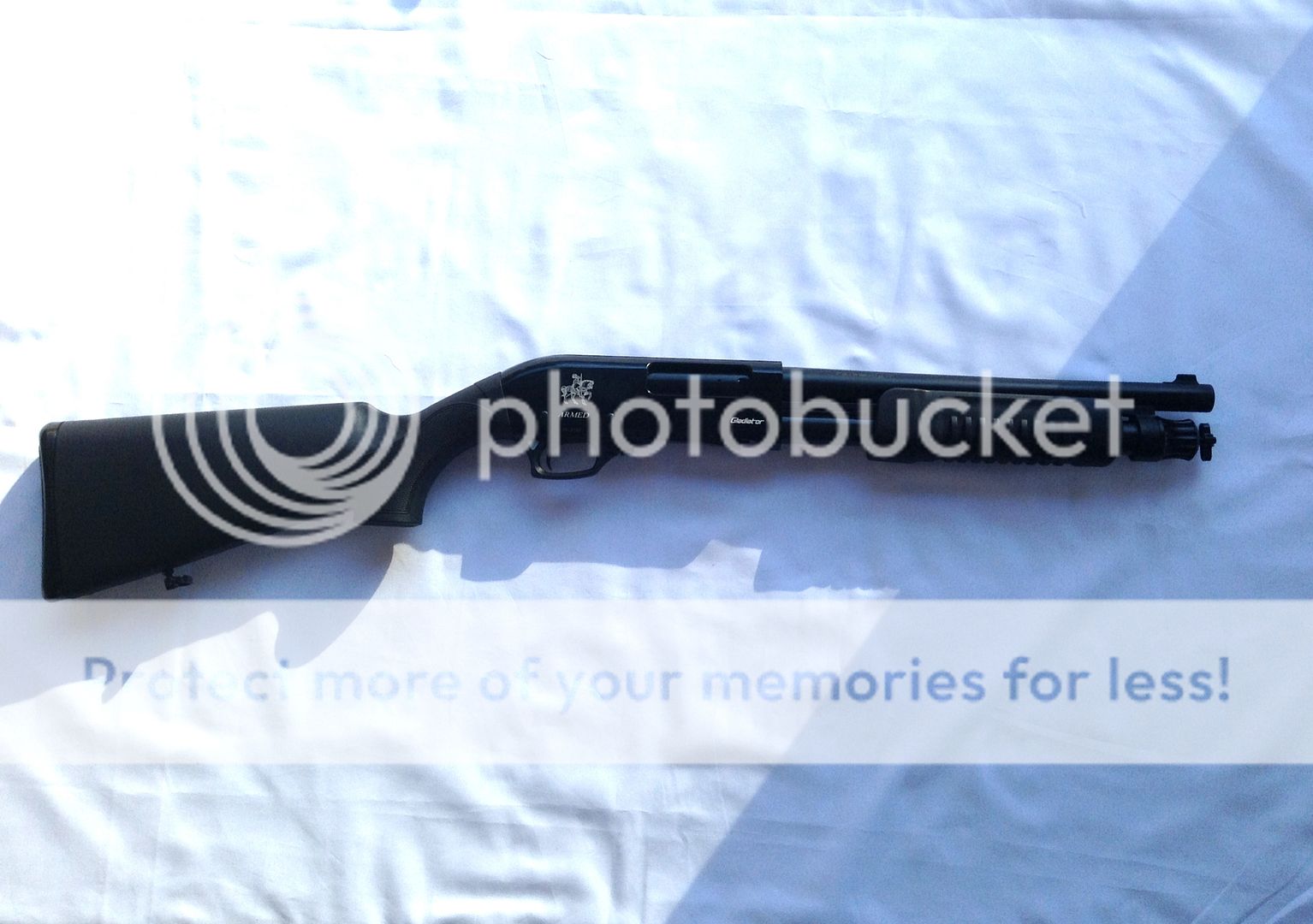
The 2 shot guns I have been looking at are Winchester SXP Marine Defender or the maverick 88 defender. Anyone have any thoughts about these and slugs? Or maybe a suggestion of your own?
Either of those guns are suitable with certain provisos. that said, the lower the purchase price, the greater the likelihood that it will take more money and effort to get the gun to where you need it to be as a life saving tool, than would be necessary with a more expensive gun. The most important consideration is that the gun you choose to carry will cycle and fire with absolute reliability, with the ammunition you'll carry in the field. The next consideration is whether or not the gun fits you, if not recoil will seem worse, and your gun handling will be slower and clumsier. In most cases, its prudent to cut a good inch off the butt stock, or simply purchase an adjustable stock, like the Magpul SGA, so you can configure the gun to not only your build, but also to the clothing you're wearing; T-shirt weather and parka weather changes your optimal LOP. If the gun is cleaned of all the gummy factory metal rust protection, and it still requires an unreasonable amount of effort to cycle, strip the gun, determine from the wear pattern on the action arms, the bolt and the carrier where the issues lie, apply some fine valve grinding compound to those surfaces, reassemble the gun, and work the action a couple of hundred times, clean reassemble and test. Repeat as required. With an empty, cocked, clean gun, if I depress the bolt release, I like to see the slide fully retract with a light bump on the butt.
The location of the bead is a real problem on economy guns. Usually its mounted down on the barrel, rather than on a pedestal, and is thus well below the height of the receiver. In order to see the bead, you are forced to raise the muzzle higher, which causes you to shoot high. If you try this arrangement, you'll probably find that your slug or shot pattern hits the point of aim, if you aim with the bead, then allow it to dip just out of sight below the receiver. This is a less than intuitive means of shooting. The solution is a bead with a pedestal under it to match the height of the receiver, or the installation of rifle sights, preferably a ghost ring rear and a rectangular post front sight. It will prove to be less expensive to buy a gun with the correct sights installed at the factory than it is to purchase a less expensive gun and pay to have a gunsmith install them.
Having the provision for mounting a flashlight whose beam is in coincidence with the front sight is desireable. The flashlight should be mounted in such a way that the beam is not blocked by the sling. A sling is desirable as a slung gun is less fatiguing over the course of a long day than one carried in the hands, of course to install a sling, the gun must have swivels or studs, and that is an additional cost if your guns doesn't have them factory installed. If the gun is called for in an emergency, you will have to use it with the ammunition it carries, you won't have the opportunity to get more, particularly at night. Therefore equipping the gun to carry extra ammo is desirable, and this can be accomplished with a sidesaddle, a butt-cuff, or a sling with ammo loops in it. One side benefit of the sidesaddle is that it replaces the cross pin(s) with threaded pins. Because you might want to chamber a type of ammunition that is different than what is in the magazine, you should practice select drills, which enable you to put a different type of round directly into the chamber. The easiest way is to load the magazine 1 round short of it's capacity, then simply push the select round into the magazine and cycle the gun. If for example you wished to fire a less lethal round, it could be loaded into the magazine, the gun cycled, and the less lethal round would now be in the chamber. It could then be fired, or the bolt release could be depressed, the gun cycled again, and a lethal round chambered. However you choose to run the gun, ensure you always know what kind of shell is in the chamber, while it would be sad to kill a bear you intended to only scare away, it would be tragic to fire a scare cartridge at a bear that needed killing. It is prudent to check for bore obstructions after firing any less lethal ammo, but in an emergency there might not be time.
Aside from being less expensive than a powerful rifle, one of the benefits of the shotgun is it's versatility due to the wide selection of ammunition that is available for it. The shotgun can fire slugs, buckshot, birdshot, cracker shells rubber slugs and buckshot, line throwing charges, and signal flares to name just a few. As a rule for wilderness defense we're mostly concerned with slugs, buckshot, and scare cartridges. The slug should be considered the primary ammunition since it provides the power and penetration necessary to stop the action that forced us to shoot in the first place. Buckshot provides no leeway for poor marksmanship, but it is desirable in populated areas like campgrounds or towns. As a generality, a buckshot pattern opens up about an inch for each yard of range. The reason we shoot is to stop a bear from touching us, and this is accomplished a short range where the pattern has little opportunity to open up. If a follow up shot is required, and the range is longer, poor marksmanship will result in only part of the pattern making contact, which does less damage than might be required to resolve the problem. Since marksmanship is so important, you might as well shoot the ammo that is the most effective, although if camping in a campground at night you might want to replace the slugs with shot, if a bear sticks it's head in your tent, even birdshot will kill it. Scare cartridges might prevent you from having to kill a bear, but if you scare a bear off 3 or 4 times and it keeps returning, you might have to kill it anyway. Be prepared for that. If you use less lethal ammo in your gun, ensure there are no partial obstructions left in the bore before firing lethal ammo, emergencies notwithstanding. If your adventure is one of long duration, the gun should be completely unloaded and reloaded daily to ensure the follower hasn't frozen to the magazine tube, particularly in wet weather with a steel follower, and it allows you to wipe the ammo dry, and ensure it has not corroded. I've found that shotshells corrode much more quickly than rifle cartridges, and I make a habit of swapping them out every 30 days or so, both in the magazine and the sidesaddle.
All this is fine in preparing for your adventure, but it doesn't really prepare you for facing a dangerous bear situation. The first step is to read the books by Garry Shelton and Stephen Herrero on bear attacks to learn something about bear behavior. I'm uncomfortable telling anyone without big game hunting experience that they can sally forth and handle any wildlife emergency when they have never killed or even seen killed a large animal. If you haven't done it, you will be unprepared for the reality of doing it. If you have the opportunity to go bear hunting take it, then decide if you want to depend on a firearm to keep you safe. There are all kinds of shooting drills I could suggest, but the most important IMHO, are loading the gun without taking your eyes off the target, snap shooting from slung, and shooting at a rapidly approaching target. Understand that a bear's brain is only the width of his snout, and that just shooting him in the head doesn't necessarily solve the problem. Understand that shooting at something that is rapidly closing the distance is a particularly difficult marksmanship problem, you tend to shoot where it was, but dropping to a kneeling position puts the trajectory of your slug on the same plane as the bear, but anchors you in place.
I've been around bears and have lived in bear country most of my life, except for the years that I drove a truck for a living, and I've killed some bears. For a number of years I carried a gun for more than 200 days a year for bear protection, but I have never found it necessary to kill a bear in self defense, although its been a close thing a few times. I've had hundreds of bear encounters, and over the years have posted photos of a few of them on CGN, but only a handful of those encounters have been dangerous, though many have been exhilerating. The point I'm trying to make is that simply seeing a bear is not a reason to shoot it. A bear at 50 yards is no threat to you, neither is one at 25, although you have to be alert and ready for what happens next. Use your head and don't provoke a confrontation that is unnecessary.
Hope this helps.