












































You are using an out of date browser. It may not display this or other websites correctly.
You should upgrade or use an alternative browser.
You should upgrade or use an alternative browser.
10/22 short barrel .22 accuracy questions
- Thread starter randyhub
- Start date




hometownhero
CGN Ultra frequent flyer
- Location
- Toon Town, Sk
No myth shorter bbl"s are more accurate than long bbl"s any caliber
Unless you shoot at 50 yards with a 49.8" barrel. That might be tough to beat lol. But yes short and stiff wins the race.

I keep hearing both sides many say 16 to 24" for rimmies, would love to install a shorter factory barrel on a 10/22.
Somewhere between 12" to 16" will generally produce the highest velocity, accuracy is not the same deal at all.
Mark
Could be others have had good success with longer barrels of high quality but as mmattockx mentioned most match ammo reaches max velocity in 12-16" of barrel. The shorter barrel is stiffer which means less sag and thus less whip plus it has a wider accuracy node requiring less consistent ammunition with a wider velocity spread to keep groups tight. The only advantage longer barrels have is with iron sights for the longer sight radius.
The shorter barrel is stiffer which means less sag and thus less whip plus it has a wider accuracy node requiring less consistent ammunition with a wider velocity spread to keep groups tight. The only advantage longer barrels have is with iron sights for the longer sight radius.
"Sag" relates to play in the barrel/receiver interface (which bedding compensates for)... "whip" relates to the vibrations which occur from the explosion of the powder and the passage of the bullet... "sag" and "whip" are not directly related... indirectly; anything that contacts the barrel during the shot effects the barrels resonance (whip), ergo "barrel sag" may cause contact between the barrel and stock and thus effect the vibration or "whip" of the barrel. Stiffer barrels may have less "whip" but that in itself does not necessarily mean a more accurate barrel, even with other factors being equal (steel quality, bore diameter, rifling & crown quality etc...). After 40+ years of rimfire shooting and load testing out of dozens of firearms, I am not prepared to say that shorter barrels are "more" accurate, but I have not found them to be "less" accurate out to 100 meters... and the most accurate LR gun I ever had was an Anschutz rebarreled with a 20" Lilja... I can not attribute the accuracy to the barrel alone. Having blathered on like this, I will add that I prefer barrels on the short side now, for their feel and handling... and to 100 meters, I don't feel that I am compromising my potential accuracy.
Good Day.
Looking at getting a shorter barrel for my SR-22, anyone out there have any experience with switching out to a short barrel on the SR-22. I am thinking a 12-16 barrel with a threaded barrel. I need to get something in the next few weeks.
Any suggestions or directions to a retailer would be great
Looking at getting a shorter barrel for my SR-22, anyone out there have any experience with switching out to a short barrel on the SR-22. I am thinking a 12-16 barrel with a threaded barrel. I need to get something in the next few weeks.
Any suggestions or directions to a retailer would be great

Good Day.
Looking at getting a shorter barrel for my SR-22, anyone out there have any experience with switching out to a short barrel on the SR-22. I am thinking a 12-16 barrel with a threaded barrel. I need to get something in the next few weeks.
Any suggestions or directions to a retailer would be great
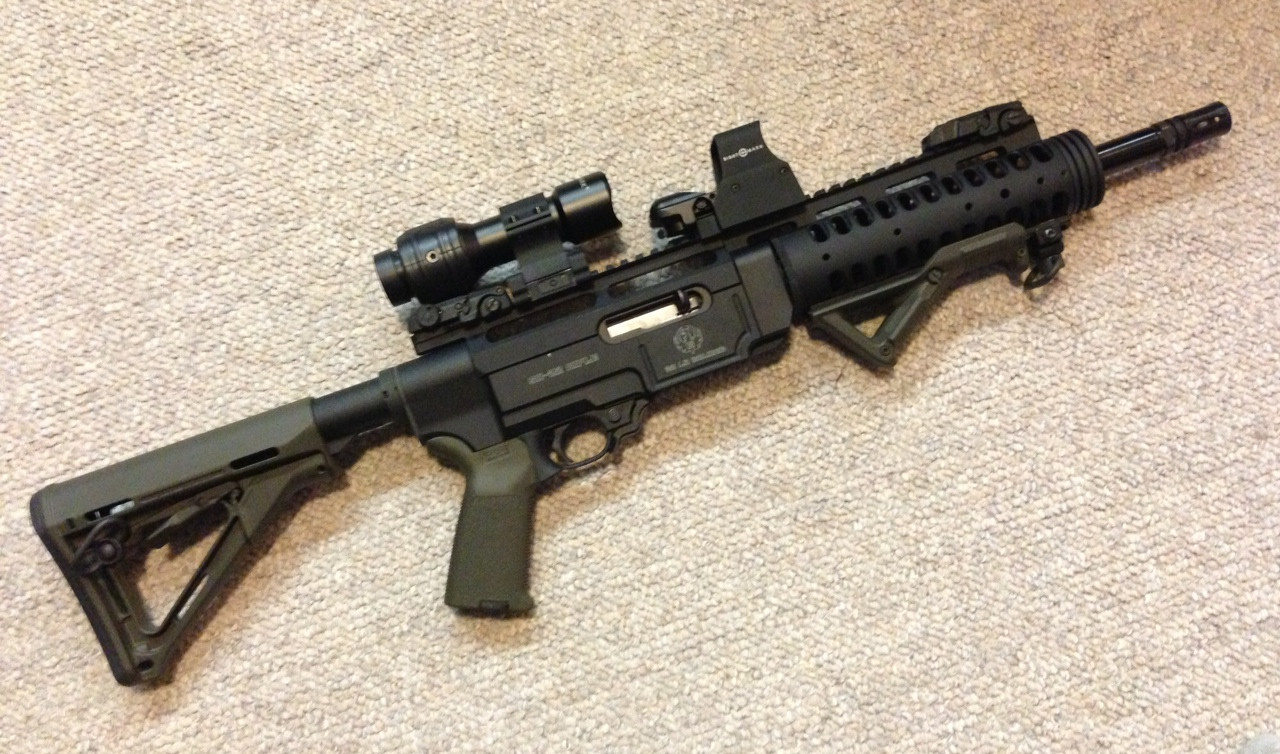
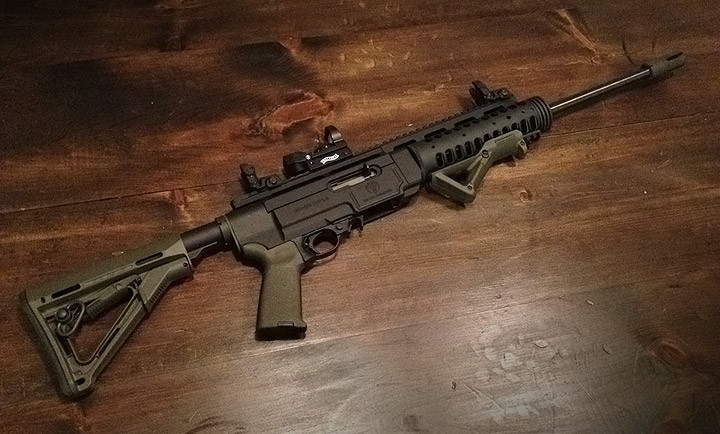
Yep, just did it last week. Got it from dlask arms. 12.5" barrel, .920 stepped to .850 (a straight .920 barrel might look odd with the flash hider since the hider is barely .850 wide). Mine was the xtreme chamber, but they rechambered at no cost to the sporter so I could use ammo like cci minimags. The xtreme or target chambered barrels from dlask are too tight to use with cci ammo, the bullet wont seat far enough and can rupter the casing, just FYI. It was a breeze to install and looks great with my short hand guard also from dlask. $179 before shipping and taxes
12.5" barrel
Compared to the factory 16.5" (my gun is a 10/22 in a sr-22 kit)
Last edited:
- Location
- Saskatchewan
I have to measure the stock on my 10/22 carbine...been thinking of getting a short barrel (8" Dlask) as well, but want to make sure it's going to remain NR.
I think it would be a handy little machine...bet it would be noisy though.
I think it would be a handy little machine...bet it would be noisy though.
"Sag" refers to the barrel bending under its own weight towards the muzzle. It is a very small but measureable amount and the reason why Enfields, Mosins etc are pressure bedded towards the muzzle. Otherwise the long, skinny barrels exhibit a lot of sag and thus a lot of whip. The pressure bedding eliminates the sag and reduces whip considerably. Shorter/stiffer barrels sag less and whip less which widens their accuracy node.
"Sag" relates to play in the barrel/receiver interface (which bedding compensates for)... "whip" relates to the vibrations which occur from the explosion of the powder and the passage of the bullet... "sag" and "whip" are not directly related... indirectly; anything that contacts the barrel during the shot effects the barrels resonance (whip), ergo "barrel sag" may cause contact between the barrel and stock and thus effect the vibration or "whip" of the barrel. Stiffer barrels may have less "whip" but that in itself does not necessarily mean a more accurate barrel, even with other factors being equal (steel quality, bore diameter, rifling & crown quality etc...). After 40+ years of rimfire shooting and load testing out of dozens of firearms, I am not prepared to say that shorter barrels are "more" accurate, but I have not found them to be "less" accurate out to 100 meters... and the most accurate LR gun I ever had was an Anschutz rebarreled with a 20" Lilja... I can not attribute the accuracy to the barrel alone. Having blathered on like this, I will add that I prefer barrels on the short side now, for their feel and handling... and to 100 meters, I don't feel that I am compromising my potential accuracy.
"Sag" refers to the barrel bending under its own weight towards the muzzle. It is a very small but measureable amount and the reason why Enfields, Mosins etc are pressure bedded towards the muzzle. Otherwise the long, skinny barrels exhibit a lot of sag and thus a lot of whip. The pressure bedding eliminates the sag and reduces whip considerably. Shorter/stiffer barrels sag less and whip less which widens their accuracy node.
That is what I said, except sag... is not the barrel "bending", but it is "drooping" (I believe that is what you meant) as a result of a less than perfect barrel/receiver junction... long skinny barrels droop "less" than long "heavy" barrels due to the weight involved... the longer and heavier an unsupported barel is the more it will 'droop" or "sag"... but again neither has a direct effect on harmonics, a sloppy fit to reciever would have an impact but that is really a seperate issue from "barrel droop" although it is the primary culprit of it. Bedding does help with droop, but it does not help with Whip or sonic resonance... in fact most have found that it hurts, unless the proper pressure and node are located ... the old tried and true "pressure pad" bedding used for 10/22's and other rimfire rifles has been found by many to improve accuracy over floating the barrel... but only when the correct point and amount of pressure is located... accuracy usually gets worse at first... sometimes alot worse... a gun prone to much vibration often reacts badly to contact at any point.
- Location
- Saskatchewan
That is what I said, except sag... is not the barrel "bending", but it is "drooping" (I believe that is what you meant) as a result of a less than perfect barrel/receiver junction... long skinny barrels droop "less" than long "heavy" barrels due to the weight involved... the longer and heavier an unsupported barel is the more it will 'droop" or "sag"... but again neither has a direct effect on harmonics, a sloppy fit to reciever would have an impact but that is really a seperate issue from "barrel droop" although it is the primary culprit of it. Bedding does help with droop, but it does not help with Whip or sonic resonance... in fact most have found that it hurts, unless the proper pressure and node are located ... the old tried and true "pressure pad" bedding used for 10/22's and other rimfire rifles has been found by many to improve accuracy over floating the barrel... but only when the correct point and amount of pressure is located... accuracy usually gets worse at first... sometimes alot worse... a gun prone to much vibration often reacts badly to contact at any point.
From the way I understood supernova's post, he meant the barrel is bending...but it wouldn't be the first time that I didn't know what the heck is going on lol...
No Hoyt, I did mean barrel sag. I know you know your stuff and know it well but we got our wires crossed here. I know about barrel droop in the 10/22 due to the slip fit tenon but what I'm talking about is the barrel itself "bending" under its own weight. That sag at the muzzle puts a bit of stress on the barrel that magnifies whip when the harmonic vibrations come down the barrel's length. Picture the long, skinny barrel of a Mosin if you will. Think about how much weight vs. rigidity it has when held horizontally by just the tenon. Now think about that same barrel cut to say 18". Drastic reduction in sag at the muzzle with an increase in stiffness due to the shorter length. Less material equals fewer grains to stretch which means more less total stretch across the length equalling more rigidity. But with the longer barrel they use upward pressure behind the muzzle to alleviate barrel sag. Pressure is tuned to dial in the harmonics for the specific load being shot. Works with any gun shooting a consistent load that isn't dialled in for that particular rifle. That was my point is all.
No Hoyt, I did mean barrel sag. I know you know your stuff and know it well but we got our wires crossed here. I know about barrel droop in the 10/22 due to the slip fit tenon but what I'm talking about is the barrel itself "bending" under its own weight. That sag at the muzzle puts a bit of stress on the barrel that magnifies whip when the harmonic vibrations come down the barrel's length. Picture the long, skinny barrel of a Mosin if you will. Think about how much weight vs. rigidity it has when held horizontally by just the tenon. Now think about that same barrel cut to say 18". Drastic reduction in sag at the muzzle with an increase in stiffness due to the shorter length. Less material equals fewer grains to stretch which means more less total stretch across the length equalling more rigidity. But with the longer barrel they use upward pressure behind the muzzle to alleviate barrel sag. Pressure is tuned to dial in the harmonics for the specific load being shot. Works with any gun shooting a consistent load that isn't dialled in for that particular rifle. That was my point is all.
Yep... got the wires crossed on the terminology... but since we are in rimfire, you gotta ask yourself how much any of these factors "really" come in to play when you consider the primary accuracy concerns of ammuniton, barrel "quality", bore/muzzle quality as well as action rigidity and repeatability...? Bottomline... shorties shoot some good.

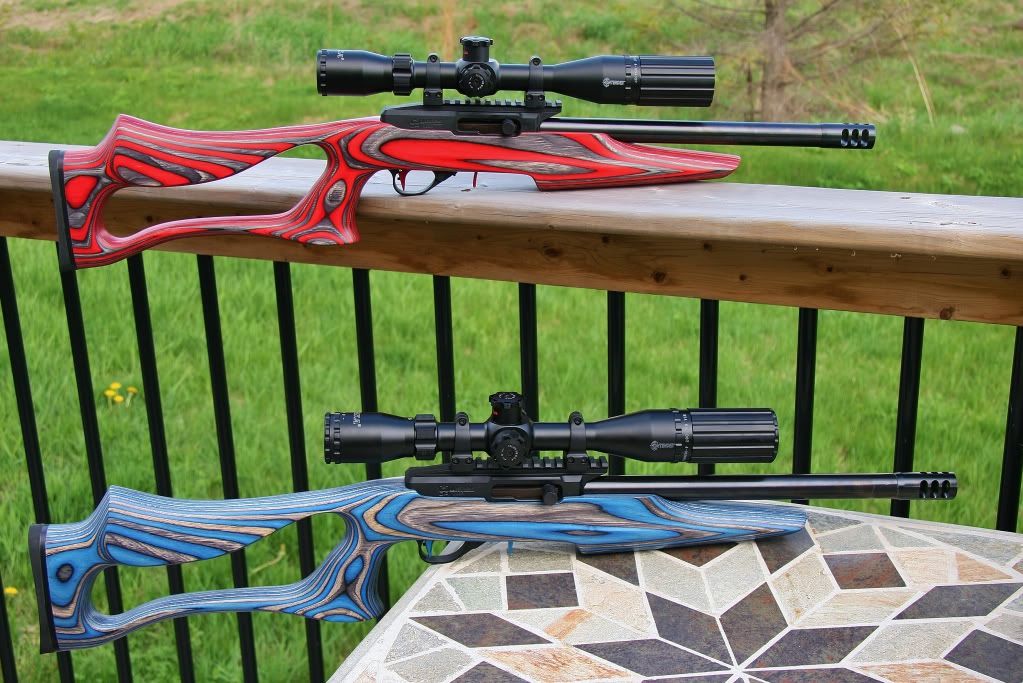
i love the red and blue rugers
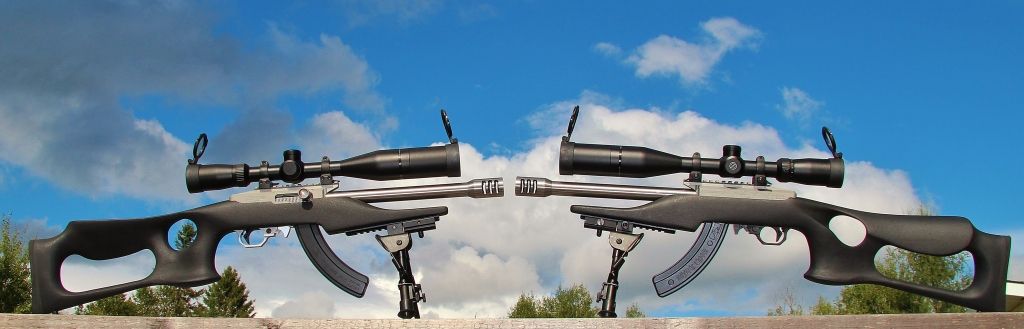
Thanks... but there is actually not one part in those guns from Ruger... They are DAR22 (Dlask) receivers with Dlask 12.5" barrels, RT Bolts and TG's and an assortment of other parts from VQ and Kidd... they are supremely accurate... with their preferred Wolf Mt/SK St+/CCI SV's... the red one is my son's, the blue one is mine (he got first pick of the stocks)...






















