












































You are using an out of date browser. It may not display this or other websites correctly.
You should upgrade or use an alternative browser.
You should upgrade or use an alternative browser.
1863 sharps
- Thread starter m1978
- Start date

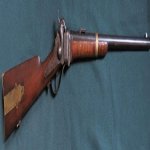
I have a Shiloh 1859 carbine and a Shiloh 1863 Sporting rifle both are in 54cal.In my opinion Shiloh makes the best Percussion Sharps repro followed by Pedersoli,the last on my list would be the IAB versions sometime found.The biggest difference as far as performance goes is in the breech seal,the Shiloh depends on tight tolerances to prevent any blow by gas and the a pedersoli uses the original breech seal system of the original sharps.The problem is in the original system they use a sliding chamber seal to stop the gases and this seal can eventually seize up .There is a remedy for this where the breech block has been modified with an o ring and it seems to work well on the pedersolis but as far as I know the only place doing this is in the states.The only problem with the Shilohs is finding one as they are not being made presently and may not be made in the future.They are fun guns to play with and I kind of like them better than my cartridge a Sharps rifles.
"The problem is in the original system they use a sliding chamber seal to stop the gases and this seal can eventually seize up ."
Is the sliding chamber seal a loose fit in the chamber, or is it tight and need adjustment with some type of specialized tool?
How would you free-up a seized chamber seal? Seems black powder fouling would stop free movement of the chamber seal pretty quick.
Does the plate on the front of the breechblock move forward on firing to meet the chamber seal?
I have an original Model 1859 carbine and always wondered how the original system worked.
Regards,
Powderman
Is the sliding chamber seal a loose fit in the chamber, or is it tight and need adjustment with some type of specialized tool?
How would you free-up a seized chamber seal? Seems black powder fouling would stop free movement of the chamber seal pretty quick.
Does the plate on the front of the breechblock move forward on firing to meet the chamber seal?
I have an original Model 1859 carbine and always wondered how the original system worked.
Regards,
Powderman
Last edited:
The Sharps chamber sleeve or bushing in theory moves forward upon firing to help seal the breech .If the gun is not properly cleaned eventually the sleeve will seize up and not move causing to fouling build up in the action making it hard to open after a few shots.Pedersoli makes a tool to move the sleeve if stuck and for adjustment but it doesn t remove the seal from the gun.I know of a guy down the states(Charlie Hahn) that alters the breechblock on the pedersoli sharps to take an o ring to help seal the breech to help prevent the action seizing up do to fouling.If you fire the gun enough eventually fouling will build up and make the action hard to open especially if you loose load instead of using paper cartridges but the modifications to the breech block if shooting a pedersoli will extend your shooting a lot.The a Shiloh guns don t need the modification as they don t have the the chamber bushing.The only real downside if you can call it one iif shooting the percussion Sharps is cleaning the gun after firing takes a bit longer as you have to disassemble the breech block as well as clean the bore.
The best bullet to use is the so called Christmas tree bullet design of the original Sharps bullet.Like I said they are fun guns to shoot and hunt with though you can t use them for primitive hunting in mist places.
The best bullet to use is the so called Christmas tree bullet design of the original Sharps bullet.Like I said they are fun guns to shoot and hunt with though you can t use them for primitive hunting in mist places.
Last edited:
It is my understanding after reading Frank Sellers book on Sharps firearms, that the straight breech percussion guns used a special tool, which at the time of writing, Sellers had not seen. This tool was inserted from the muzzle to tap the adjustable "bouching" until it was tight to the plate on the front of the breech block. The powder that found its way into the chamber behind the plate would cause the plate to move ahead sealing the breech tight to the "bouching".
This was considered an improvement over the slant breech percussion guns which had either a platinum or flexible steel o-ring in the face of the breech block to seal against the adjustable "bouching" in the chamber.
Regards,
Powderman
This was considered an improvement over the slant breech percussion guns which had either a platinum or flexible steel o-ring in the face of the breech block to seal against the adjustable "bouching" in the chamber.
Regards,
Powderman
Last edited:
What I have read is that slant breech had a similar system to the later 59 /63 sharps but it was the angle of the breech that didn t help with the sealing of the gases that is why they went to the straight breech sharps as it gave a better seal to the gases

What I have read is that slant breech had a similar system to the later 59 /63 sharps but it was the angle of the breech that didn t help with the sealing of the gases that is why they went to the straight breech sharps as it gave a better seal to the gases
I think the big advantage of the straight breach was that if the breach began leaking badly from gas cutting, it was a quick job to remove the faceplate and install a new one. The purpose of the slant breach was that it allowed the breach to jam or wedge tightly closed, the disadvantage was that if you had to repair it from gas cutting, that was a more major job. I have a straight breach Sharps that was missing the breach block and I made a new one more or less copying the Italian system of a plate retained by a long tube through the plate. More importantly I replaced the chamber liner with a much smaller one that holds about 60 grains or so, which is much less that the original chamber liner. It does not seem to leak but the chamber sleeve slide back with the first shot and stays back because of fouling. To remove the sleeve, I plug the barrel and add water for 5 or 10 minutes to soften the fouling then use a tool that can be used from the breach end to remove the sleeve
cheers mooncoon
mooncoon,
What does your sleeve-removing tool look like?
Regards,
Powderman
I need to qualify my statements / method. My gun started as a barrel, lock and the outer shell of the receiver. I made my own breach block more or less copying the Pedersoli method but no O rings. The original method used by Sharps did not make sense to me then and only a little bit now. The chamber sleeve was completely frozen into the barrel and I had to bore that out and make a replacement. I did not want a sleeve that would hold 100 grains of powder or thereabouts, so I made the chamber a little larger than the slug. The length of the sleeve is governed by the opening that the breach runs up and down in and if you make the sleeve too long, it cannot be removed without removing the barrel. The portion of the barrel ahead of the sleeve is slightly coned or funneled into the rifling and there is a short gap between the end of the liner and the beginning of the cone which allows me to put a hooked rod into the liner and have it catch the front of the liner and I can then tap the hooked rod to extract the liner. If I have bee shooting the gun, I need to soak the breach end of the barrel for 4 or 5 minutes to soften the fouling enough that I can remove the liner and I don't see how the liner can slide back and forth between shots because of the fouling. I did try holding a piece of paper over the breach / barrel area while shooting the gun and did not seem to get much blow by.
I have to admit that I am a bit puzzled about how a rod traveling from the muzzle into an original chamber sleeve would be able to grip the sleeve in order to push it back (breachwards)
cheers mooncoon
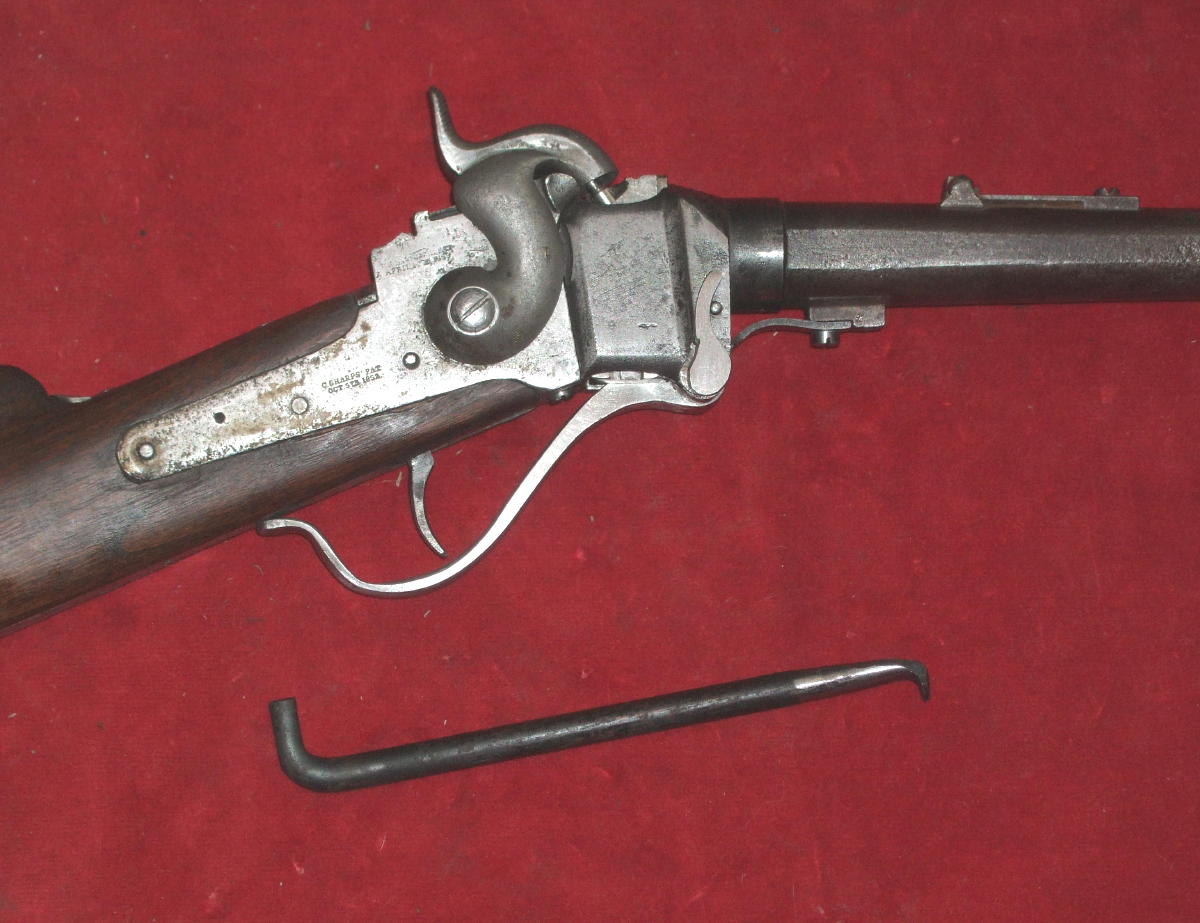
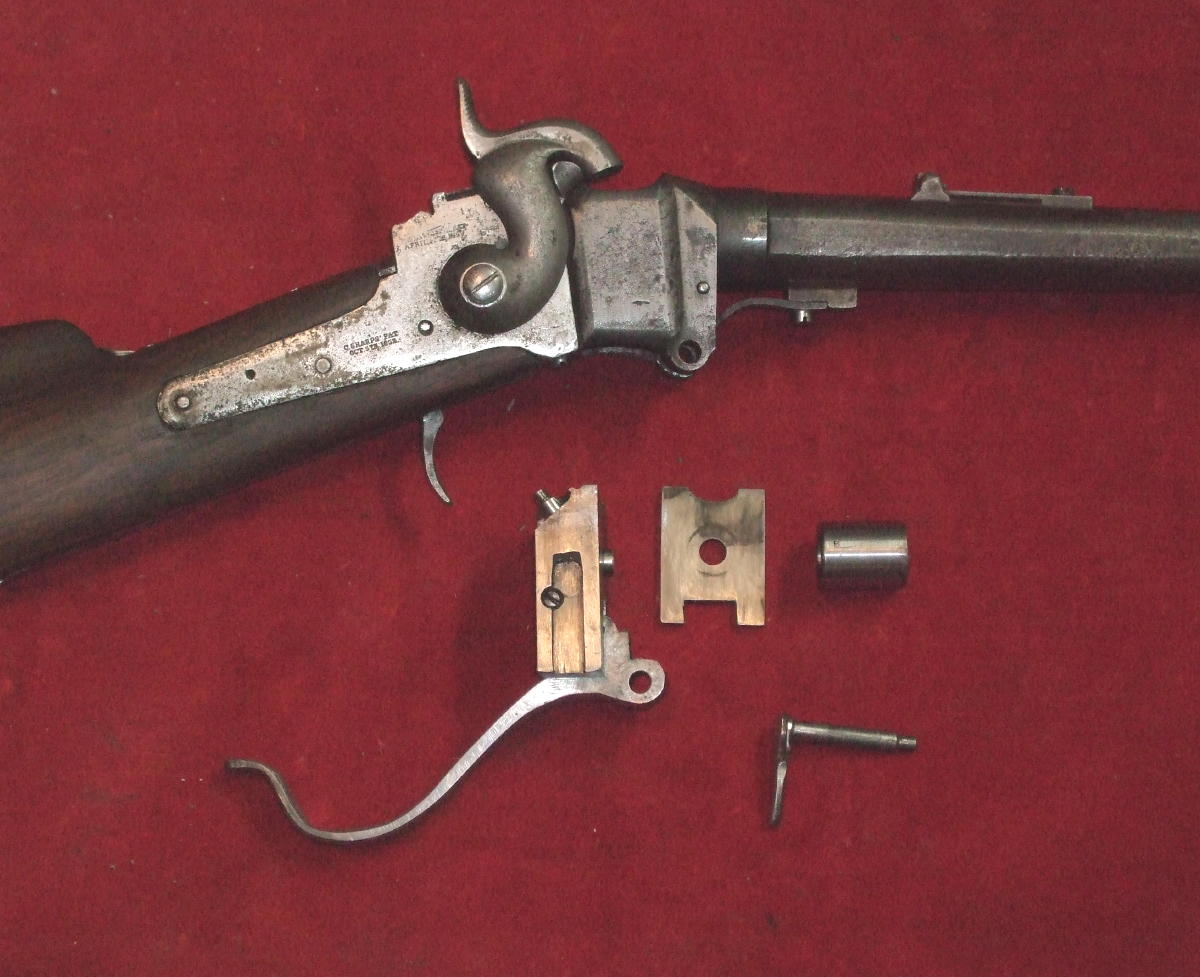
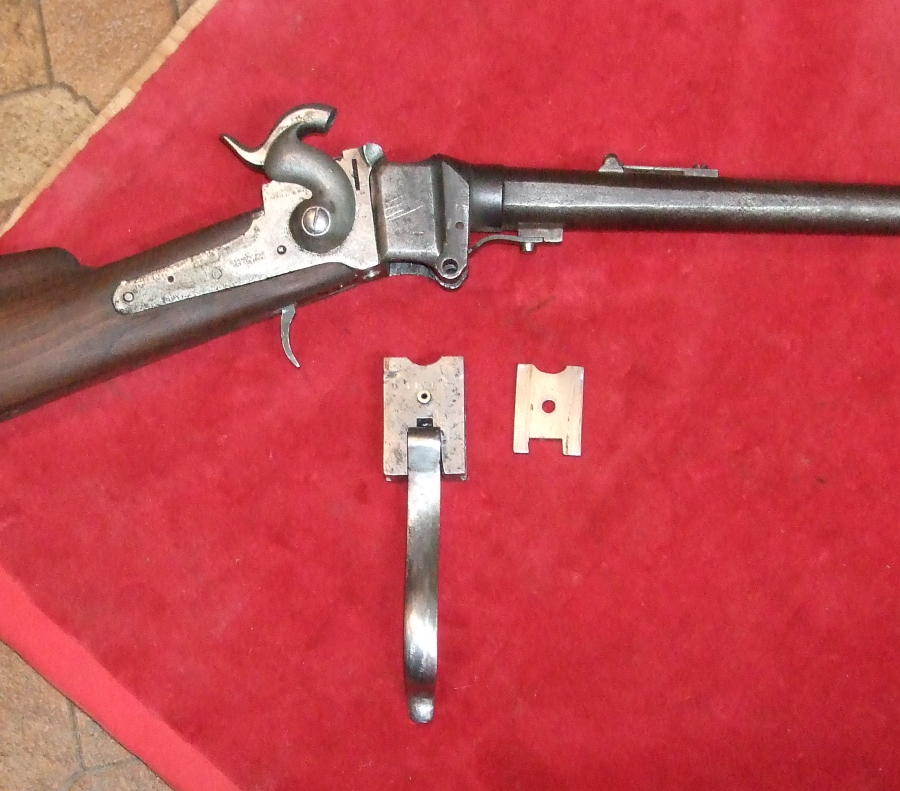
Last edited:
mooncoon,
Thanks for posting a pics of your chamber tool. Nice job on the breech block.
My understanding is the chamber sleeve (bouching) was not meant to move upon firing but was periodically adjusted to the rear of the chamber to be tight against the breech block plate which moved ahead when the gun was fired.
From Sellers book:
“Another of the unknown tools during the early percussion period of the Sharps rifles is the “bouching clamp and rod.” This tool was used for adjusting the head space of the guns. It was inserted into the front of the chamber and engaged the front edge of the bouching. The breechblock was closed after the insertion of the bouching clamp. The bouching rod was inserted through the muzzle and held the bouching clamp tight against the chamber while the bouching rod was tapped, forcing the bouching back tight against the face of the breechblock.”
I am posting photos for your amusement, of my New Model 1859 showing the not often seen pellet primers in their charging tube about to be inserted into the magazine.
Regards,
Powderman
Thanks for posting a pics of your chamber tool. Nice job on the breech block.
My understanding is the chamber sleeve (bouching) was not meant to move upon firing but was periodically adjusted to the rear of the chamber to be tight against the breech block plate which moved ahead when the gun was fired.
From Sellers book:
“Another of the unknown tools during the early percussion period of the Sharps rifles is the “bouching clamp and rod.” This tool was used for adjusting the head space of the guns. It was inserted into the front of the chamber and engaged the front edge of the bouching. The breechblock was closed after the insertion of the bouching clamp. The bouching rod was inserted through the muzzle and held the bouching clamp tight against the chamber while the bouching rod was tapped, forcing the bouching back tight against the face of the breechblock.”
I am posting photos for your amusement, of my New Model 1859 showing the not often seen pellet primers in their charging tube about to be inserted into the magazine.
Regards,
Powderman
Attachments


Last edited:
My understanding is the chamber sleeve (bouching) was not meant to move upon firing but was periodically adjusted to the rear of the chamber to be tight against the breech block plate which moved ahead when the gun was fired.
I am posting photos for your amusement, of my New Model 1859 showing the not often seen pellet primers in their charging tube about to be inserted into the magazine.
Regards,
Powderman
That definitely describes the way mine works; the bouching slides back with the first shot and stays there.
My lock plate was made for a pellet primer but the mechanism was missing. I was able to find pictures of the components and made the pieces and while they "fill the holes", they do not work. The components are fiddly to make and a major challenge to make in a fashion that works. The pellet mechanism works off of the hammer and with crud or rust would probably make the gun less reliable of firing with or without the pellets. I think that is why most of the guns with them had the mechanism removed. It definitely took a bunch of cogitating to figure out out the pieces worked, in the absence of a working one to examine.. Also I suspect that most people do not realize that the pellets were actually flat discs rather than BB shaped
cheers mooncoon
The straight breech Sharps percussion guns had a cut off in the priming mechanism that kept the pellets in the magazine so that a musket cap could also be used. The slant breech Sharps did not have this cut off.
After the war the US Government converted over 30,000 percussion guns to metallic cartridge. Many more were privately converted by Sharps as well as others. I suspect a lot of the priming mechanisms were removed during the conversions.
Regards,
Powderman
After the war the US Government converted over 30,000 percussion guns to metallic cartridge. Many more were privately converted by Sharps as well as others. I suspect a lot of the priming mechanisms were removed during the conversions.
Regards,
Powderman

The straight breech Sharps percussion guns had a cut off in the priming mechanism that kept the pellets in the magazine so that a musket cap could also be used. The slant breech Sharps did not have this cut off.
After the war the US Government converted over 30,000 percussion guns to metallic cartridge. Many more were privately converted by Sharps as well as others. I suspect a lot of the priming mechanisms were removed during the conversions.
Regards,
Powderman
I have an antique 1863 Sharps that was converted to 50-70 post war. I seem to recall the primer feed system is still there. I’ll check it.






















