You are using an out of date browser. It may not display this or other websites correctly.
You should upgrade or use an alternative browser.
You should upgrade or use an alternative browser.
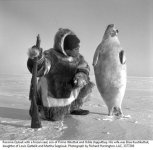
1953 Photo
- Thread starter tiriaq
- Start date

- Location
- WMU248 near Edmonton
nice, enfield calvary carbine

I knew an Inuk who had an old family rifle still in serviceable condition - a Long Lee Enfield. He also had a Winchester M70 in .22Swift made in the '40s. Someone borrowed it and bulged the barrel underneath the integral front sight ramp.
About the LEC: I wonder how it got north.
Richard Harrington travelled through the Eastern Arctic in the early '50s and took many remarkable photographs. I think this one was taken in the Iglulik area.
About the LEC: I wonder how it got north.
Richard Harrington travelled through the Eastern Arctic in the early '50s and took many remarkable photographs. I think this one was taken in the Iglulik area.
- Location
- East Kootneys
That's what she said!........That is one stiff Seal

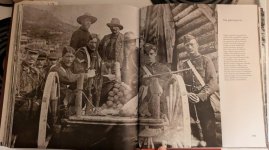
Hi Tiriaq. The Yukon Field Force brought up a few carbines for the Yukon Gold Rush 1899. There still is one in the museumI knew an Inuk who had an old family rifle still in serviceable condition - a Long Lee Enfield. He also had a Winchester M70 in .22Swift made in the '40s. Someone borrowed it and bulged the barrel underneath the integral front sight ramp.
About the LEC: I wonder how it got north.
Richard Harrington travelled through the Eastern Arctic in the early '50s and took many remarkable photographs. I think this one was taken in the Iglulik area.
up there so maybe they were old stock released from RCMP or M&D sources. John
I'm in Dawson City and hope to go to the museum and get a few pictures of the various rifles including this one and post them to this thread once things settle down with the mining season.Hi Tiriaq. The Yukon Field Force brought up a few carbines for the Yukon Gold Rush 1899. There still is one in the museum
up there so maybe they were old stock released from RCMP or M&D sources. John

Hi Tiriaq. The Yukon Field Force brought up a few carbines for the Yukon Gold Rush 1899. There still is one in the museum
up there so maybe they were old stock released from RCMP or M&D sources. John
The RNWMP got the carbines from the M&D in 1914 and I believe I've read they were retained for drill and surplused around the 60s, bit late for the photo.
I'm reading that when the Yukon Field Force left in 1899, they also left their arms with the Dawson Volunteer Militia Rifle Coy. If I were to hazard a guess, those arms were probably sold off much earlier and locally as they were disbanded in 1905.
Hi Pelcat. The YFF was a special multi unit force consisting of volunteers. They received their weapons from the M&D. A small amount of modified LEC carbines ( sling swivels added) went along with the Mk I LE rifles. The Dawson Museum has the original pics on hand and hopefully "bros" will take copies and post them on this thread. Interesting that many of the rifles were held in store and finally returned to the M&D 1912. List of serials of rifles and some 20 carbines listed in the AppendicesThe RNWMP got the carbines from the M&D in 1914 and I believe I've read they were retained for drill and surplused around the 60s, bit late for the photo.
I'm reading that when the Yukon Field Force left in 1899, they also left their arms with the Dawson Volunteer Militia Rifle Coy. If I were to hazard a guess, those arms were probably sold off much earlier and locally as they were disbanded in 1905.
of "Defending the Dominion". It is true that 1000 LEC were aquired for the RNWMP in 1914 but they went to active police depots and stations for their use in policing. All these carbines were butt stamped with a special RNWMP logo stamped with a
inventory number. Therefore the 'Dawson' carbines would not have the oval stamp. It is also my assumption that the carbine modification may also have been used for issue to artillery units in the Boer War. JOHN
The photo was taken in the Eastern Arctic - a long way from the Yukon. Perhaps RNWMP carbines were used in NWT detachments. The northern detachments did use a variety of arms that were not current issue. Perhaps they (LEC) were available to RCMP Special Constables. Don't know if Pacome Qulaut had a RCMP connection.
Hi JohnHi Tiriaq. The Yukon Field Force brought up a few carbines for the Yukon Gold Rush 1899. There still is one in the museum
up there so maybe they were old stock released from RCMP or M&D sources. John
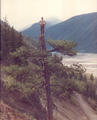
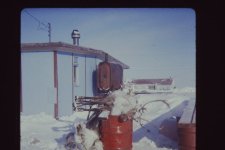
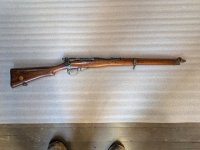
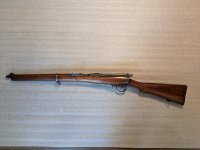
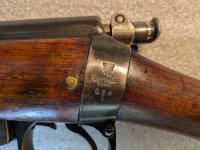
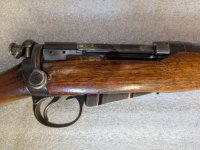
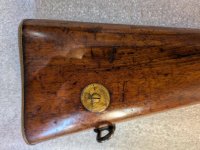
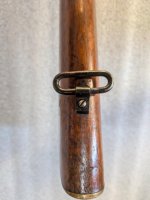
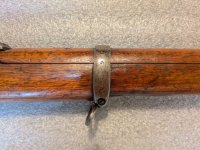
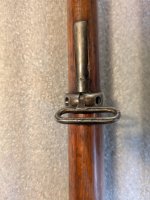
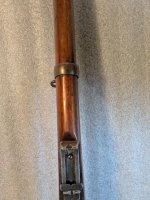
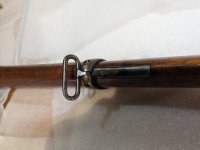
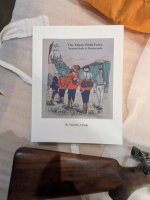
I went to the museum in Dawson City today and took some photos of the rifle you're talking about.
I spoke with the curator and she told me that the son of the member who was in the Yukon Field Force donated the rifle so that must have been a long time ago, there was only one other Lee Enfield there that looks like it was found in the Yukon River.
The right side of the receiver is buggered a bit with two threaded holes and the stock is relieved in that area a bit, probably to accommodate a peep site I guess. There are no specific ownership markings on that gun anywhere (without removing the fore-stock) to tie it to any sort military unit. I honed in the area of the sling swivels, that was what you were mainly interested in.
Attachments
-
 1000005128.jpg155 KB · Views: 11
 -
 1000005147.jpg162.4 KB · Views: 8
 -
 1000005142.jpg116 KB · Views: 7
 -
 1000005129.jpg145.3 KB · Views: 7
 -
 1000005130.jpg136.8 KB · Views: 6
 -
 1000005131.jpg73.1 KB · Views: 6
 -
 1000005135.jpg154.8 KB · Views: 6
 -
 1000005136.jpg103.4 KB · Views: 6
 -
 1000005138.jpg196.9 KB · Views: 6
 -
 1000005150.jpg87.4 KB · Views: 9
 -
 1000005166.jpg90.7 KB · Views: 11