













































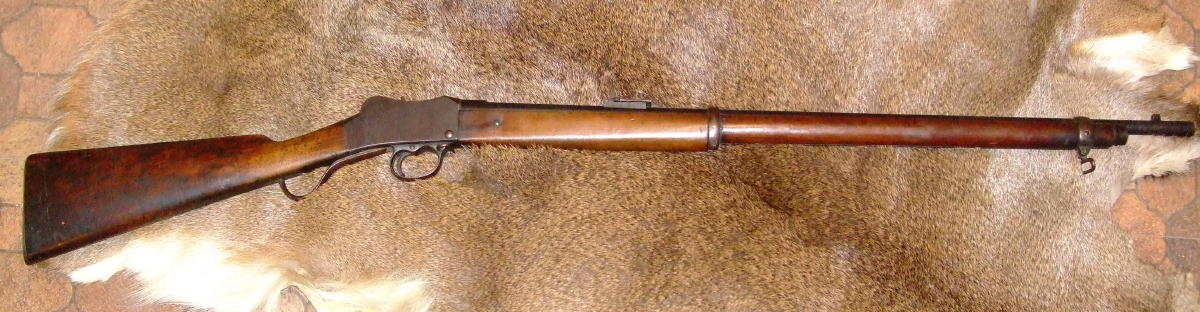
From time to time I have been intrigued by the 22 Morris shell also known as the 290-230 cartridge (unless I have reversed the numbers). It came out in 1883 and was used in service rifle with a removable liner and I presume allowed troops to practice indoors with their service rifles. It also was used in scaled down Martini rifles I presume much like we would use a 22 rimfire today. A year or two ago, I got lucky and picked up one of the small martini rifles in that caliber and finally got around to making some shells for it and shooting the gun.
The original shell used a heeled bullet and I did not want to swage a heal on my bullets as well as did not want to open the chamber slightly to accept an inside lubed bullet. Result was that I breach seated the slugs then pushed in a "blank" behind it. The original bullet was only 37 grains and in my trials, anything over 40 grains was not stable but tumbled badly. I loaded the shells with disgusting smokeless powder held in place with a pinch of dryer lint . The cartridges themselves I made from much shortened 22 Hornet shells reformed into a necked case and fireformed to match the chamber of my gun. The original cartridge came in a short and a long version and because of breach seating, I more or less copied the short version of the cartridge.
For slugs, I had some jacketed 50 grains slugs and a mold for 50 grain lead bullets. Made up a sort of collet that allowed me to put the slugs in the lathe and shorten them to 40 grains. I was expecting the jacketed bullets to be more accurate that the cast ones but while accuracy is still very much a work in progress, the lead bullets performed much better than the jacketed ones. With the lead slugs and 5 shots I had 2 pairs of bullets (each pair grouped about 1" apart) and separated by 2 or 3 inches plus one flier.
I am suspicious that the variation was caused by my trimmed shells having different internal volumes and therefore different velocities. The original shell had I think about 3 grains of black powder in it and I want to try loading with that next. Also have to admit the cartridge is a very fiddly one to load and shoot breach seated but on the other hand I can get 4000+ shots per lb of powder :>)
cheers mooncoon
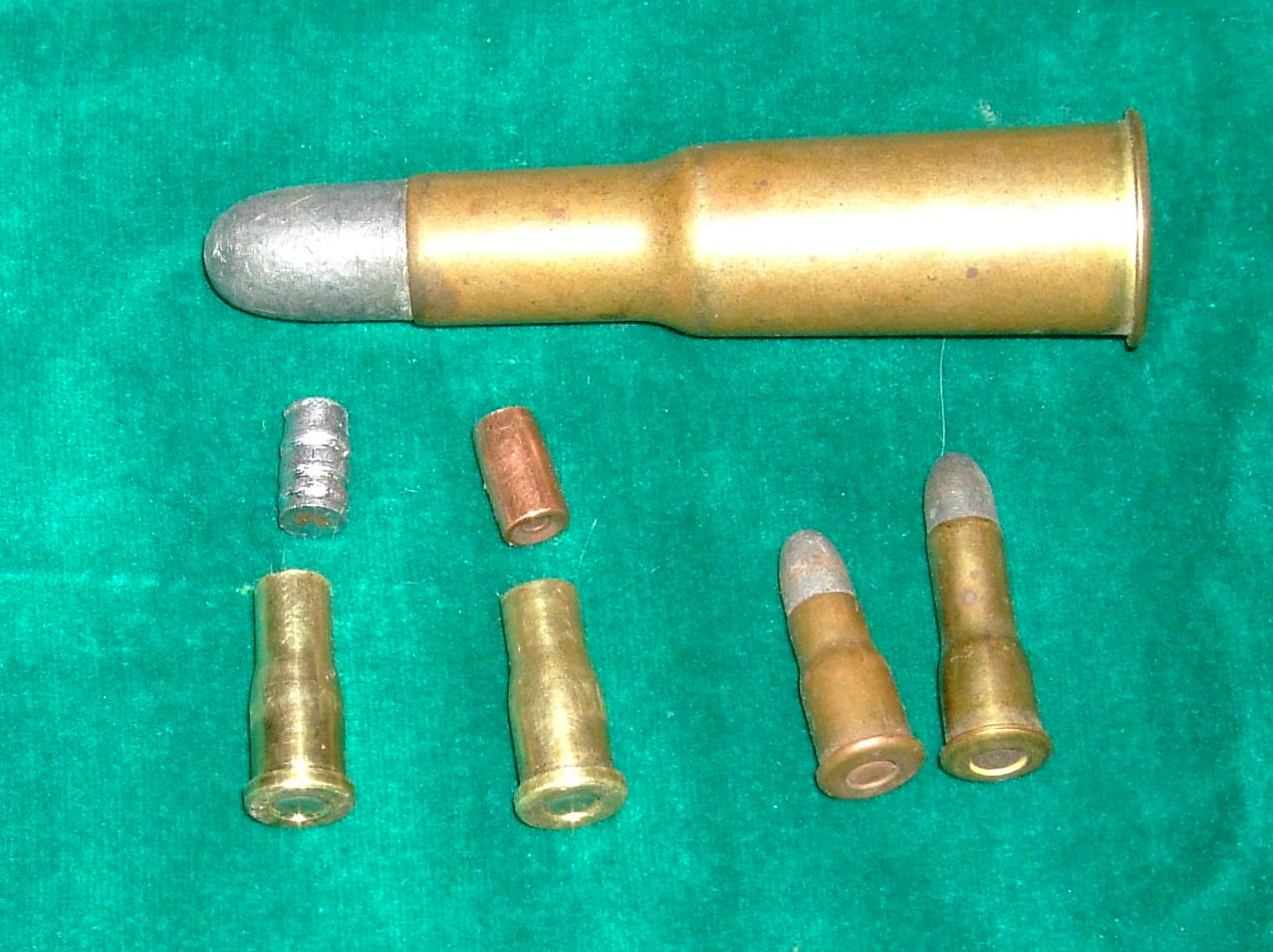
The original shell used a heeled bullet and I did not want to swage a heal on my bullets as well as did not want to open the chamber slightly to accept an inside lubed bullet. Result was that I breach seated the slugs then pushed in a "blank" behind it. The original bullet was only 37 grains and in my trials, anything over 40 grains was not stable but tumbled badly. I loaded the shells with disgusting smokeless powder held in place with a pinch of dryer lint . The cartridges themselves I made from much shortened 22 Hornet shells reformed into a necked case and fireformed to match the chamber of my gun. The original cartridge came in a short and a long version and because of breach seating, I more or less copied the short version of the cartridge.
For slugs, I had some jacketed 50 grains slugs and a mold for 50 grain lead bullets. Made up a sort of collet that allowed me to put the slugs in the lathe and shorten them to 40 grains. I was expecting the jacketed bullets to be more accurate that the cast ones but while accuracy is still very much a work in progress, the lead bullets performed much better than the jacketed ones. With the lead slugs and 5 shots I had 2 pairs of bullets (each pair grouped about 1" apart) and separated by 2 or 3 inches plus one flier.
I am suspicious that the variation was caused by my trimmed shells having different internal volumes and therefore different velocities. The original shell had I think about 3 grains of black powder in it and I want to try loading with that next. Also have to admit the cartridge is a very fiddly one to load and shoot breach seated but on the other hand I can get 4000+ shots per lb of powder :>)
cheers mooncoon
























