223 Tavor Issues

Anpaul

Regular
Rating - 100%
530   0   0
Location
Edmonton
New guy disclaimer, but I'm hoping you guys can help me zero in on the root issue quickly:

I'm currently using a Lee Turret Press to reload 223 for my Tavor. 55gr Campro with 25.3 gr of CFE223 using mixed brass. On two separate occasions, I've had a round chamber and it seems the projectile is being pushed OUT of the casing. Primer shows a good strike, but the powder has spilled out in the chamber (obviously not ignited). Bullet needs to be knocked out of the chamber.

Ejection is inconsistent with rounds ejecting from 2-5 o'clock. Several casings have ejected back and ended up flipped 180 degrees on top of the magazine.

Neck tension seems fine and the rounds are crimped. Powder charge spot checks between 25.2-25.4. I'm wondering about powder or primer contamination.

Thoughts?
 
Is the first round always firing fine? How are you checking the neck tension? What I used to do was press the newly made round against my bench to see if I had sufficient crimp.

I'm wondering if the recoil was causing the other rounds in the mag from coming loose?
 
Using mixed brass can cause variations in bullet grip due to annealing, neck thickness etc.

Did the primer actually go off or did chambering and bullet inertia drive the bullet into the rifling.

Did you trim all the cases to the same OAL.

Are you using a magnum primer with this double base ball powder?

How are you measuring your cartridge case headspace length, meaning a simple case gauge or a Hornady cartridge case headspace gauge. If the case is a smidgen too long bolt inertia is forcing the case into the chamber and effecting ignition. If the case is too short this can also effect ignition. If your primers are not seated correctly this can cause faulty ignition.

Reloading dies and chambers vary in size and on a semi-auto the case diameter should be .003 to .005 smaller in diameter than its fired diameter.

Using mixed brass with different "spring back" rates will effect case diameter and shoulder bump.

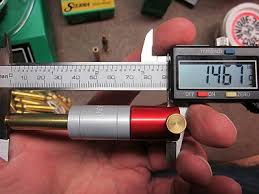
Below I use a Hornady gauge to check the "fired" length and its resized length. The fired headspace length is 1.4765 and I then size and bump the shoulder back .003

H0SXHH8.jpg


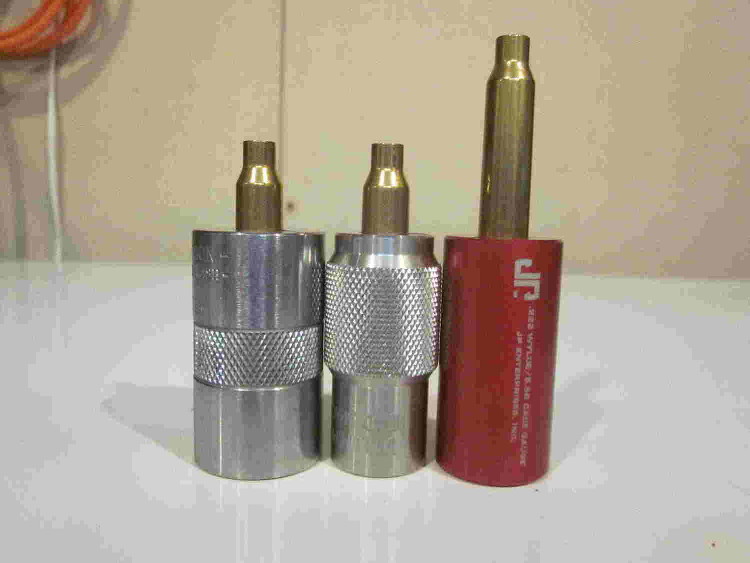
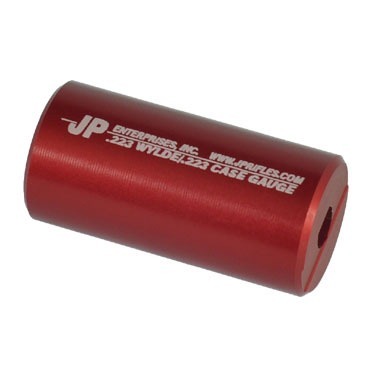
Below case gauges like the Wilson and Dillon left and center do not check case diameter, the JP Enterprise gauge is made with a finish chamber reamer and "DOES" check case diameter.

KSB3ZvP.jpg


My main use of the JP Enterprise gauge is a final "plop test" of loaded rounds, if the case falls all the way into the gauge and falls out when inverted the ammo is good to go.

PPHWn7L.jpg


I'm reloading for three different AR15 rifles and one belongs to my son, and "dad" isn't going to be blamed for bad ammo.

NOTE, a small base die will size the case diameter .002 to .003 smaller than a standard die. This same small base die will also push the case shoulder back .002 to .003 more than a standard die. Also commercial .223 brass may not be made to the same standards as military brass. Meaning the thickness in the base of the case and brass hardness.

I buy bulk once fired military Lake City brass and size it with a small base die, this brings the case back to minimum dimensions. And depending on your chamber and die mixed brass can and will cause problems.

P.S. If you made your ammo on the Jewish sabbath, God might be punishing you. :evil:

"According to halakha (Jewish religious law), Shabbat is observed from a few minutes before sunset on Friday evening until the appearance of three stars in the sky on Saturday night. Shabbat is ushered in by lighting candles and reciting a blessing." :stirthepot2:

Sorry the Devil made me do it.:)
 
Last edited:
From the user manual p. 20 "IWI does not recommend using hand loads, reloads or remanufactured ammunition..."

And if everyone followed legal recommendations by the manufactures to prevent lawsuits no one would reload.

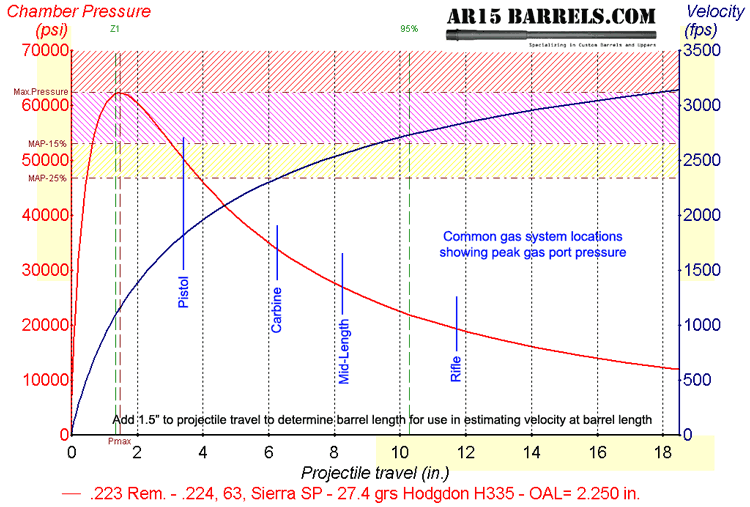
All anyone need to know is what is the desired port pressure for that semi-auto rifle and the best powders to use for this range of port pressure.
As you can see below pistol and carbine length gas systems have higher port pressure and the rifle takes more of a pounding.

223plot.gif


5.56/233 reloading and the AR vs Tavor ( always remember that Google is your best friend for getting information, it searches the entire internet and not just one forum)
http://www.prepperforums.net/forum/rifles-sks-ar-ak-long-guns/28921-5-56-233-reloading-ar-vs-tavor.html
 
Last edited:
Thanks for the feedback everyone.

1) Neck tension was checked by pushing the round down on the workbench to test for movement. None that can be seen. That said, I think I may have been seating the bullet too far into the case, as none of the cannelure was visible above the case. I've got a feeling that the crimp may have been missing the cannelure altogether.

2) OAL was not checked on every cartridge. Most were once fired (removed the crimp), so I spot checked a few OAL, but didn't check each one. I'm looking into case gauges, so thanks for the tip on the JP. Clearly an extra step I was over looking in the case prep process. Any preferred case trim options? I have a Lee Quick Trim, but it doesn't seem very efficient.
 
It looks like the case was not crimped in the bullets channular and your case neck may have bulged larger than chamber neck diameter.

I do not crimp my AR15 loads, I use a expander .0025 smaller than bullet diameter to increase bullet grip.

Do not take this the wrong way but I'm 67 and have been reloading for over 47 years and the reason I reload is to make better ammo than factory.

I inspect the case at every step of the reloading process making sure everything is 100%

Bottom line you should have found the problem before the case was chambered in your rifle.

I wear glasses and have chronologically gifted eyesight and have several magnifying glasses on my bench to inspect cases.

Get a Hornady cartridge case headspace gauge and measure your fired and resized cases for headspace length and proper shoulder bump.

And I doubt some of your loaded rounds would have fit in a JP Enterprise case gauge due to the bullet seating depth and crimp area. Meaning the crimp would have caused a bulge below the crimp.

Food for thought, I spent half my life as a aircraft mechanic and the other half as a inspector and the first thing we learned in aircraft inspector school was the following.

97% of all aircraft crashes are due to human error and only 3% are from mechanical failures.

So slow down and inspect the case at each step of your reloading process, you have 60,000 to 65,000 psi going off next to your face. So go slow and be safe when reloading.
 
The tavor has a very violent action, and thus a round needs heavy neck tension, at least from my experience. I have loaded several thousand rounds for my tavor and never an issue. I would suggest investing in a Lee factory crimp die for 223. Helps a lot and will also help create consistant neck tension if there is a varience in case length. I personally trim all 223 casings everytime I reload them, but then again I also have an electric press mounted trimmer which allows me to do that without losing my mind.
 
I'm using a Lee Classic cast turret press with factory crimp die as well. It feeds both my Tavor and Colt IUR with no issues. I also use the Hornady case comparator to ensure appropriate COL.
 
Can lead to split necks after firing yes. I found that a generally mild to medium is sufficient for crimp. As long as your case neck is sized properly, which is also why cases need to be trimmed, they will all have a bullet seater at the same depth.
 
Does a heavy crimp reduce brass life faster than a light crimp?

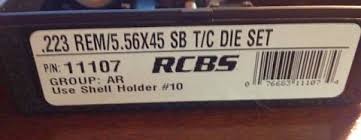
RCBS AR series small base dies have a taper crimp and if you reduce the expander diameter you increase the bullet grip/neck tension and a crimp is not needed.

When I first started loading for my AR15 rifles I used a light crimp just to streamline the case mouth just for reliable feeding. But after reading about accuracy loads for my A2 HBAR I stopped crimping all together.

If your loaded case passes the bullet push test and doesn't move when chambered you have enough bullet grip.
 
Does a heavy crimp reduce brass life faster than a light crimp?

Well by that I mean a normal crimp, which i not light. No need to excessively crimp the round though.

No clue if it reduces brass life. The semi guns chew the cases pretty bad anyway.
 
I have my x95 runnung my own reload with no issues. Just follow all the standard steps to prepare the cases and then load. Should not have any issues. I never do heavy, but just firm crimp enough to hold the bullets in place.
 
Okay, all this is good as far as neck tension and case sizing goes but what about the OP's issues with 2 stuck bullets and erratic ejection? The stuck bullets seem to me to be a seated length issue (seated long & getting jammed) as supposed adequate neck tension should rule out bullet slide while chambering. Maybe just a varying anomaly?

How about the ejection? Aside from unsuitable or faulty powders or primers giving erratic ignition, can case condition / size / working capacity have enough effect to exhibit the ejection patterns he's seeing?

Other than hard-to-F-up 7.62's, I dont have a lot of experience loading s/a rifles - not enough to have seen these issues & had the opportunity to work them out. Would be nice to know if someone can diagnose.

Rooster
 
I think the issues are with case prep and powder charge.
Try use small base die to size the brass, trim them to length. Oal around 2.2" and cfe 223 powder charge don't be lower than 25.5gr.

Loading 223 with cfe 223 is almost like loading pistol round, other than the rifle case prep steps. Just make sure don't skip steps or random check. Especially at the beginning, pay full attention to each case.
 
I load 27.0 CFE 223 at 2.2 with a hdy 55 BT-FMJ and pressure is fine.

Maybe your load is just too mild and doesnt cycle well. The tavor is a mil rifle balanced for full power rounds.
 
Okay, all this is good as far as neck tension and case sizing goes but what about the OP's issues with 2 stuck bullets and erratic ejection? The stuck bullets seem to me to be a seated length issue (seated long & getting jammed) as supposed adequate neck tension should rule out bullet slide while chambering. Maybe just a varying anomaly?

How about the ejection? Aside from unsuitable or faulty powders or primers giving erratic ignition, can case condition / size / working capacity have enough effect to exhibit the ejection patterns he's seeing?

Other than hard-to-F-up 7.62's, I dont have a lot of experience loading s/a rifles - not enough to have seen these issues & had the opportunity to work them out. Would be nice to know if someone can diagnose.

Rooster

New guy disclaimer, but I'm hoping you guys can help me zero in on the root issue quickly:

I'm currently using a Lee Turret Press to reload 223 for my Tavor. 55gr Campro with 25.3 gr of CFE223 using mixed brass. On two separate occasions, I've had a round chamber and it seems the projectile is being pushed OUT of the casing. Primer shows a good strike, but the powder has spilled out in the chamber (obviously not ignited). Bullet needs to be knocked out of the chamber.

Ejection is inconsistent with rounds ejecting from 2-5 o'clock. Several casings have ejected back and ended up flipped 180 degrees on top of the magazine.

Neck tension seems fine and the rounds are crimped. Powder charge spot checks between 25.2-25.4. I'm wondering about powder or primer contamination.

Thoughts?
Thanks for the feedback everyone.

1) Neck tension was checked by pushing the round down on the workbench to test for movement. None that can be seen. That said, I think I may have been seating the bullet too far into the case, as none of the cannelure was visible above the case. I've got a feeling that the crimp may have been missing the cannelure altogether.

2) OAL was not checked on every cartridge. Most were once fired (removed the crimp), so I spot checked a few OAL, but didn't check each one. I'm looking into case gauges, so thanks for the tip on the JP. Clearly an extra step I was over looking in the case prep process. Any preferred case trim options? I have a Lee Quick Trim, but it doesn't seem very efficient.

Does a heavy crimp reduce brass life faster than a light crimp?

The OPs last question above and lack of gauges in the other posts tells a story.

1. If the Campro bullets are copper plated the crimp can be screwing up neck tension. Plated pullets should only have a slight taper crimp.
2. Chambered rounds did not go off and the bullet was jammed into the rifling spilling powder in the chamber. Meaning loose bullet grip or bullets seated too long.
3. Possibly a bulge below the case neck crimp effecting chambering and faulty primer ignition. And if the bulge is squeezed down during chambering the crimps effect is reduced.
4. Were the bullets seated and crimped in the same operation and bulged the neck.
5. What is the bullet and dies expander diameter. Again possible neck tension problem.
6. There is a difference between crimping a jacketed bullet and a copper plated bullet.
7. Was the "mixed" brass all trimmed to the same length.
8. I don't have the cases in "my" hands so these are just a few guesses.

And RCBS AR series dies are taper crimp dies. (T/C = taper crimp)

rlWf7Uw.jpg
 
Last edited:
Back
Top Bottom