









































.280 Ross M1910

Skaal-tel

Regular
Rating - 100%
4   0   0
Location
Ontario
Hey gun nutters.

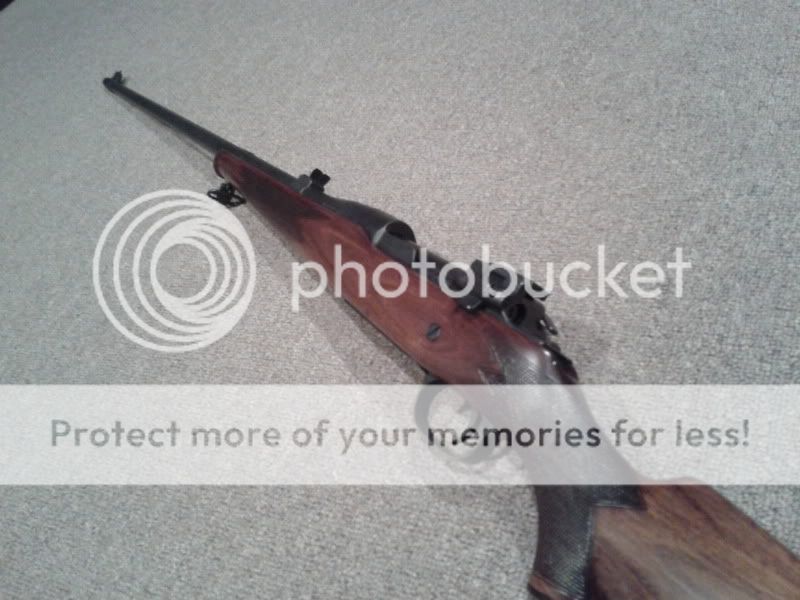
What I have to share today are a few pictures of my dad's Ross rifle.

The story goes that my dad got this gun from an older gent in Quebec in the mid 70s, for hunting.

My dad had all the blue-ing redone, and he sanded and linseed+varethaned the stock himself.

It's no WW2 gun so I'm not too broken up about it. He did what looks to me like an excellent job. He's also kept it spotless clean and oiled it maybe once every 10 years.

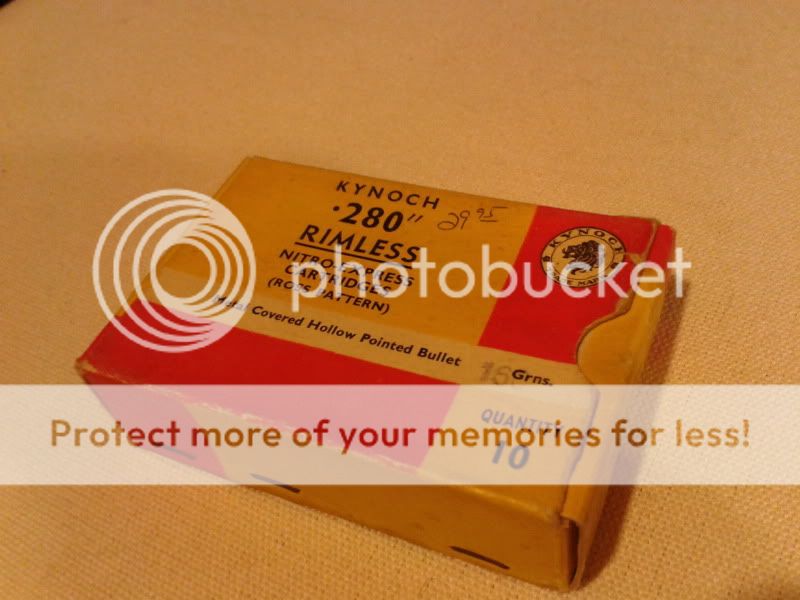
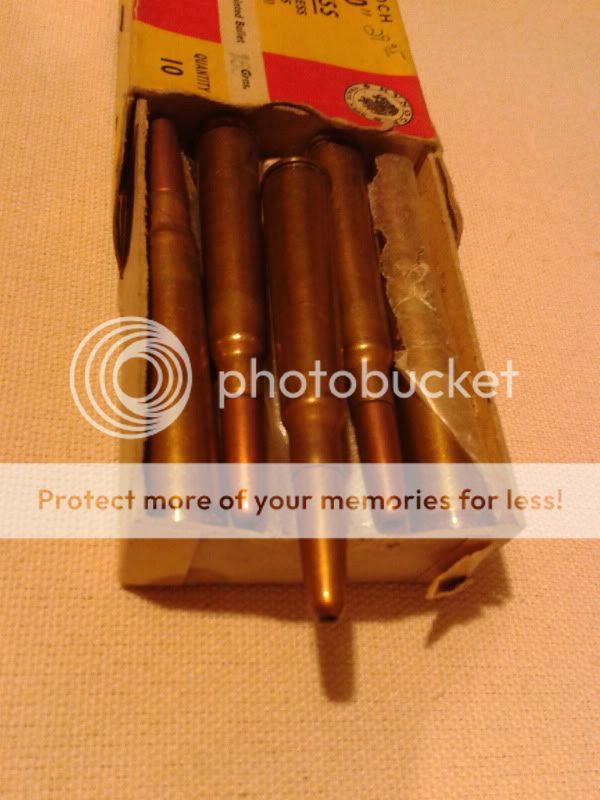
The gun falls into my hands now, it hasn't been shot in more than 25 years but I aim to change that. He even held onto some ammunition, spent brass and failed primer rounds.

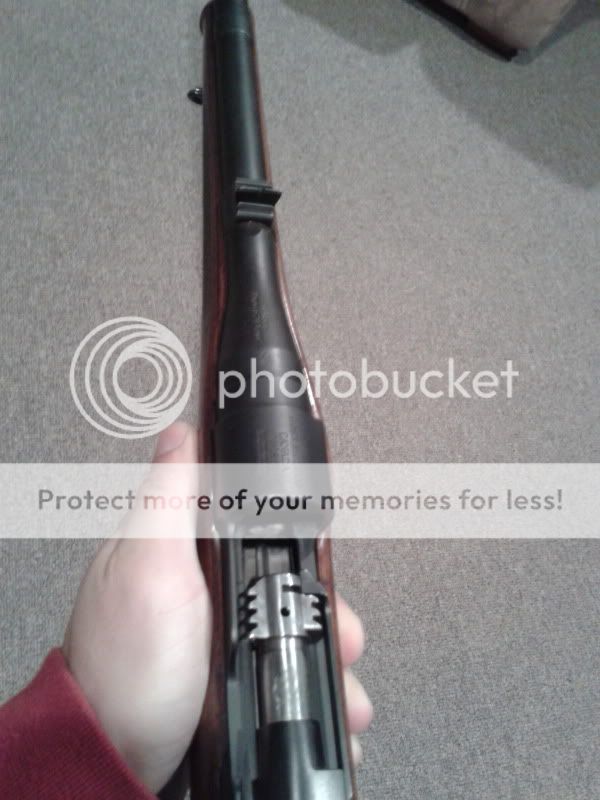
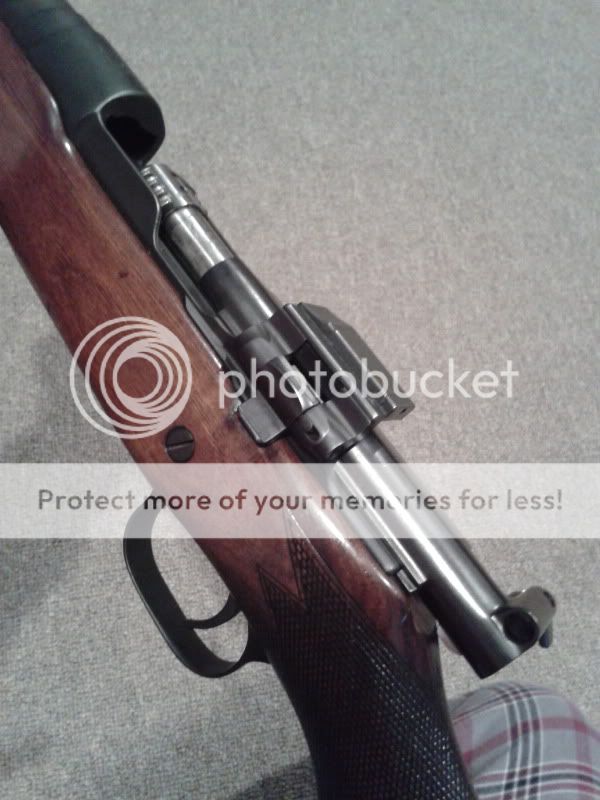
Here are some pics :)
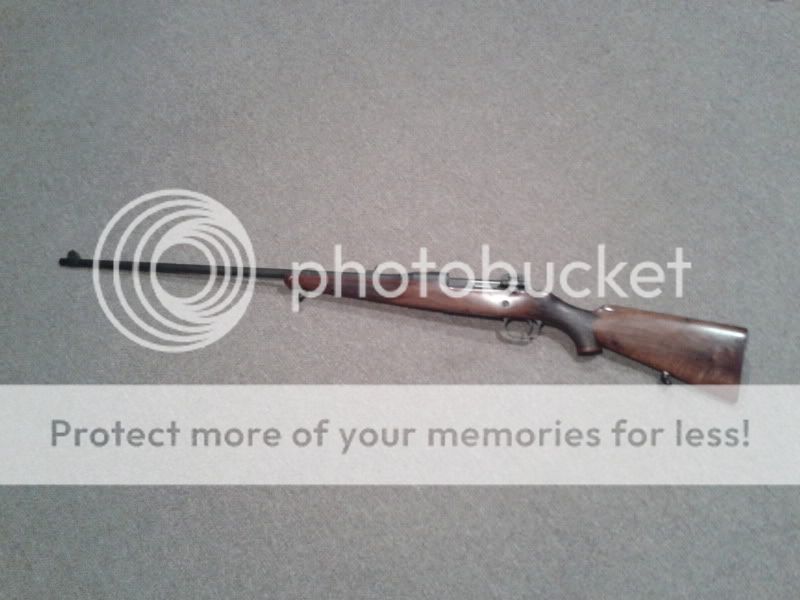
2012-09-23141720_zps4d3c2b0a.jpg


2012-09-23141657_zpscca7b145.jpg


2012-09-23141741_zps3527a009.jpg


2012-09-23141818_zps0a28f4c6.jpg


2012-09-23142045_zps61e9155f.jpg


2012-09-23142131_zps55791fe2.jpg


30 bucks for a box of 10.. even in the 70s ammo for this thing wasn't exactly cheap!

My dad remembers this thing kicking like a horse. He also remembers cutting the head off a coyote with one round.. :eek:

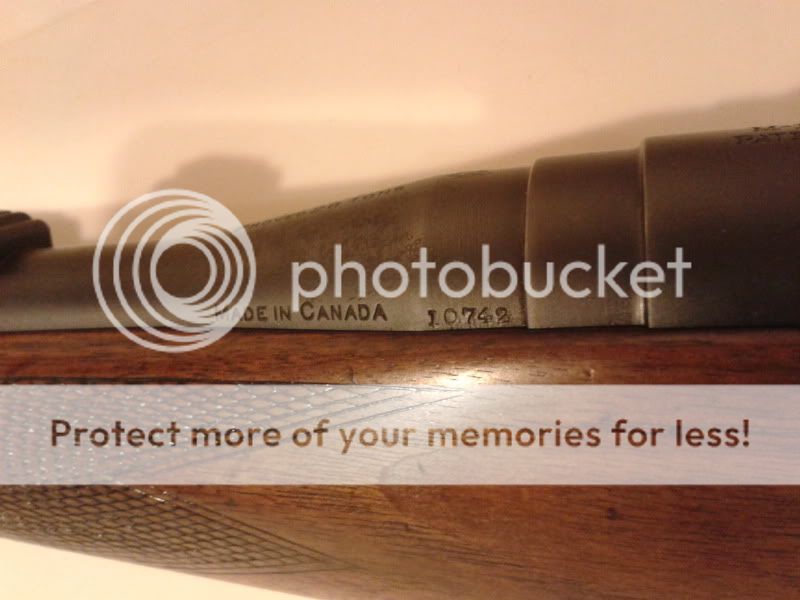
The only serial number I found was a 22 stamped underneath the bolt head.

Any thoughts on 1: finding new ammunition
2: General value / condition?
 
What a beauty!.
Your father did a fine job on the stock ... not oversanded, as so many are.
Beautifull rifle. No clue as to it's $value, but were it mine?, never to be sold ... at any price.
Going to be a wee bit inconvenient to feed though.

J. Donnelly's book: "Handloaders manual of cartridge conversions" has this to say. (dated from 1987)
.280 Ross:
Bullet dia. .287
Make from: .280 Ross (B.E.L.L.). .300h&h cases will also work if the belt is turned to .525" dia.. Anneal case, F/L size, and trim to length.
Case type: rimmed B/N
Case length: 2.58
Head dia.: .525
Rim dia.: .556
Neck dia.: .322
Neck legnth: .300
Case capacity: 77.38 (grains water)
Loaded length: 3.50
Load data suggests a 140gr spirepoint with 58.0 grains of 4895 for 3170 fps.

You mention having some failed to fire cartridges. If the firing pin strikes appear shallow, perhaps the bolt interior is gummed up after all these years. A soak in varsol will likely fix that.

If you get lucky, Smellie will pipe up, with his considerable knowledge of all things Ross.:)
 
Great rifle, I love the .280 Rosses. The refinish hurts value, but not as much as you would imagine - these are still very rare birds in nice condition with shootable bores.

Mine was drilled and tapped back in the 1930's and it now wears a Lyman Alaskan in red field style mounts. It's DEADLY with the right loads.

My brass came from Buffalo Arms (you might need a US address and go pick it up). I swage .270 bullets up to size in a home-made swaging die (I have a machine shop).

It's worth the effort though - very fine rifles. In any kind of nice condition, these are easily $1000+ rifles.

DSCN0395.jpg

DSCN0398.jpg
 
Hi, Skaal-tel!

You are sitting on what is quite possibly the finest sporting rifle ever made.

Note the rear sight: same sight all the way to 500, just allowing the sight to rise or fall within the sight notch. These things shoot FLAT. As Ross loaded the cartridge, it actually had a slight edge on the 7mm Weatherby Magnum, so it's no slouch.

If you are not already into handloading, now is the time to start. Cases can be made easily from .300 H&H Magnums and will do far better service than trying to reload very old brass (the stuff hardens from age and then splits). The ammo you have is Berdan-primed but absolutely correct for your rifle. Likely you will want to hang onto this ammo. BTW, check on the back of the box: Kynoch was licensed to use the RWS patents on non-corrosive primers from quite an early period. If your Dad has older cases headstamped REM-UMC, USC Co or WRA Co, these will be Boxer-primed and thus reloadable with our primers. RCBS lists the dies in their 55000 list, so they are available.

A great deal has been written about the .287" bullets needed for this rifle. That's odd, because all of the original ammunition I have here (which includes a 1913 box of George Gibbs made by King's Norton) has bullets of .284" or .285" diameter. Considering that modern bullet jackets are much softer than what they had 'way back then, and that lead is a plastic material.... and that this cartridge runs at 63,800 pounds NORMAL pressure, I would think the bases of the bullets are certainly being "kicked" hard enough to expand them. It should be fine to use ordinary 7mm bullets. The .280 Ross is the father of the 7x61 Sharp & Hart, grandfather to the 7mm Weatherby, great-grandfather to the 7mm Remington, great-great grandfather to the 7-08..... and it beats them ALL hollow.

Your rifle's serial number should be visible, just above the stock line, on the forward part of the Chamber of the barrel, on the left side, in very tiny numbers. ONLY true Factory Sporters were numbered like this, and, it seems, not quite all of them.

The Ross .280 rifles had special rifling which was supposed to last 5 times as long as regular rifling. Of course, they were using (very hot) Cordite in their ammunition. Your barrel should last your lifetime.

There are many stories from the old days about these rifles: 1-mile shots on mountain sheep, that sort of thing..... and most of them documented, too. Where the .280 Ross with its thin-jacketed bullets (designed to expand on lighter North American animals) fell down was when it was used against Lions and such. With our modern bullet selection, given that you are handloading, the rifle and cartridge should be good for anything in North America and ALMOST anything anywhere else, with the exception of the Big Five.

I note that your Bolt is assembled properly in your photo. There was a real problem with this bolt in that it could be assembled wrong, so you REALLY need to know what you are doing if ever you want to remove the bolt and put it back in. It is quite easy to throw the bolt out of adjustment and just as easy to put it back INTO adjustment. Once in the rifle, it CAN NOT get out of adjustment by itself. I would suggest that you pop over to milsurps dot com, get into their Military Knowledge Library (link through the Stickie at the top of the first-page Index for this Forum) and download your own copy of the 1913 Instruction Manual for the Ross Rifle.

Try the SEARCH function in this forum; lots of posts regarding Ross bolts. You NEED to know this. Serious.

Everybody asks about value. When you get something THIS nice....... and a family piece to boot......who cares about mere dollars?

It is a beautiful old rifle, one of the finest and most accurate sporters ever made...... and it's YOURS.

Thank your Dad very sincerely.
.
.
 
Last edited:
.
It's no WW2 gun so I'm not too broken up about it. He did what looks to me like an excellent job. He's also kept it spotless clean and oiled it maybe once every 10 years.

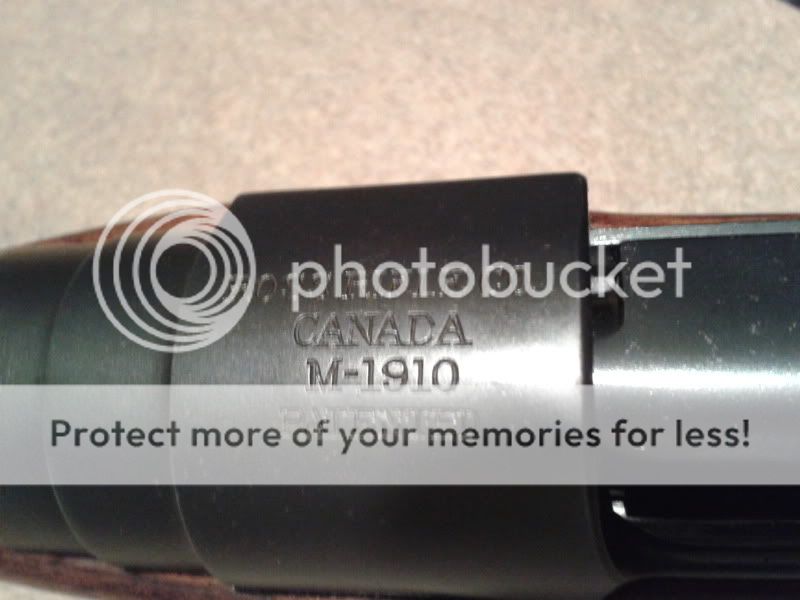
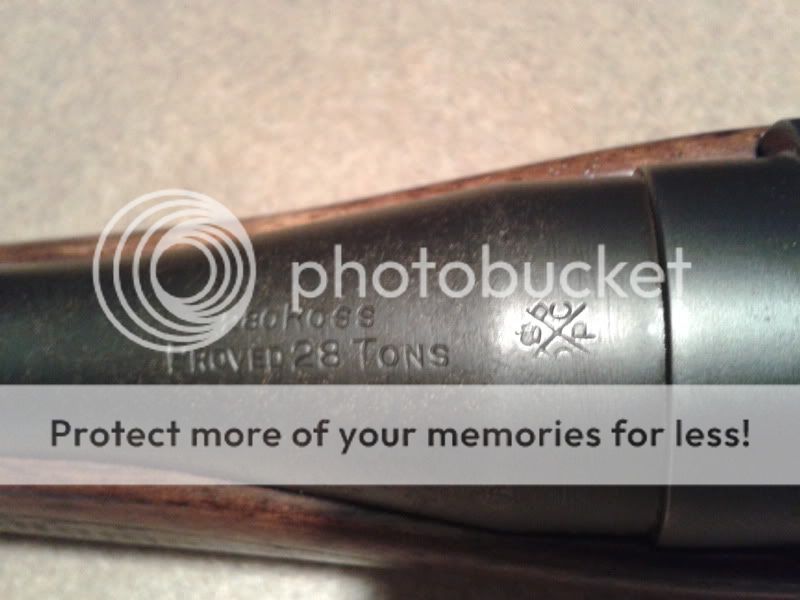
I think you SHOULD be concerned about it. The pictures are a bit fuzzy, but it looks like the Calibre is stamped on the barrel. This, and the .280 Calibre it is chambered for, plus a few other obvious pieces would indicate that this is a Ross Factory Sporter. If so, it is worth about FIVE times what a sporterized Ross Military 1910 rifle is worth.

Lets see a good close up of the stamping on top of the barrel, just back of the rear sight.
.
 
No need. It's a factory sportier - 100% for sure. NO military Rosses were ever made in .280 Ross and also the flush bottom metal is a dead give way. Much liek the one I have (pictured above), it's a nice old 1910-1914 era Canadian-built sporting rifle.
 
Great rifle, I love the .280 Rosses. The refinish hurts value, but not as much as you would imagine - these are still very rare birds in nice condition with shootable bores.

Mine was drilled and tapped back in the 1930's and it now wears a Lyman Alaskan in red field style mounts. It's DEADLY with the right loads.

My brass came from Buffalo Arms (you might need a US address and go pick it up). I swage .270 bullets up to size in a home-made swaging die (I have a machine shop).

It's worth the effort though - very fine rifles. In any kind of nice condition, these are easily $1000+ rifles.

DSCN0395.jpg

DSCN0398.jpg

Beautiful rifle Ron! That's one 'old' sporter I'd love to own and hunt with.

Same for the one owned by Skaal-tel. Good thing he posted here before doing anything he'd regret with his Dad's gun.
 
Thanks - this one still goes out at least once every year or two to hunt deer - still slaying Canadian whitetails since 1913 (year mine was made).

I have newer rifles - even tacticool RFB's, AR15's, etc., but life is too short to hunt with an ugly gun so I tend to use my Ross .280, 1940's Husqvarnay mausers, Merkel combo gun, and vintage rolling blocks for my big game hunting ;)

It's not just about function - form matters (to me).
 
Yes there's lots to be said for hunting with a beautiful classic rifle.

I love the lines of my 1904 Winchester '95 and '50s Savage 99, although beauty is in the eyes of the beholder. Some folk think that the magazine on the '95 spoils the classic Winchester lever 'look' and that the Savage 99 is just f*ugly.
 
@Ilikeoldguns:

This is the Cartridge and the Action, but the Sporters had a lightweight barrel. However, the rifling INSIDE the barrel of the Sporters was identical to that used by the handful of rifles which shot at Bisley. It was a special form of rifling devised by Sir Charles Ross.

The actual .280 Ross Military Match rifles (there were about a dozen built including 6 for the Bisley team; I have had 2 of those in my hands) was stocked-up like a military rifle, had different sights and had a heavier barrel. It beat EVERYTHING in the world in 1911 and 1912.

The British wanted rid of the Ross in ANY form, but especially that d*mned 280: it was just too accurate. So they came up with a ban on the rifle on the grounds that it was not an issue rifle in the Canadian Militia...... despite the fact that it WAS adopted for sniping and long-range competition use. Then they tried to keep the rifle out of competition on the grounds that the Sutherland sights were target sights and not military..... and had to back down when they sent a man to Canada..... who found 30,000 of the Sutherland sights already assembled on Canadian military rifles. In the end, the Ross was restricted to use by the 29 men of the Canadian team; no-one else was to be allowed to use a Ross Rifle.

ALL those records tumbled to 29 men and their Rosses!

The .280 Military Match Ross rifle shot a 74-point target (out of 75 points possible) at 1100 yards. Cpl. George Mortimer shot a 73/75 at 1200 yards in the 1912 competition. This was iron-sight shooting at its finest, and some records set a century ago, still stand; they have been equalled but never surpassed.

But the .303s were very good, also. In the 1912 season, Ross rifles took 92% of the prize money at Bisley and took almost EVERY trophy they shot for. A Canadian, Pte. W. J. Clifford, became the first man ever to win both the King's Prize and the Prince of Wales' Prize in one year. He shot a Mark II** Ross rifle in calibre .303.

Not bad..... for the rifle that nobody wanted.

Except the winners, of course.

.
.
 
Wow, thanks for all the great response!

Have no fear gun nutters. I have no intention of abusing OR selling this fine old rifle!

I'm just curious about value for conversation's sake.

And I have zero desire to go hacking up this much history.

I've also got a cooey 840 12ga single shotgun and model 60 .22 rifle from my dad. Obviously a bit newer but still plenty of sentimental value.

vviking that is some great info. Thanks!

claven2 that is a beautiful reddish finish. And a nice scope too. Your sling mounts and everything look identical to mine. Which is reassuring. I am missing the sling itself though.

smellie, thanks for the help :) I've done SOME digging on the bolt issue. Both my dad and I have run into the bolt issue. I have got to say, it is an incredible bear to put the bolt into the gun the WRONG way. I tried it once and didn't get far.
I would love to get into handloading. To shoot this piece it's pretty much a necessity.
I'm a mechanic by trade and have a good space to work so it's a safe bet I'll be buying tools in no time. I doubt I can cram a lathe into the shop.
Do you have any recommendations on a fair starter kit?

Here are some more pictures.

2012-09-23221326_zps6100a348.jpg


2012-09-23221318_zps40ffe007.jpg


2012-09-23221127_zpsba7af09e.jpg


looks like 10742 to me :)
 
Pte. Clifford's two Mk. II** rifles were donated to the DCRA several years ago by his daughter. One was his target rifle, the second a presentation rifle with a silver plaque on the butt. IIRC, it was from Sir Charles. Both were rather neglected in condition. Had a chance to inspect them the year they were donated.
Then, as now, Bisley rifle matches have a couple of classes, one for service rifles, the other for match rifles. It is the match rifles which are shot at the long ranges. Purpose built match rifles were often different critters than than service rifles. One Ross match rifle was dq'd because its barrel was overweight.
Its all in The Ross Rifle Story, if anyone is interested in the whole story. The initial complaint about Ross .303 rifles not being actual service rifles originated in Africa.
 
@Ilikeoldguns:

This is the Cartridge and the Action, but the Sporters had a lightweight barrel. However, the rifling INSIDE the barrel of the Sporters was identical to that used by the handful of rifles which shot at Bisley. It was a special form of rifling devised by Sir Charles Ross.

The actual .280 Ross Military Match rifles (there were about a dozen built including 6 for the Bisley team; I have had 2 of those in my hands) was stocked-up like a military rifle, had different sights and had a heavier barrel. It beat EVERYTHING in the world in 1911 and 1912.

The British wanted rid of the Ross in ANY form, but especially that d*mned 280: it was just too accurate. So they came up with a ban on the rifle on the grounds that it was not an issue rifle in the Canadian Militia...... despite the fact that it WAS adopted for sniping and long-range competition use. Then they tried to keep the rifle out of competition on the grounds that the Sutherland sights were target sights and not military..... and had to back down when they sent a man to Canada..... who found 30,000 of the Sutherland sights already assembled on Canadian military rifles. In the end, the Ross was restricted to use by the 29 men of the Canadian team; no-one else was to be allowed to use a Ross Rifle.

ALL those records tumbled to 29 men and their Rosses!

The .280 Military Match Ross rifle shot a 74-point target (out of 75 points possible) at 1100 yards. Cpl. George Mortimer shot a 73/75 at 1200 yards in the 1912 competition. This was iron-sight shooting at its finest, and some records set a century ago, still stand; they have been equalled but never surpassed.

But the .303s were very good, also. In the 1912 season, Ross rifles took 92% of the prize money at Bisley and took almost EVERY trophy they shot for. A Canadian, Pte. W. J. Clifford, became the first man ever to win both the King's Prize and the Prince of Wales' Prize in one year. He shot a Mark II** Ross rifle in calibre .303.

Not bad..... for the rifle that nobody wanted.

Except the winners, of course.

.
.

Awesome info, thanks smellie. I have seen one or two .280 Rosses at gunshows, none near the beautiful condition as the ones shown in this topic, and they were in the $800-$1000 range....
 
I've seen .280 Ross brass found on the land in Keewatin, north of Arviat, Nunavut.
No idea of who, when, etc, used the rifle there. Given the other rifles in use during the period .44-40, .303 Savage, .303 British, .30-30, .250 Savage, the .280 must have been like the hammer of Thor.
I suspect that the survival rate of M-10 .280 rifles is pretty good. The rifles were expensive when new, and used an"enthusiast" cartridge.
Speaking of "found" cartridge cases, I've seen Indian made First War period .303 casings, fired in a LC Ross, discovered on Baffin Island.
 
As interesting as that is, there is sadly no way of knowing if those rounds were fired 90 years ago, or 5 years ago. I have a bunch of WW1 dated .303 in a drawer at home that I could go shoot tomorrow and leave lying around. After a year or two the corroded cartridge casings could generate some interesting conversations! :)
 
The Indian/Ross fired cases were found by a research party doing archeological work; obviously they aren't archeological in nature, but they'd been there a long while.
Lots of cases turn up. Another odd one was a 7.63 Mauser; the HBC sold these pistols with their stocks prior to WWI. HBC did sell 1905R sporters, amybe they sold M-10s as well.
There was also a coiled brass .450 rifle case. No doubt from a British whaler.
Also saw some German made .43 Mauser cases from the 1880s. During that period, there was a German scientific party doing work in Cumberland Sound near modern Pangnirtung.
Some cases had been handloaded. Small primers in large pockets with a wrap of cut brass strip to make them fit.
These specimens other than the .280s were from the National Museum collection.
 
Back
Top Bottom