3 Inch 20 Gauge Patterns

MK2750

CGN Regular
Rating - 100%
39   0   1
Location
Sylvan Lake, Ab
I have never tried 3" shells in a 20. If I thought I needed a bit more I would just grab a 12 and it was another excuse to own more and different shotguns. The problem being that I just haven't found an upland field gun that I love as much as my 20s and weight seems to becoming more of a factor every year.

I know that different guns pattern differently but I have more light 20s than most would consider sane and I am sure one of them will pattern as good as any. Does the square shot load really apply or do 20s pattern 3" fine. I find 1 oz loads in 2 3/4" pattern great in spite of the expert's opinion that 7/8 oz is the sweet spot for a 20. I did notice that 1 oz loads in the 28 gauge patterned no better than 7/8 or even 3/4 oz with lots of pellets grouped much too closely together.

I would like to throw 1 1/8 oz or even 1 1/4 oz of lead at late season pheasants so basically I am wondering if I can get 12 gauge 2 3/4" heavy field performance out of a 3" 20 gauge.

I know that I am searching for a short cut and that only the pattern board will tell, however I really don't have a bunch of money to waste if I am chasing something completely unobtainable. If someone has experimented I would certainly appreciate your input.
 
Theoretically speaking, a larger gauge with the same payload should pattern better than the smaller gauge as it's closer to being the magical "square" load but there are lots of other factors involved. I think the longer shot column of the heavier load should have more stringing but that doesn't necessarily mean bad patterns. To me, stringing isn't as big of a concern as a lot of people think.
I've regularly use Federal 1 1/8 and 1 1/4 oz 20 gauge loads with great success on late season Pheasants with lots of plumage, these loads hit them pretty hard and not many are just wounded. Since they work well I've never felt the need to take them to the pattern board to compare to lighter loads, why mess with a good thing? And I don't notice the stiffer recoil of the 3 inch shells but the light weight gun is nice to carry.
 
The only way to know is you have to do the pattern testing with your shells and your gun.

Lighter loads pattern more evenly. Lower velocities pattern more evenly as well. Shot cups reduce errant pellets to a greater degree.
 
I shoot a 20 for waterfowl and upland both, don't even own a 12 ga field gun any more. I occasionally shoot 3" when I cannot find 2 3/4" steel loads. The 3" steel loads I have used in three different brands have all been 7/8oz loads of #2 shot through a factory invector plus IC choke in my SX3 and worked extremely well on everything from mallards to big honkers. My patterns on paper are excellent. In 2 3/4" I am shooting 3/4oz #4 through the same gun/choke combination and again it has proven to be a highly effective load. I don't notice much difference if any over decoys. The edge goes to the 3"-2's though if I happen to stretch the odd shot out to 45yds. Having said that though I absolutely crumpled a big honker yesterday at about that distance with the 2 3/4" 4's. The most noticeable difference between the two sizes is noise and muzzle jump. The 3" are definitely louder and are a bit "livelier" in the lighter weight 20.
For upland and crow shooting I just grab whatever 7.5 shot 2 3/4" target loads I have on hand. Again same gun and choke combination. I never switch up. I've even taken to using it exclusively on the skeet field.
 
Last edited:
20 ga. 3" lead loads are ballistically crap. They kick excessively, patterns are ragged, and shot string is way too long. They look good when comparing paper specifications, but not so good when shooting flying game at longer distances. However, some shooters who have trouble hitting long distance crossing birds may actually scratch down one or two extra birds because of the loooong shot string and a couple of lucky pellets. I would use lead 3" 20 ga. only for stationary game like turkeys, where the long shot string doesn't matter as much.
If shooting steel, pellet roundness is assured, so the high pressure from the long shot column at the bottom of the shot cup doesn't deform the shot and results in fewer "flyers" compared to lead. If shooting steel shot, 3" 20 ga is the sensible load to choose.
 
The shotgun experts at shooting schools in Britain use pattern plates moving at bird speed on rails, and the target moves perpendicular to the shooter. They have proven time and again the best result on flying game is a short shot string, applied correctly with proper lead. Short shot strings are achieved by short shot columns ( "square" loads of shot, exposing fewer shot to deformation ), hard round shot, and moderate velocity. It is no coincidence that British game loads are lighter than USA ( or Canadian) loads. They do the research. My reference to extra lucky hits from 3" lead shells is not an endorsement of long shot strings, but is a practical reality. However, most of those hits result in cripples, not clean kills.
 
I have been shooting 20 and 28 gauge for my main smokeless shotguns for main years, and 20 for my main waterfowll gun.
3" #2's or 2 3/4" 2's kills super depending on the brand.
Mostly I use Fasteel #2's, they have never let me down!
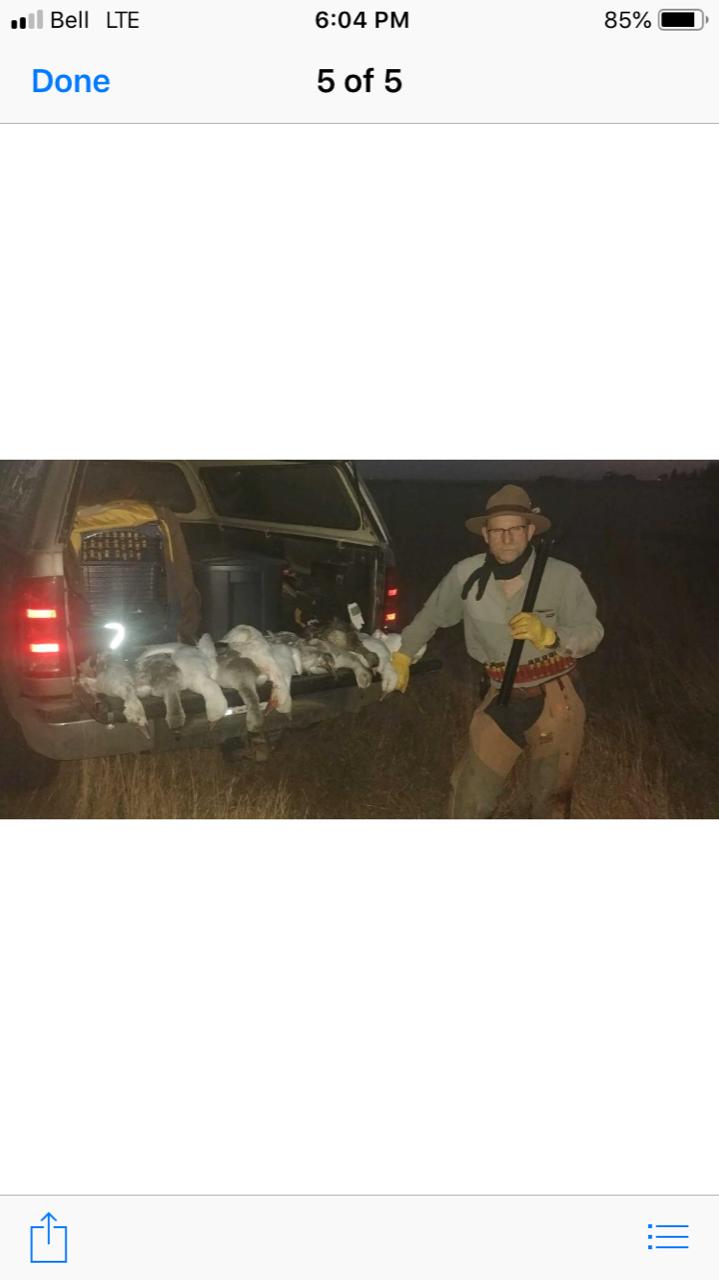
These geese were all shot pass shooting with Faststeel #2's
YOKHZko.jpg

As far as wild rooster, released roosters, and Sharptails , I normally hand load 1oz of Nickle or copper plated shot in my 20's and flatten anything I shoot at.:cool:
Cat
 
That's why I pack a 1950's era Ithaca featherweight 37 in 20ga 2 3/4" full for roosters with 1 oz #4 lead.Just finished making up some BPI long range 28ga loads 7/8 oz #4 lead for the same purpose.
 
The shotgun experts at shooting schools in Britain use pattern plates moving at bird speed on rails, and the target moves perpendicular to the shooter. They have proven time and again the best result on flying game is a short shot string, applied correctly with proper lead. Short shot strings are achieved by short shot columns ( "square" loads of shot, exposing fewer shot to deformation ), hard round shot, and moderate velocity. It is no coincidence that British game loads are lighter than USA ( or Canadian) loads. They do the research. My reference to extra lucky hits from 3" lead shells is not an endorsement of long shot strings, but is a practical reality. However, most of those hits result in cripples, not clean kills.

I love the late Bob Brister's pattern plate.

He actually proved those British shooting school assertions for us cowboys.

For us geezers out there, you gotta have a darn good wife to drive the family station wagon for your shotgun ballistic tests.

Mister Longwalker: Have you studied German pattern tests. I sort of like that Berlin Wansee pattern board.

And then there is Doctor Smith. Just starting out on that.

I talked to a Dallas Fort Worth sports writer when their "BB" passed on. His funeral was very very solemn with extreme respect. Followed with a big party.
 
Yes, at some point I believe I have studied most of the various published methods of patterning. One of the fascinating things about shotgunning is all the exotic stuff there is to learn.
 
I shoot a 20 for waterfowl and upland both, don't even own a 12 ga field gun any more. I occasionally shoot 3" when I cannot find 2 3/4" steel loads. The 3" steel loads I have used in three different brands have all been 7/8oz loads of #2 shot through a factory invector plus IC choke in my SX3 and worked extremely well on everything from mallards to big honkers. My patterns on paper are excellent. In 2 3/4" I am shooting 3/4oz #4 through the same gun/choke combination and again it has proven to be a highly effective load. I don't notice much difference if any over decoys. The edge goes to the 3"-2's though if I happen to stretch the odd shot out to 45yds. Having said that though I absolutely crumpled a big honker yesterday at about that distance with the 2 3/4" 4's. The most noticeable difference between the two sizes is noise and muzzle jump. The 3" are definitely louder and are a bit "livelier" in the lighter weight 20.
For upland and crow shooting I just grab whatever 7.5 shot 2 3/4" target loads I have on hand. Again same gun and choke combination. I never switch up. I've even taken to using it exclusively on the skeet field.

Sounds like you really like this gun, what is it?
 
Honestly the best patterning shotguns I've ever seen have all been 20 gauge. But if you get a pattermaster choke tube it'll shorten your shot string to 5 feet or so and really make the feathers fly!
 
I've read about the patternmaster choke tubes and the design that they say gives them tighter and shorter shot columns is basically the same design that other choke tube manufacturers use to spread shot out quickly. Some people call them spreader chokes and the concept is to slow the wad momentarily at the muzzle to allow the shot column to spread quickly but in the case of the patternmaster, they claim it spreads more slowly and works for longer ranges. Hmmmmm.... not compressing the shot column in order to keep it from spreading out. In a way that makes sense to me but by using that same logic the only thing that is different than a cylinder bore choke tube is the lack of a means to retard the wad. I used to have some spreader chokes from angle port which are basically a non-compressing choke with a couple of internal rings to retard the wad and they worked fairly well to spread the pattern quickly but obviously there must be some differences in the patternmaster design. Spreader chokes are to be used at close range so stringing isn't even a consideration. Funny how a similar design can achieve opposite results!

As I read the literature on the patternmaster website I notice they say "the tube stops the wad for a millisecond " to this I take exception because I don't think it would be possible to stop it for a millisecond and then restart the forward movement. I believe they're slowing it by impeding it with the so called stud ring instead. This and other claims such as "achieve mind-blowing accuracy" give me cause me to think they might be using more drama and less science to sell the product. And they would lend more credibility to the claims if they got rid of the cartoon of the shorter shot strings and used high speed photography to show the difference instead. If the product is as good as they claim them I think they need a better marketing program, then again a lot of folks these days tend to like cartoons and drama!

I've never had any patternmaster choke tubes so I'm not saying that they don't work as advertised but I do have questions.
 
Back
Top Bottom