












































Back in Feb. I got a new x-bolt in 300wsm. I've been working up loads for it with 180gr Hornady Interlock's spbt. Speer spbt in 165gr and now the Barnes TSX in 165gr. All of it was over H414 using Winchester brass and cci magnum primers.
I did not like what the 180gr loads were like so I switched to the 165gr bullets. The Speer's i got to 3/4 of an inch but the Tsx's are better.
The load i settle on is 165gr Tsx, 65.5gr H414, CCI magnum primer and Winchester brass. .050 off of the lands. 3030fps. 3 shot group at a 100yrds is a ragged hole.
Im not sure how many times this brass has been loaded but im sure its not more that 5 times.
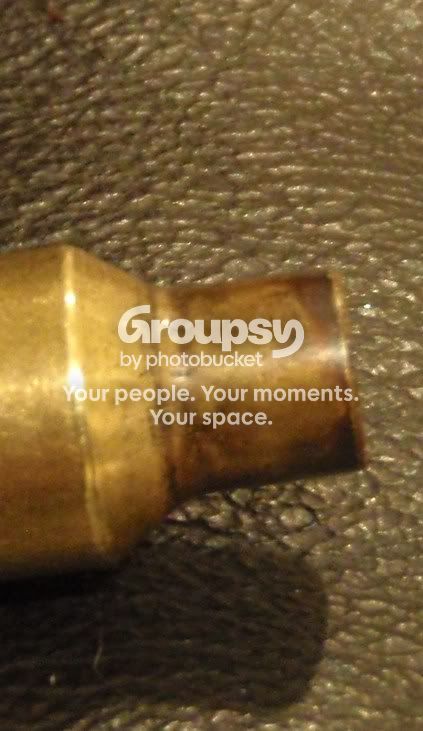
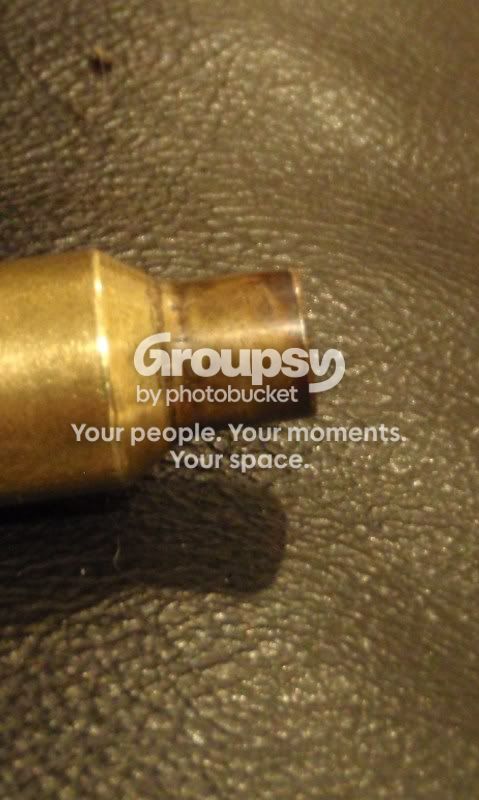
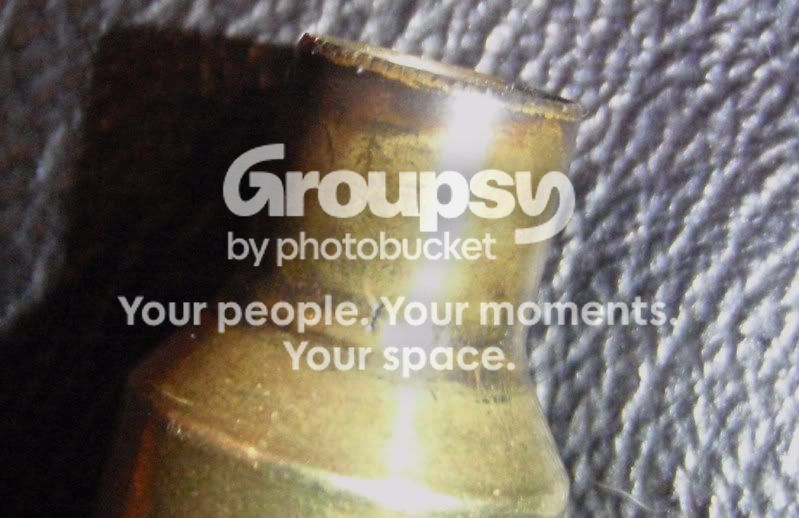
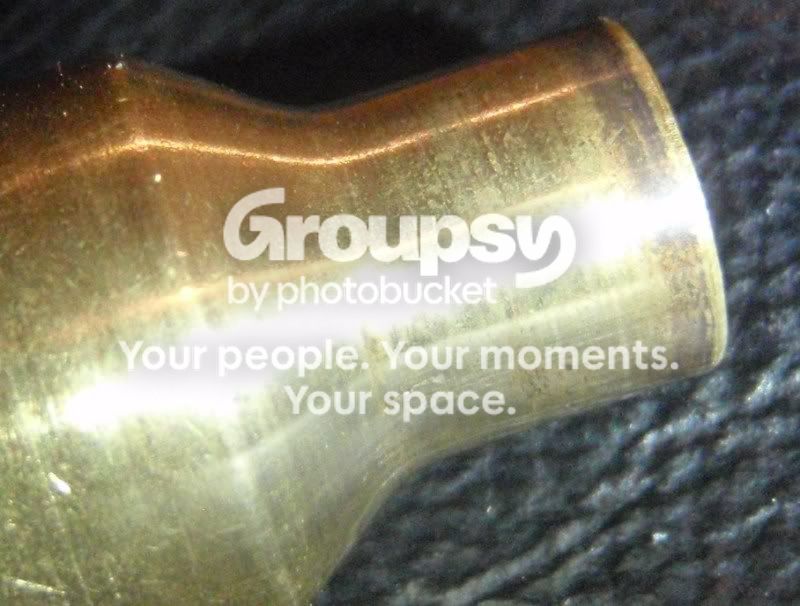
They are cracking horizontally around the case neck and shoulder. I did notice that the brass was very soft and easy to trim. I suspect that it just can't handle being worked and is cracking do to that. (work hardening). It reminds me of toffee. Nice and soft and will bend, but you hit and it cracks.
My old 30-06 brass was 1 fired factory ammo that i loaded more than 10 times and never saw any thing like this.
I realise the metal has been work hardened but am just wondering if this is more normal for this caliber or maybe this is a bad batch of brass. Also with a small pic you can feel the cracks on the inside as well.
There are no pressure signs on any of the brass or primers.
Here are some pic's.
Thanks
Tron
I did not like what the 180gr loads were like so I switched to the 165gr bullets. The Speer's i got to 3/4 of an inch but the Tsx's are better.
The load i settle on is 165gr Tsx, 65.5gr H414, CCI magnum primer and Winchester brass. .050 off of the lands. 3030fps. 3 shot group at a 100yrds is a ragged hole.
Im not sure how many times this brass has been loaded but im sure its not more that 5 times.
They are cracking horizontally around the case neck and shoulder. I did notice that the brass was very soft and easy to trim. I suspect that it just can't handle being worked and is cracking do to that. (work hardening). It reminds me of toffee. Nice and soft and will bend, but you hit and it cracks.
My old 30-06 brass was 1 fired factory ammo that i loaded more than 10 times and never saw any thing like this.
I realise the metal has been work hardened but am just wondering if this is more normal for this caliber or maybe this is a bad batch of brass. Also with a small pic you can feel the cracks on the inside as well.
There are no pressure signs on any of the brass or primers.
Here are some pic's.
Thanks
Tron























