.303 chamber problem?

Just thinking out loud..............(and a cheap bastards question)

And since this is the reloading forum what would you guys think of just trimming the cases shorter below the brass flow? And not doing anything to the chamber or setting back the barrel.
 
Just thinking out loud..............(and a cheap bastards question)

And since this is the reloading forum what would you guys think of just trimming the cases shorter below the brass flow? And not doing anything to the chamber or setting back the barrel.

The downside of that is the eternal old saw about trying to ensure that the next guy down the road doesn't inadvertently blow the gun up by sticking the 'real' thing in there, eh?

That chamber is easily 20 thou short, and by the dimensions shown, could be as much as 35 thou deeper. The neck actually looks further back (towards the rim) than the unfired case too. Odd stuff.

The easy money were it mine, would be to start with some pretty careful measuring, determine more or less where the chamber dimensions start to get off the rails, and compare those dimensions pretty carefully against the SAAMI spec reamer dimensions to see what the results might end up looking like. Maybe even to the extent of overlaying the two sets of dimensions in a scaled drawing to see if one fits entirely or partially within the other, not a terrible task in a CAD program.

What would the possibility be that he chamber was reamed with a sizing die spec'd reamer, d'ya think? Or the guy that made it was working off the case dimensions, and did not account for the clearances needed in the chamber?
That chamber length at 2.202 seems almost bang on the spec for the minimum length of the cartridge in the drawing shown. Some time spent sorting out the rest of the dimensions would be time well spent, I think.
If the shoulders are short too, there may be better than average expectations of a clean-up with a correct reamer, if the bore size is also correct.

So it seems from this chair, anyways.

Cheers
Trev

 
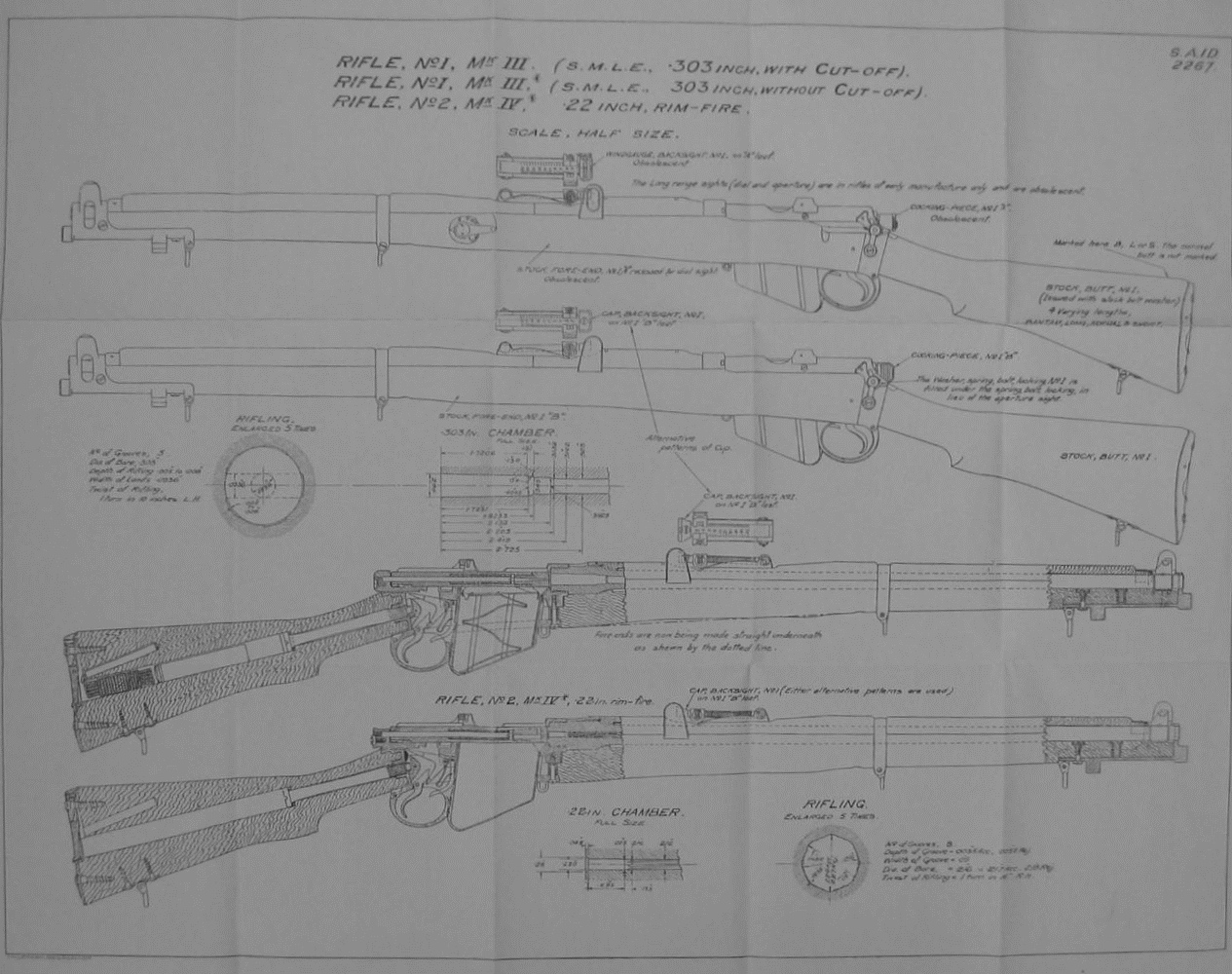
Or it was chambered by a very old gunsmith who had a original British chamber reamer. The bottom drawing below is from a British SAID drawing of a No.1 Enfield rifle.
Look at the two different chamber lengths and the older 2.205 measurement????? This drawing may be before the chambers were reamed larger in 1914.

30320Chamber20Dimensions20a_zpso6jxputp-1.jpg


The bottom chamber drawing above came from the center of the SAID drawing below.

sd80e4s.jpg
 
Last edited:
You might well be onto the answer. Now, would a modern reamer clean it up without adding any fancy new shoulders to the mix?
Maybe even clean out the gouges on the chamber wall that are marking up the brass ( which may be harmless, but are annoying).

This should allow the use of off the shelf ammo, even with a bit odd a extra shoulder or ridge, though it may take a setback to get away from it looking like a kludge. Seems to nice a gun to not put the effort into.

The discussions about freebore and leade are baffling me, as I see both quite well defined in that very well done picture of the chamber and bore.
 
It's a bit of a workaround, but I mapped out the chamber in mine using a set of pin gauges at 0.001" spacing. I pushed each one in ever-so-lightly with the bolt and measured the bolt stop position with a caliper each time. As I worked down the pins went in further and further.

Some CAD station time plotting those onto a rotated section and I had a pretty good idea what I was working with in terms of neck, throat, lead-in etc.

It didn't tell me anything about the rifling, but beyond being able to see that it was reasonably uniform I didn't care.

The OP posted a few shots of the back of fired cases. Those primers look a little bit squished to me; faded fillet, bit of raised ring around the firing pin, and the bolt-head finish embossed in.

Are those normal pressure signs, or is that in the "getting kind of high" area?

My own fired .303 British has unflattened primers with a nice smooth crush-in dent, but I don't load it as high as I could.
 
Rayleigh_Scattering

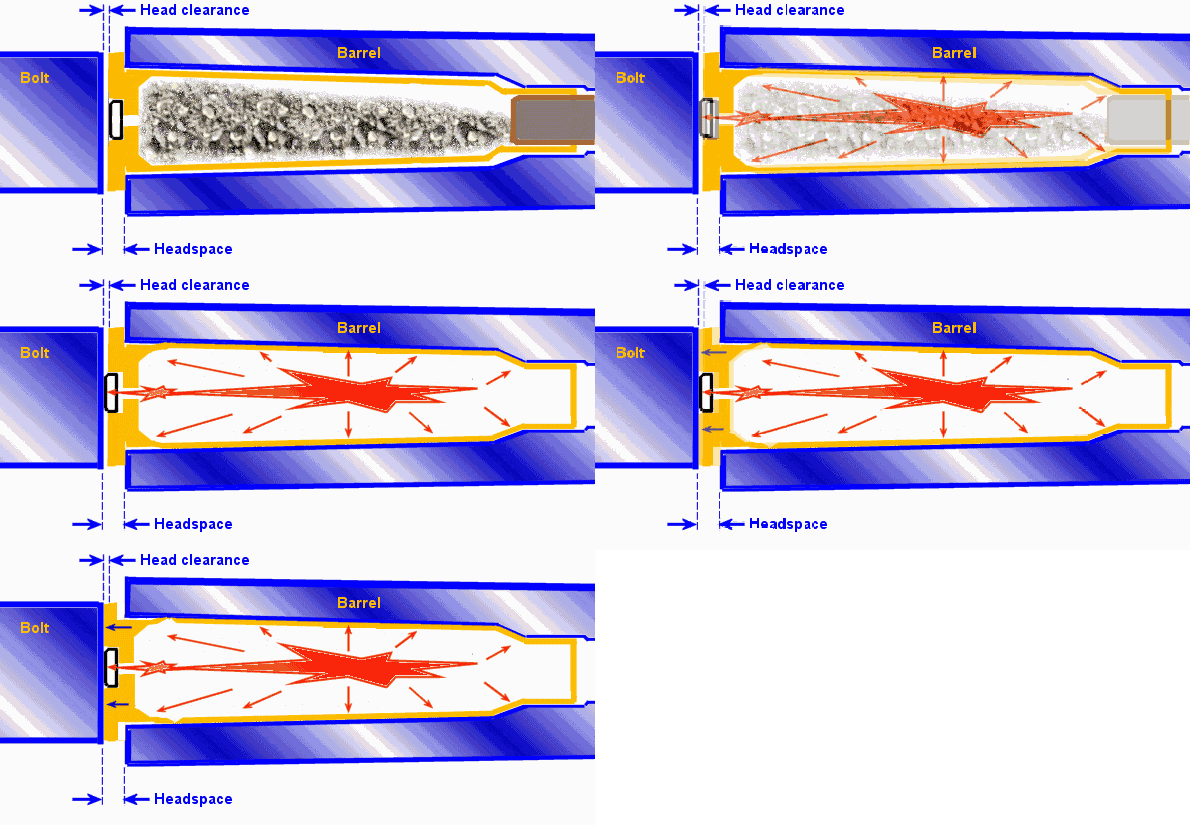
Primers can fool you trying to read them after firing, and a long headspace setting will allow the primer to back out of the primer pocket more. When the primer backs out and then re-seated when the case contacts the bolt face the primer can mushroom around it edges.

Below when the primer backs out of the primer pocket the upper part is unsupported and can flatten more (mushroom) around its outer rounded edges.

sHgqVJR.gif


As long as the fired primer is protruding from the base of the case after firing the chamber pressure was not great enough to push the case against the bolt face.

And to me the OPs fired primers do not look bad or have signs of high pressure.
 
>a long headspace setting

Makes sense. I usually fire brass that has been fired in the same rifle before and only neck-sized, so the case is always a snug fit and I don't see motion effects.

>signs of high pressure

Cool. I could probably load mine up a little bit more in the next batch then.
 
The No.4 Enfield rifle was made of higher grade steels than the older number No.1 Enfield rifles. And the No.4 was later chambered in .308/7.62 at a much higher chamber pressure.

And older well used Enfield rifles will have cordite throat erosion that will lower the chamber pressure. Meaning your loads may need to be increased to make up for the barrel wear/throat erosion.
 
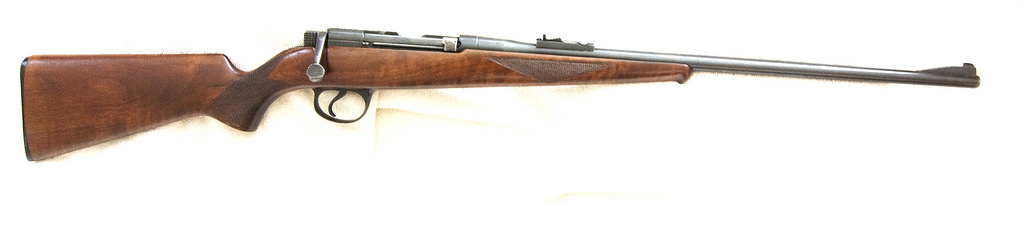
I got a sporter no1 mkIII, fires and ejects fine but I am a little concerned about the condition of the case mouth after firing. What is going on here??

Thanks, Jonathan

aq5tlmJ.jpg
[/IMG]
Ikb2ONL.jpg

I looked at Johnathan's rifle this weekend....I checked the headspace first....easily closed on a No-go gauge but did not close on a field. There is also a issue (although not great) with something going on in the chamber....you can see that the brass is marked up...have a look at the picture he posted. It's a lovely little rifle with a great bore, would not the easy fix be to set the barrel back and re-chamber...that would solve 3 problems. Who would you recommend and how much would that cost approx?
 
Yes I would like to find someone who is set up to turn the barrel back and cut a new chamber. I wonder if Ellwood Epps would be a good place to send it? Also I wonder if this thread should be in the gunsmithing section :) Hopefully I can get some suggestions as to where to send it or if setting the barrel back is a good idea. Cheers
 
This thread is a great example of the best of CGN. I enjoyed reading all the experience and knowledge on display here. Very impressive. I have nothing to add except thanks for the education.
 
Setting the barrel back and recutting the chamber would make things as good as new, yes. However, consider this...

The barrel and the reinforce in particular is tapered, so shortening it has an effect on where and how it sits in the wood. The bedding under the reinforce is critical to accuracy on an un-modified Lee Enfield, I would imagine it would be similar on yours. So not only will you have to address the chamber work, you will need stockwork to bed the barrel too.

Ellwood Epps no doubt could do it for you, but there would be considerable shop time which could rack up your bill. If you are in love with this rifle, then money well spent to get her working the way that you want.
I have done similar in the past, spent a fortune on a less than stellar rifle and ended up with something mediocre.

Setting back a barrel is a common practice where a replacement is expensive or a rare gun where a replacement is simply not available. Also you are not dealing with a serial numbers matched collectable where keeping the original barrel is vital for the value.
So not really viable unless you had the skills and tools to do it yourself.

I would suggest a simpler and less expensive route would be that you trash this barrel and find another good one to have fitted. To my mind, this is more practical, you will be miles ahead with costs and have a better repair.
 
I would set the barrel back one thread and re-chamber. This should clean up the chamber wall as well as correcting what appears to be an issue with length. My only concern in doing this job would be that the neck diameter might be over-size and my reamer (a minimum spec match reamer) could leave a visible step. Not saying this is at all certain but it is a potential issue and I don't know that I have a neck reamer large enough to clean it up. One could set back a distance equivalent to the length of the neck and eliminate all concerns but this would leave too much gap in the barrel channel. Personally, I would live with the step if, indeed, the re-chamber did result in this. It would be cosmetic only and wouldn't affect function.
Cost would run about 125 bucks plus shipping. Regards, Bill.
 
I have not confirmed bore diameter. 44 is stamped on the barrel as well as what looks like an armourers stamp, and what looks like T C

Some photos of the markings, in case anyone can, or cares to make anything of them.

928tfCA.jpg
[/IMG]
nBO0Wds.jpg
[/IMG]
nd8afES.jpg
[/IMG]
QrgOaqy.jpg
[/IMG]
wx1hEcJ.jpg
[/IMG]
ELE6VVp.jpg
[/IMG]
Nsu285I.jpg
[/IMG]
 
Last edited:
Just bumping this thread so I can announce that a most excellent member on here turned the barrel back (super quick turn around I might add) and now the fired brass that pops out of the chamber is the nicest .303 brass I have seen! I am very happy and will get a range report up once I get a chance. Cheers and thanks again for all the help.
 
Well - you now have a "commercial " chamber on that rifle. The nice thing is that it doesn't blow out the shoulder like a military chamber. Suggest you segregate your brass for that rifle if you are shooting other 303's...
 
Back
Top Bottom