308 Load Development

doowroh

Member
EE Expired
Rating - 100%
31   0   0
Location
GTA
I'm pretty new to this, but I’m starting to get the hang of things. Well, maybe... My goal was to develop a kick-@ss load for deer hunting, but I’m geeking out and loving the science behind all of this.

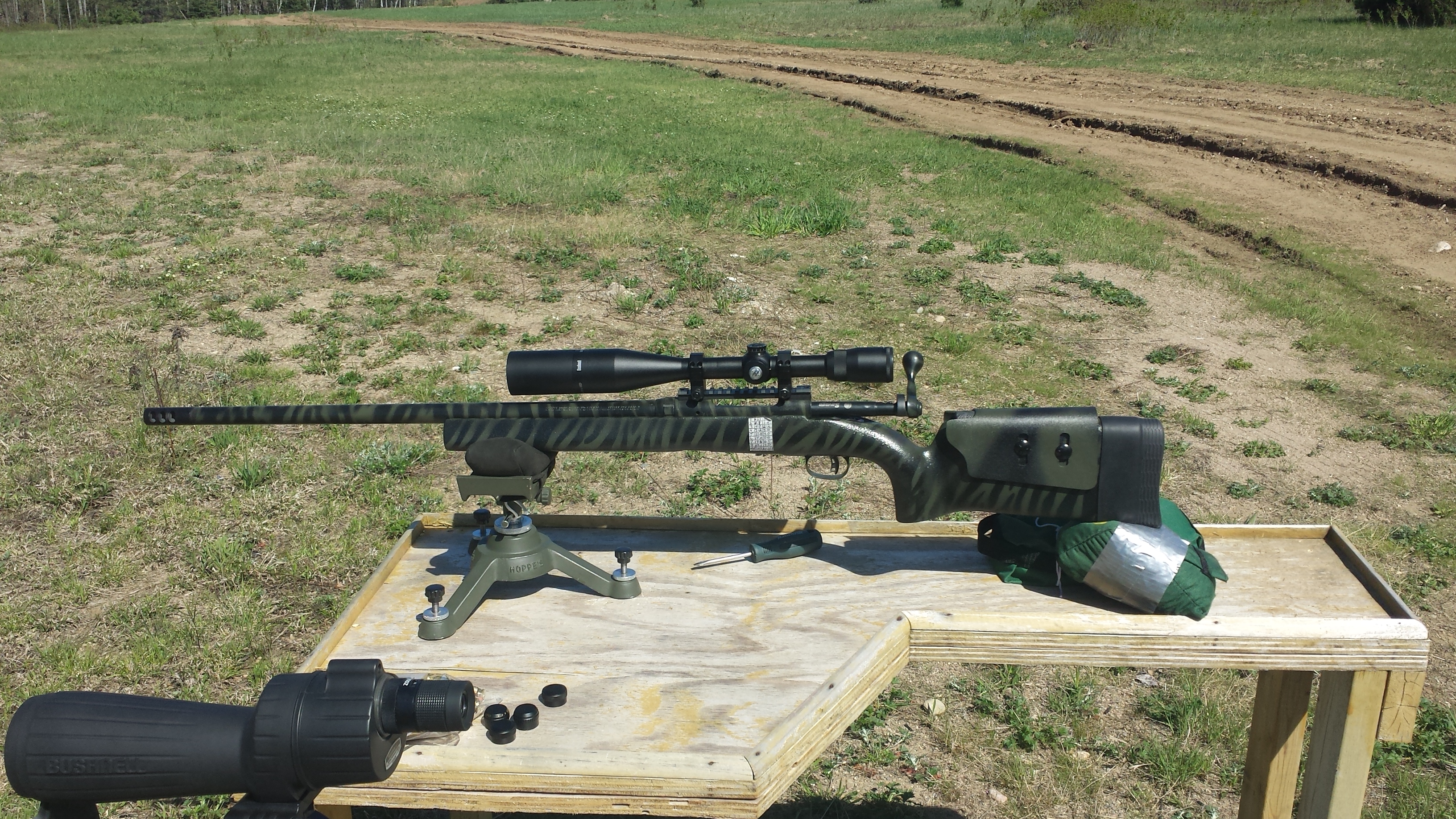
I'm shooting a Savage 110 Scout chambered in .308 Win. Barrel length is 16.5" and is sometimes called a "heavy profile" barrel.

I have struggled with some of my previous load development, as I started with the iron/peep sights, shortly after which I started using a Magnetospeed Sporter and then recently added a Sightron STAC scope (installed over the receiver, not using the hokey pokey Scout rail). Right or wrong, I have leaned heavily on Varget powder, although I have dabbled with IMR-4064 as well as CFE-223. Cases are Winchester, prepped reasonably well, based on what I am capable of (FL resized, then fire formed, then FL sized just enough to bump the shoulder so they can just barely be chambered, flash holes deburred, primers sorted/installed by weight).

My gun doesn't seem to want to group 150 grain bullets. Bullets are Sierra #2140 165 grain HPBT.
OAL is 2.750" and CBTO (if that matters) is 2.257" (+/- 0.003").

I made what I thought was good progress when I did some velocity ladder testing. I found what seemed to be a sweet spot between 42.0 grains and 42.7 grains. Although I had some bum data, and ended up interlacing some data between two different days. This is probably a bad thing.

Anyway, I went out recently and shot some bad groups, some okay groups, and some slightly better than okay groups. Distance was 100 yards, from prone. This was the first time I have actually ever shot from prone, and man, my back & neck did not like it. I think my "form" could use some help as well.
I also shot some back-up factory ammo (Winchester 150 grain Deer Season XP) in case I couldn't get a hunting load ready for deer season.

Anyway, here are some of my better groups.

Winchester Deer Season XP 150 grain (3-shot group)
GjxU5p9.jpg


Sierra #2140 w/ 42.6 grains Varget
eZddWp1.jpg


Sierra #2140 w/ 42.8 grains Varget
YDBWhQC.jpg


I also had some weird horizontal stringing while shooting one load of CFE-223. I was tired. I wonder if it's because of "me" or if there is some sort of writing on the wall here?
0JJ9KZh.jpg


I'm pretty sure that I'm going to load up a bunch of 42.8 Varget, but is there anything else I should be trying in the short/long term?
I'd love to have your thoughts.

Thanks.
 
Last edited:
Is the rifle bedded? Accuracy and repeatability will suffer without good bedding.

Did you test up to around 46 gr of Varget? Your load looks mild. I would test higher until I got pressure signs, then drop a grain.
 
Is the rifle bedded? Accuracy and repeatability will suffer without good bedding.

Did you test up to around 46 gr of Varget? Your load looks mild. I would test higher until I got pressure signs, then drop a grain.

The stock is not bedded. It’s a factory original, untouched Savage Accufit Accustock.

I have gone up as high as 45.5 grains of Varget, but was using FC Federal cases, and had started to see pressure signs in the mid 42s with those cases (FC cases are made of butter, if you haven’t heard - LOL). I switched to Winchester cases, and had gone as high as 44 grains without pressure. I haven’t loaded anything higher yet, as some of my previous posts where I had asked about the pressure signs had sort of suggested to “slow down there cowboy”. LOL.

I really need to do a full scale ladder test with Varget again.
My chronograph broke the last time I was out with it. I’m waiting on a new display at the moment.

What program do you use to calculate and draw on the target?

It’s an iOS app called SubMOA. Why do you ask?? Problems?
 
Last edited:
I would stop shooting ladder test and start shooting OCW with 5 shot groups, and .3gr between powder charges. I shot many ladder tests and found unless you can duplicate them 5 times, the results are always subjective. Why not just shoot OCW and just be done with it? Also, I hope you aren't shooting for groups with the magneto speed attached?
 
The stock is not bedded. It’s a factory original, untouched Savage Accufit Accustock.

I have gone up as high as 45.5 grains of Varget, but was using FC Federal cases, and had started to see pressure signs in the mid 42s with those cases (FC cases are made of butter, if you haven’t heard - LOL). I switched to Winchester cases, and had gone as high as 44 grains without pressure. I haven’t loaded anything higher yet, as some of my previous posts where I had asked about the pressure signs had sort of suggested to “slow down there cowboy”. LOL.

I really need to do a full scale ladder test with Varget again.
My chronograph broke the last time I was out with it. I’m waiting on a new display at the moment.


It’s an iOS app called SubMOA. Why do you ask?? Problems?

My best 308 load is 42.7gn of Varget with 175 SMKs, it is considered a mild load, but gets to 900M supersonic (in my 26''er), so why load it to pressure?
I can 10 shot sub 1/2 moa at 300M with it.

The same load, without doing a load dev in another complete different rifle (24''), is doing sub 3/4 moa without too much effort and is super to 800M, it seems like a load that more than 1 rifle likes.

2 years ago I went down that rabbit hole of trying to find the best load possible.
I somewhat documented what affected accuracy and what affected it less.
My 2 biggest factors we're powdering and priming.
Powdering by weighing on an FX120 scale shrunk my group sizes compared to RCBS chargemaster,
And priming by switching to regular large primers to CCI BR2 primers made a huge difference, in fact the BR2 primers is THE thing that got me shrinking groups the most in all the specialized reload process.
 
42 grains varget
168 grain berger
cci primer
lapua brass
coal up to you
savage 12 308 large shank factory gun 30''
under 1 moa at 875 meters good conditions, sea level, low celing, shooting east.
Data availble just ask
 
42.5gr Varget with 168's is my go to 308 load.
Also using an ugly Savage...10HS. Keeps 5 in those little shoot n see patch dots (3/4"?) at 100 even if you close your eyes lol.
20170520-154922.jpg

20170624-190204.jpg
 
I would stop shooting ladder test and start shooting OCW with 5 shot groups, and .3gr between powder charges. I shot many ladder tests and found unless you can duplicate them 5 times, the results are always subjective. Why not just shoot OCW and just be done with it? Also, I hope you aren't shooting for groups with the magneto speed attached?

I have also found ladder test or refined tests like the 10 shot load development to be inconclusive.

I like to search internet for different loads and rifles and powder combination.

I cross reference with much of factory data online.

I find Noslers data to be particularly helpful.

I like to use Hodgdon Extreme powders as they seem to be the best consistently across temp ranges.

H4350, H4831Sc, H1000, and Retumbo being my favourites.

Load development for me is ignoring the minimum starting loads because they usually don't produce the velocity I am after anyways.

I like to start 1.5 -2 grains under the max load I can find.

I will start with 3 shots and varying the charge weight by .3-.5. Grains. Shot over a chronograph.

This serves purpose of fireforming brass to chamber....and to identify charge weights that have lowest ES spreads and tightest groups.

I then explore those nodes with 5 shot groups in .2-.3 grain variances....again comparing groups and ES numbers.

Using this method might take a little more work and brass and firings but I find most consistent results.
 
Last edited:

OP, I don't think there's anything wrong with your rifle or your load.

I'm willing to bet that rifle will shoot just about any load with GOOD bullets well. It's been my experience that Savage bolt rifles either shoot extremely well with just about everything or they don't shoot anything well.

Your rifle appears to be a good shooter.

I suspect, from the pics of your groups that your shooting technique is the real culprit.

For instance the pic of the horizontal group. That doesn't indicate a scope problem, nor a bedding problem, nor a load problem. In reality, it shows a load that rifle really likes. It also shows a lack of consistency on the shooters part when it comes to fingertip position on the trigger, eye position behind the scope and cheek weld positioning on the stock.

Rests will make most things easier to control but it takes patience and practice to keep our personal limitations out of the equation.

When I first started to shoot in matches, I had a heck of a time bringing my scores up to the point of being in the top three winners. I thought I was pretty good but quickly learned I was just average when it came to precision shooting.

That's when a mentor finally took pity on me. He asked if he could shoot my rifle in the next match and offered his in exchange. Of course, I agreed.

I was under the mistaken impression that it was either my rifle or the load that was the issue. WRONG.

I didn't shoot a proven rifle any better than I shot my own. On the other side of the coin, the fellow shooting my rifle won the match. OOOPS. That pretty much pointed out the problem.

OP, your group pics remind me of that time.

It was time for me to pay a lot more attention to detail and consistency when shooting. If I didn't want to go to the level required, it was time to get out of the game. It meant a lot of time on the bench without shooting and going through the motions with a set of snap caps. It also meant jotting down a few notes of things I noticed I was doing right as well as wrong. Took me most of one spring and summer to get things down so that I knew why groups were going vertical or horizontal. Shotgun patters were symptoms of mechanical issues or maybe a component change. Not always though.

To cure those horizontal groups, sit at the bench, snap cap in your chamber and go through the motions. This will accomplish two things. First it will cure any flinch issues, which you may or may not realize you have. The best indication that you have flinch is that you aren't aware of what your scope reticle is doing as you pull the trigger. Once you settle down enough to actually watch what's happening through your scope, you will start to make changes to your approach and work towards more consistent methods of pulling the trigger at the optimal moment when it all comes together.
 
OP, I think bearhunter may be on to something here. I was always a pretty good shot, usually better than anyone I shot with or hunted with. I had good luck with reloading. Then I put together a featherweight 308 weighing under 5lbs without the scope and that demanded much more of me to shoot it well. I was really discouraged at first about the gun and the new reloading equipment I had just got.

Then I humbled myself after reading about shooting mountain hunting rifles accurately. I was taking for granted that I was just fine at shooting. I got snapcaps and annoyed my wife to no end during the winter and now am a much better shooter for it with any rifle, including that featherweight Kimber.

Don't stop looking at your reloading or equipment cuz everything can always be better and it's fun to improve it all! But don't overlook your technique as a contributor.
 
I would stop shooting ladder test and start shooting OCW with 5 shot groups, and .3gr between powder charges. I shot many ladder tests and found unless you can duplicate them 5 times, the results are always subjective. Why not just shoot OCW and just be done with it? Also, I hope you aren't shooting for groups with the magneto speed attached?

Truth is that until this thread motivating me to look it up, I really didn't "get" the OWC concept. That, when compared to all of the pretty sensible looking charts online about people's velocity based ladder tests, I went with what made the most sense in my head, for the way I think/rationalize problems. Once I started getting zig-zag charts (some of which was my own doing) I kind of hit the wall, so to speak.

Another thing I've really struggled with is figuring out what my starting charge(s) should be...


I have also found ladder test or refined tests like the 10 shot load development to be inconclusive.
I like to search internet for different loads and rifles and powder combination.
I cross reference with much of factory data online....


...I like to start 1.5 -2 grains under the max load I can find.
I will start with 3 shots and varying the charge weight by .3-.5. Grains. Shot over a chronograph.
This serves purpose of fireforming brass to chamber....and to identify charge weights that have lowest ES spreads and tightest groups.
I then explore those nodes with 5 shot groups in .2-.3 grain variances....again comparing groups and ES numbers.
Using this method might take a little more work and brass and firings but I find most consistent results.

I too search and compare to factory data. I tend to get a bit of analysis paralysis myself though. LOL.
I like your proposed load development ideas.
Thank you.


OP, I don't think there's anything wrong with your rifle or your load.

I'm willing to bet that rifle will shoot just about any load with GOOD bullets well. It's been my experience that Savage bolt rifles either shoot extremely well with just about everything or they don't shoot anything well.

Your rifle appears to be a good shooter.

I suspect, from the pics of your groups that your shooting technique is the real culprit.

For instance the pic of the horizontal group. That doesn't indicate a scope problem, nor a bedding problem, nor a load problem. In reality, it shows a load that rifle really likes. It also shows a lack of consistency on the shooters part when it comes to fingertip position on the trigger, eye position behind the scope and cheek weld positioning on the stock.

Rests will make most things easier to control but it takes patience and practice to keep our personal limitations out of the equation.

When I first started to shoot in matches, I had a heck of a time bringing my scores up to the point of being in the top three winners. I thought I was pretty good but quickly learned I was just average when it came to precision shooting.

That's when a mentor finally took pity on me. He asked if he could shoot my rifle in the next match and offered his in exchange. Of course, I agreed.

I was under the mistaken impression that it was either my rifle or the load that was the issue. WRONG.

I didn't shoot a proven rifle any better than I shot my own. On the other side of the coin, the fellow shooting my rifle won the match. OOOPS. That pretty much pointed out the problem.

OP, your group pics remind me of that time.

It was time for me to pay a lot more attention to detail and consistency when shooting. If I didn't want to go to the level required, it was time to get out of the game. It meant a lot of time on the bench without shooting and going through the motions with a set of snap caps. It also meant jotting down a few notes of things I noticed I was doing right as well as wrong. Took me most of one spring and summer to get things down so that I knew why groups were going vertical or horizontal. Shotgun patters were symptoms of mechanical issues or maybe a component change. Not always though.

To cure those horizontal groups, sit at the bench, snap cap in your chamber and go through the motions. This will accomplish two things. First it will cure any flinch issues, which you may or may not realize you have. The best indication that you have flinch is that you aren't aware of what your scope reticle is doing as you pull the trigger. Once you settle down enough to actually watch what's happening through your scope, you will start to make changes to your approach and work towards more consistent methods of pulling the trigger at the optimal moment when it all comes together.

[gulp]
Yeah, I kind of think it's a me thing as well. I agree that there are definitely some mechanical aspects that I can tune or adjust out, but I'm still the loose but behind the wheel. I don't really have a mentor, so a lot of this is a crash course.

Thanks for your advice. As I said, when I shot that horizontal string, I was tired AF, and my neck & back were killing me. I'd shot at least 150 rounds by that point in the day.

Again, I really appreciate your response. It sucks to hear that it's a you thing most of the time, but I really appreciate your thoughts.


OP, I think bearhunter may be on to something here. I was always a pretty good shot, usually better than anyone I shot with or hunted with. I had good luck with reloading. Then I put together a featherweight 308 weighing under 5lbs without the scope and that demanded much more of me to shoot it well. I was really discouraged at first about the gun and the new reloading equipment I had just got.

Then I humbled myself after reading about shooting mountain hunting rifles accurately. I was taking for granted that I was just fine at shooting. I got snapcaps and annoyed my wife to no end during the winter and now am a much better shooter for it with any rifle, including that featherweight Kimber.

Don't stop looking at your reloading or equipment cuz everything can always be better and it's fun to improve it all! But don't overlook your technique as a contributor.

Thanks. I've sort of had the same experiences you mention about being a good shooter. I would say that I'm as good or better than most of the people I've shot with. Definitely better than Billy-Joe hunter who blows the dust off his rifle and then prints a 12~14" group while checking his scope/zero every fall, and then calling it good for hunting.

I do agree though that a lot of my issues are probably bad form/habits.

I should get some snap caps I guess. I've always been a dry fire kind of guy myself, but snap caps can't hurt.
 
Last edited:

Just wanted to jump in here and say I am following your thread with great interest. I too am developing a load but for 6.5X55, but soon will working on a load for my Tikka M55 in .308. There is lots of good info being shared here, and I am learning a lot. I recently got a Lead Sled and that has improved my shooting, taking some of the tension and nervousness out of my shooting, especially with the larger calibers. Bearhunter has made many good points in this thread, and in mine as well, a valued resource on this forum, along with everyone else who contributes here, much appreciated. I hope one day to have enough experience to offer help to newbies like myself.

Anyway, following this story with great interest.

Cheers
 
Back
Top Bottom