












































Until recently I knew nothing about Plant revolvers---let alone what cup-fire cartridges were.
I just added this 3rd Model Plant revolver to my collection after doing some research which is shown below in a bit of an ‘Internet put together form’.
I do have two S&W No.2 Army .32 cal. rimfire revolvers that I will display with the Plant revolver.
The Plant on the left---the S&W on the right.
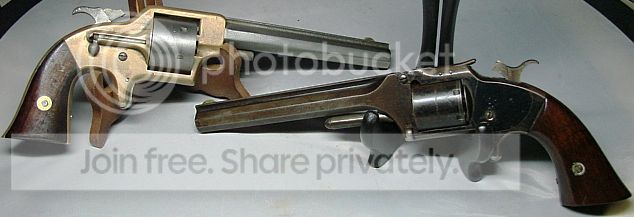
My photos;
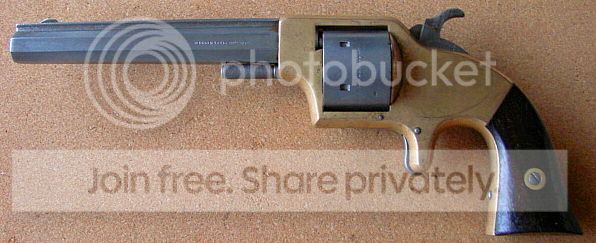
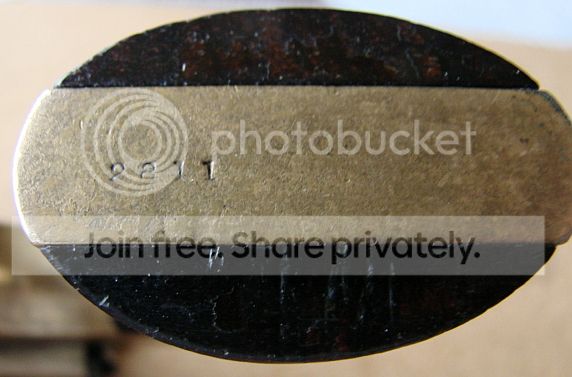
S/n 2811.
----------------------------------------------------------------
In the mid 1860s the patent for bored through cylinders was held by Smith & Wesson.
Plant front-loading army revolver. .42 caliber six-shot revolver firing a cup-primed cartridge, but also made to allow substitution of a cylinder for percussion cartridges. Like many revolvers firing self-contained ammunition, the maker was trying to avoid infringing on patents for bored-through cylinders held by Smith and Wesson. Plant made about 8,000 of them in different models during the mid-1860s.
Plant’s Mfg. Co Front-Loading Army Revolver 3rd Model: 6-shot, 42 caliber cup-primed cartridge. Barrel is marked “Plant’s Mfg Co New Haven CT.” on the top of the 6 inch” octagonal barrel. Serial number 2811 can be seen on the bottom of the butt and the cylinder is faintly marked “Patented July 12, 1859 and July 21, 1863”.
Marked Merwin & Bray on the left side of the barrel.
Patent information faintly stamped on the cylinder.
"Plant's Mfg. Co. New Haven CT" barrel marking on the sight rib and Merwin and Bray agent markings on the left flat of the octagon barrel. Serial number 2811, making it reasonably early in the Third Model series, which Flayderman says started around number 700. Brass frame with no original silver finish remaining, the barrel has turned to a dull silver gray.
Here is a really fine example of the Plant Army Revolver, chambered for the .42 cup-fire self-contained cartridge. This is the Third Model, 1st Type variation, and is serial numbered 2811 on the bottom of the grip strap, just under the halfway point of a total production of roughly 8,000. The revolver is a single action with a spur trigger and a 6” barrel. The gun is marked on the top strap:
YES---this is the same revolver that was sold by Collectors Firearms in Houston ,Texas some time ago.
(date ?)
It came to Canada and was sold in an auction in Edmonton in 2016.
I purchased it in Montreal on Nov 11 2017.
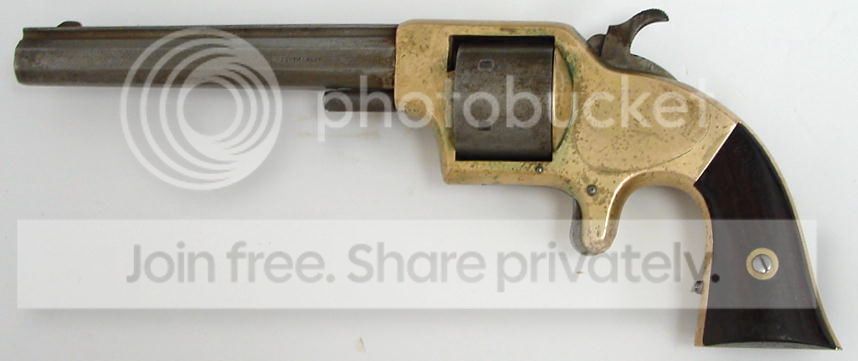
PLANT’S MFG. CO. NEW HAVEN, CT.
and on the left side of the barrel:
MERWIN & BRAY. NEW-YORK
Merwin & Bray were the financiers and agents for the guns turned out by Plant’s Mfg Co.. The revolver was designed to load (and unload) through the front of the cylinder chamber, with the hole in the rear of the cylinder (where the hammer struck the cartridge) smaller than the hole in the front. This technically skirted the fact that Rollin White of Smith & Wesson had patented the bored through cylinder design. The cartridges were loaded from the front and the frame mounted ejector rod pushed them right back out the way they had entered. Another unique portion of the design is that most the revolvers were originally sold with both the cup-fire cylinder and a percussion cylinder as well. This allowed the owner to continue to use the gun, even if his supply of self-contained cartridges were to be exhausted. The secondary percussion cylinders are very rarely encountered today.
The gun has an iron barrel and brass frame, and retains none of the original finish.
The cylinder is faintly marked:
PATENTED JULY 12, 1859 & JULY 21, 1863
The action is crisp and works well.
Overall this is a ‘decent’ example of a relatively rare late Civil War era revolver.
Some other photos that I got off the Internet.
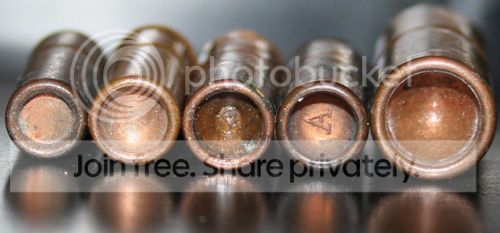
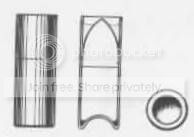
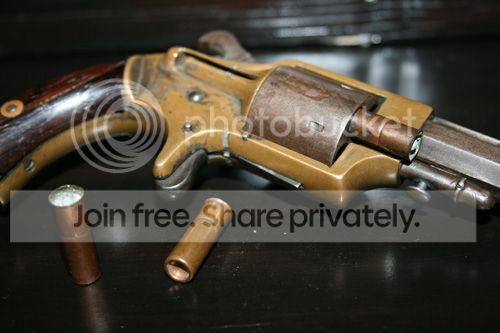
I do not have an example of a .42 cal. cup-fire cartridge.
I just added this 3rd Model Plant revolver to my collection after doing some research which is shown below in a bit of an ‘Internet put together form’.
I do have two S&W No.2 Army .32 cal. rimfire revolvers that I will display with the Plant revolver.
The Plant on the left---the S&W on the right.

My photos;

S/n 2811.

----------------------------------------------------------------
In the mid 1860s the patent for bored through cylinders was held by Smith & Wesson.
Plant front-loading army revolver. .42 caliber six-shot revolver firing a cup-primed cartridge, but also made to allow substitution of a cylinder for percussion cartridges. Like many revolvers firing self-contained ammunition, the maker was trying to avoid infringing on patents for bored-through cylinders held by Smith and Wesson. Plant made about 8,000 of them in different models during the mid-1860s.
Plant’s Mfg. Co Front-Loading Army Revolver 3rd Model: 6-shot, 42 caliber cup-primed cartridge. Barrel is marked “Plant’s Mfg Co New Haven CT.” on the top of the 6 inch” octagonal barrel. Serial number 2811 can be seen on the bottom of the butt and the cylinder is faintly marked “Patented July 12, 1859 and July 21, 1863”.
Marked Merwin & Bray on the left side of the barrel.
Patent information faintly stamped on the cylinder.
"Plant's Mfg. Co. New Haven CT" barrel marking on the sight rib and Merwin and Bray agent markings on the left flat of the octagon barrel. Serial number 2811, making it reasonably early in the Third Model series, which Flayderman says started around number 700. Brass frame with no original silver finish remaining, the barrel has turned to a dull silver gray.
Here is a really fine example of the Plant Army Revolver, chambered for the .42 cup-fire self-contained cartridge. This is the Third Model, 1st Type variation, and is serial numbered 2811 on the bottom of the grip strap, just under the halfway point of a total production of roughly 8,000. The revolver is a single action with a spur trigger and a 6” barrel. The gun is marked on the top strap:
YES---this is the same revolver that was sold by Collectors Firearms in Houston ,Texas some time ago.
(date ?)
It came to Canada and was sold in an auction in Edmonton in 2016.
I purchased it in Montreal on Nov 11 2017.

PLANT’S MFG. CO. NEW HAVEN, CT.
and on the left side of the barrel:
MERWIN & BRAY. NEW-YORK
Merwin & Bray were the financiers and agents for the guns turned out by Plant’s Mfg Co.. The revolver was designed to load (and unload) through the front of the cylinder chamber, with the hole in the rear of the cylinder (where the hammer struck the cartridge) smaller than the hole in the front. This technically skirted the fact that Rollin White of Smith & Wesson had patented the bored through cylinder design. The cartridges were loaded from the front and the frame mounted ejector rod pushed them right back out the way they had entered. Another unique portion of the design is that most the revolvers were originally sold with both the cup-fire cylinder and a percussion cylinder as well. This allowed the owner to continue to use the gun, even if his supply of self-contained cartridges were to be exhausted. The secondary percussion cylinders are very rarely encountered today.
The gun has an iron barrel and brass frame, and retains none of the original finish.
The cylinder is faintly marked:
PATENTED JULY 12, 1859 & JULY 21, 1863
The action is crisp and works well.
Overall this is a ‘decent’ example of a relatively rare late Civil War era revolver.
Some other photos that I got off the Internet.
I do not have an example of a .42 cal. cup-fire cartridge.
























