












































You are using an out of date browser. It may not display this or other websites correctly.
You should upgrade or use an alternative browser.
You should upgrade or use an alternative browser.
45-70 Cowboy/light recoil loads with jacketed 300gn
- Thread starter avocado
- Start date

Aloha local reloading gods,
So i was wondering if anyone had any insight on reduced recoil loads with 300gn jacketed rounds? I know cast can be downloaded to thrown rock velocity but what about jacketed? Thanks!
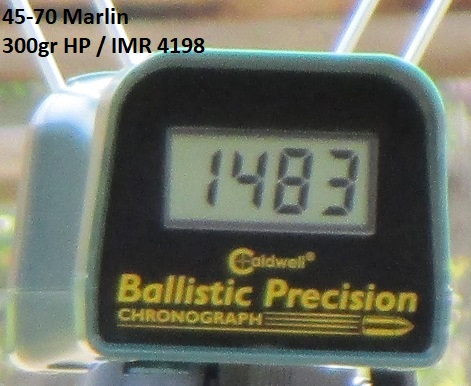
"Cowboy" and "Jacketed" just don't see to go together, but there are many reduced loads published that will launch bullets in the low teens. Look at Hodgdon's "Trapdoor Loads" for example. The 4198's (Hodgdon and IMR) are my powders of choice in that regard, and with a 300 gr jacketed bullet in the 45-70, I'd work in the 30.0-36.0 grain range. Jacketed bullets will exhibit slightly higher pressure than cast, but at these low pressures you'll still be well within the limits of your action (unless you're shooting a Springfield Trapdoor" which I highly doubt).
Last edited:


fingers284
CGN Ultra frequent flyer
- Location
- Alberta Cowboy Ranges
I have shot a considerable amount of cast & jacketed 300 gr or less out of a bunch of different 45-70 rifles over the years and right now my "go to" load for any of them is a 250 gr slug.
My "go too" powder, for light loads was SR 4759 before it was discontinued so if you have any of that stuff laying around, use it. After it was discontinued i started using 5744 and like it fine for loads 1100 to 1400 fps. I did try 30-31 and 4198 but came to the conclusion that they worked better at the higher velocities/more recoil than I wanted, much more inconsistent at reduced loads than the 5744....
oohh ya...I heavy crimp every low velocity round i load no matter which rifle it will be used in.
My "go too" powder, for light loads was SR 4759 before it was discontinued so if you have any of that stuff laying around, use it. After it was discontinued i started using 5744 and like it fine for loads 1100 to 1400 fps. I did try 30-31 and 4198 but came to the conclusion that they worked better at the higher velocities/more recoil than I wanted, much more inconsistent at reduced loads than the 5744....
oohh ya...I heavy crimp every low velocity round i load no matter which rifle it will be used in.
I have shot a considerable amount of cast & jacketed 300 gr or less out of a bunch of different 45-70 rifles over the years and right now my "go to" load for any of them is a 250 gr slug.
My "go too" powder, for light loads was SR 4759 before it was discontinued so if you have any of that stuff laying around, use it. After it was discontinued i started using 5744 and like it fine for loads 1100 to 1400 fps. I did try 30-31 and 4198 but came to the conclusion that they worked better at the higher velocities/more recoil than I wanted, much more inconsistent at reduced loads than the 5744....
oohh ya...I heavy crimp every low velocity round i load no matter which rifle it will be used in.
Why the heavy crimp?

unstableryan
CGN Ultra frequent flyer
- Location
- Beautiful Okanagan Valley
Unique and trail boss are the answer.
fingers284
CGN Ultra frequent flyer
- Location
- Alberta Cowboy Ranges
Why the heavy crimp?
Unburnt powder can be very evident in "large volume cases with small powder charges usage" and i noticed very early on in my quest to duplicate BP velocity of the old cartridges that a hard crimp will facilitate a slightly longer burn time in the case before the unburnt powder is pushed downbore. The difference is very easily seen by just glancing down the barrel after using both types of rounds.
I've often wondered after noticing unburnt powder in a bore as to how much i am seeing and how much went out the bore end and forever unnoticed.
Can I claim there is an "across the board" accuracy improvement...no I cant...it just makes me feel better LOL
Unburnt powder can be very evident in "large volume cases with small powder charges usage" and i noticed very early on in my quest to duplicate BP velocity of the old cartridges that a hard crimp will facilitate a slightly longer burn time in the case before the unburnt powder is pushed downbore. The difference is very easily seen by just glancing down the barrel after using both types of rounds.
I've often wondered after noticing unburnt powder in a bore as to how much i am seeing and how much went out the bore end and forever unnoticed.
Can I claim there is an "across the board" accuracy improvement...no I cant...it just makes me feel better LOL
The unburnt powder (not to be confused with the normal by-products of ignition) suggests that pressures are below what's optimal for that powder. Even so, I've found some "under-pressure" loads to be quite consistent and to produce good groups so long as the pressure is not so low that hangfires and squibs occur. Crimping ups the pressure a bit, although it's another step, might require another die and can affect brass life - not major obstacles if it produces a good load.
Unburnt powder can be very evident in "large volume cases with small powder charges usage" and i noticed very early on in my quest to duplicate BP velocity of the old cartridges that a hard crimp will facilitate a slightly longer burn time in the case before the unburnt powder is pushed downbore. The difference is very easily seen by just glancing down the barrel after using both types of rounds.
I've often wondered after noticing unburnt powder in a bore as to how much i am seeing and how much went out the bore end and forever unnoticed.
Can I claim there is an "across the board" accuracy improvement...no I cant...it just makes me feel better LOL
Ahhh ok i get it. Checks out.
The unburnt powder (not to be confused with the normal by-products of ignition) suggests that pressures are below what's optimal for that powder. Even so, I've found some "under-pressure" loads to be quite consistent and to produce good groups so long as the pressure is not so low that hangfires and squibs occur. Crimping ups the pressure a bit, although it's another step, might require another die and can affect brass life - not major obstacles if it produces a good load.
With 4570 i believe one must crimp everytime anyways. Also it seems as tho 4570 brass is quite robust. Guys are getting more than 10 forings on even winchester.

Trail Boss makes for a nice light recoil.
Retreever
My answer too.
I push CamPro 300gr jacketed at about 1300 for my light load all day long. I haven’t had any brass wear issues yet at that low pressure 8 firings so far.
My answer too.
I push CamPro 300gr jacketed at about 1300 for my light load all day long. I haven’t had any brass wear issues yet at that low pressure 8 firings so far.
With trail boss?
Yup, great stuff. I have a trail boss load for every caliber I shoot at this point. The stuff is perfect for what it does.With trail boss?
Yup, great stuff. I have a trail boss load for every caliber I shoot at this point. The stuff is perfect for what it does.
Ever use unique? Cant find TB. Sigh
Ever use unique? Cant find TB. Sigh
Yup...start at 10 gr. and work your way up. I use 11-12 gr. with bullets between 250-410gr. I rip toilet paper into 1/4 squares and use it to keep the powder against the primer.
Yup...start at 10 gr. and work your way up. I use 11-12 gr. with bullets between 250-410gr. I rip toilet paper into 1/4 squares and use it to keep the powder against the primer.
Ahh kk. Large rifle primers?
Ahh kk. Large rifle primers?
Yes.





















