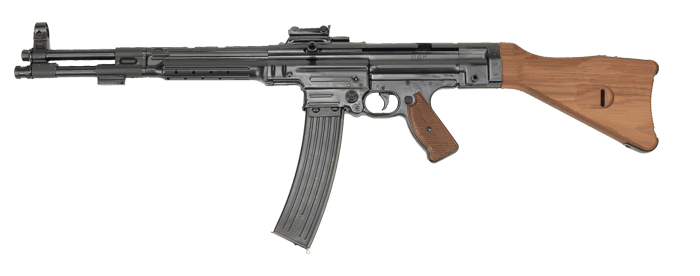
8x33 from open bolt BD42(H)

diopter

CGN Ultra frequent flyer
Rating - 100%
82   0   0
Location
Montreal
Friend of mine was having a terrible time tonight with his reloads in the BD42(H), which fires from an open bolt.
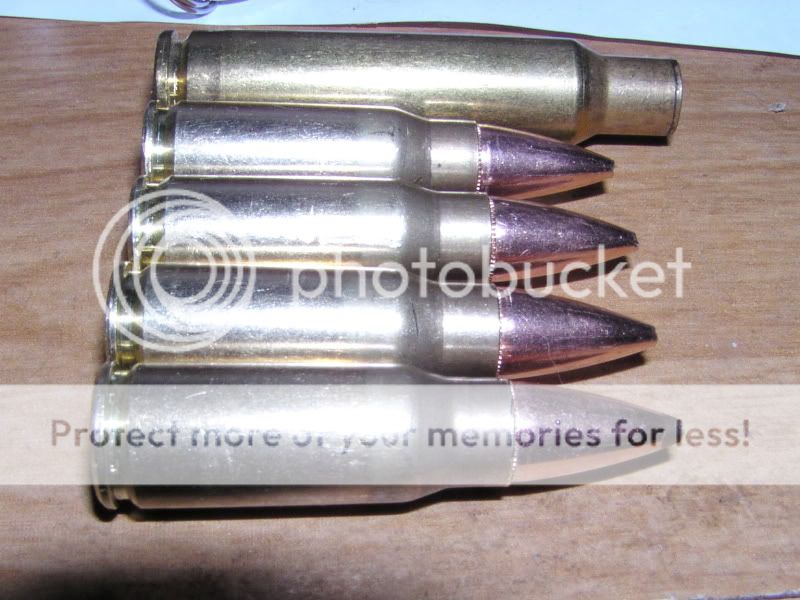
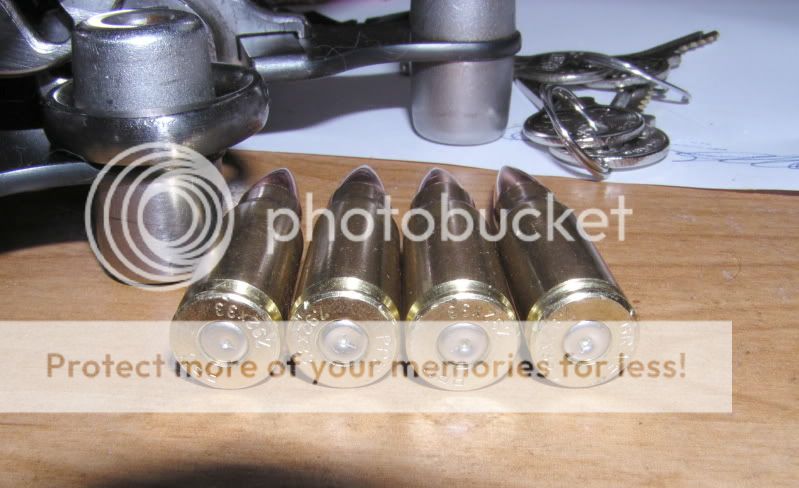
Same loads worked fine from his BD44 which fires from a closed bolt. In the BD42(H) Half of the rounds would not go off even though primers were hit by floating firing pin.
P1010223.jpg


P1010224.jpg


MKB42_02-erste-seite.gif


As you can see the brass is Priva either with the PPU or GRAF headstamps

I'm thinking the primer pockets are to deep.
Comments?
 
Last edited:
It could be that his reloads were not fully resized with small base dies.
If the die only partially sized the casings down, there could have been enough resistance, of the slightly larger improperly sized casing to further cushion the firing pin impact.

Tell him to read this, paying particular attention to the paragraph on sizing, about half way down the page:

http://www.exteriorballistics.com/reloadbasics/gasgunreload.cfm

He has probably already done this, but get him to check and or clean this rifle chamber as well.
 
the brass is unprimed Privi brass that works perfectly in the MP44 from Dittrich, but does these silly things in the Mkb42 from Dittrich.

Bullets are 125gr Hornady and 22gr of IMR 4198, a medium load.

The bolt carrier does not seem to have the energy to hit the firing pin hard enough or the primer is being pushed rather than hit by th epin.

Very frustrating to have such a great icon and have such problems.
 
Is this a common problem with the BD42(H) or a one of? What does Marstar say - is it warranty? Does it function with WW2 German Ammo?
 
Don't forget Mr. Newton and for every action there is an equal and opposite reaction.

Two things may be hampering the “reaction”.

1.Firing pin mass and weight (the force hitting the primer)
2.primer hardness

Also a third possibility, something is restricting the firing pin movement, grease, dirt, metal shavings etc.

Note: I have been reloading for 40 years and have never needed small base dies, BUT your cases could be too long or your chamber could be too short. Meaning the shoulder of the case is contacting the the shoulder area of the chamber too soon. You could have a short chamber or bad reloading dies, the average factory loaded case is two thousandths shorter than minimum headspaces to ensure chambering.

97% of all problems or failures are created by human error and only 3% are actually due to mechanical failure. A case gauge would tell you a good deal about your cases.

IMGP5130-1.jpg
 
What primers is he using? Are the CCI No.34's? If so, these are meant for closed-bolt guns and he might benefit from trying a softer primer like Winchester WLR's.
 
Another possibility is the strength of the action spring for the open bolt model.
It Should stand to reason that this method of firing would require a stronger action spring, than one firing from the closed bolt?

This factor combined with hard primers maybe???

According to my meager research, the WW 2, MP-43/MP-43-1/MP-44, which these are based on, were not designed to fire from the open bolt, in semi or full automatic fire.
Only the earlier MP-42 (H) fired open bolt in semi auto or full auto fire.
 
That the primer or pin issue.

Either pin doesn't hit hard enough or primers are too hard for the pin.

Reminds me about a guy who decided to use rifle primers (thicker metal) for a handgun ammo (1911). Some ammo didn't go off (same as on your picture).
 
Don't forget Mr. Newton and for every action there is an equal and opposite reaction.

Two things may be hampering the “reaction”.

1.Firing pin mass and weight (the force hitting the primer)
2.primer hardness

Also a third possibility, something is restricting the firing pin movement, grease, dirt, metal shavings etc.

Note: I have been reloading for 40 years and have never needed small base dies, BUT your cases could be too long or your chamber could be too short. Meaning the shoulder of the case is contacting the the shoulder area of the chamber too soon. You could have a short chamber or bad reloading dies, the average factory loaded case is two thousandths shorter than minimum headspaces to ensure chambering.

97% of all problems or failures are created by human error and only 3% are actually due to mechanical failure. A case gauge would tell you a good deal about your cases.

IMGP5130-1.jpg

What does that gauge sell for? Looks allright.
 
Not entirely.
First primers were CCI BR, hard
Second tried were Federal, very soft
Winchester is most likely what's needed along with increasing the load.

Primer pocket was same dimensions as a DA 7.62
 
Back
Top Bottom