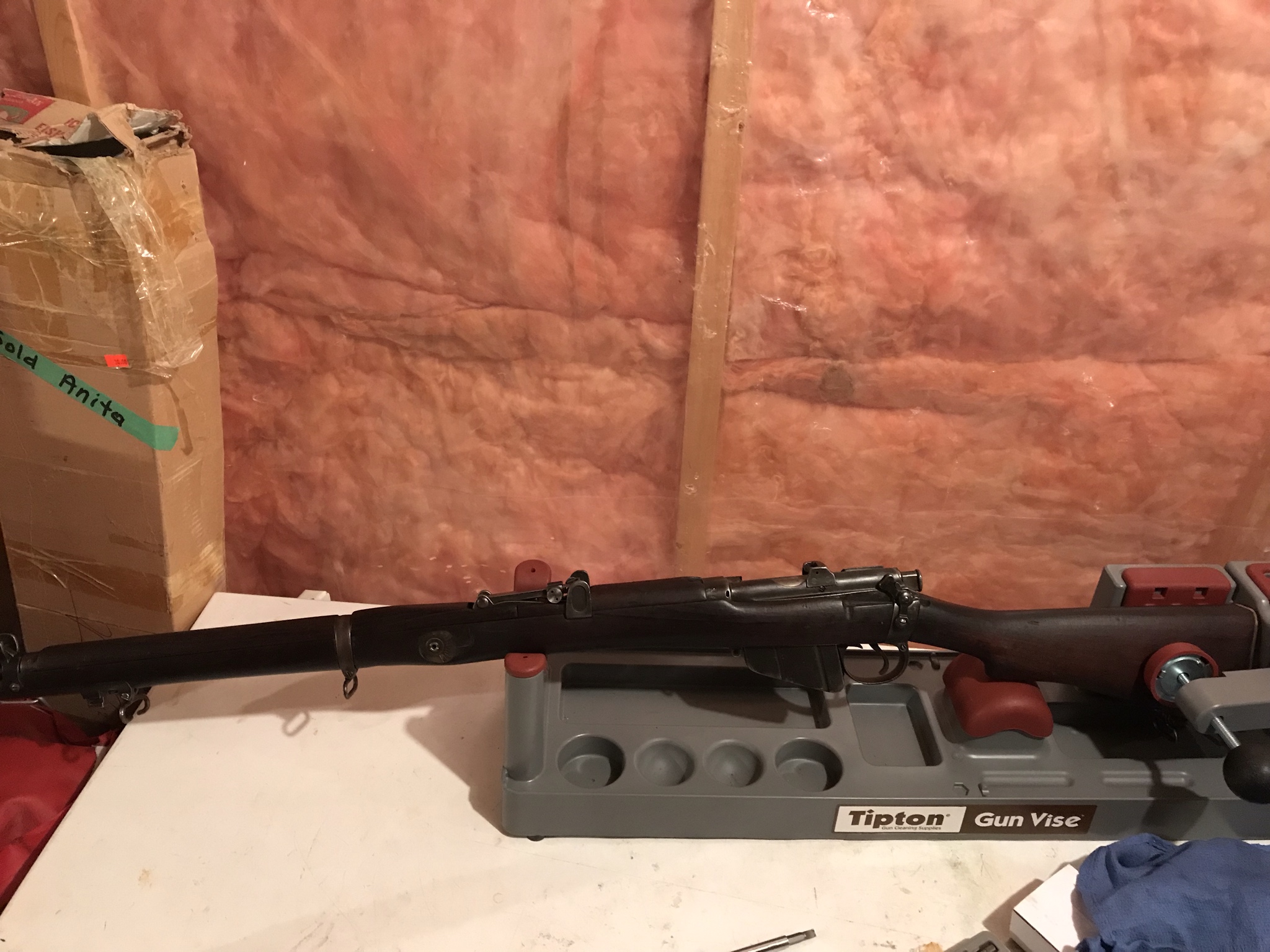
A few 1915 SMLE questions

ricohman

CGN frequent flyer
Rating - 100%
64   0   0
Location
Saskatchewan
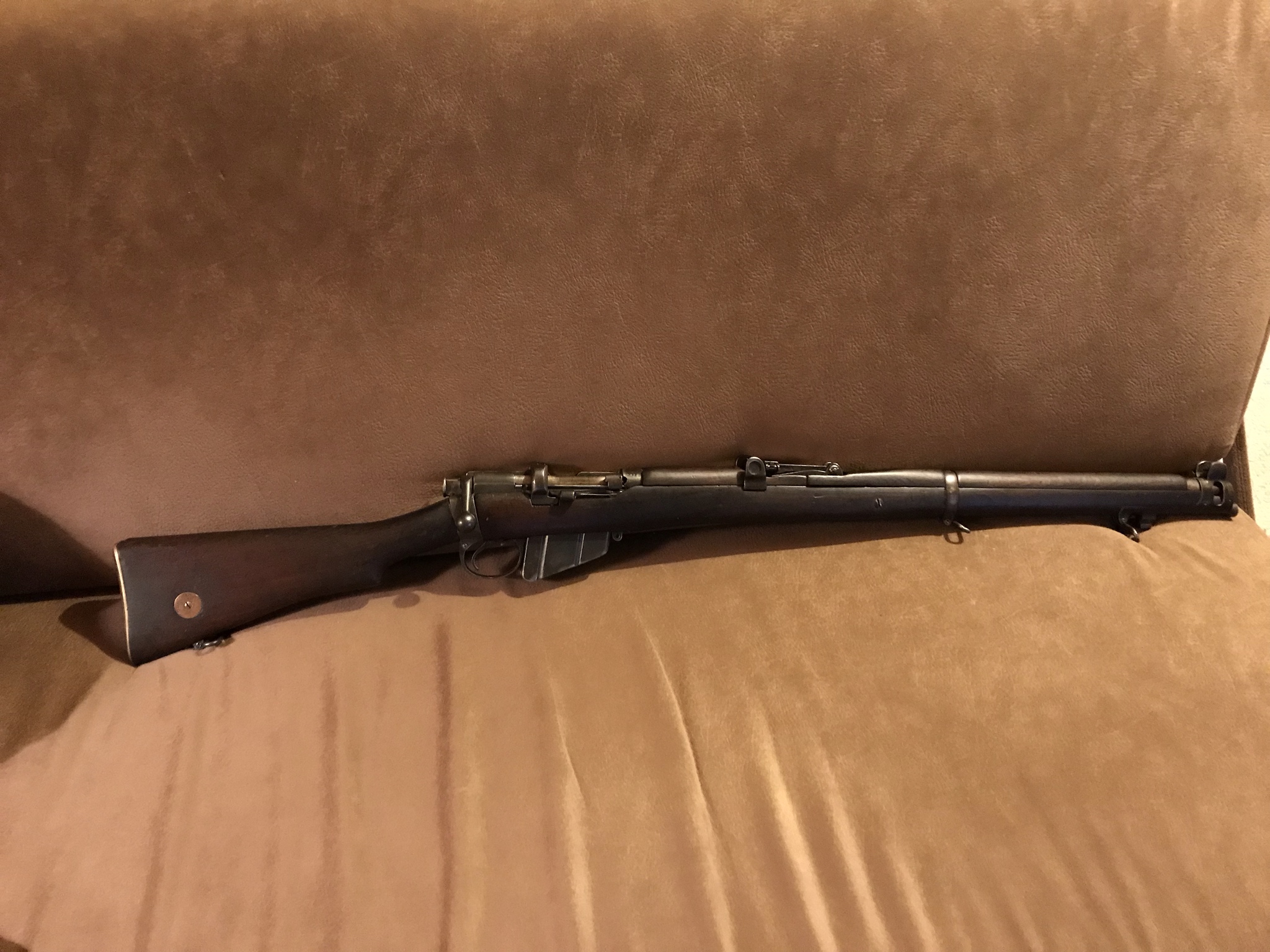
Having scrubbed the grease off I now have a couple questions about this SMLE.
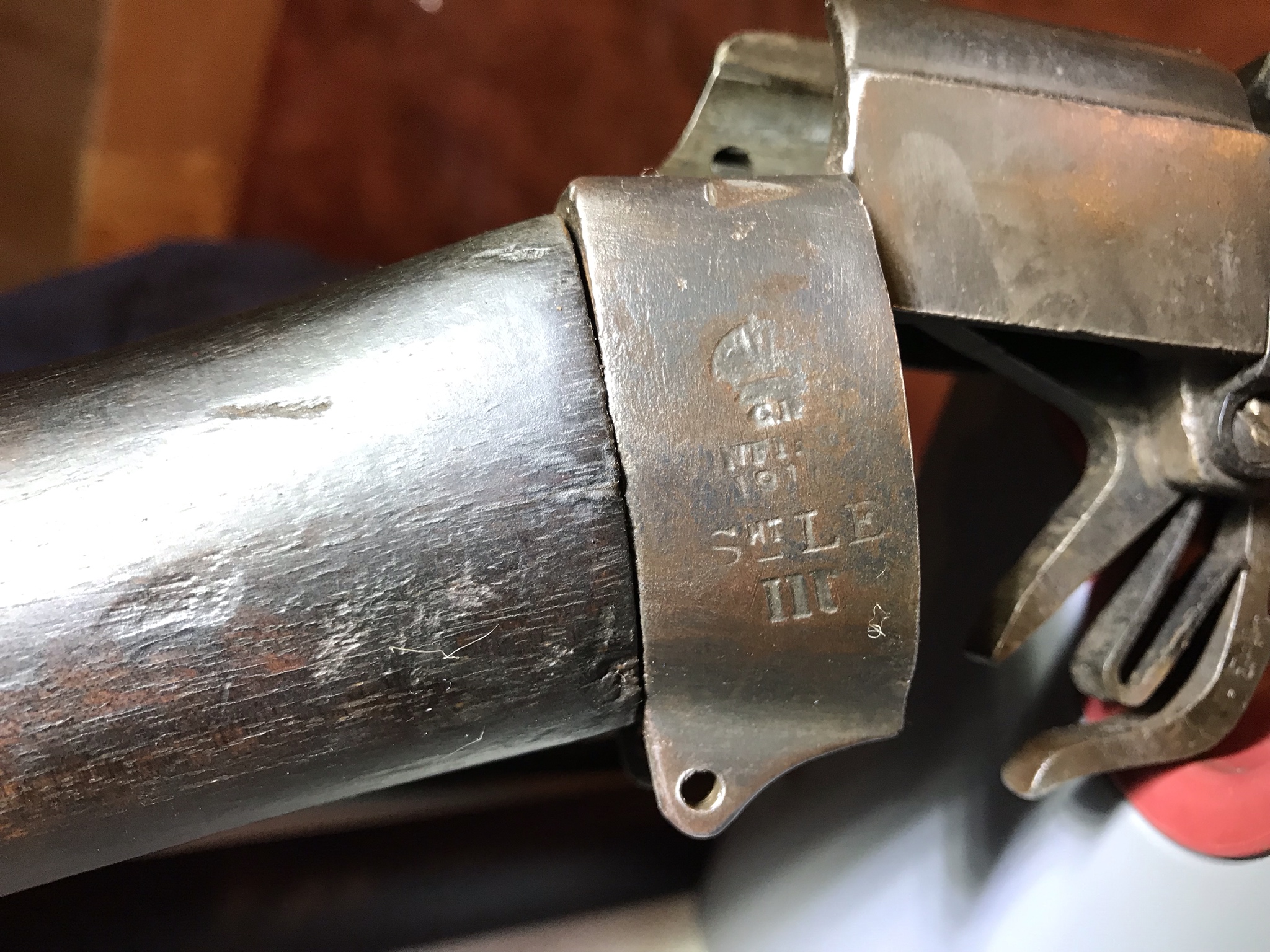
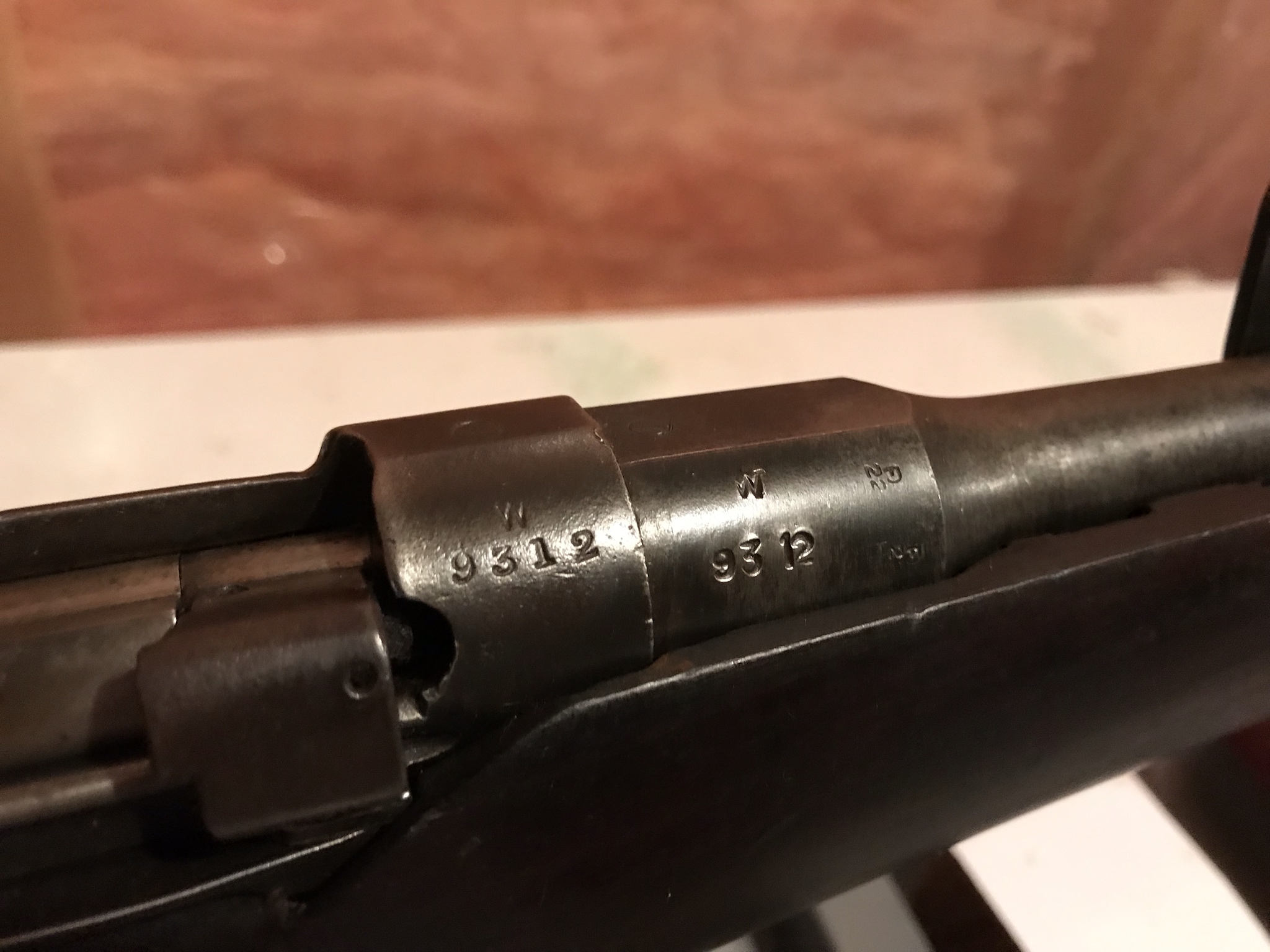
The year stamp is not very deep. So really it could be any year I guess.
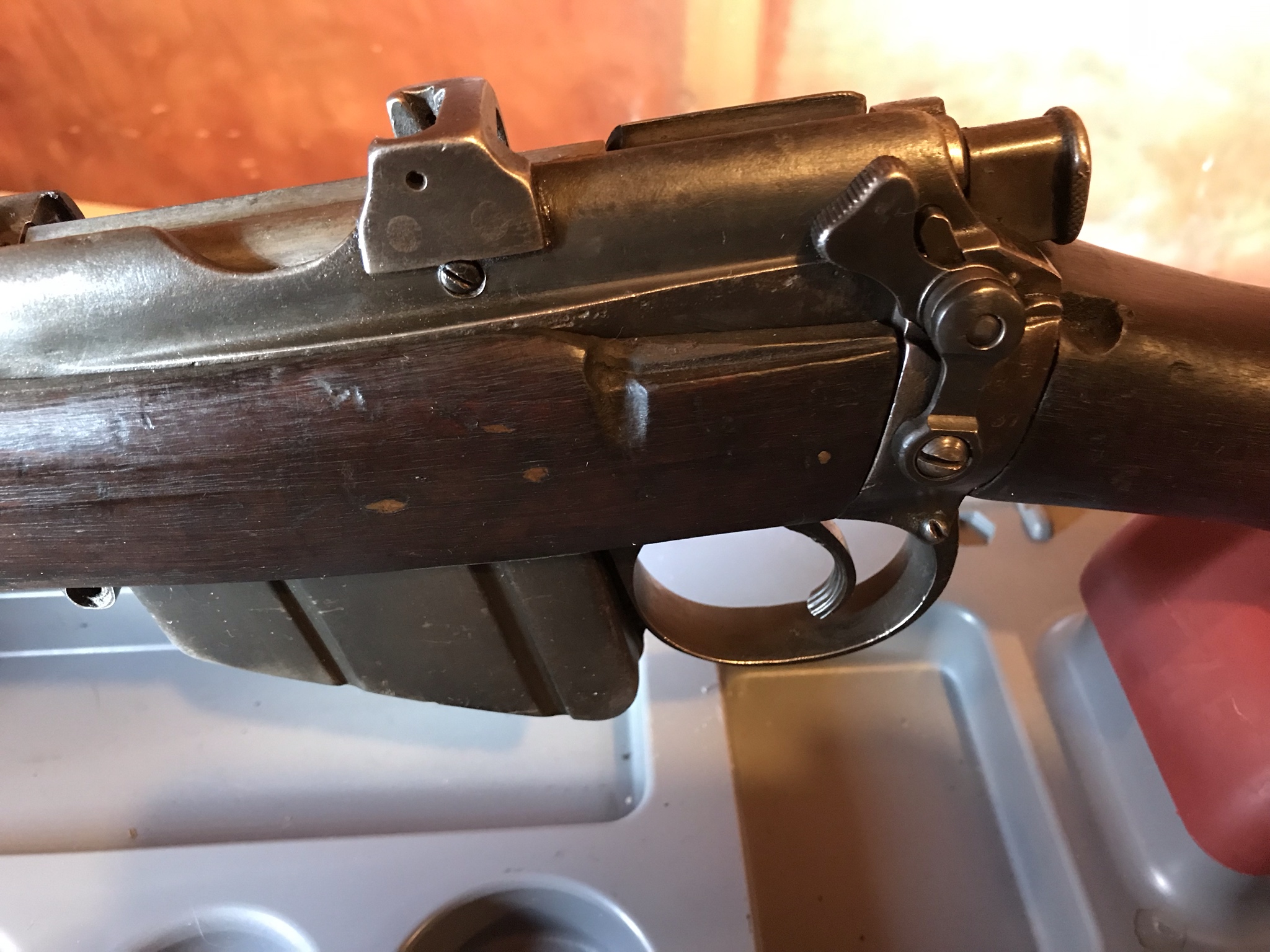
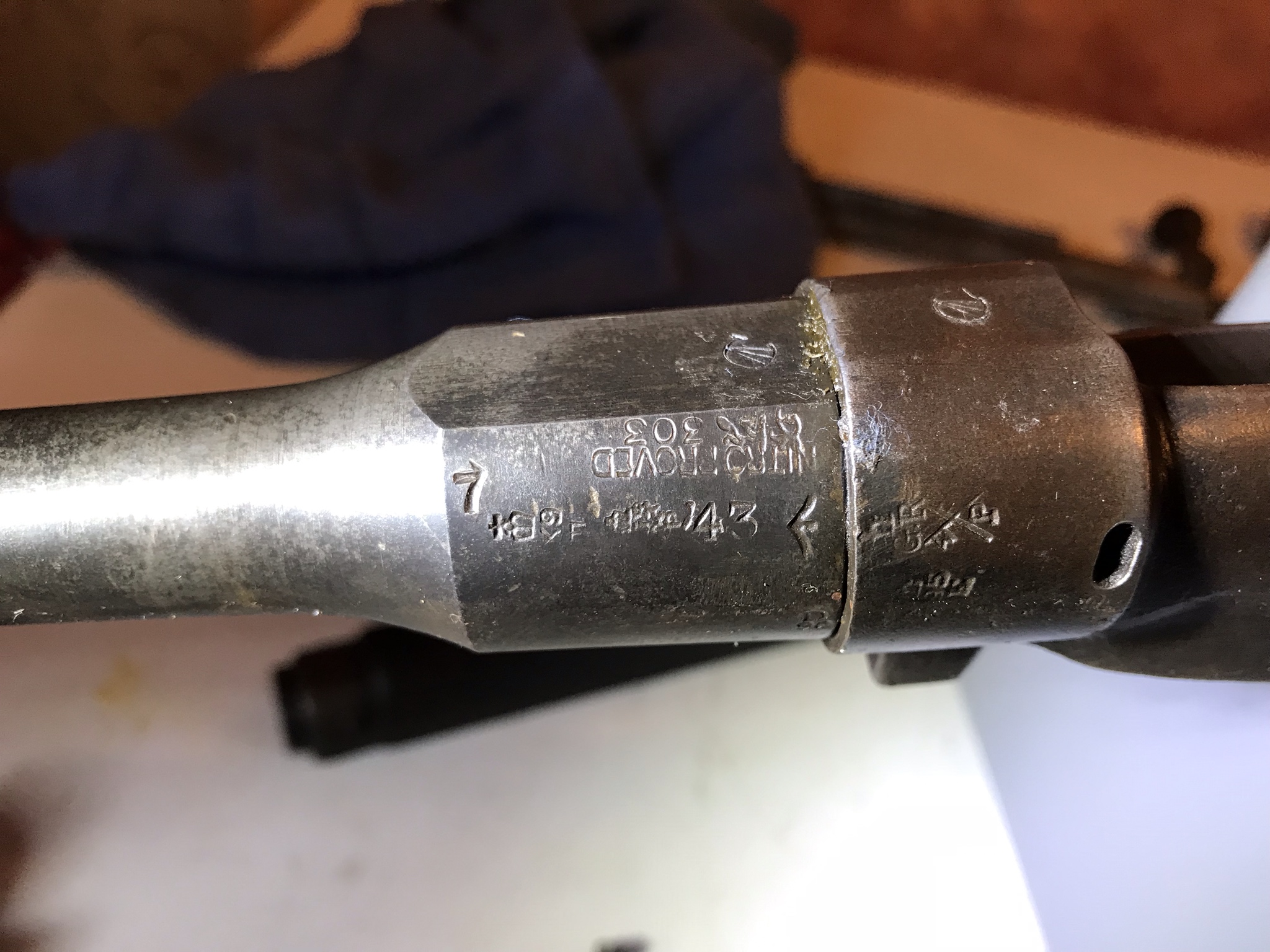
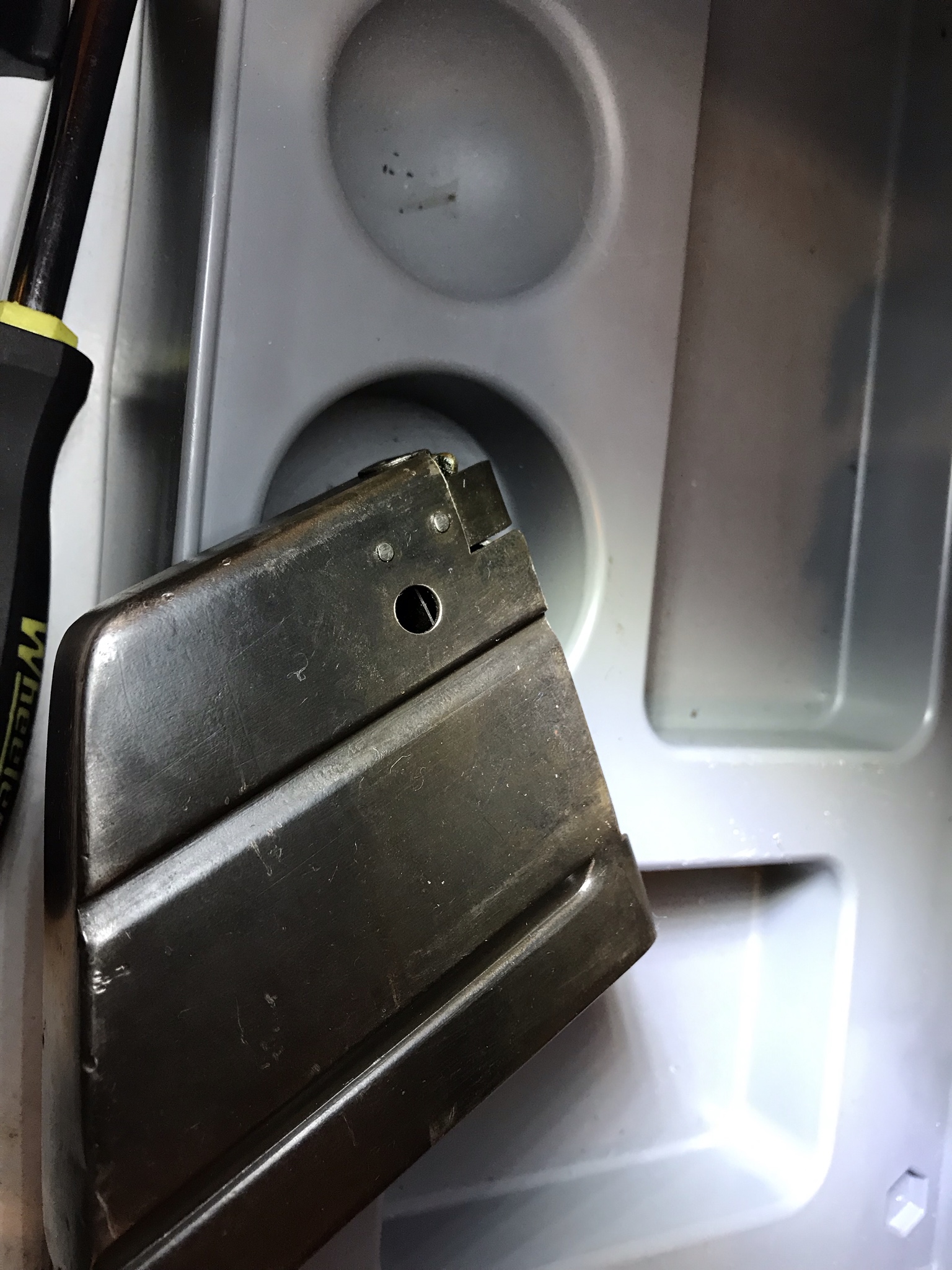
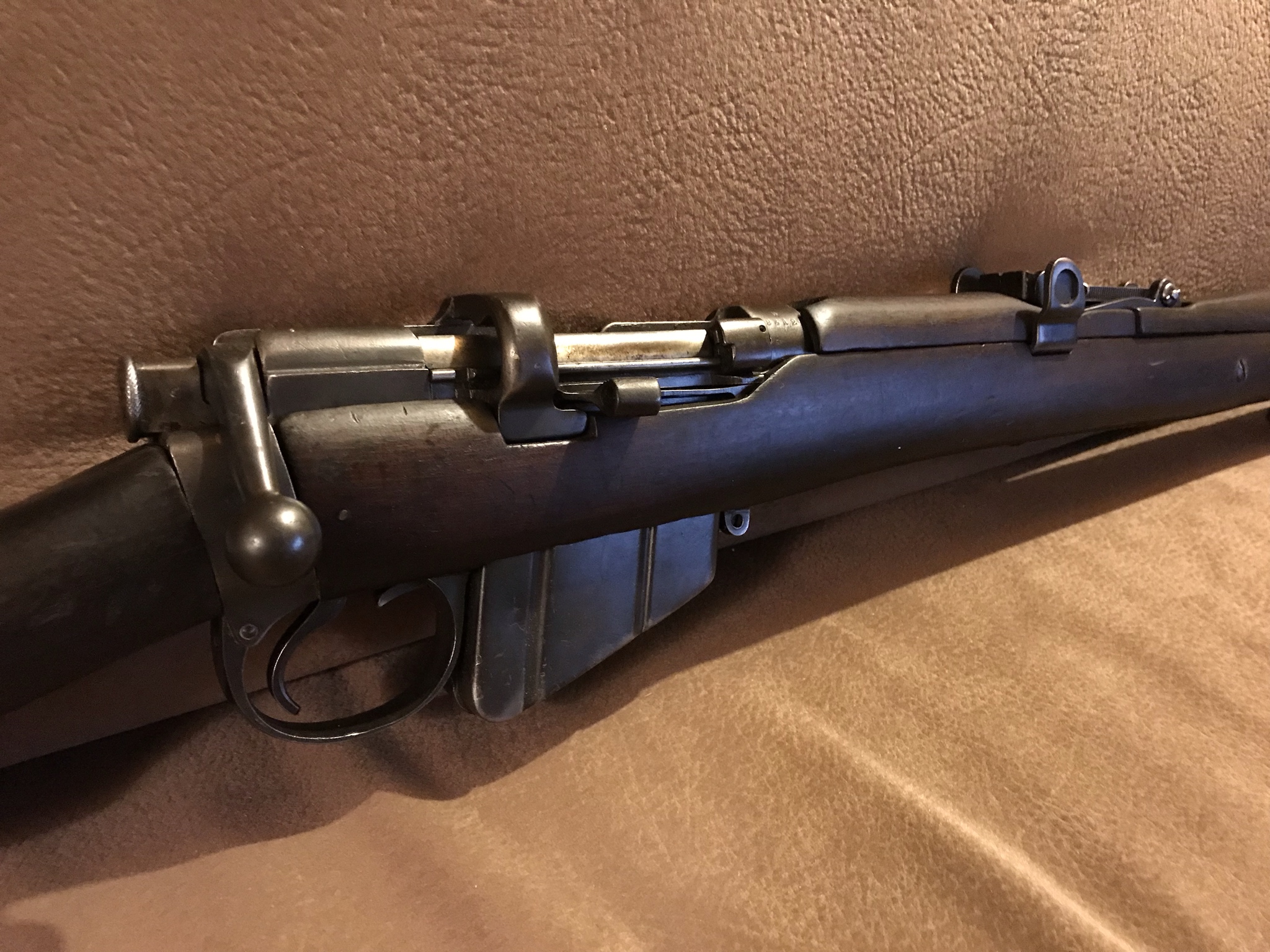
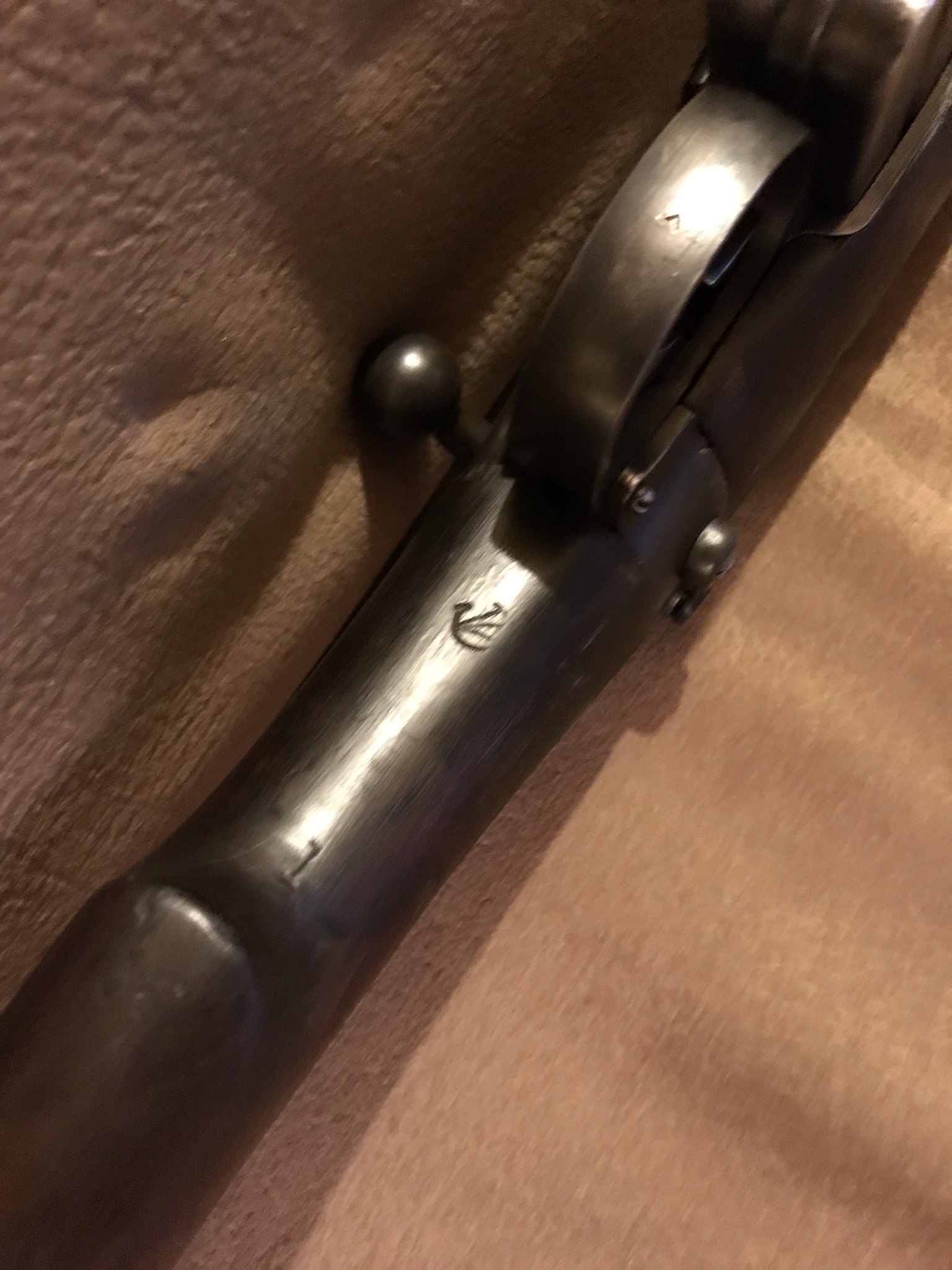
The mag has a hole unlike any of my other SMLE magazines. I would also like to know if the barrel was replaced in 1943 by the stamps. The barrel seems to nice for such an early rifle. But it is stamped to match the receiver.
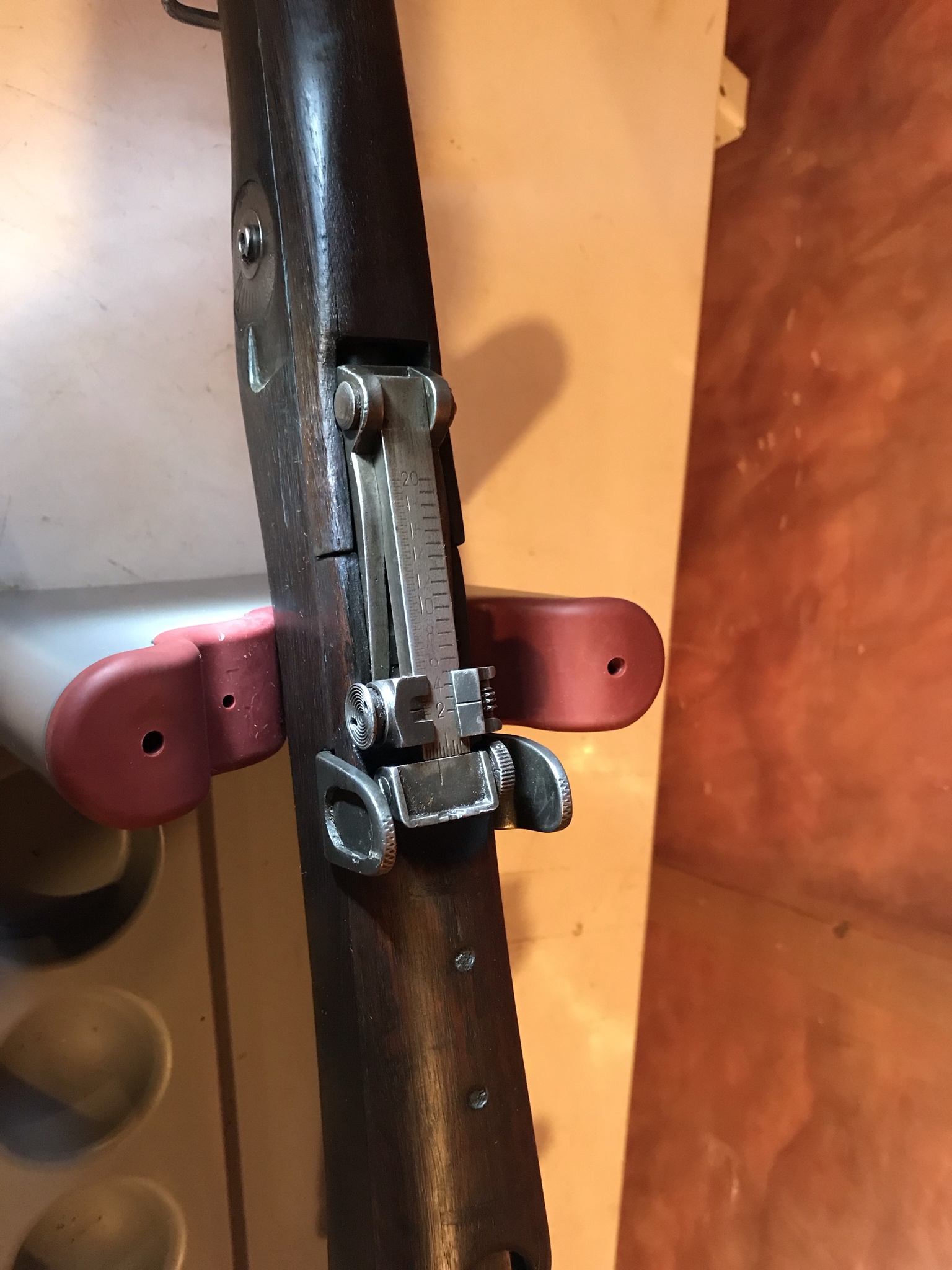
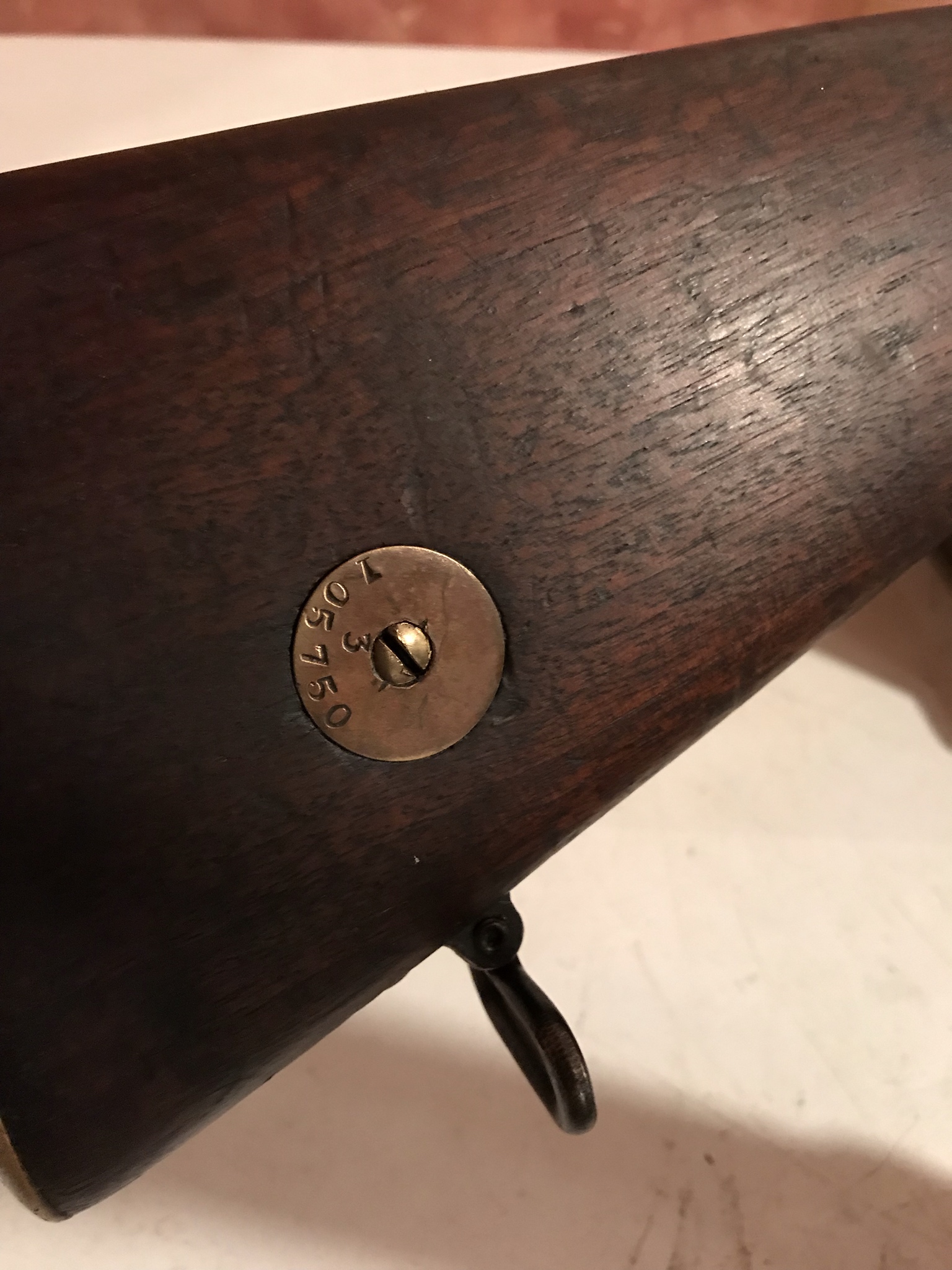
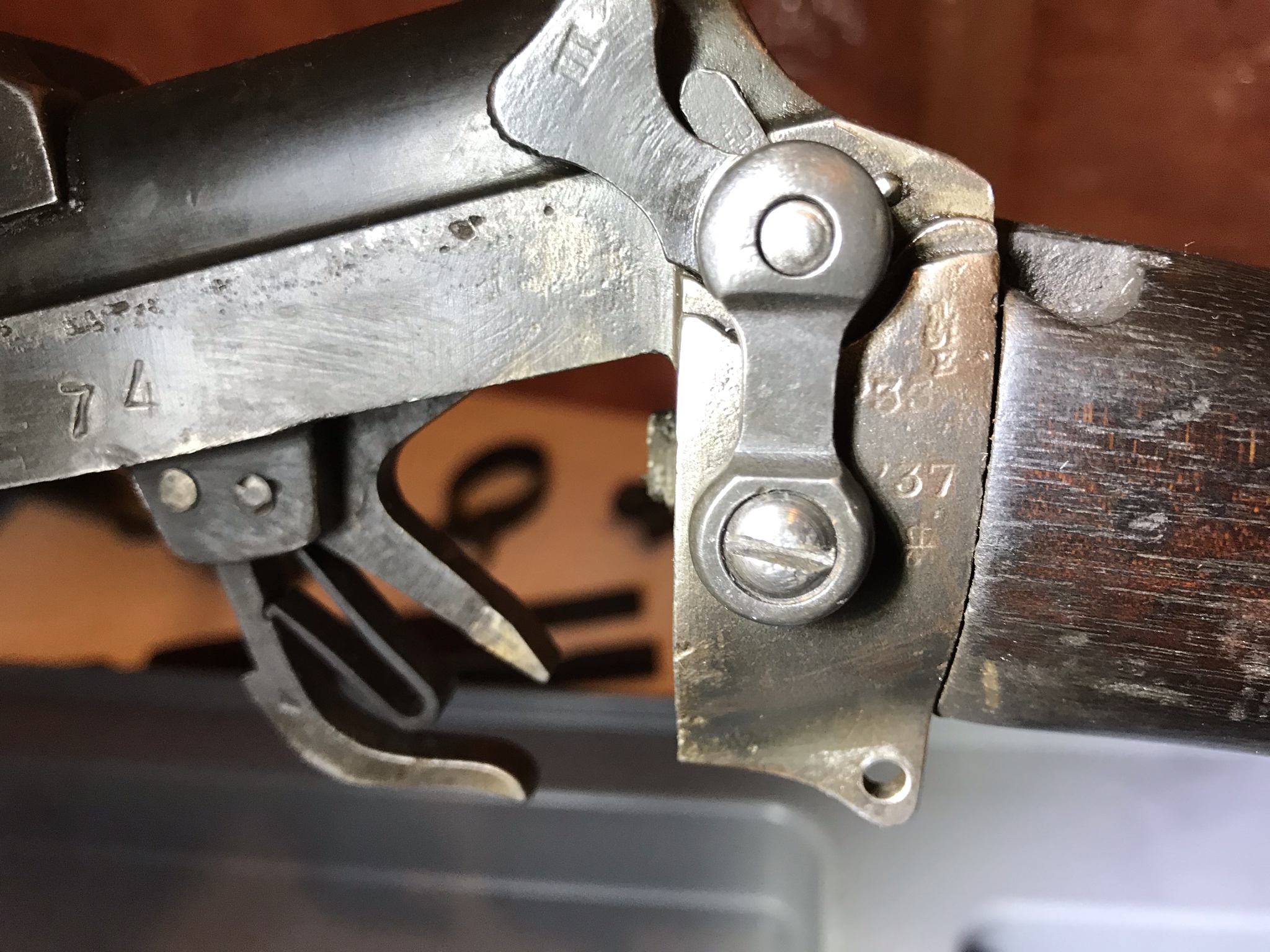
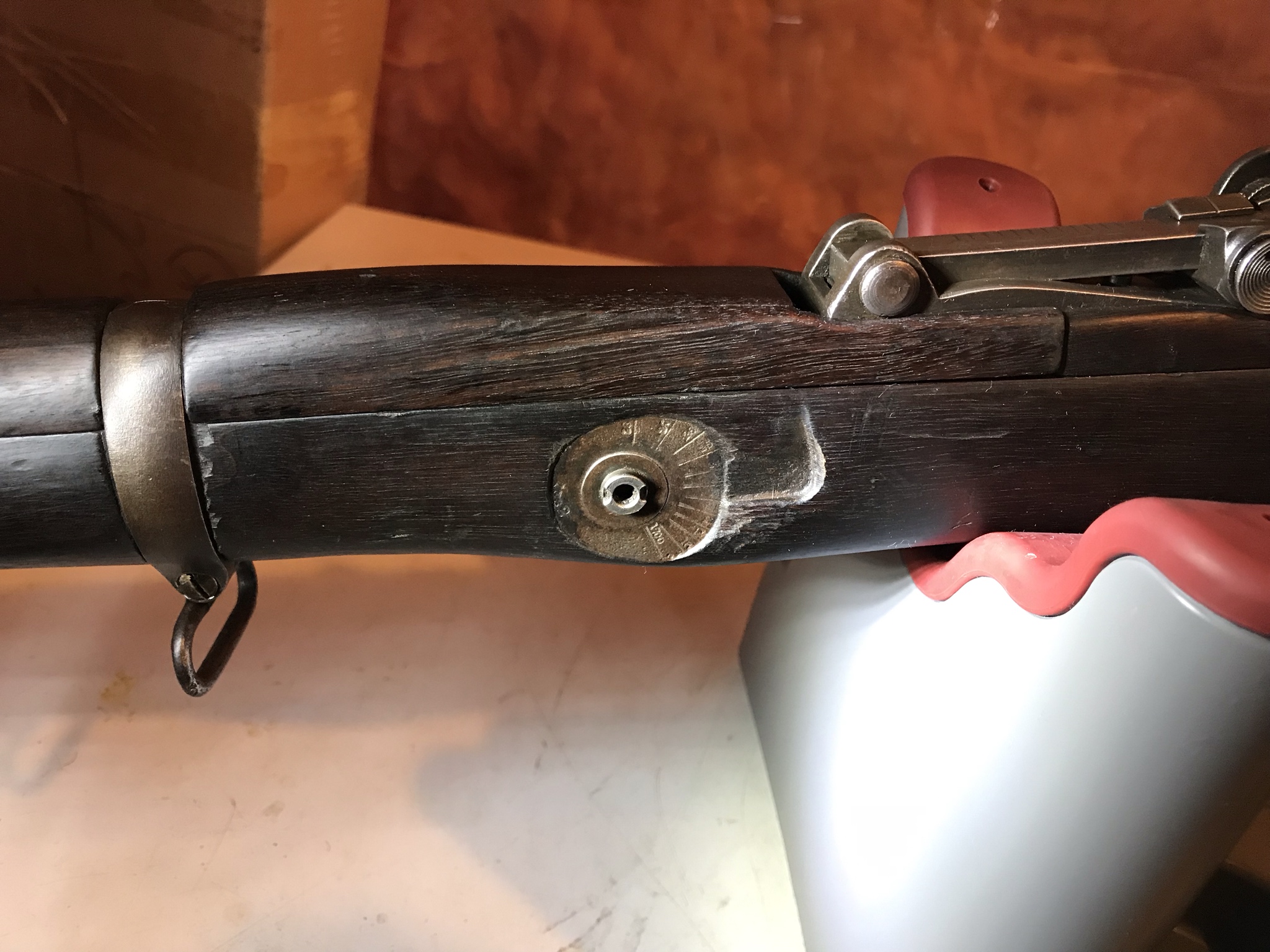
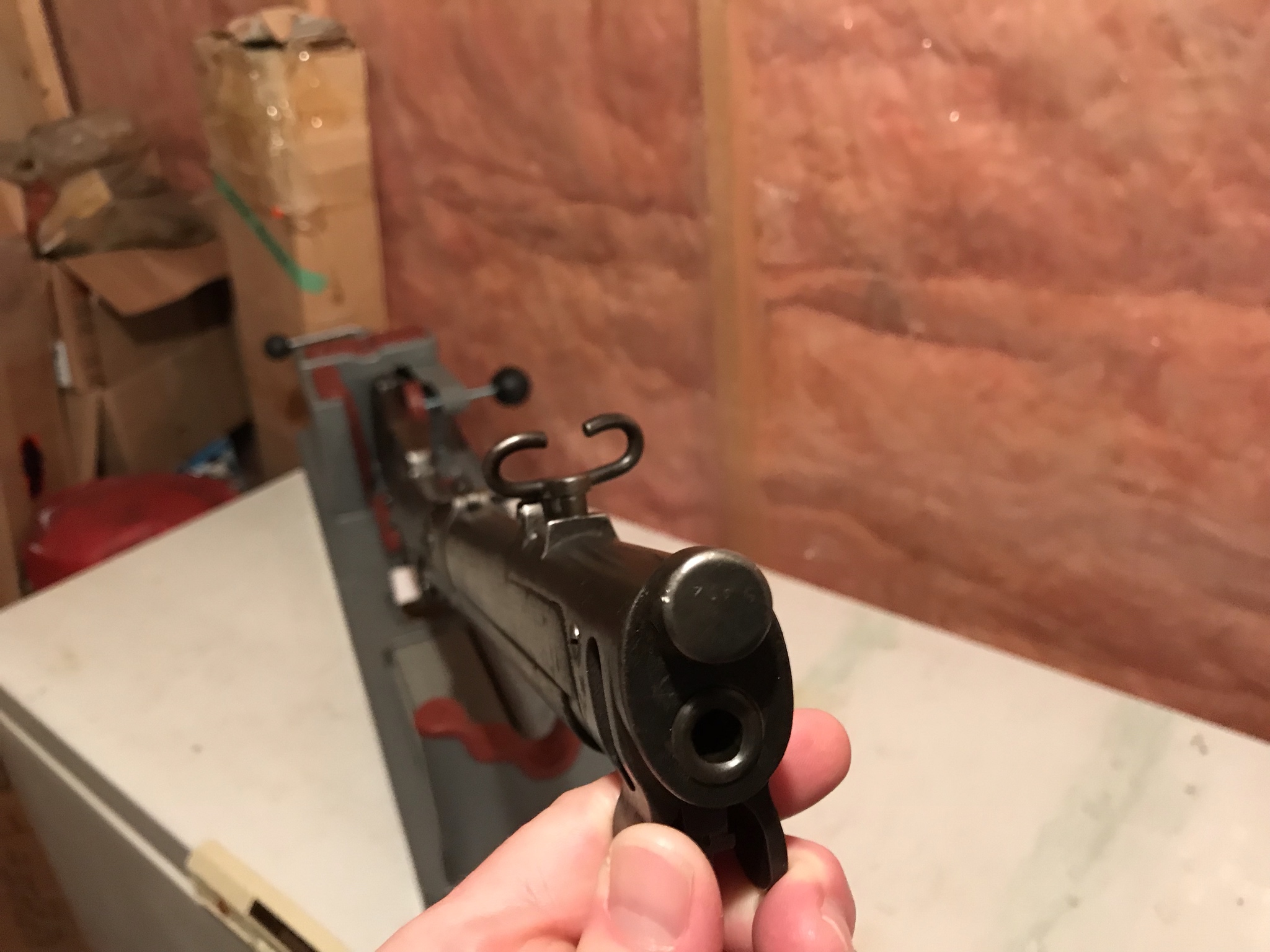
I cannot find any FTR markings but it is broad arrow marked and has some numbers on the rear disc. Are the original volley sights hard to find? The wood appears right and a nice old set would look right at home.

SXFuu6g.jpg


3spbtxj.jpg


FTtUMp5.jpg


A2e2AFm.jpg


QYoF9pZ.jpg


dlSHUDa.jpg


eGFxdy9.jpg


OtuTCcF.jpg


U9E0ExU.jpg
 
.
The barrel and action have after sale proof markings on it. This may have been a sporterized in England rifle that has been "restored" back to original wood furniture.
 
I thought the barrel was to nice to be original. It is strange how it received a new barrel yet retained the volley sight wood and cut off.
Looking at the year stamping with oblique light it looks like 1910. I find these early rifles so interesting.
 
Last edited:
.
The barrel and action have after sale proof markings on it. This may have been a sporterized in England rifle that has been "restored" back to original wood furniture.

Interesting. Which markings are these?
This example came from Corwin, and it looks to have been together for a very very long time as the wear markings on the the barrel match up with the wood. Not to mention the cosmoline and grime!
 
inspection marks for 1933 and 1937

and as above the barrel is a 1943 replacement.

I agree with buffdog that it is likely that it was restored with salvaged wood. there should be serial numbers on the nose cap bayonet lug as well as on the bottom of the wood stock just behind the nose cap.
 
inspection marks for 1933 and 1937

and as above the barrel is a 1943 replacement.

I agree with buffdog that it is likely that it was restored with salvaged wood. there should be serial numbers on the nose cap bayonet lug as well as on the bottom of the wood stock just behind the nose cap.

Yes the serial is on the nose cap and the stock. The stock is very hard to see however without some light from an angle.
 
I was doing some reading on the "BNP" markings found on some Enfields.
It seems like all guns to be sold or exported were marked as such by law.
Is it safe to assume that the large lot of No4 Enfields from Italy and others would also bear these markings?
I also came across a few M1 Garands with the BNP markings.
 
BNP is Birmingham Nitro Proof mark from 1954 onwards, a legal requirement to allow the rifle to be sold through the British Gun Trade onto the public market in UK. A domestic requirement, nothing to do with export.

If it was exported from directly from Italy to Canada, it would not need to be British proof marked. Import into Canada at one time required no additional marking (now there are new UN regs, or soon will be).

"It seems like all guns to be sold or exported were marked as such by law." No, not quite. Only required for domestic sales.

Dealers that buy
surplus directly from govt stores for export, stage the arms at a UK bonded warehouse. If the receiving country has import regulations that require markings that denotes the source and such, they would be marked at the warehouse before shipment overseas.


BNP is Birmingham Nitro Proof mark from 1954 onwards, a legal requirement to allow the rifle to be sold through the British Gun Trade onto the public market in UK. A domestic requirement, nothing to do with export.

If it was exported from directly from Italy to Canada, it would not need to be British proof marked. Import into Canada at one time required no additional marking (now there are new UN regs, or soon will be).

"It seems like all guns to be sold or exported were marked as such by law." No, not quite. Only required for domestic sales.

Dealers that buy
surplus directly from govt stores for export, stage the arms at a UK bonded warehouse. If the receiving country has import regulations that require markings that denotes the source and such, they would be marked at the warehouse before shipment overseas.


Thanks for clearing that up. Then the M1 Garands that were marked are most likely lend lease guns.
On this particular rifle, is the "nitro proved 303" mark the one stamped on for public sale? I cannot see any BNP markings similar to what I can find in my book or on line.
 
Your rifle is interesting in that the markings do tell a bit of a story.

It is a nice example of a Mk.III that looks like it has been there and done that. It has taken (and no doubt given) a schmitt kicking in two world wars.

Starting out as a 1910 (or whatever) Sht.LE Mk.III, it probably saw service in the first world war. It saw enough use to need a new barrel.

After the war in 1933 and 1937 it went back through RSAF Enfield for repair or up grades, as witnessed by the date and inspector stamps marked on the left hand wrist. Could have been an earlier barrel change or the sight upgrade for Mk.VII ammo. Could have been lots of things but it was sufficient work to be inspected and noted on the rifle.

This is where the imagination can be used. In 1943, it had its barrel replaced with an Enfield made unit. This could have been the first or second barrel change. Most likely done in the UK. Need to see the right hand side of the nocks form to help determine who did it, factory or unit armourer.
Canada had a similar barrel replacement program around that time, but used Long Branch made Sht.LE replacement barrels. They tended not to number the barrel to the action.

The rifle came into Canadian possession after the barrel change in 43 and was marked with the 'C broad arrow' govt acceptance markings. This mark was used from 1905 up until 1949 when a new stylised maple leaf became to be used, but the C broad arrow is found still marked on things into the early 1950's. The acceptance mark could have been applied by a Canadian unit in England. I dont recognise the unit markings on the butt disc, but it is another clue.

So after the second World war, it was in still England and was sold off as surplus onto the UK domestic market through the British Gun Trade. There is a London Proof House marking right beside the NITRO PROVED. Marking is a graphic of an armoured arm brandishing a scimitar sword called a 'seaxe'.

This one still has the remnants of the volley sights which were made obscolete in 1916. It has retained them until a point where the flip up arms were removed as an expediency. The rifle did not get a full factory rebuild to like new up to date specs. It did not get new wood as the old wood was still serviceable. This was war time and a dark times for England.

So lots of possible scenarios for this one. But it is basically complete and original, not a desporterised example. Reading the markings, tool marks, wear in the blue all are clues to the detective work in figuring out the story.

A nice example to have in any collection. Yes, volley arms are available, you will find them on ebay every day. But to fit such is actually taking away one or two of those clues to the rifle's history. Leave it alone, it probably saw service looking exactly as it does now. I suggest that if you want a rifle with volley sights, go find another example to add to the collection. :eek:) You actually have a bit of a time capsule frozen in time.

If you added the volley sight arms, with a 1943 rebarrel, they would be a dead give away that the rifle has been messed with post service. If I picked it up at random and evaluated it and saw volleys sights and the three late dated repairs, I would be very suspicious that it was a desportered one too.

In a similar way that many new owners of Sht.LE rifles think that the rifle needs to have a magazine cut off plate and piling hook to be complete. If I see those, I think either that the rifle has been hiding untouched in stores somewhere, or more likely improved and 'corrected' by civilian owner.

 
Last edited:
Birmingham Nitro Proof BNP markings were introduced in 1954.

Your rifle was proofed at the London Proof House.

However, I do need to pull out my notes on London Proof House markings to pin down a date on those London markings. Try and peg it with a date window as to when it was sold as surplus.
 
Last edited:
Not sure what gives it away as a restored sporter. It has the serial number in the nosecap and forend.

Nice one, I like it!
 
Thank you for all this very detailed information. This rifle still has the mag cut off and it has Canadian broad arrow markings on the stock as well.
It is nice to find out that it is not a restored sporter example. I didn't believe it was as the screw heads all had decades worth of grime in them. Unless they desporterized these rifles back in the 1950's.
From this good advice I will leave it as is. Finding some original volley sights and installing them will detract from the history of this rifle. I suspected as such when I first thought about adding them.

aCluaD7.jpg


75yBu1n.jpg


4C2AIn3.jpg


GyPiHy7.jpg


JGRifZs.jpg
 
Last edited:
The EFD inspection mark (E superimposed over F superimposed over D above 22) on the right side of the nocks along with the remarked serial number confirms that the barrel change was done at RSAF Enfield.

Your rifle is one that still has its original mag cut off plate and piling hook. A VERY nice example of a rifle rebuild for use in two world wars.

Clean her gently. Gun oil and a soft cloth for the metal, raw linseed oil and a soft cloth for the wood. Nothing more is required and any more cleaning than that will start to have effect of its collector value. Leave the screw slots alone. You found evidence that the screws have not been touched in years, leave them that way. It is an old rifle so it is allowed to look old.

Nice find. It is a fantastic example of a Canadian Mk.III . A collector would have a hard time finding one if they wanted such. There cannot be many surviving in this condition (as compared to a Mk.III*). It would be the pride of any collection.
 
Last edited:
The EFD inspection mark (E superimposed over F superimposed over D above 22) on the right side of the nocks along with the remarked serial number confirms that the barrel change was done at RSAF Enfield.

Your rifle is one that still has its original mag cut off plate and piling hook. A VERY nice example of a rifle rebuild for use in two world wars.

Clean her gently. Gun oil and a soft cloth for the metal, raw linseed oil and a soft cloth for the wood. Nothing more is required and any more cleaning than that will start to have effect of its collector value. Leave the screw slots alone. You found evidence that the screws have not been touched in years, leave them that way. It is an old rifle so it is allowed to look old.

Nice find. It is a fantastic example of a Canadian Mk.III . A collector would have a hard time finding one if they wanted such. There cannot be many surviving in this condition (as compared to a Mk.III*). It would be the pride of any collection.

When applying the linseed oil, is it best to apply it on the inside and the outside? Or just the outside?
I've read that some soak the stock in a tube filled with raw linseed oil.
 
The stocks were soaked in a warm bath of linseed oil at the factory before they were assembled. Regular maintenance and cleaning involves rubbing in RAW linseed oil (RLO) by hand, letting it soak in for half an hour and then buffing the wood with a soft cloth.

Tung oil was never used on Enfields while in military service by any country of the Commonwealth. It dries hard with a shiny finish.
RLO takes a long time to dry and allows new coatings of RLO to soak in. It is a finish that should be maintained and refreshed once a year.

Just a little drop of RLO in the palm of your hand and rub it all over the outside of the rifle. Not a concern if you get it on the metal. Rub it well into the wood. Let it sit. Wipe it off the wood and metal with a soft cloth, buff the wood. Do this many, many times.

When the wood is conditioned and has taken on a finish, one drop will do the entire rifle.

Don't dismantle the rifle unless you have concerns that there is active rust under the wood line. Leave the rifle untouched if you can.
 
Back
Top Bottom