Sharps '63.
I don't know much about the Gallagher carbine...I have never seen one.
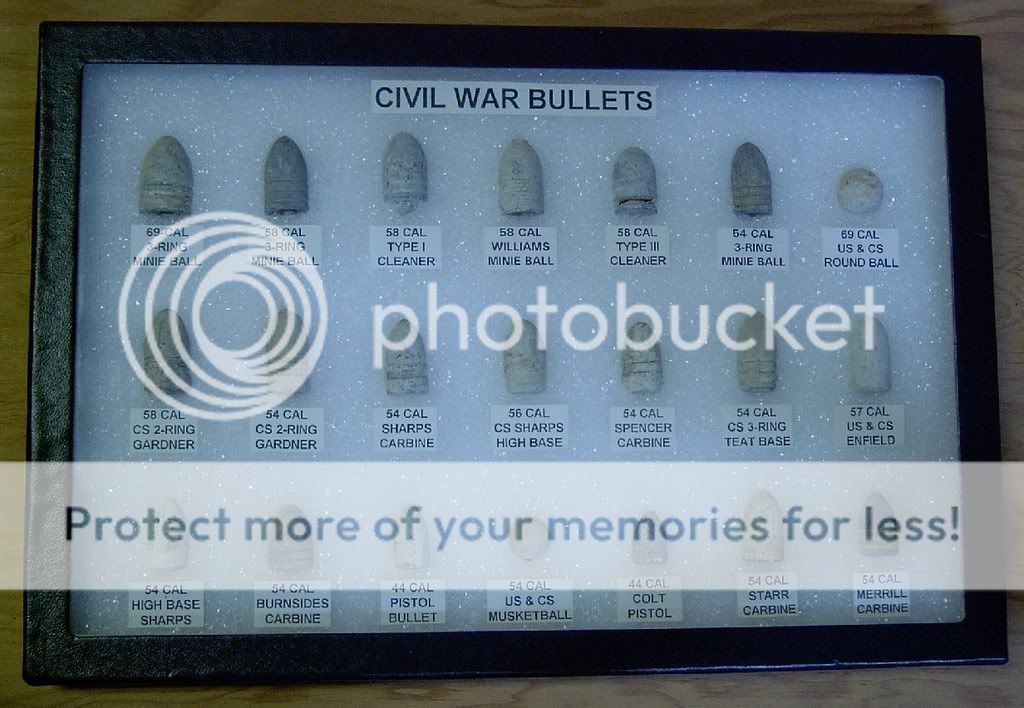
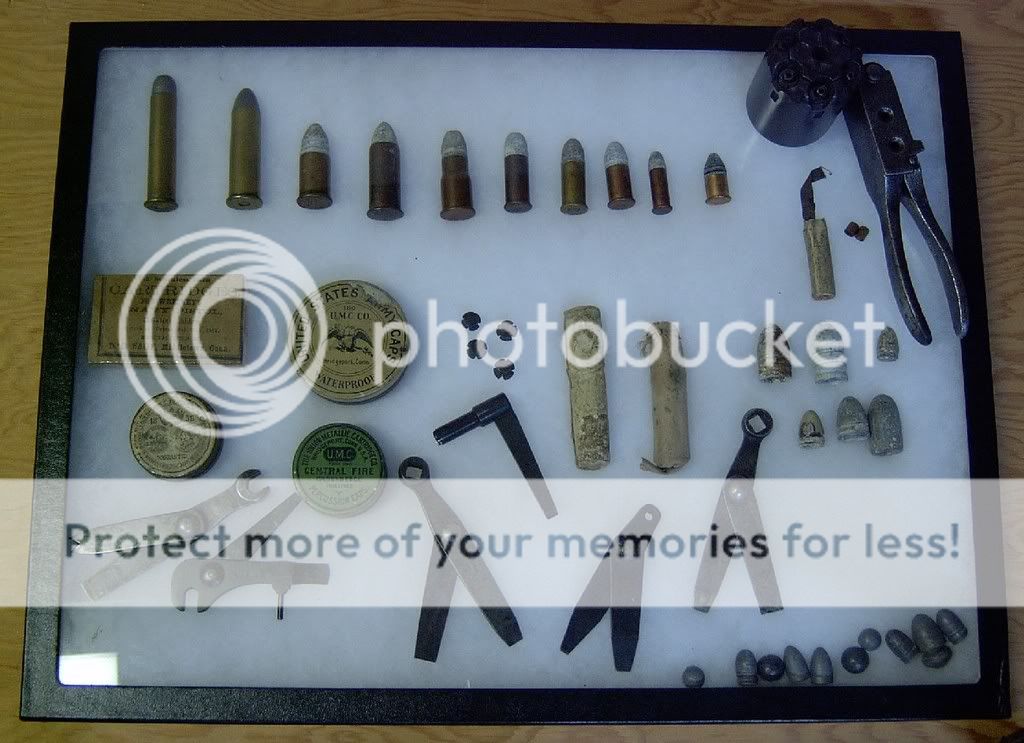
If possible I always try and find an example of the cartridge that was used in the guns that I own.
I don't own an original Smith carbine cartridge....and I doubt that I will ever find one in Canada.
They are rather different than many of the others.
Supplying ammunition to the troops armed with so many different arms must have been a nightmare.
David
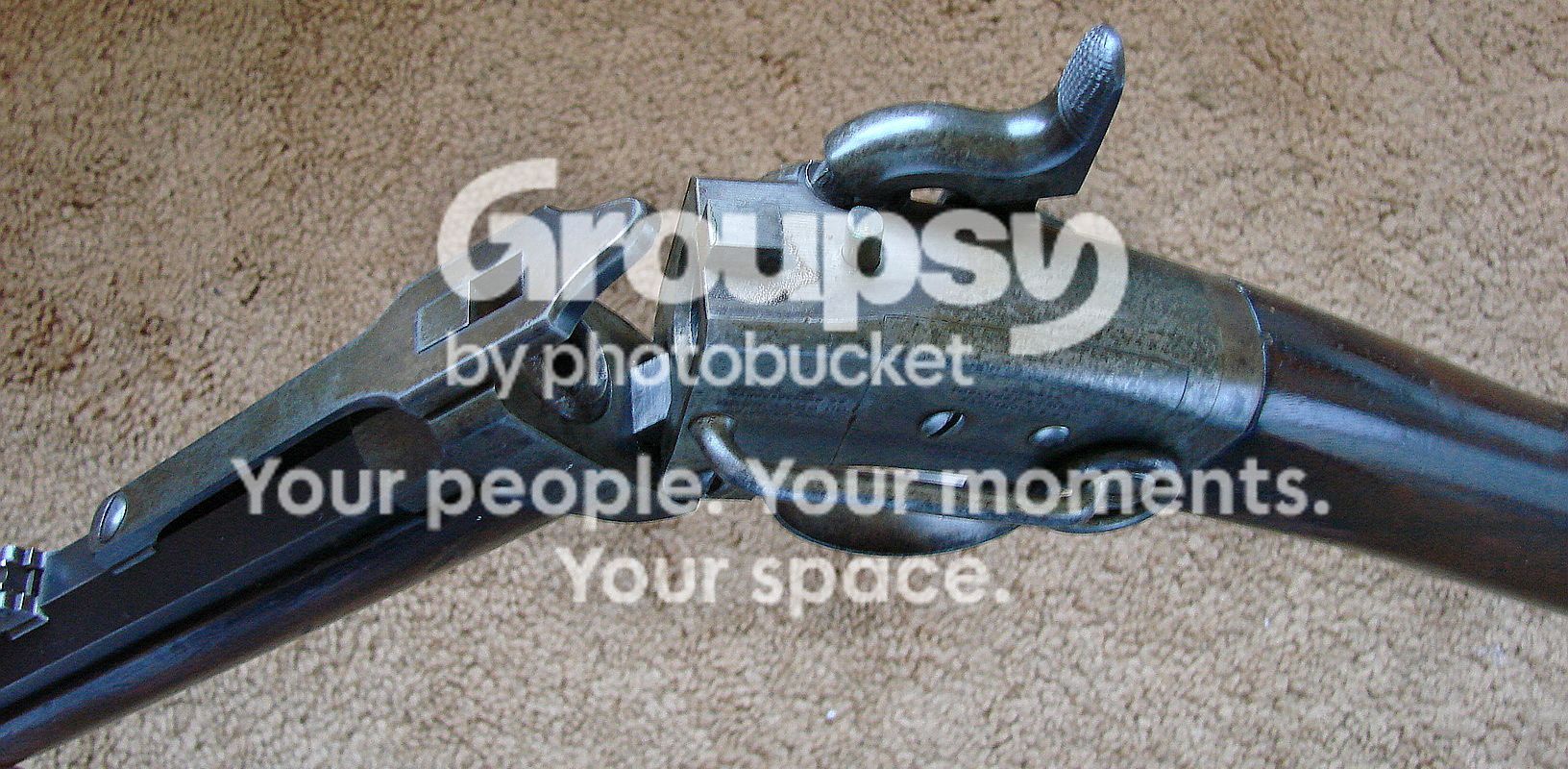
My Smith carbine.
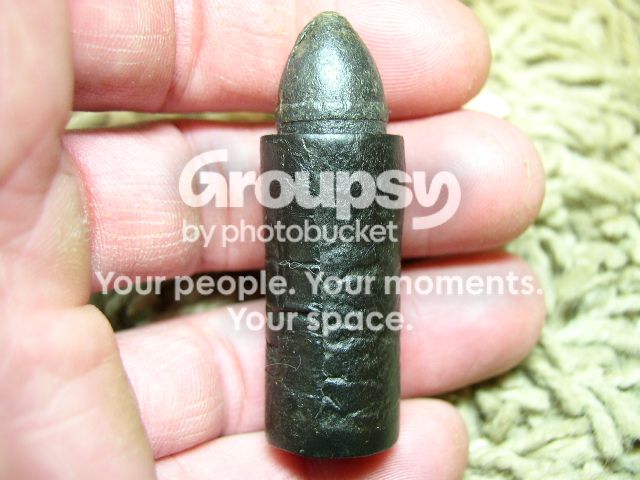
Not my cartridge.
A comment found on the Internet?
The Smith was the fourth most purchased carbine during the Civil War. It was only made during the Civil War from 1861 into 1865. Almost the entire production of 30,000+ was bought by the Federal Government.
The Smith carbine was fifty caliber. It opened by depressing the latch ahead of the trigger to release the barrel. The barrel pivots downward on the frame to a right angle and far beyond the opening angle of the typical break open shotgun.
The Smith carbine was purchased in quantity because it was available at the onset of the Civil War. 7,000 Smith carbines were delivered during the year 1862. It had been invented just before the creation of self-contained metallic ammunition by Smith & Wesson and Henry. Constrained by its ammunition, the Smith carbine was surpassed by other developments, principally the Sharps and the Spencer.
Special ammunition in an india rubber tube was issued for the Smith carbine. It could also be loaded with loose powder and bullet and was so used when captured by the Confederates. Loaded and fired without a seal the leakage is significant to the shooter's hand and arm and can be frightening to the face and eyes.
Alternate attempts to make ammunition were made with a rubber sealing ring, rolled paper, gutta percha, or rolled metal. Many different bullet weights and powder charges were used as arsenals and suppliers struggled with the task of making suitable ammunition. The bullet and powder weights and energies cited below are a composite to estimate typically issued ammunition.
The Smith Carbine was produced under three company names. All were made in the same general area in Massachusetts around Chicopee Falls and Springfield.
The original Smith Carbine was patented by Gilbert Smith of Buttermilk Falls, New York on June 23, 1857, and successfully completed the Military Trials of the late 1850's. Significant quantities were ordered by the Union military authorities, who after all had to supply both Armies for most of the Civil War.
More than 30,000 were produced by the Massachusetts Arms Co. and American Machine Works of Chicopee Falls, Massachusetts. Military sales of the Smith were handled by Poultney and Trimble of Baltimore, and units known to have received the Smith were the 3rd W. Va. Cav., the 7th and 11th Ill. Cav., the 1st Conn. Cav, the 7th and 17th Penn. Cav., the 6th and 9th Ohio Cav., and the 1st Massachusetts Cav.
The action of the Smith Carbine breaks open in such a way that the chamber is broken between the front and rear of its dimensions. This was incorporated in the design of the weapon to facilitate quick removal of spent rounds.
-----------------------------------------------------
These are Burnside carbine cartridges....how different is that?


I don't know much about the Gallagher carbine...I have never seen one.
If possible I always try and find an example of the cartridge that was used in the guns that I own.
I don't own an original Smith carbine cartridge....and I doubt that I will ever find one in Canada.
They are rather different than many of the others.
Supplying ammunition to the troops armed with so many different arms must have been a nightmare.
David
My Smith carbine.
Not my cartridge.
A comment found on the Internet?
The Smith was the fourth most purchased carbine during the Civil War. It was only made during the Civil War from 1861 into 1865. Almost the entire production of 30,000+ was bought by the Federal Government.
The Smith carbine was fifty caliber. It opened by depressing the latch ahead of the trigger to release the barrel. The barrel pivots downward on the frame to a right angle and far beyond the opening angle of the typical break open shotgun.
The Smith carbine was purchased in quantity because it was available at the onset of the Civil War. 7,000 Smith carbines were delivered during the year 1862. It had been invented just before the creation of self-contained metallic ammunition by Smith & Wesson and Henry. Constrained by its ammunition, the Smith carbine was surpassed by other developments, principally the Sharps and the Spencer.
Special ammunition in an india rubber tube was issued for the Smith carbine. It could also be loaded with loose powder and bullet and was so used when captured by the Confederates. Loaded and fired without a seal the leakage is significant to the shooter's hand and arm and can be frightening to the face and eyes.
Alternate attempts to make ammunition were made with a rubber sealing ring, rolled paper, gutta percha, or rolled metal. Many different bullet weights and powder charges were used as arsenals and suppliers struggled with the task of making suitable ammunition. The bullet and powder weights and energies cited below are a composite to estimate typically issued ammunition.
The Smith Carbine was produced under three company names. All were made in the same general area in Massachusetts around Chicopee Falls and Springfield.
The original Smith Carbine was patented by Gilbert Smith of Buttermilk Falls, New York on June 23, 1857, and successfully completed the Military Trials of the late 1850's. Significant quantities were ordered by the Union military authorities, who after all had to supply both Armies for most of the Civil War.
More than 30,000 were produced by the Massachusetts Arms Co. and American Machine Works of Chicopee Falls, Massachusetts. Military sales of the Smith were handled by Poultney and Trimble of Baltimore, and units known to have received the Smith were the 3rd W. Va. Cav., the 7th and 11th Ill. Cav., the 1st Conn. Cav, the 7th and 17th Penn. Cav., the 6th and 9th Ohio Cav., and the 1st Massachusetts Cav.
The action of the Smith Carbine breaks open in such a way that the chamber is broken between the front and rear of its dimensions. This was incorporated in the design of the weapon to facilitate quick removal of spent rounds.
-----------------------------------------------------
These are Burnside carbine cartridges....how different is that?
Last edited: