












































You are using an out of date browser. It may not display this or other websites correctly.
You should upgrade or use an alternative browser.
You should upgrade or use an alternative browser.
A Tribute to Queen Victoria.
- Thread starter drm3m
- Start date


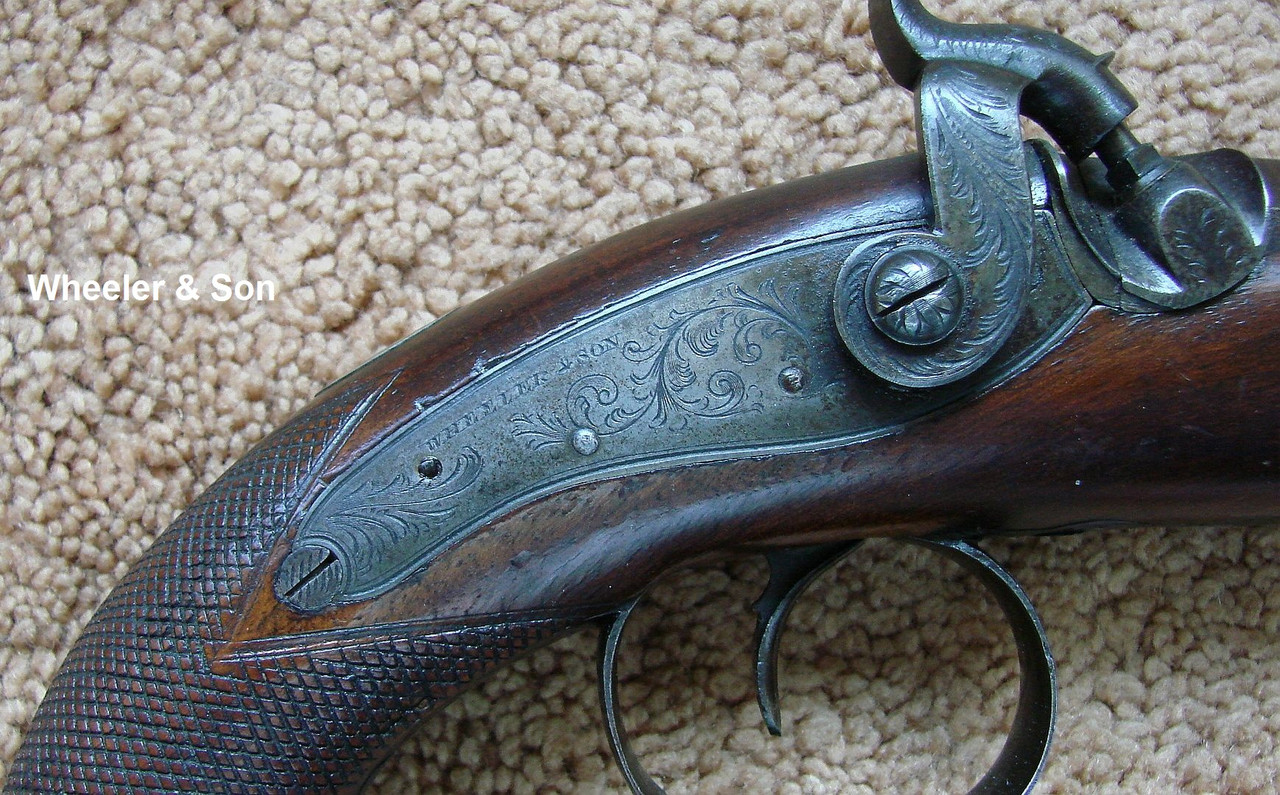
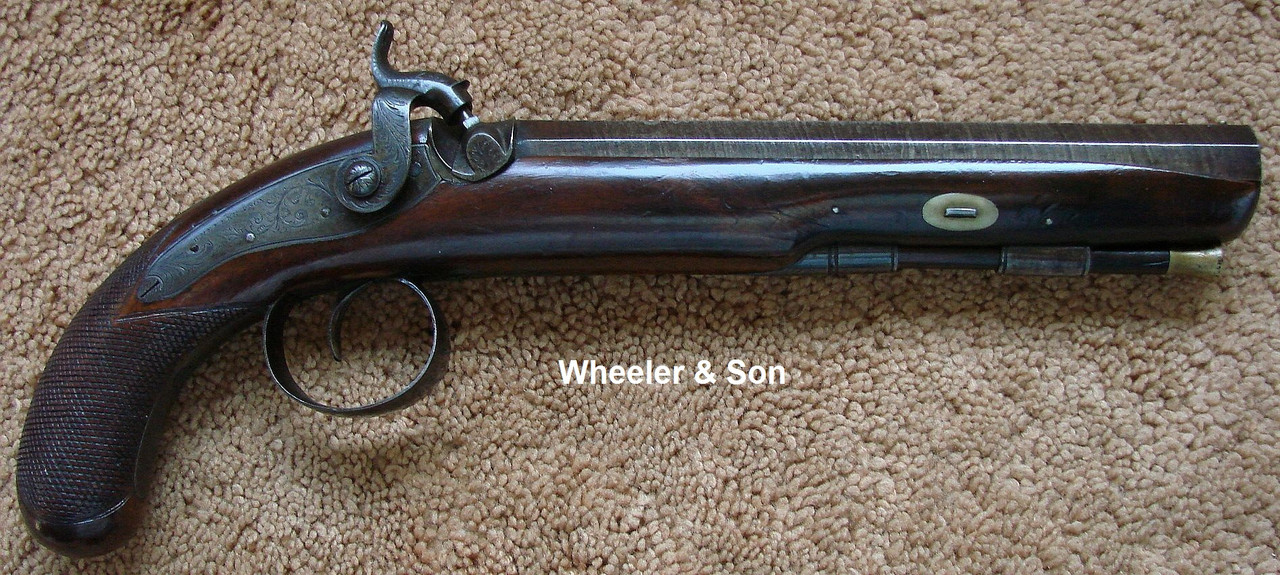
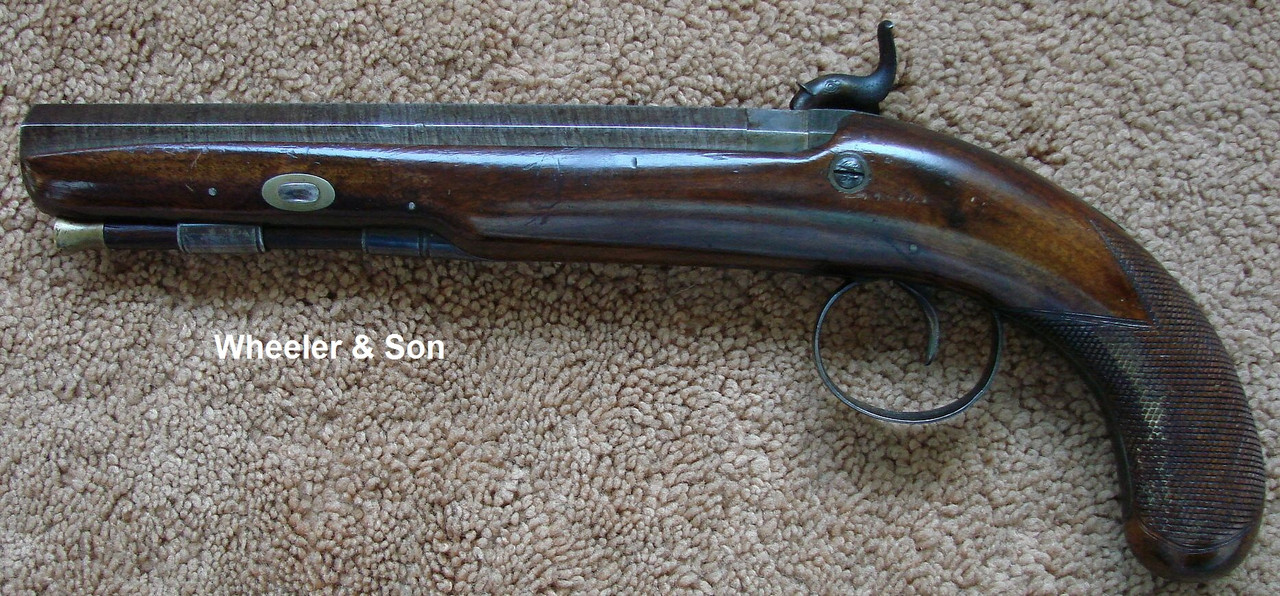
I love the simple yet elegant lines of that pistol - nothing there that doesn't need to be, and beautifully simple. I'm betting it's a great shooter, too. One thing is for sure, if I had it here in UK it would get shot - a lot. Note the size of the trigger gaurd, ideal for shooting with a gloved hand - it is, after all, probably one of a pair of travelling pistols carried by a gentleman ahorse.

Great topic, let’s hear it for Queen Victoria! Hip, Hip, Huzzah!
Both Her Majesty and her consort, Prince Albert, were keen shooters. Albert favoured sporting guns by William Greener (father of the better-known William Wellington Greener), Edward Paton, and George Fuller. The firm chosen by Queen Victoria (and let’s face it, she could have chosen anyone) was that of Parker, Field & Sons. I realize that few will readily recognize these names. The firm of Parker, Field & Sons is probably best known for its military contracts. It supplied arms to the Honourable East India Company, trade guns to the Hudson’s Bay and North West Companies, and military Enfield muskets to both sides in the American Civil War. The firm also provided police forces with pistols, truncheons, tipstaffs, cutlasses, handcuffs, wrist shackles and leg irons. Little is known or has been written about Parker, Field & Sons, and even less on their sporting guns. Surviving pieces show off the superb quality of their flint and percussion pistols and sporting guns, but very little is known of their pinfire game guns.
The origins of the business started with John Field, who had been a goldsmith, sword cutler and gun maker at 233 High Holborn from 1783 to 1791. He traded under his name and also as Field & Co and Field & Clarke. When John Field died in 1791, William Parker went into partnership with his widow, and they traded as Field & Parker. John Field Junior worked for the firm, but not as a partner. In 1793, William Parker bought John Field’s widow’s share of the partnership. He became gun maker to Prince Edward, then to King William IV, and the Duke of Kent. In 1841 William Parker died, and John Field Junior and his sons started trading as Parker, Field & Sons. In 1850 John Field Junior died, and the sons, John William Parker Field and William Shakespeare Field, took over the business. JWP Field was an accomplished rifle shooter; he was Instructor to the Honourable Artillery Company from 1866 to 1879 and Captain of the English Twenty shooting team. At some point, Parker, Field & Sons received the greatest accolade, becoming gunmaker to Her Majesty Queen Victoria.
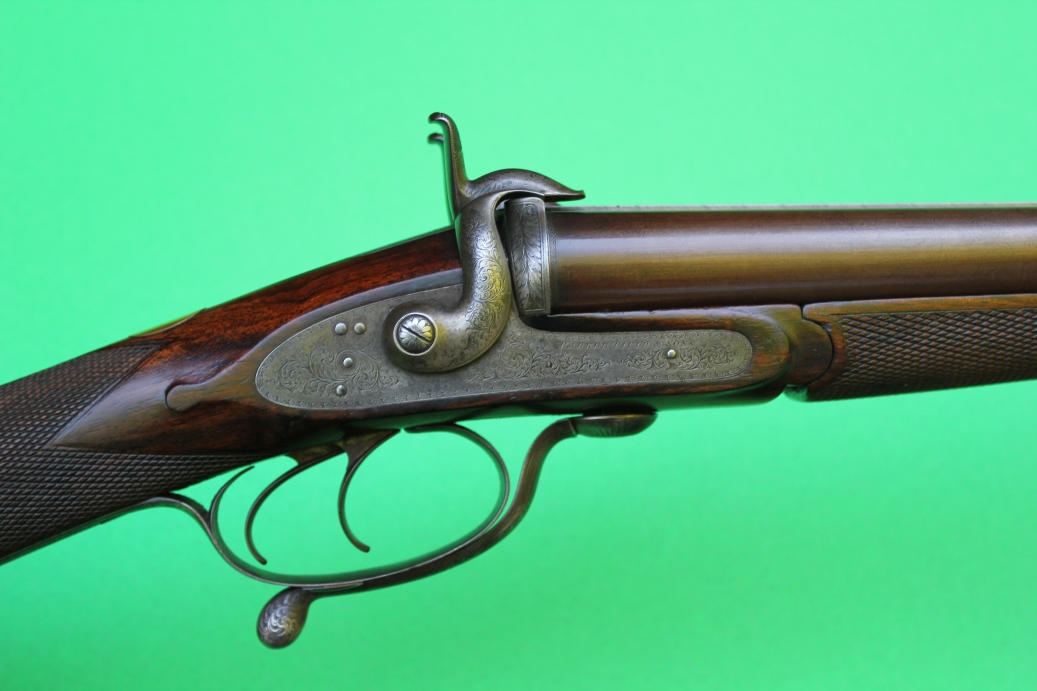
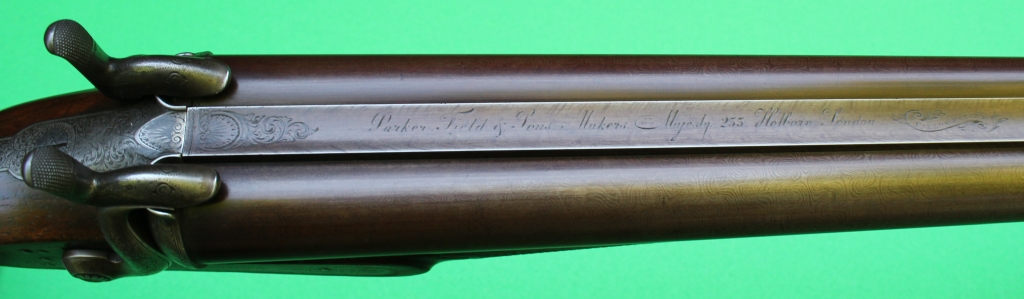
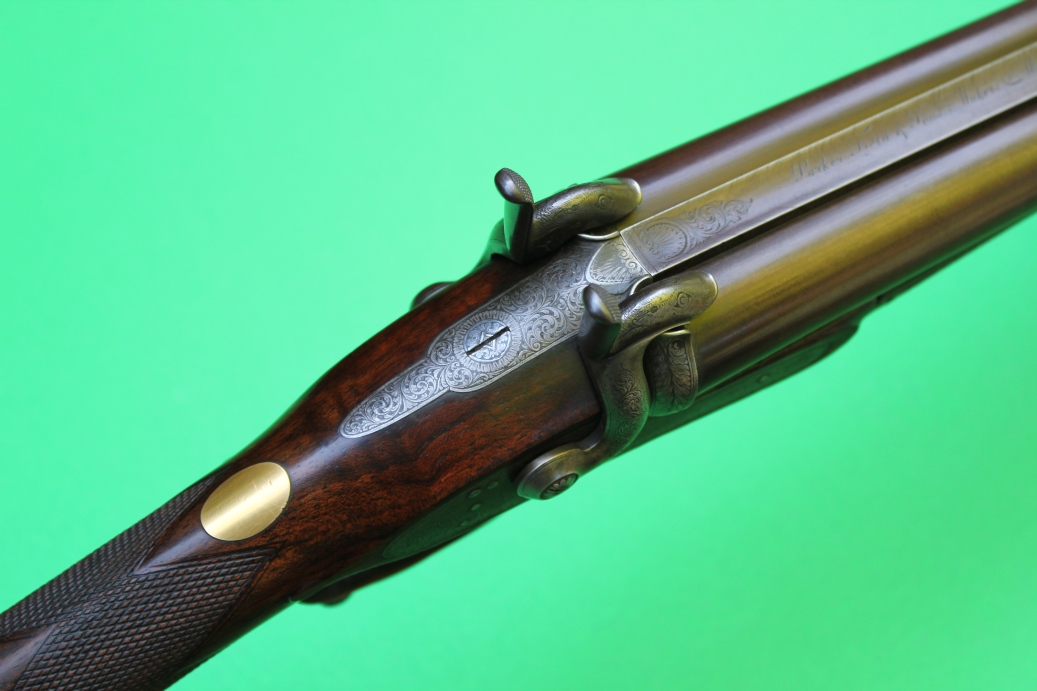
Here is a Parker, Field & Sons pinfire game gun. It is amongst the first to exhibit the bar-in-wood construction to hide the hinge and minimize the visual differences between muzzle-loaders and the early breech-loaders. It is a 12-bore, and Parker, Field & Sons probably made gun number 10567 sometime around 1865. The top rib is signed ‘Parker Field & Sons Makers to her Majesty 233 Holborn London’ in cursive and ‘Field’s Patent’ within a decorative scroll. The same ‘Field’s Patent’ marking is present on the sculpted underlever. The 30” damascus barrels have London proofs and bear the Field stamp and the barrel maker’s mark ‘R.W.,’ possibly Robert Wall of 9 Little Compton St., Soho (1864-65). The single-bite partial snap-action rotary underlever action is John William Parker Field’s patent No. 3485 of December 1862. It is only a partial snap-action; the underlever is only partially under spring tension. It has to be closed by hand.
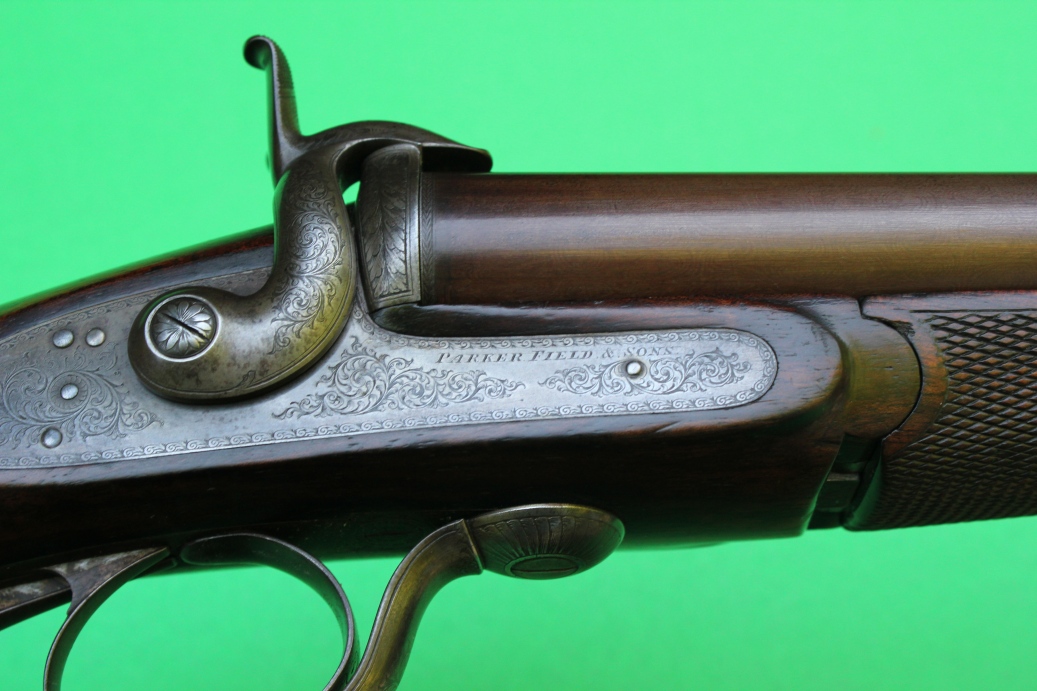
The slender bar action locks are signed ‘Parker Field & Sons.’ The rounded hammers have dolphin-headed noses, and the thin percussion fences are decorated with acanthus spray engraving. The figured stock has drop points, a feature not commonly found at the time. The foliate scroll engraving is typical of the period. The vacant monogram escutcheon on the top wrist is gold, not the usual silver. The gun weighs a tidy 6 lb 15 oz., and the bores are still mirror-bright. The gun still has its original leather-covered case, though the case is in a rather poor condition, and the label is darkly stained. I would be surprised if Parker, Field & Sons built more than a handful of these.
Both Her Majesty and her consort, Prince Albert, were keen shooters. Albert favoured sporting guns by William Greener (father of the better-known William Wellington Greener), Edward Paton, and George Fuller. The firm chosen by Queen Victoria (and let’s face it, she could have chosen anyone) was that of Parker, Field & Sons. I realize that few will readily recognize these names. The firm of Parker, Field & Sons is probably best known for its military contracts. It supplied arms to the Honourable East India Company, trade guns to the Hudson’s Bay and North West Companies, and military Enfield muskets to both sides in the American Civil War. The firm also provided police forces with pistols, truncheons, tipstaffs, cutlasses, handcuffs, wrist shackles and leg irons. Little is known or has been written about Parker, Field & Sons, and even less on their sporting guns. Surviving pieces show off the superb quality of their flint and percussion pistols and sporting guns, but very little is known of their pinfire game guns.
The origins of the business started with John Field, who had been a goldsmith, sword cutler and gun maker at 233 High Holborn from 1783 to 1791. He traded under his name and also as Field & Co and Field & Clarke. When John Field died in 1791, William Parker went into partnership with his widow, and they traded as Field & Parker. John Field Junior worked for the firm, but not as a partner. In 1793, William Parker bought John Field’s widow’s share of the partnership. He became gun maker to Prince Edward, then to King William IV, and the Duke of Kent. In 1841 William Parker died, and John Field Junior and his sons started trading as Parker, Field & Sons. In 1850 John Field Junior died, and the sons, John William Parker Field and William Shakespeare Field, took over the business. JWP Field was an accomplished rifle shooter; he was Instructor to the Honourable Artillery Company from 1866 to 1879 and Captain of the English Twenty shooting team. At some point, Parker, Field & Sons received the greatest accolade, becoming gunmaker to Her Majesty Queen Victoria.
Here is a Parker, Field & Sons pinfire game gun. It is amongst the first to exhibit the bar-in-wood construction to hide the hinge and minimize the visual differences between muzzle-loaders and the early breech-loaders. It is a 12-bore, and Parker, Field & Sons probably made gun number 10567 sometime around 1865. The top rib is signed ‘Parker Field & Sons Makers to her Majesty 233 Holborn London’ in cursive and ‘Field’s Patent’ within a decorative scroll. The same ‘Field’s Patent’ marking is present on the sculpted underlever. The 30” damascus barrels have London proofs and bear the Field stamp and the barrel maker’s mark ‘R.W.,’ possibly Robert Wall of 9 Little Compton St., Soho (1864-65). The single-bite partial snap-action rotary underlever action is John William Parker Field’s patent No. 3485 of December 1862. It is only a partial snap-action; the underlever is only partially under spring tension. It has to be closed by hand.
The slender bar action locks are signed ‘Parker Field & Sons.’ The rounded hammers have dolphin-headed noses, and the thin percussion fences are decorated with acanthus spray engraving. The figured stock has drop points, a feature not commonly found at the time. The foliate scroll engraving is typical of the period. The vacant monogram escutcheon on the top wrist is gold, not the usual silver. The gun weighs a tidy 6 lb 15 oz., and the bores are still mirror-bright. The gun still has its original leather-covered case, though the case is in a rather poor condition, and the label is darkly stained. I would be surprised if Parker, Field & Sons built more than a handful of these.

Londonshooter
CGN frequent flyer
- Location
- SW Ontario
Lovely, Stephen. Huzzah!
Hooray for the Queen! And that gun of yours Pinfire is a queen as well, remarkable condition. There was an article in DGJ some years back about Parker Field, their convoluted name changes and their guns. That was after I had sold the only one that I've ever seen, a 12 gauge centrefire. Lovely gun and a very rare action.
Last edited:
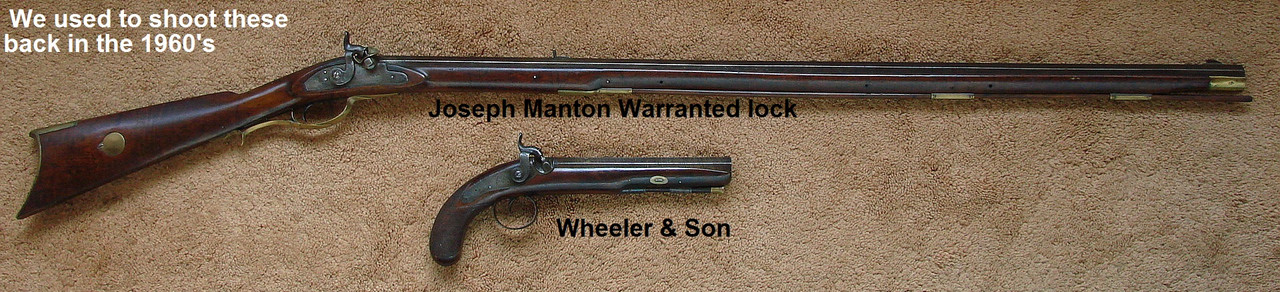
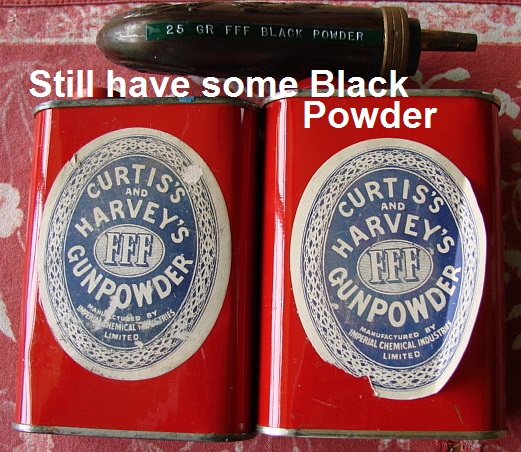
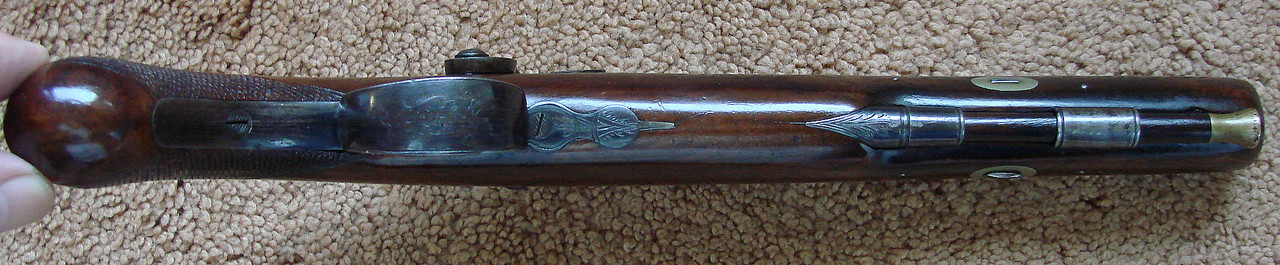
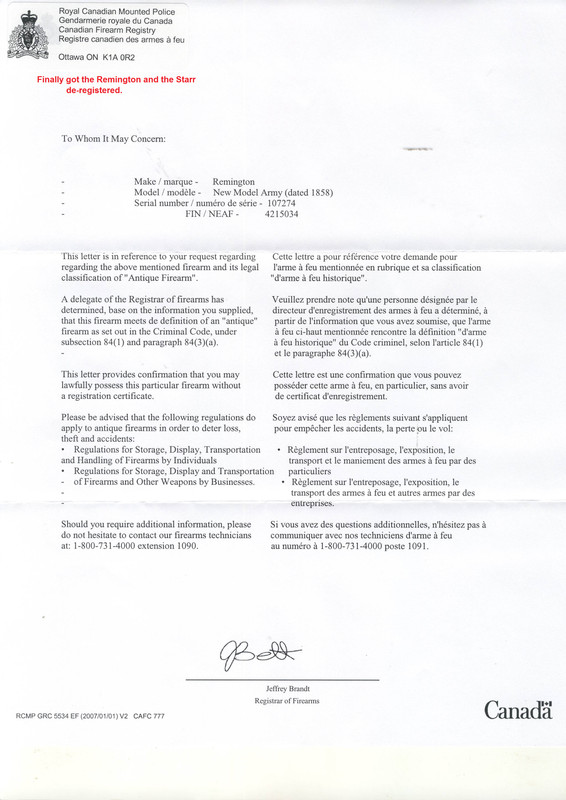
We used to shoot these two revolvers back in the 1970's. (I still have them)
At that time they were both registered---we managed to get them de-registered much later.


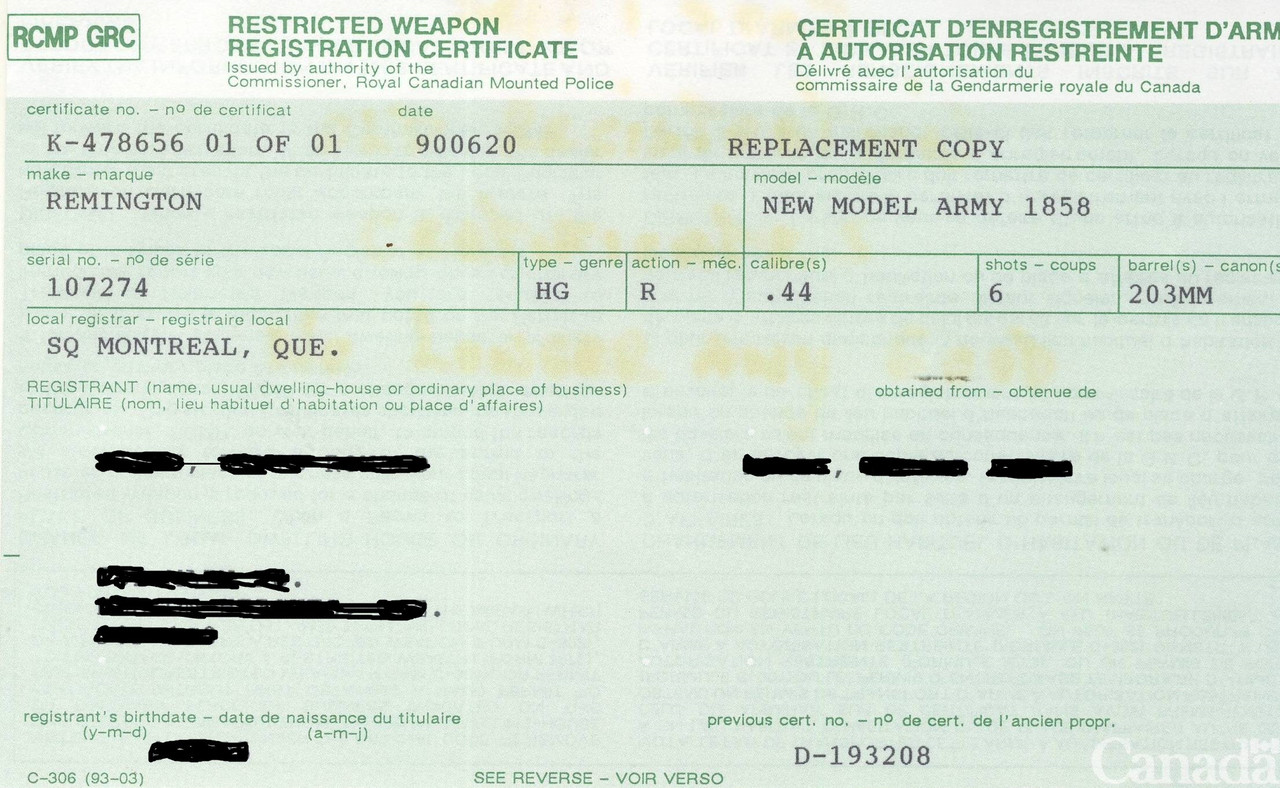
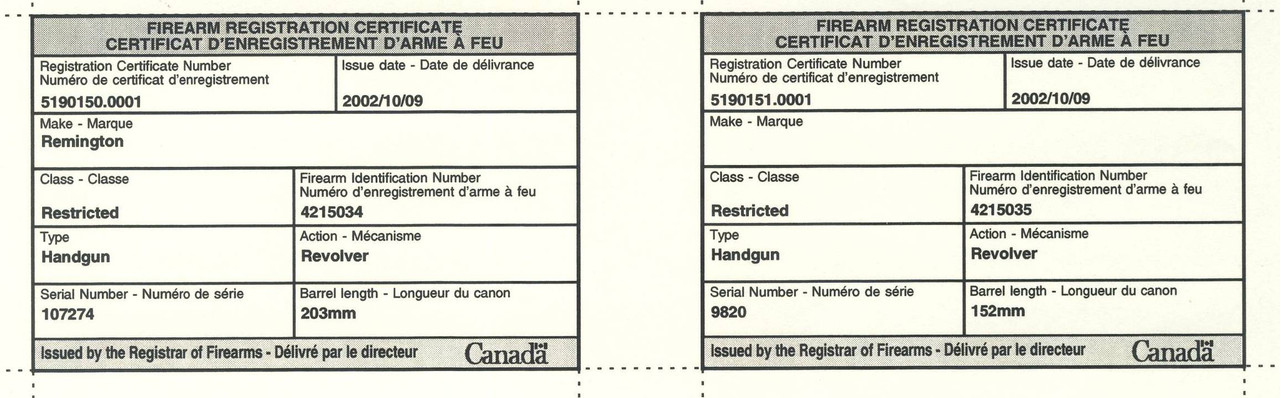
 gif upload
At that time they were both registered---we managed to get them de-registered much later.
gif uploadThanks for posting your letter, with the ruling by the bureaucrats from on high, giving your antique revolver their blessing for the time being.
The mind boggles at the cost to the taxpayer to generate, mail, and file away this letter.
All to update info they already had on file.
Regards
The mind boggles at the cost to the taxpayer to generate, mail, and file away this letter.
All to update info they already had on file.
Regards
Last edited:






















