IronNoggin
CGN frequent flyer
- Location
- Port Alberni, Vancouver Island
‘All options on the table’ to manage grizzlies, including lifting hunting ban: parks minister
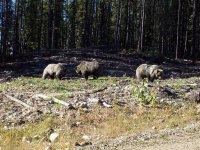
In the wake of a recent grizzly bear mauling near Cochrane, Alta., Minister of Forestry and Parks Todd Loewen said “all options are on the table” for managing the province’s bear population — including lifting a ban on hunting grizzlies.While the province has had a ban on hunting grizzly bears since 2006, it introduced the Wildlife Management Responder Network program last year to allow “problem” grizzlies to be hunted. The program’s pool of “grizzly responders” consists of qualified hunters who applied and were selected to target certain bears whenever the province deems it appropriate.
In June, a bear was killed near Twin Butte, a hamlet in southern Alberta, making it the first kill of the program, the minister later confirmed.
“I think as a responsible government looking at the safety of Albertans, that we have to act and we have to take all things under consideration,” Loewen said, speaking to Alberta at Noon’s host Kathleen Petty.
“There'll be studies done and everything, but I think it would be incredibly irresponsible for us as government concerned about the safety of Albertans just to put our heads in the sand and not look at the evidence that's before us,” he added, referring to reports of bear maulings.
The most recent surveys of Alberta’s grizzly bear population were conducted seven years ago. In 2021, the province estimated Alberta’s grizzly bear population was “between 865 and 973” bears, using data based on those 2018 surveys.
“The traditional area of the grizzly bear is expanding,” the minister said, explaining that grizzlies are venturing out further from their usual habitats into human-occupied areas.
When it comes to policy decisions on bear management, Loewen said that while there isn’t recent population data to draw on, the province can use “local ecological knowledge” from people who live in impacted areas.
For Kim Titchener, founder of Bear Safety and More, the lack of data plays a part in what she believes is the wrong approach to managing grizzly bear populations in the province.
“Our government has their head in the sand,” she said, on Alberta at Noon. “They're doing nothing. They're not looking at population numbers.
“Shooting one grizzly bear that was a problem doesn't solve the problem of human-wildlife conflict in this province.”
Colleen St Clair, professor of biological sciences at the University of Alberta, said while the last bear population count in Alberta is a few years old, “it does suggest that grizzly bears are increasing in Alberta, supporting these anecdotal reports.
“They are moving into areas that they haven't occupied for many decades.”
St Clair added, “if the responder program achieves the same number of removals that happened previously with conservation officers — that's about a little over five a year — I think there's not necessarily a conservation reason to oppose that program.”
But if closer to 15 bears are killed a year (which is the limit set by the province) through the responder program, that may not be sustainable with Alberta’s grizzly bear recovery plan, St Clair said.
Both St Clair and Titchener suggest more bear safety education for the public, especially for hunters and those who work with livestock and agriculture who are more likely to have bear encounters.
“Even hunters experienced with using guns are less likely to be able to do so successfully to deter an attack by a bear with a gun than they are with bear spray,” St Clair said.
“That might be because it's just hard to aim a gun accurately when you're being charged by a bear.”
The Alberta government’s recovery plan includes grizzly habitat restoration in bear management areas, and raising awareness on co-existence with bears through education programs like Bear Smart.
https://www.cbc.ca/news/canada/calg...-lifting-hunting-ban-parks-minister-9.6965720