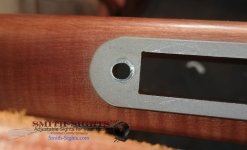
An Experiment in Rimfire Bedding

Josh Smith

Regular
Rating - 100%
1   0   0
Location
Wabash IN
For various reasons I don't want to glass bed my Savage MkII. I'm not sure I'll stick with this stock, and, in my work with Mosins, I find that minimal receiver to stock contact provides the best repeatability. I'm experimenting to see if that'll carry over to rimfire; I think it should.

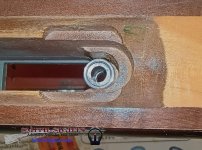
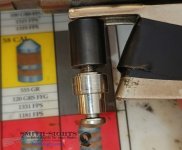
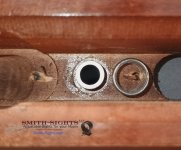
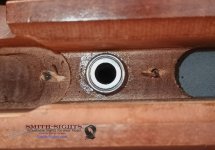
Self-locking pillars are, from what I can tell, my own invention. They should provide the rigidity of epoxy-secured pillars without the epoxy.
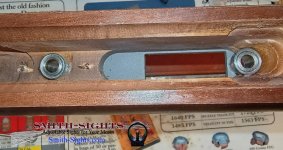
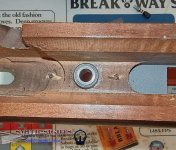
front and rear.jpg
rear.jpgfront.jpgFront, bottom.jpg
They're made of two parts, allowing the pillars to clamp to the wood when the action screws are tightened. Length sizing is critical so as to clamp the wood without crushing it.

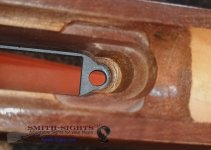
As critical as securing horizontal movement is securing vertical movement. On centerfire rifles, I do this by shimming the vertical surface of the recoil lug crossbolt to ensure firm contact with the recoil lug.

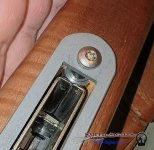
The Savage MkII has no recoil lug, so I used the rearmost nut which happens to secure the trigger housing to the receiver:
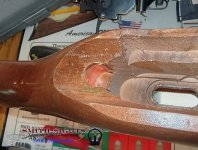
rear shim.jpg
This little bit of shim stock provides a nice, tight fit.

This design has been an evolution, applying lessons I've learned from playing with Mosins and M.95s and modifying them a bit for this application. I think this is its final form, but maybe not. We'll see.

Regards,

Josh

 
Got any group sizes to show??

It seems to work.

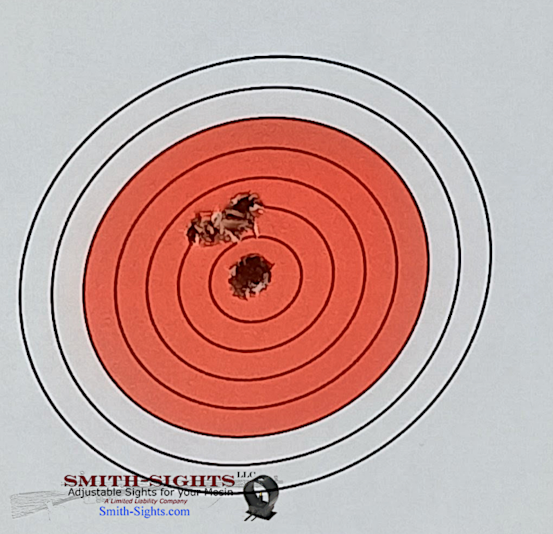
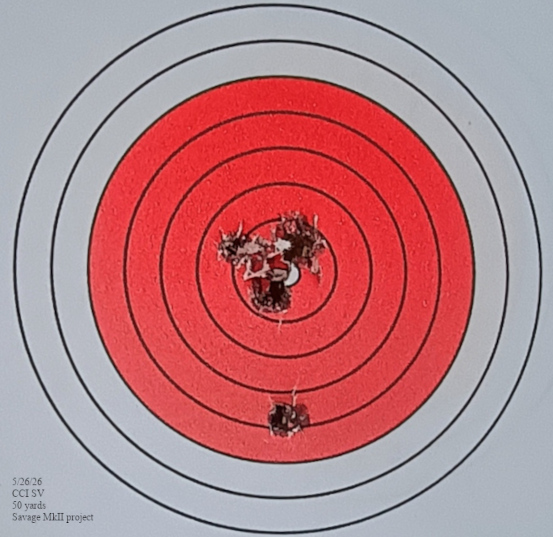
I'm still re-learning how to shoot precision, having not done it in something like 15 years. But when I get on the rifle correctly, I do see quite a bit of improvement, even accounting for flyers:

CCI-Mini-Mag-HP-36grn-Lot-J19U13-1.png

Mini-Mag HP, 50yds

CCI-Mini-Mag-40grn-solids-Lot-J19U13-1.png

Mini-Mag Solids, 50yds

13.png

CCI SV, 50yds

10.jpg

CCI SV, 50yds

11.jpg

CCI SV, 50yds

12.jpg

CCI SV, 50yds

Not my best work, but I've also not sent match ammo through it yet.

Regards,

Josh

 
Are the two halves meeting each other so there's a metal to metal contact point? It sounds like they're still sandwiching wood, no? The intention of a pillar bedding job is to take wood crush completely out of the equation, as that is one large source of variance. When you create a cradle of pillars and bedding material that matches the shape of the action completely accurately you also eliminate the potential sources for tension in the action, which is another large source of variance. Eliminating the stress in the action pretty much eliminates the action screw torque as a source of variance. It doesn't seem to me like this method will help in eliminating sources of stress at all. You've still got wood crush as a factor. And it doesn't seem like there's any way to ensure the pillars are perfectly aligned with the action, so you likely still have action tension to contend with. I feel like if you're going to bother doing anything at all you might as well go all the way and to a proper stress-free pillar bedding job and get rid or reduce as many sources of variance as possible. I don't feel like this is doing that at all.

If you take a look at this: https://www.6mmbr.com/pillarbedding.html

you will see that the pillars are attached to the action before placing the action in the stock. That ensures they're aligned to the action since the screws are securely tightened to hold the pillars in place. The stock is relieved enough to make it so that the bedding material is what mates the stock to the action, and the bedding material cures in the mating shape. So it perfectly matches the shape of the action and the pillars, and the stock. That eliminates any twisting action when you remove and install the action and torque it down with the action screws, because everything cured in a stress-free state. So the action is in the same state whether you have it in there with the action screws barely finger tight or torqued to 20, 30, or 40 inch-lbs., or whatever. The amount of torque you tighten them with isn't causing anything to twist or bend, so the amount of torque isn't going to change how it shoots, anywhere from nice and snug to whoa don't break the screws now. It's all the same because there's no stress being induced in the action.

Here's a test you can try. Set your stock up in a vise such that you can still access the action screws. Set up an indicator on top of the muzzle. Loosen and tighten one of the action screws, and then the other. Is that making the muzzle move noticeably? Then you've got stress in the action due to the pillars not lining up with the action properly. It's hard not to have things incorrectly lining up unless you've done a bedding job such as that seen in the link I gave. But if you do a job like that properly you shouldn't see any movement in the muzzle at all because there shouldn't be any stress in the action at all. If you're chasing ultimate precision then you need to eliminate that action stress by doing such a bedding job. And if you do it right, that muzzle won't move when tested in that fashion. Of course, not every shooting need requires going to such lengths. But if you're going to do anything similar at all, it isn't that much more work to do it properly.
 
Are the two halves meeting each other so there's a metal to metal contact point? It sounds like they're still sandwiching wood, no? The intention of a pillar bedding job is to take wood crush completely out of the equation, as that is one large source of variance. When you create a cradle of pillars and bedding material that matches the shape of the action completely accurately you also eliminate the potential sources for tension in the action, which is another large source of variance. Eliminating the stress in the action pretty much eliminates the action screw torque as a source of variance. It doesn't seem to me like this method will help in eliminating sources of stress at all. You've still got wood crush as a factor. And it doesn't seem like there's any way to ensure the pillars are perfectly aligned with the action, so you likely still have action tension to contend with. I feel like if you're going to bother doing anything at all you might as well go all the way and to a proper stress-free pillar bedding job and get rid or reduce as many sources of variance as possible. I don't feel like this is doing that at all.

If you take a look at this: https://www.6mmbr.com/pillarbedding.html

you will see that the pillars are attached to the action before placing the action in the stock. That ensures they're aligned to the action since the screws are securely tightened to hold the pillars in place. The stock is relieved enough to make it so that the bedding material is what mates the stock to the action, and the bedding material cures in the mating shape. So it perfectly matches the shape of the action and the pillars, and the stock. That eliminates any twisting action when you remove and install the action and torque it down with the action screws, because everything cured in a stress-free state. So the action is in the same state whether you have it in there with the action screws barely finger tight or torqued to 20, 30, or 40 inch-lbs., or whatever. The amount of torque you tighten them with isn't causing anything to twist or bend, so the amount of torque isn't going to change how it shoots, anywhere from nice and snug to whoa don't break the screws now. It's all the same because there's no stress being induced in the action.

Here's a test you can try. Set your stock up in a vise such that you can still access the action screws. Set up an indicator on top of the muzzle. Loosen and tighten one of the action screws, and then the other. Is that making the muzzle move noticeably? Then you've got stress in the action due to the pillars not lining up with the action properly. It's hard not to have things incorrectly lining up unless you've done a bedding job such as that seen in the link I gave. But if you do a job like that properly you shouldn't see any movement in the muzzle at all because there shouldn't be any stress in the action at all. If you're chasing ultimate precision then you need to eliminate that action stress by doing such a bedding job. And if you do it right, that muzzle won't move when tested in that fashion. Of course, not every shooting need requires going to such lengths. But if you're going to do anything similar at all, it isn't that much more work to do it properly.

Here are some other views:

1.jpg
2.jpg
3.jpg
4.jpg
5.jpg

The only difference between these and those which are epoxied in is that these rely on mechanical clamp force to stay in place.

There's no significant stress on the receiver. Your test has the barrelled receiver staying straight. Additionally, the receiver makes no significant contact with the wood, just the metal.
 
Back
Top Bottom