.
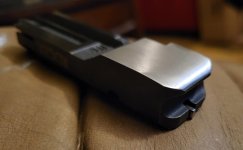
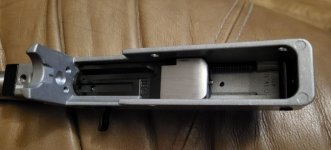
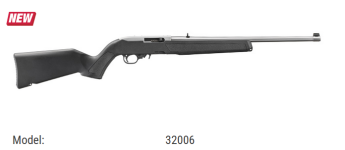
I very recently acquired a Ruger 10/22 Standard, one of the new generation (2026) units with the "upgrades" and the stock BX trigger. It is of the stainless flavor and comes with a black Magpul-like Ruger branded stock, as well as a black bolt with the "Ruger" laser etching on it.
I decided to "tune" this unit for reliability more to my liking right out of the box, with some Volquartsen upgraded parts (firing pin, extractor, buffer), Williams peep sights and also to radius the bolt for smoother operation and better subsonic ammo reliability.
The bolt radiusing process went so well and easy on the belt sander that the very next day I decided to radius my old gen (circa 2014) and yet untouched 10/22 Takedown's bolt as well.
Here are my observations :
- The new bolt produces almost no spark when being ground down on the belt sander (indicating very little carbon in the steel). The old bolt produces a ton of spark on the same belt sander, indicating high carbon steel;
- The new bolt also feels like it's much "softer" as a material, because it grinds down VERY fast. To the point where I had to do tiny little swipes on the belt sander as not to remove too much. The old bolt felt like it needed a lot more time on the belt sander to achieve the same desired effect. I'm no metallurgist, but if I were to guess the old gen bolts are much better built for the long haul (harder + much more carbon content in steel);
- The new bolt looks like it had very few to no casting marks (probably a MIM part?). The old bolt had plenty of casting marks and tiny surface unevenness that I had to sand down with very fine grit sand paper by hand to make it smooth, at the end.
So there you have it. Ruger most definitely changed the production method on these bolts, most probably going to a cheaper process to save money. We shall see if this will translate into any issues or premature wear in the future, I suppose.
These videos show a comparison between a stock bolt and a radiused bolt, for those who are interested :
I very recently acquired a Ruger 10/22 Standard, one of the new generation (2026) units with the "upgrades" and the stock BX trigger. It is of the stainless flavor and comes with a black Magpul-like Ruger branded stock, as well as a black bolt with the "Ruger" laser etching on it.
I decided to "tune" this unit for reliability more to my liking right out of the box, with some Volquartsen upgraded parts (firing pin, extractor, buffer), Williams peep sights and also to radius the bolt for smoother operation and better subsonic ammo reliability.
The bolt radiusing process went so well and easy on the belt sander that the very next day I decided to radius my old gen (circa 2014) and yet untouched 10/22 Takedown's bolt as well.
Here are my observations :
- The new bolt produces almost no spark when being ground down on the belt sander (indicating very little carbon in the steel). The old bolt produces a ton of spark on the same belt sander, indicating high carbon steel;
- The new bolt also feels like it's much "softer" as a material, because it grinds down VERY fast. To the point where I had to do tiny little swipes on the belt sander as not to remove too much. The old bolt felt like it needed a lot more time on the belt sander to achieve the same desired effect. I'm no metallurgist, but if I were to guess the old gen bolts are much better built for the long haul (harder + much more carbon content in steel);
- The new bolt looks like it had very few to no casting marks (probably a MIM part?). The old bolt had plenty of casting marks and tiny surface unevenness that I had to sand down with very fine grit sand paper by hand to make it smooth, at the end.
So there you have it. Ruger most definitely changed the production method on these bolts, most probably going to a cheaper process to save money. We shall see if this will translate into any issues or premature wear in the future, I suppose.
These videos show a comparison between a stock bolt and a radiused bolt, for those who are interested :
Last edited: