












































You are using an out of date browser. It may not display this or other websites correctly.
You should upgrade or use an alternative browser.
You should upgrade or use an alternative browser.
Annealing Newbie
- Thread starter daroccot
- Start date
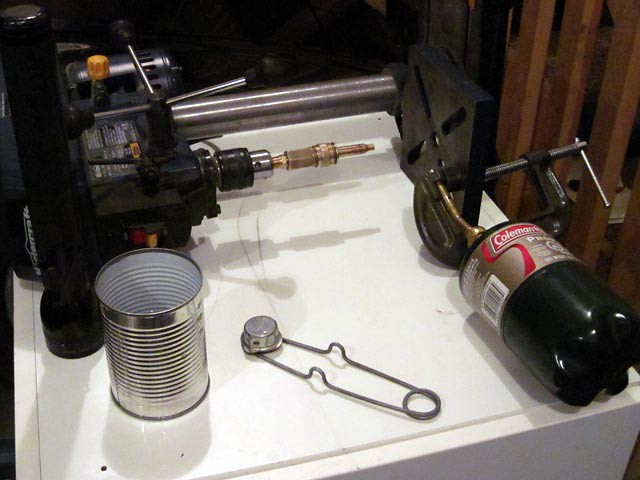
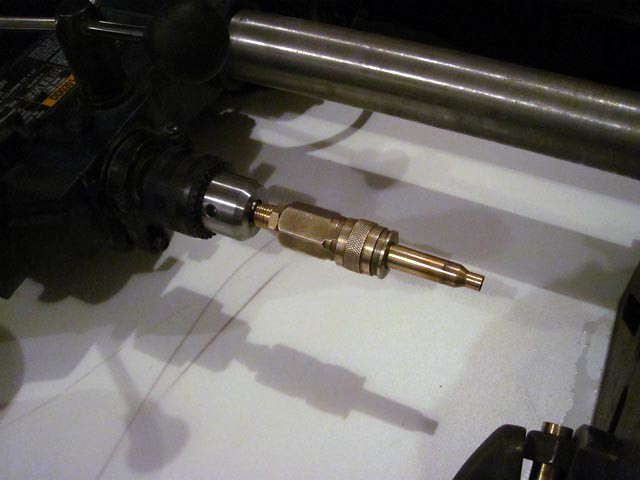
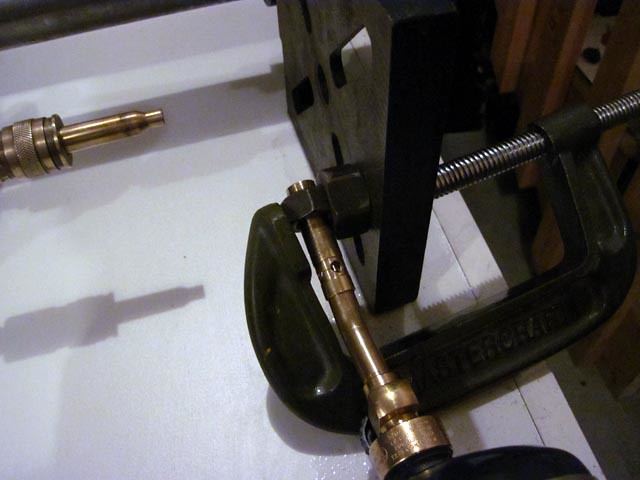
My old man has 25years worth of .300 win mag cases, many of which had been reloaded an unknown number of times for him by a few other people. We just started a couple moths ago ourselves and many of them were cracking and splitting in the necks and shoulders. I anealed the whole lot by hand and have not had a single failed case since. Brass is a fairly good conductor of heat, distributes it quite well. You can tell by the temper line after how even. I spin it right and hold a second, spin left hold a second, right wait left wait, drop in water. You'd have to get a micrometer to tell which ones been heated longer. If your good at estimating a second, you can do it fine by hand. After you've done a couple dozen it feels natural and you'll feel a pattern. So much faster than having to toss it in a chuck. That auto machine is quite nice though, I'd only the disk had one size, more of them and a tube to stack them in so it auto filled as well as dropped. Easy add on.
I have been asked a number of questions both off and on-line. Here are some answers
(1) Yes, that is a rotissiere motor, we wanted a cheap, dependable motor that the end user could replace easily if it ever burned out.
(2) We hope to have models for sale in one month, the current motor turns at 3rpm which is a bit fast, we had used a rheostat to slow the motor, but it turns out this is tricky to get a stable speed, we will instead use a small gear box with a couple of reduction speeds to get down to 1.5 - 2 rpm which seems to be an ideal speed for propane torches (Temp 4579F), you can also use MAPP gas (Temp 5193F) and run it faster, but MAPP gas is more expensive. I have a thick .376 Steyr case that I use one propane and one MAPP torch to get the results I want at a speed of 2rpm ( http://www.bernzomatic.com/RESOURCES/GASTYPES/tabid/222/Default.aspx ) The gear box will also be cheaper than a rheostat.
(3) The hole size on the current one is for the following bolt faces .308, .223, 6.5-284 (rebated rim so the case is larger than .308 boltface), and magnum (I use it for 7mm WSM). For tall magnums such as .338 Lapua we will sell a set of bushings that will allow you to encase more of the brass.
Of course you can also have them all one size if you wish
(4) We are trying to keep the final price below $500.00.
I will let you know when we have some ready to ship.
(1) Yes, that is a rotissiere motor, we wanted a cheap, dependable motor that the end user could replace easily if it ever burned out.
(2) We hope to have models for sale in one month, the current motor turns at 3rpm which is a bit fast, we had used a rheostat to slow the motor, but it turns out this is tricky to get a stable speed, we will instead use a small gear box with a couple of reduction speeds to get down to 1.5 - 2 rpm which seems to be an ideal speed for propane torches (Temp 4579F), you can also use MAPP gas (Temp 5193F) and run it faster, but MAPP gas is more expensive. I have a thick .376 Steyr case that I use one propane and one MAPP torch to get the results I want at a speed of 2rpm ( http://www.bernzomatic.com/RESOURCES/GASTYPES/tabid/222/Default.aspx ) The gear box will also be cheaper than a rheostat.
(3) The hole size on the current one is for the following bolt faces .308, .223, 6.5-284 (rebated rim so the case is larger than .308 boltface), and magnum (I use it for 7mm WSM). For tall magnums such as .338 Lapua we will sell a set of bushings that will allow you to encase more of the brass.
Of course you can also have them all one size if you wish
(4) We are trying to keep the final price below $500.00.
I will let you know when we have some ready to ship.

i do mine sitting in a cake pan with water , enough to go half way up the brass, when it sizzles the brass is done tip over,
X2 It is the simplest,and most reliable way to anneal your brass. Been doing it that way since forever, never had a problem.

BattleRife
CGN Ultra frequent flyer
- Location
- of No Fixed Address
X2 It is the simplest,and most reliable way to anneal your brass.
Really? I found it the messiest, most inconsistent and totally frustrating way to anneal brass. To each his own.
I must say though, that I find the attention annealing has gotten in the last few years to be fascinating. Here is easily the most mysterious and poorly understood aspect of reloading, many people swear it is completely unnecessary, and yet other people are building $500 machines to help speed it up! And still there is no properly documented information on even the most basic parameters (temperature being the obvious one) for doing it. Weird.
Mystic Precision
CGN Ultra frequent flyer
- Location
- Summerland, BC
Chatting with people in the industry, case annealing is truly a black art and a closely guarded secret on how different manf do it.
However, from a material standpoint, the goals are easy (and tough).
Brass can be heated to sub 700F for a long duration to get the job done. However, that leads to issues like overheating the web area which is dangerous.
Instead, we know that raising the temp from 750 to 800F does the job in a very short period of time.
Here is the rub - How much time? What is the correct temp curve for YOUR lot of brass?
Then there are more eccoteric parameters like dwell and quenching. Overheating will cause as much damage as inconsistent heating.
I have just built a ghetto annealer for dirt cheap and it worked (will post info and pics at a later time) surprisingly well. Allows for easy adjustment of heat location, amount of time in the flame, intensity of the flame heat, etc. All the basic stuff one needs to anneal cases.
Basic, crude and utterly functional - yes, anyone with any basic skills and tools can build one for around $60/70 pending proximity to a Cdn Tire and a lumber store.
I went and annealed all my old and new WIN cases that I have used for 6.5 Mystic and 260improved shooting. It was interesting to see how time and duration had to be slightly adjusted for the various lots, ages and useage but once set up for THAT BATCH, annealing was straight forward.
I still need to get some 750F tempilac paint to do a final confirm but sizing indicated that the ductility of the necks was similar to new cases and the newly annealed cases fired very well this morning.
At the very least, they look 'right'.
Annealing is yet another small step needed to extract all your rifle can give you and only if you use your cases multiple times. I know of a number of top ranking shooters that will not anneal but rather use new cases for matches. They have the budget for this and are more concerned about their abilities then the process.
For me, now that I have a device to help me, I will experiment to find a nice stable level of treatment where my cases can be held uniform from firing to firing.
YMMV.
Jerry
However, from a material standpoint, the goals are easy (and tough).
Brass can be heated to sub 700F for a long duration to get the job done. However, that leads to issues like overheating the web area which is dangerous.
Instead, we know that raising the temp from 750 to 800F does the job in a very short period of time.
Here is the rub - How much time? What is the correct temp curve for YOUR lot of brass?
Then there are more eccoteric parameters like dwell and quenching. Overheating will cause as much damage as inconsistent heating.
I have just built a ghetto annealer for dirt cheap and it worked (will post info and pics at a later time) surprisingly well. Allows for easy adjustment of heat location, amount of time in the flame, intensity of the flame heat, etc. All the basic stuff one needs to anneal cases.
Basic, crude and utterly functional - yes, anyone with any basic skills and tools can build one for around $60/70 pending proximity to a Cdn Tire and a lumber store.
I went and annealed all my old and new WIN cases that I have used for 6.5 Mystic and 260improved shooting. It was interesting to see how time and duration had to be slightly adjusted for the various lots, ages and useage but once set up for THAT BATCH, annealing was straight forward.
I still need to get some 750F tempilac paint to do a final confirm but sizing indicated that the ductility of the necks was similar to new cases and the newly annealed cases fired very well this morning.
At the very least, they look 'right'.
Annealing is yet another small step needed to extract all your rifle can give you and only if you use your cases multiple times. I know of a number of top ranking shooters that will not anneal but rather use new cases for matches. They have the budget for this and are more concerned about their abilities then the process.
For me, now that I have a device to help me, I will experiment to find a nice stable level of treatment where my cases can be held uniform from firing to firing.
YMMV.
Jerry
BattleRife
CGN Ultra frequent flyer
- Location
- of No Fixed Address
Instead, we know that raising the temp from 750 to 800F does the job in a very short period of time.
Really? I find that interesting that you know that, because I've been a practicing metallurgist for 10 years now, and I have a very nice corporate research library available to me, and I can't find a stitch of data to back up this (or any other) temperature figure. I have heard people claim effective "annealing" at kitchen oven temperatures, while I lean to 550-600C myself. But I don't yet have proof of any of it.
Overheating will cause as much damage as inconsistent heating.
Back in my early days of reloading, I used to heat cases 'til they glowed like the sun. I still have many of those cases. Accuracy and velocity spreads may have suffered, but the temperature excursions didn't hurt the brass in any way that I could tell.
I recognize that your goals in annealing are very different from mine. I principally do it to keep my cases from cracking, not so much because I'm concerned about the details of bullet pull and extreme accuracy. I just wanted to share that in the last couple of years I have become increasingly convinced that even as annealing gains a higher profile, it is possible that not one single home reloader anywhere actually understands what they are doing when they anneal.
Really? I find that interesting that you know that, because I've been a practicing metallurgist for 10 years now, and I have a very nice corporate research library available to me, and I can't find a stitch of data to back up this (or any other) temperature figure. I have heard people claim effective "annealing" at kitchen oven temperatures, while I lean to 550-600C myself. But I don't yet have proof of any of it.
Back in my early days of reloading, I used to heat cases 'til they glowed like the sun. I still have many of those cases. Accuracy and velocity spreads may have suffered, but the temperature excursions didn't hurt the brass in any way that I could tell.
I recognize that your goals in annealing are very different from mine. I principally do it to keep my cases from cracking, not so much because I'm concerned about the details of bullet pull and extreme accuracy. I just wanted to share that in the last couple of years I have become increasingly convinced that even as annealing gains a higher profile, it is possible that not one single home reloader anywhere actually understands what they are doing when they anneal.
http://www.6mmbr.com/annealing.html
I cannot comment from a 10 year experience as a metallurgist, I base my understanding on the above article and several other references I have been able to read. In my practice of shooting literally hundreds of rounds comparing annealed vs. Not annealed there is no question that in my hands the annealed brass has a much tighter velocity SD and shoots more consistent groups
Annealing has two very important outcomes:
(1) It restores work hardened brass to its original softer state, this prolongs the life of the brass and to hopefully prolongs the life of a good batch of cases
(2) Properly annealed brass will also have a much more uniform ductility this translates into consistent neck tension (assuming the necks have been turned to a consistent thickness)
Is this consistent neck tension important?
It depends on what kind of shooting you do. If you want to prolong the life of your hunting wildcat, then the most important part of annealing is to prolong the life of your case, the improved consistency in neck tension is nice but really not needed for most hunting applications
For serious match shooters annealing is all about seeking consistent, reproducible neck tension. If you take 100 cases, fired 5 times each and assess neck tension, either by carefully loading in a hand arbour press or with some method of measuring tension you will find that most are close, but 10% or so will vary considerably. It is this 10% that a match shooter needs to avoid.
Consistent reproducible reloads is why we turn necks, weigh and measure bullets, brass, and carefully measure powder loads.
It is all about reducing variation and seeking consistency.
In any batch of match bullets, brass, most will be very close. Most match powder dispensers will dispense accurate loads. But with all of these there are outliers.
Match competitors spend a great deal of time and money on equipment and travelling and competing in matches. You do not want even a single bad load. At 1000 yards mother nature sends us enough variables we cannot control. The last thing you want is even a single loaded round that is not consistent with the rest of the rounds you fired in that match.
Back to annealing....
For me absolutes are
(1) The brass must rotate so the heat is applied evenly
(2) Get the neck to 800F for a few seconds.
This can be done easily with a cheap setup using an aluminum holder (sold by Hornady) to act as a heat sink and protect the body of the case, and tempilaq applied just below the shoulder, on every case, everytime.
(I will not belabour the point here, but if you really think your eyes can tell the proper color of the brass or changes in the flame with the same accuracy and reproducibility of Tempilaq, then you are a better man/women than me.)
Some match shooters will anneal brass after every use or every other use to ensure consistency, considering that during the shooting season we fire upwards of 1-2000 round, this means annealing 2-4000 cases. Do you really want to do this by hand?, and then remove the tempilaq residue?
Hence the interest in a rotary annealer. Once the annealer is set up using Tempilaq, you can anneal hundreds or thousands of cases to exactly the same state. You may argue what state that is, but it will be consistent.
I set up my annealer as follows.
With my set up 750 deg Tempilaq placed just below the shoulder will melt, about 1-2 seconds after the 800 tempilaq will melt on the neck. I set up to ensure 750 deg Tempilaq just starts to melt, then I run the rest of the cases without Tempilaq ( I hate cleaning Templiaq off the brass)
Many match shooters agree that annealing is critical to reproducible accuracy, the reason many don’t do it regularly is the work involved in actually doing it properly

stupid question. but what about annealing with a lead pot ? set the pot to 750 (more expensive pots are very accurate with temp) and anneal that way.
some things have said not to as if there is water in the case it could explode (but if you clean them in corn husk then there is likely no water) or it may stick to the brass. that may happen, but likely will be able to brush it off or put it through the cleaner again.
some things have said not to as if there is water in the case it could explode (but if you clean them in corn husk then there is likely no water) or it may stick to the brass. that may happen, but likely will be able to brush it off or put it through the cleaner again.
Mystic Precision
CGN Ultra frequent flyer
- Location
- Summerland, BC
BR, if forced to explain accuracy tech through science, this sport would be dead in the water. so much is from observation and by scientific testing methods, anecdotal but holes in paper don't lie.
And when enough holes in paper repeat, you develop a trend which leads to a theory. Over time and many shooters, it either holds water or falls flat on its face.
Science by trial and error.
If it makes my loads more consistent, I am all over it. Now I am the first to argue there is alot that doesn't do much of anything but there are also a few things that are not paid enough attention to.
maybe you can explain it better but were you aware brand new brass doesn't fire the same as brass that is once or twice fired? dimensionally identical but elasticity has changed in a tangible manner.
Most will call it work hardening but maybe that is not the correct term but once a case has been fired once or twice, its behaviour is very predictable and repeatable. that is what we are trying to return to when we anneal.
There are some top match shooters that will only fire their brass up to 4 times - then bye bye.
I had a friend do some ductility testing on my annealed cases. In some cases, there was no change, in others dramatic. In all cases, I didn't get it as soft as factory orig.
Not necessarily a bad thing but better then the condition it was before annealing - way too hard and inconsistent.
Maybe you haven't cooked your necks but I most certainly have turned some cases to taffy - Soft enough to crush the necks with my fingers and no these didn't get red hot.
will it work for you, maybe, maybe not. Depends on the rifle you are using, bullet and reloading technique.
When I am trying to build loads that can shoot 4" and hopefully better at 1000m, everything matters.
I also weigh my charges to the nearest kernel of H4831SC. Most will say that is insanity and +/- 0.1gr is plenty accurate in a 48gr load.
My testing has shown enough difference in my LR accuracy for me to matter.
YMMV.
roberti11, use the temp crayons. These flash off and leave almost no residue. Tempilac leaves a horrid residue. I will only use it on my test cases which can get scrubbed.
Jerry
Depending on the condition of the necks, you could get lead sticking to the necks. Big mess. It would be a great method if it didn't stick.
And when enough holes in paper repeat, you develop a trend which leads to a theory. Over time and many shooters, it either holds water or falls flat on its face.
Science by trial and error.
If it makes my loads more consistent, I am all over it. Now I am the first to argue there is alot that doesn't do much of anything but there are also a few things that are not paid enough attention to.
maybe you can explain it better but were you aware brand new brass doesn't fire the same as brass that is once or twice fired? dimensionally identical but elasticity has changed in a tangible manner.
Most will call it work hardening but maybe that is not the correct term but once a case has been fired once or twice, its behaviour is very predictable and repeatable. that is what we are trying to return to when we anneal.
There are some top match shooters that will only fire their brass up to 4 times - then bye bye.
I had a friend do some ductility testing on my annealed cases. In some cases, there was no change, in others dramatic. In all cases, I didn't get it as soft as factory orig.
Not necessarily a bad thing but better then the condition it was before annealing - way too hard and inconsistent.
Maybe you haven't cooked your necks but I most certainly have turned some cases to taffy - Soft enough to crush the necks with my fingers and no these didn't get red hot.
will it work for you, maybe, maybe not. Depends on the rifle you are using, bullet and reloading technique.
When I am trying to build loads that can shoot 4" and hopefully better at 1000m, everything matters.
I also weigh my charges to the nearest kernel of H4831SC. Most will say that is insanity and +/- 0.1gr is plenty accurate in a 48gr load.
My testing has shown enough difference in my LR accuracy for me to matter.
YMMV.
roberti11, use the temp crayons. These flash off and leave almost no residue. Tempilac leaves a horrid residue. I will only use it on my test cases which can get scrubbed.
Jerry
Depending on the condition of the necks, you could get lead sticking to the necks. Big mess. It would be a great method if it didn't stick.
BattleRife
CGN Ultra frequent flyer
- Location
- of No Fixed Address
BR, if forced to explain accuracy tech through science, this sport would be dead in the water. so much is from observation and by scientific testing methods, anecdotal but holes in paper don't lie.
And when enough holes in paper repeat, you develop a trend which leads to a theory. Over time and many shooters, it either holds water or falls flat on its face.
Science by trial and error.
If it makes my loads more consistent, I am all over it. Now I am the first to argue there is alot that doesn't do much of anything but there are also a few things that are not paid enough attention to.
maybe you can explain it better but were you aware brand new brass doesn't fire the same as brass that is once or twice fired? dimensionally identical but elasticity has changed in a tangible manner.
Most will call it work hardening but maybe that is not the correct term but once a case has been fired once or twice, its behaviour is very predictable and repeatable. that is what we are trying to return to when we anneal.
There are some top match shooters that will only fire their brass up to 4 times - then bye bye.
I had a friend do some ductility testing on my annealed cases. In some cases, there was no change, in others dramatic. In all cases, I didn't get it as soft as factory orig.
Not necessarily a bad thing but better then the condition it was before annealing - way too hard and inconsistent.
Maybe you haven't cooked your necks but I most certainly have turned some cases to taffy - Soft enough to crush the necks with my fingers and no these didn't get red hot.
will it work for you, maybe, maybe not. Depends on the rifle you are using, bullet and reloading technique.
Almost all science is backed up by trial and error somewhere, I don't have an issue with that. I guess what I was curious to know is if you were given the temperature you use and accepted it, or if you found it by your own experimentation, and how rigourously you investigated the issue. Like I mentioned, I recognize that what you are doing is different than what I am doing, and may require different temperatures.
stupid question. but what about annealing with a lead pot ? set the pot to 750 (more expensive pots are very accurate with temp) and anneal that way.
That is in fact how I have started to do my annealing, I use the cheapest Lee pot made and a thermocouple to monitor the temperature. The key is that I don't use lead, I use heat treating salts (potassium nitrate, I will be mixing in a bit of sodium nitrate to depress the melting point on the next batch).
Here is a photo of one my early runs, I have since added a heat shield with bracket to reduce heat loss, protect my knuckles and provide a stand for the cases. The big advantages of this method are speed and control: I can easily do 20 cases per minute and the temperature is controlled to within +/- 10 degC. That is why I am so keen to find a properly established annealing temperature. My own research efforts are ongoing, but have hit some roadblocks, largely because I am finding that virtually everything written about annealing in the usual places is completely off base, to the point that I question if annealing is even useful to the reloader trying to extend the life of his brass.


Mystic Precision
CGN Ultra frequent flyer
- Location
- Summerland, BC
ALL factory cases are annealed. Most companies polish their brass to get rid of the annealing discoloration. Has become NA fashion to have nice shiny cases.
however, Lapua has left theirs in and it has now become a positive effect.
Look at the military ball and you will likely see similar annealing coloration.
Jerry
however, Lapua has left theirs in and it has now become a positive effect.
Look at the military ball and you will likely see similar annealing coloration.
Jerry

That is in fact how I have started to do my annealing, I use the cheapest Lee pot made and a thermocouple to monitor the temperature. The key is that I don't use lead, I use heat treating salts (potassium nitrate, I will be mixing in a bit of sodium nitrate to depress the melting point on the next batch).
BR you are not doing anything different than the person using a propane torch from the following perspective: The rate if annealing -change of crystal structure- depends upon the temperature. Below a certain temperature the rate is essentially zero. As you increase the temperature the rate increases. If you hold the case neck in a salt bath or a propane flame the controlling factor will be time. Whether the temperature is low or hot the heat will eventually be conducted to the shoulder and to the body of the case. The trick is to anneal one part while not annealing the other. Using a lower temperature salt bath may give you more time than in a flame but the process is otherwise the same.
The other aspect of this is to remove the heat getting into the body of the case by conduction. Some people insert the case into an aluminum case holder which is near room temperature and others immerse the body of the case in water.
The use of a mechanical annealer is to precisely control the time so that neck tension will be identical for that batch of brass.
These seem to be the variables and they are all controlled by time in the heat source. Tempilac or heat crayons act as thermometers to help you gauge the time of the case neck in the heat source.

Almost all science is backed up by trial and error somewhere, I don't have an issue with that. I guess what I was curious to know is if you were given the temperature you use and accepted it, or if you found it by your own experimentation, and how rigourously you investigated the issue. Like I mentioned, I recognize that what you are doing is different than what I am doing, and may require different temperatures.
That is in fact how I have started to do my annealing, I use the cheapest Lee pot made and a thermocouple to monitor the temperature. The key is that I don't use lead, I use heat treating salts (potassium nitrate, I will be mixing in a bit of sodium nitrate to depress the melting point on the next batch).
Here is a photo of one my early runs, I have since added a heat shield with bracket to reduce heat loss, protect my knuckles and provide a stand for the cases. The big advantages of this method are speed and control: I can easily do 20 cases per minute and the temperature is controlled to within +/- 10 degC. That is why I am so keen to find a properly established annealing temperature. My own research efforts are ongoing, but have hit some roadblocks, largely because I am finding that virtually everything written about annealing in the usual places is completely off base, to the point that I question if annealing is even useful to the reloader trying to extend the life of his brass.
This seems to be the most accurate method out of all of them. I have tried using the torch in a socket before with varrying degrees of accuracy.
does anyone in Edmonton know where you can purchase some potassium nitrate salts for this purpose?
The only way to know for sure is to measure the brass temp - colour change is not a good indicator.
750 to 800F is where you want to be. tempilac paint is what you want get from your local welding supply store. The paint is easy to apply but a royal PITA to remove. The crayon leaves no residue but you can only use this by inference.
I am going to set up a combo of both so that I can get a true indicator vs time.
Different alloys and degrees of work hardening will affect your time in flame. Go over 800f and the necks will turn to taffy. Under and it has done nothing much. have different amounts with each case and you have a world of hurt.
I have a chance to test some of my annealed brass for ductility and my method still requires a whole bunch of improvement.
Process is so easy, it is hard to do it precisely.
I will be looking at the new Frankford Arsenal set up when it is offered later this year. Supposed to be a much lower cost unit vs the small manf rigs.
If it works, I will carry it as I feel annealing is so very critical to LR accuracy.
But doing it with any degree of variability is worse then not doing it at all. A couple of seconds and you may have a pile of junk.
Jerry
I thought the target temperature was between 600 and 700 degrees f. Would that be too cool to accomplish anything?
Mystic Precision
CGN Ultra frequent flyer
- Location
- Summerland, BC
And here is where experience and experimentation come into play.
Annealing is a combo of temp and time at temp (dwell). Different alloys and the degree that they work harden changes the "receipe" to reach desired annealed levels.
Playing with different brands of brass, you quickly see that all is not the same and even from lot to lot, the alloy can change and quite dramatically.
So you need to develop a process to establish a baseline then be able to adjust in a predictable and repeatable way so you can reach the performance you want time and time again for THAT batch of brass.
This is where better annealers come into play. Their ability to adjust a variety of parameters and repeat those parameters consistently quickly make them indispensable and a great value despite their high cost of purchase.
If you are going to anneal, do it right or just toss the brass. Inconsistency will drive you bonkers with flyers that you have no way to resolve.... trust me on this.
To your question, it really depends on WHERE you are measuring that temp and for how long that exposure is. If you have a way to actually measure the temp of the brass (neck), you likely aren't doing a heck of a lot BUT it is doing something.
If you are using a temp indicator to infer temp somewhere else, you will need to play around to see what is actually happening. Yes, it involves some playing around.
Annealing and how factory anneals is actually a protected process with few giving full disclosure. Our process is likely very basic but it maintains the consistency we need to make accurate ammo.
Jerry
Annealing is a combo of temp and time at temp (dwell). Different alloys and the degree that they work harden changes the "receipe" to reach desired annealed levels.
Playing with different brands of brass, you quickly see that all is not the same and even from lot to lot, the alloy can change and quite dramatically.
So you need to develop a process to establish a baseline then be able to adjust in a predictable and repeatable way so you can reach the performance you want time and time again for THAT batch of brass.
This is where better annealers come into play. Their ability to adjust a variety of parameters and repeat those parameters consistently quickly make them indispensable and a great value despite their high cost of purchase.
If you are going to anneal, do it right or just toss the brass. Inconsistency will drive you bonkers with flyers that you have no way to resolve.... trust me on this.
To your question, it really depends on WHERE you are measuring that temp and for how long that exposure is. If you have a way to actually measure the temp of the brass (neck), you likely aren't doing a heck of a lot BUT it is doing something.
If you are using a temp indicator to infer temp somewhere else, you will need to play around to see what is actually happening. Yes, it involves some playing around.
Annealing and how factory anneals is actually a protected process with few giving full disclosure. Our process is likely very basic but it maintains the consistency we need to make accurate ammo.
Jerry
fingers284
CGN Ultra frequent flyer
- Location
- Alberta Cowboy Ranges
Very interesting stuff guys. a few years ago I ventured into the world of annealed cases to help form some new hotshot wildcat that was turning peoples cranks at the time ...I had to reduce the necks on some old military 30-06 all the way down to .25 cal. ...yup... the 25-06.
I heated them up to red hot at the neck, then dunked in water, about half the cases folded at the neck, allowing the neck to be basically inserted into the case. Not a rousing success by any means. A lot smarter after reading this thread.
This comes at an opportune time for me as I find myself needing to anneal some brass I am forming from 45-70 down to the old 38-56. I have had reasonably good luck with the forming by using 3 different forming dies I have made myself and then final fire forming them in the gun. The problem is that by the time they have been thru the four processes they have work-hardened enough that the last little wrinkles from the forming dies are hard to get rid of in the fire forming stage.
BattleR, I would be interested to know more about your use of & formula for the salts...any danger of fumes or such as to its use???
I realize the critical nature of this case won't be that of a case that is expected to shoot groups at 1000 yrds. The gun is 1896 vintage Marlin that will shoot 2-3 in. groups at 100 yrds with the brass I have made so far but a little more consistency would be nice.
I heated them up to red hot at the neck, then dunked in water, about half the cases folded at the neck, allowing the neck to be basically inserted into the case. Not a rousing success by any means. A lot smarter after reading this thread.
This comes at an opportune time for me as I find myself needing to anneal some brass I am forming from 45-70 down to the old 38-56. I have had reasonably good luck with the forming by using 3 different forming dies I have made myself and then final fire forming them in the gun. The problem is that by the time they have been thru the four processes they have work-hardened enough that the last little wrinkles from the forming dies are hard to get rid of in the fire forming stage.
BattleR, I would be interested to know more about your use of & formula for the salts...any danger of fumes or such as to its use???
I realize the critical nature of this case won't be that of a case that is expected to shoot groups at 1000 yrds. The gun is 1896 vintage Marlin that will shoot 2-3 in. groups at 100 yrds with the brass I have made so far but a little more consistency would be nice.
BattleRife
CGN Ultra frequent flyer
- Location
- of No Fixed Address
does anyone in Edmonton know where you can purchase some potassium nitrate salts for this purpose?
I purchased the KNO3 I use in my videos at the pharmacy counter of the Safeway in Bonnie Doon Mall (SE Edmonton). It cost me $17 for a 2kg package, and took about a week to get it ordered in. The bad news is this was just before the government changed the regulations regarding explosives and explosive precursors. These changes did not make it illegal for you and me to buy potassium nitrate, but they did make it something of a pain in the ass for retailers to sell it. I would like to know, for my own information, if people can still find it easily. The common uses of KNO3 are pharmaceutical, both for humans and livestock, so pharmacies and veterinary centers will be the best places to go look.
BattleR, I would be interested to know more about your use of & formula for the salts...any danger of fumes or such as to its use???
I use straight potassium nitrate, though if I was getting into it on a larger scale I would blend in some sodium nitrate and sodium nitrite, which depresses the melting point and neatly skirts the issue that the salt might be an "explosive precursor". Fuming isn't an issue until one exceeds 600C. The most convenient source of detailed information is a MIL spec that was written up many years ago when the US DoD did a lot of its own manufacturing at arsenals around the country, including apparently annealing of brass. MIL specs are free to view on the defense logistics website, I suggest anyone interested go look up MIL-S-10699.
fingers284
CGN Ultra frequent flyer
- Location
- Alberta Cowboy Ranges
thanks Battle R






















