












































You are using an out of date browser. It may not display this or other websites correctly.
You should upgrade or use an alternative browser.
You should upgrade or use an alternative browser.
appreciate all your words
- Thread starter miscou kid
- Start date


Certainly need more information. Is the .380 cal you mention stamped on the pistol?
The regs state that .38 colt and .38 Long Colt aren't allowed in the antique category but not sure about yours.
What's the story about the police even knowing about this pistol and how did they get involved in the first place?
The regs state that .38 colt and .38 Long Colt aren't allowed in the antique category but not sure about yours.
What's the story about the police even knowing about this pistol and how did they get involved in the first place?

Certainly need more information. Is the .380 cal you mention stamped on the pistol?
The regs state that .38 colt and .38 Long Colt aren't allowed in the antique category but not sure about yours.
What's the story about the police even knowing about this pistol and how did they get involved in the first place?
380 only started to be produced in 1908 but i could be wrong, Sir you have to ask for help from friends or family, it's important. Jp.
Last edited:
Why do you think it is antique?
Caliber and date of manufacture?
Any proof of either?
What do you mean by .380? .380 British revolver?
Any proof marks on the pistol that might help date it?
And how did it come to the intention of the city police?
Caliber and date of manufacture?
Any proof of either?
What do you mean by .380? .380 British revolver?
Any proof marks on the pistol that might help date it?
And how did it come to the intention of the city police?

Milanczar
CGN Ultra frequent flyer
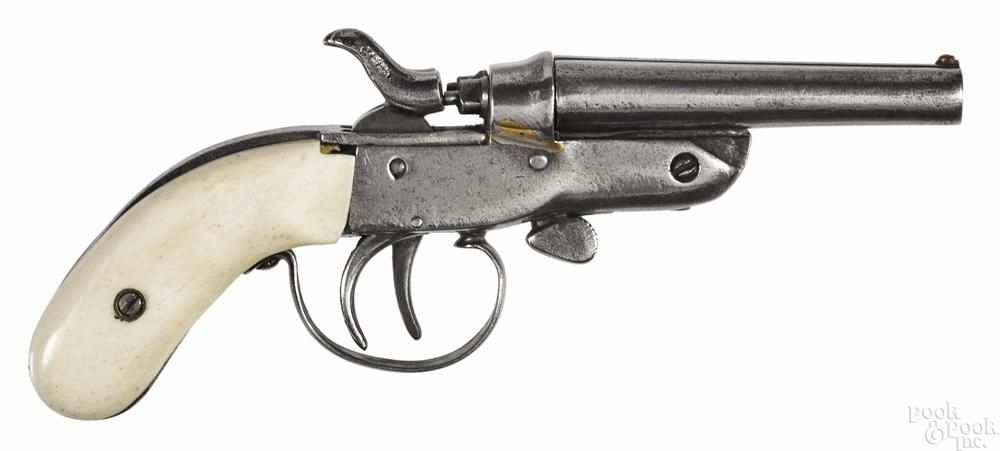
That is certainly a Garrucha.
I had a friend from Uraguay and he talked about the local scene and firearms etc. Great guy.
So this is a south American 'Derringer' in various calibers including shotgun
Looks like a worn version of this or this is a modern copy of the design.
The picture is an example of the type, a Rossi double barrel hammer pistol in 22
These are called Garruchas.
The Garrucha is a small pistol, similar to a derringer, common in southern Brazil and Argentina in the early 20th Century.
It is usually double-barreled,though with the barrels side-by-side rather than vertical as is common in American derringers, and the bores can be rifled or smooth.
In Brazil, the most popular chamberings were for the .320 and .380 centrefire cartridges, similar to the .32 S&W and .38 S&W in appearance, but conical.
They were also chambered for the .22 Short, .22 Long, .22 Long Rifle, and the .32, 8mm, and 9mm Flobert cartridges, among others.
These types of pistols were popular from 1930-1960 due to their low cost and small size, and were associated with the gauchos (cowboys) of the South American pampas.
In Brazil, Garruchas were produced by Castelo, Rossi, and Lerap
I had a friend from Uraguay and he talked about the local scene and firearms etc. Great guy.
So this is a south American 'Derringer' in various calibers including shotgun
Looks like a worn version of this or this is a modern copy of the design.
The picture is an example of the type, a Rossi double barrel hammer pistol in 22
These are called Garruchas.
The Garrucha is a small pistol, similar to a derringer, common in southern Brazil and Argentina in the early 20th Century.
It is usually double-barreled,though with the barrels side-by-side rather than vertical as is common in American derringers, and the bores can be rifled or smooth.
In Brazil, the most popular chamberings were for the .320 and .380 centrefire cartridges, similar to the .32 S&W and .38 S&W in appearance, but conical.
They were also chambered for the .22 Short, .22 Long, .22 Long Rifle, and the .32, 8mm, and 9mm Flobert cartridges, among others.
These types of pistols were popular from 1930-1960 due to their low cost and small size, and were associated with the gauchos (cowboys) of the South American pampas.
In Brazil, Garruchas were produced by Castelo, Rossi, and Lerap

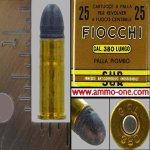
Pistol is Most likely .380 British which is a .375 heeled bullet in a rimmed case not 38 s&w and not .380acp Contact the Canadian fire arms center there techs maybe able to help you out I have found them to be very good and may help to clear up a misunderstanding

rentedzone
CGN Regular
- Location
- Ottawa, ON
Interesting little pistol


A verifier could search the FaRT, and see if the firearm could be matched with an entry. But a verifier does not rule on classification.
Search the FaRT lol

380 is a good to go caliber.i have a couple of them with papers.
It's probably Belgian.
If it has an ELG proofmark with a crown on top (post1893) they going to assume it's not antique
unless you prove otherwise,by,for instance,showing the mfg. went out of business before 1898
It's probably Belgian.
If it has an ELG proofmark with a crown on top (post1893) they going to assume it's not antique
unless you prove otherwise,by,for instance,showing the mfg. went out of business before 1898
Before Bakelite there were GUTTA-PERCHA and CELLULOID grips.
Gutta-percha was a type of hard rubber and could be moulded fairly easily. Generally it was dark in colour.
Celluloid was pure nitrocellulose which was dissolved in ether/alcohol and moulded into shape. It is what a lot of your early "pearl" or "ivory" grips were made of.
Gutta-percha was a bit on the fragile side and got more delicate as time went on. Celluloid had a tendency to shrink slightly with age and also has been known to warp.
Neither has been used much at all in the past 90 years, being superceded by more modern compounds.
Gutta-percha was a type of hard rubber and could be moulded fairly easily. Generally it was dark in colour.
Celluloid was pure nitrocellulose which was dissolved in ether/alcohol and moulded into shape. It is what a lot of your early "pearl" or "ivory" grips were made of.
Gutta-percha was a bit on the fragile side and got more delicate as time went on. Celluloid had a tendency to shrink slightly with age and also has been known to warp.
Neither has been used much at all in the past 90 years, being superceded by more modern compounds.
There was an English .380 Revolver cartridge made on a modified Boxer system: drawn copper casing, folded-head construction, very thin rims, using a very small Boxer primer in a battery cup, looked just like a modern 12-bore primer except tiny.
I have a few here that date approximately 1870 or possibly a bit earlier.
The official NAME was .380 Revolver but it was also used in pocket and purse guns and would even work in some of the early Rook and Rabbit rifles.
There are/were a LOT of different ".380" cartridges!
I have a few here that date approximately 1870 or possibly a bit earlier.
The official NAME was .380 Revolver but it was also used in pocket and purse guns and would even work in some of the early Rook and Rabbit rifles.
There are/were a LOT of different ".380" cartridges!
Before Bakelite there were GUTTA-PERCHA and CELLULOID grips.
Gutta-percha was a type of hard rubber and could be moulded fairly easily. Generally it was dark in colour.
Celluloid was pure nitrocellulose which was dissolved in ether/alcohol and moulded into shape. It is what a lot of your early "pearl" or "ivory" grips were made of.
Gutta-percha was a bit on the fragile side and got more delicate as time went on. Celluloid had a tendency to shrink slightly with age and also has been known to warp.
Neither has been used much at all in the past 90 years, being superceded by more modern compounds.
Thanks Smellie, I was curious about the early non wood grip materials..... do you know the dates these different materials came to be used on guns?






















