












































You are using an out of date browser. It may not display this or other websites correctly.
You should upgrade or use an alternative browser.
You should upgrade or use an alternative browser.
Are Browning High Power FN bolt action rifles that good?
- Thread starter Oberndorf98
- Start date

OP, you're opening up a very large can of beans with that question.
There are three different models, some of which were factory custom sporters, built to customer preferences, but most were sold by "model."
They were built on FN factory 98 type actions, both small ring and large ring, again, with various options available if you were ordering one.
Most folks just bought them off LGS racks or from a catalogue.
I've had several over the decades, and all of them were good rifles, which didn't require much effort to get them to shoot well.
The magic is in the design, fit, and finish of these rifles.
The checkering was always fine, at least 24 lines per inch, and the factory triggers all broke at 3 pounds, with very crisp let off.
The blued metal was done with the Neidner process, which created an almost "Black" color, with a slight hint of blue that only showed in bright sunlight.
The wood in the stocks was mostly Walnut, but I've had them with Birdseye Maple, and straight grain Maple. Likely other wood was available.
This is a good list to find the model
There are three different models, some of which were factory custom sporters, built to customer preferences, but most were sold by "model."
They were built on FN factory 98 type actions, both small ring and large ring, again, with various options available if you were ordering one.
Most folks just bought them off LGS racks or from a catalogue.
I've had several over the decades, and all of them were good rifles, which didn't require much effort to get them to shoot well.
The magic is in the design, fit, and finish of these rifles.
The checkering was always fine, at least 24 lines per inch, and the factory triggers all broke at 3 pounds, with very crisp let off.
The blued metal was done with the Neidner process, which created an almost "Black" color, with a slight hint of blue that only showed in bright sunlight.
The wood in the stocks was mostly Walnut, but I've had them with Birdseye Maple, and straight grain Maple. Likely other wood was available.
This is a good list to find the model
Key Identification Markers
The primary identifiers for a Browning Hi-Power fall into several categories:- Serial Number: The serial number is crucial. Early models had simple numerical sequences, while later versions incorporate letter prefixes indicating year of manufacture. Deciphering these prefixes is vital. Consult available online resources and historical production charts to pinpoint the manufacturing year and era.
- Receiver Markings: Pay close attention to the roll marks on the slide. Markings like ‘BROWNING ARMS COMPANY ST. LOUIS, MO. & MONTREAL P.Q.’ signify a specific period and origin of manufacture. European manufactured Hi-Powers often bear markings from Fabrique Nationale (FN) in Herstal, Belgium, and will generally be proof-marked
- Sights: Sight configurations evolved over time. Early models featured fixed sights, while later versions incorporated adjustable sights. The style and material (e.g., iron, three-dot, luminous) offer clues.
- Finish: The finish can be a helpful, though not definitive, indicator. Different eras saw blued finishes, parkerized finishes, and later, more durable coatings like epoxy finishes. Check for wear and tear, as re-finishing can mask original characteristics.
- Caliber Markings: While primarily chambered in 9mm, Hi-Powers were also manufactured in .40 S&W. Verify the caliber markings on the slide and barrel.
- Proof Marks: European Hi-Powers, particularly those manufactured by FN, will feature proof marks. These markings indicate the firearm has undergone and passed testing and are important for dating.
Last edited:

Hand Skills
CGN Regular
- Location
- In the 'heartland', southern SK
They don't make em like they used to, that's for sure 

f n bolt action rifles ??????OP, you're opening up a very large can of beans with that question.
There are three different models, some of which were factory custom sporters, built to customer preferences, but most were sold by "model."
They were built on FN factory 98 type actions, both small ring and large ring, again, with various options available if you were ordering one.
Most folks just bought them off LGS racks or from a catalogue.
I've had several over the decades, and all of them were good rifles, which didn't require much effort to get them to shoot well.
The magic is in the design, fit, and finish of these rifles.
The checkering was always fine, at least 24 lines per inch, and the factory triggers all broke at 3 pounds, with very crisp let off.
The blued metal was done with the Neidner process, which created an almost "Black" color, with a slight hint of blue that only showed in bright sunlight.
The wood in the stocks was mostly Walnut, but I've had them with Birdseye Maple, and straight grain Maple. Likely other wood was available.
This is a good list to find the model
Key Identification Markers
The primary identifiers for a Browning Hi-Power fall into several categories:
- Serial Number: The serial number is crucial. Early models had simple numerical sequences, while later versions incorporate letter prefixes indicating year of manufacture. Deciphering these prefixes is vital. Consult available online resources and historical production charts to pinpoint the manufacturing year and era.
- Slide Markings: Pay close attention to the roll marks on the slide. Markings like ‘BROWNING ARMS COMPANY ST. LOUIS, MO. & MONTREAL P.Q.’ signify a specific period and origin of manufacture. European manufactured Hi-Powers often bear markings from Fabrique Nationale (FN) in Herstal, Belgium, and will generally be proof-marked.
- Frame Configuration: Frame variations include internal extractors, external extractors, and variations in the safety lever (thumb safety). Ambidextrous safeties were introduced later, signifying a more modern production run. Also note the presence or absence of a magazine disconnect safety.
- Sights: Sight configurations evolved over time. Early models featured fixed sights, while later versions incorporated adjustable sights. The style and material (e.g., iron, three-dot, luminous) offer clues.
- Finish: The finish can be a helpful, though not definitive, indicator. Different eras saw blued finishes, parkerized finishes, and later, more durable coatings like epoxy finishes. Check for wear and tear, as re-finishing can mask original characteristics.
- Caliber Markings: While primarily chambered in 9mm, Hi-Powers were also manufactured in .40 S&W. Verify the caliber markings on the slide and barrel.
- Proof Marks: European Hi-Powers, particularly those manufactured by FN, will feature proof marks. These markings indicate the firearm has undergone and passed testing and are important for dating.
once again on gun stupid not even close to the question asked

- Location
- Southern Vancouver Island
Good point on that.Salt wood
 Anyone wanting one of these rifles that were made from about 1968 to 1972 should first pop the action out of the stock
to check for corrosion. Same goes for some Browning shotgun models as well.

OP, you're opening up a very large can of beans with that question.
There are three different models, some of which were factory custom sporters, built to customer preferences, but most were sold by "model."
They were built on FN factory 98 type actions, both small ring and large ring, again, with various options available if you were ordering one.
Most folks just bought them off LGS racks or from a catalogue.
I've had several over the decades, and all of them were good rifles, which didn't require much effort to get them to shoot well.
The magic is in the design, fit, and finish of these rifles.
The checkering was always fine, at least 24 lines per inch, and the factory triggers all broke at 3 pounds, with very crisp let off.
The blued metal was done with the Neidner process, which created an almost "Black" color, with a slight hint of blue that only showed in bright sunlight.
The wood in the stocks was mostly Walnut, but I've had them with Birdseye Maple, and straight grain Maple. Likely other wood was available.
This is a good list to find the model
Key Identification Markers
The primary identifiers for a Browning Hi-Power fall into several categories:
- Serial Number: The serial number is crucial. Early models had simple numerical sequences, while later versions incorporate letter prefixes indicating year of manufacture. Deciphering these prefixes is vital. Consult available online resources and historical production charts to pinpoint the manufacturing year and era.
- Slide Markings: Pay close attention to the roll marks on the slide. Markings like ‘BROWNING ARMS COMPANY ST. LOUIS, MO. & MONTREAL P.Q.’ signify a specific period and origin of manufacture. European manufactured Hi-Powers often bear markings from Fabrique Nationale (FN) in Herstal, Belgium, and will generally be proof-marked.
- Frame Configuration: Frame variations include internal extractors, external extractors, and variations in the safety lever (thumb safety). Ambidextrous safeties were introduced later, signifying a more modern production run. Also note the presence or absence of a magazine disconnect safety.
- Sights: Sight configurations evolved over time. Early models featured fixed sights, while later versions incorporated adjustable sights. The style and material (e.g., iron, three-dot, luminous) offer clues.
- Finish: The finish can be a helpful, though not definitive, indicator. Different eras saw blued finishes, parkerized finishes, and later, more durable coatings like epoxy finishes. Check for wear and tear, as re-finishing can mask original characteristics.
- Caliber Markings: While primarily chambered in 9mm, Hi-Powers were also manufactured in .40 S&W. Verify the caliber markings on the slide and barrel.
- Proof Marks: European Hi-Powers, particularly those manufactured by FN, will feature proof marks. These markings indicate the firearm has undergone and passed testing and are important for dating.
What chu talkin about Willis??
The blurb you posted is about Hi Power pistols, not Browning long arms
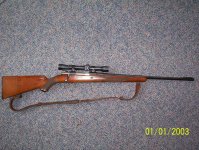

huntingfamily
CGN Regular
- Location
- In the fields and forests
It looks like he quotes AI answers in some of his repliesWhat chu talkin about Willis??
The blurb you posted is about Hi Power pistols, not Browning long arms

I guess you've got your shorts in a knot?What chu talkin about Willis??
The blurb you posted is about Hi Power pistols, not Browning long arms
Original post:
Are Browning High Power FN bolt action rifles that good?
FN made the Browning rifles the post is about.f n bolt action rifles ??????
once again on gun stupid not even close to the question asked
Last edited:
Yes it does, it's how you find out when and which model you have and, heaven forbid, parts.
Browning rifles utilize parts made in their own facilities as well as by contractors.
You need the serial number, model, and date of manufacture to get the right part.
If you're selling/collecting the rifles, this information and how to get what you need is also important.
I realize it states Hi Power pistols, but I didn't think I needed to edit that out, for thinking individuals.
Browning rifles utilize parts made in their own facilities as well as by contractors.
You need the serial number, model, and date of manufacture to get the right part.
If you're selling/collecting the rifles, this information and how to get what you need is also important.
I realize it states Hi Power pistols, but I didn't think I needed to edit that out, for thinking individuals.
When buying the Browning Safari Bolt actions made in Belgium by FN be aware that many had stocks that were dried with salt and that has wreaked havoc on the metal parts. There are resources to identify the serial numbers. Browning sort of made a mistake by drying the wood for stocks with salt

Not to go off the topic of the Browning FNs....but....
One very economical but equally excellent option are the FN Mausers used by Husqvarna in the 640 series. Same action, excellent quality, but not such nice stocks. The stocks almost always have a crack in the tang area. But it's a good excuse to buy a nice walnut replacement stock! And no worries about salt wood stocks. I've had three of these, all amazing rifles. Since they were mostly post WW2 (built to 1956 or so) commercial sporters in larger calibers, the bores are usually mint.
Another similar option are the Sako Hi Power rifles. Not as many of these around, but the same action in a nicer stock with better quality sights. Prices are usually pretty reasonable when these pop up, they aren't as well known as other Sako rifles. Had one of these guys.
Intersurplus is a great source of these. Just make sure you look for the 'FN Commercial' versions; they don't have thumb cut outs on the receiver nor stripper clip guides in the bridge.
There are good modern synthetic stocks available if you don't want to worry about a nice walnut stock getting abused. Hogue makes one with a full aluminum bedding block. The rubbery finish on the stock isn't so nice, but they are good for a hunting rifle. If you want a modern trigger, Timney makes one and they aren't that expensive ($200 or less).
Finally, most of the FN sporting Mausers came with drilled and tapped receivers with a standard spacing, so you can use an EGW one piece picatinny rail to get the scope back a bit (most of the old wood stocks have a very long LOP). For me this was a game changer.
Hope you find what you're looking for.
One very economical but equally excellent option are the FN Mausers used by Husqvarna in the 640 series. Same action, excellent quality, but not such nice stocks. The stocks almost always have a crack in the tang area. But it's a good excuse to buy a nice walnut replacement stock! And no worries about salt wood stocks. I've had three of these, all amazing rifles. Since they were mostly post WW2 (built to 1956 or so) commercial sporters in larger calibers, the bores are usually mint.
Another similar option are the Sako Hi Power rifles. Not as many of these around, but the same action in a nicer stock with better quality sights. Prices are usually pretty reasonable when these pop up, they aren't as well known as other Sako rifles. Had one of these guys.
Intersurplus is a great source of these. Just make sure you look for the 'FN Commercial' versions; they don't have thumb cut outs on the receiver nor stripper clip guides in the bridge.
There are good modern synthetic stocks available if you don't want to worry about a nice walnut stock getting abused. Hogue makes one with a full aluminum bedding block. The rubbery finish on the stock isn't so nice, but they are good for a hunting rifle. If you want a modern trigger, Timney makes one and they aren't that expensive ($200 or less).
Finally, most of the FN sporting Mausers came with drilled and tapped receivers with a standard spacing, so you can use an EGW one piece picatinny rail to get the scope back a bit (most of the old wood stocks have a very long LOP). For me this was a game changer.
Hope you find what you're looking for.






















