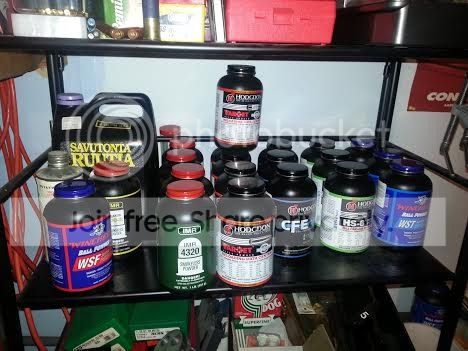
The line between hoarder and someone with foresight can be very blurry at times. There are lots of people that have 20, 30, even 50 years worth of powder stockpiled because they bought it really cheap and are trying to save money in the long run. There are people who have 40lbs kegs of powder they don't even use anymore because they bought it when it was cheap and thought they would use it. I'm hard pressed to call those people hoarders because, generally, they bought when supply was in surplus.
Some people say anyone with more than a 6-month supply is a hoarder. Others say more than 1 year, or more than 2 years, there is no definition; it's all just purely opinion.
Some people get into a panic and buy out of fear/anxiety that they won't be able to get more in the future. People who usually buy 1-2lbs a year buy 10lbs when they see it available because they're worried about their own supply.
I've only seen one example of what I'd truly call a hoarder. A guy in LeBarons tried to buy everything they had in stock, even powders he had never used before. He even tried to buy all their Pyrodex even though he didn't seem to know what it was even for. The manager refused to sell it to him and they implemented a 2lbs/customer rule after that.
A shortage can be caused by a small, sustained spike in sales in a fairly stable market. It doesn't require people to hugely increase their average purchases. If every Canadian took out $200 cash from their account over a week we would have a serious cash shortage; this was brought up during Y2K preparations 16 years ago. It's a perfectly reasonable amount of money but if enough people do it, it'll cause a shortage. I'm sure there are the guys out there clearing entire shelves and spending thousands of dollars more than normal buying ammo and reloading supplies but they've always been there on occasion. Regular consumers stocking up a little more than normal, in enough numbers, can cause shortages. Those shortages cause fear/anxiety in others who do the same and the cycle continues.
This isn't a conspiracy theory; it's basic economics.