













































You are using an out of date browser. It may not display this or other websites correctly.
You should upgrade or use an alternative browser.
You should upgrade or use an alternative browser.
Art of the tactical carbine Vol II
- Thread starter Navy Gunner
- Start date
- Status
- Not open for further replies.
vert grip isnt meant for holding? What the?
Never would have guessed.
Different methods of using the vert grip. The classic "tennis racket" hold is viewed as less than optimal. Many who run verts use them as a wedge to aid in seating the rifle. Then there's those who don't run them.
TDC

I really like Magpul low prices too?? WTF?
When the boats come in from China, I would give away free s**t too, it cost me nothing.
Lets see them open a shop up here in Canada and charge LOW Prices....then maybe people will respect them....
..if you can respect guys who make plastic gun parts...??
I would not pay for their DVD(s).....even downloading them would be a waste of hard drive space. I will go watch paintball on youtube...better skillz there.
When the boats come in from China, I would give away free s**t too, it cost me nothing.
Lets see them open a shop up here in Canada and charge LOW Prices....then maybe people will respect them....
..if you can respect guys who make plastic gun parts...??
I would not pay for their DVD(s).....even downloading them would be a waste of hard drive space. I will go watch paintball on youtube...better skillz there.

I would not pay for their DVD(s).....even downloading them would be a waste of hard drive space. I will go watch paintball on youtube...better skillz there.
And your qualifications to judge their "skillz" are what? Magpul Dynamics employ some of the world's best shooters with recent operational experience.

And your qualifications to judge their "skillz" are what? Magpul Dynamics employ some of the world's best shooters with recent operational experience.
None of which ever seem to matter once debating hits the internet.
You don't have to get your own operational experience and corporate sponsorship. Just as long as you stayed at a holiday in last night, you're apparently 'good to go'.
*Holy s**t. Just found a use for that otherwise useless movie"Be Kind, Rewind". Forget the big budget Costa flick. Get the CGN remake. Its custom Sweded.
Last edited:
I have to agree. Both Chris and Travis can shoot, there's no debating that. What they teach in my opinion is overly complicated, doesn't work in as many instances as other techniques and only applies to the AR platform. That being said, I'll buy the second set to complete the package.
TDC
yes some of the drills are complex but most of them are for shooters/operators who are well advanced. The high speed stuff is for professionals who are beyond many of the stress limitations even the average infantryman is subject to. The high speed stuff is for those who have BTDT and are coming back for more but want to be better this time around. Like anything though you practice it till you can't get it wrong and stress limitations have a reduced effect.
I think its fantastic that this stuff is being shared at the civillian level and I really appreciate Magpul's willingness to facilitate it.
I really like Magpul low prices too?? WTF?
When the boats come in from China, I would give away free s**t too, it cost me nothing.
Lets see them open a shop up here in Canada and charge LOW Prices....then maybe people will respect them....
..if you can respect guys who make plastic gun parts...??
Gotta love ignorance
 .
. 1. For what you get with the MOE stock for example the price is absolutely fantastic. Very comfortable, updated and intelligent design for about the same price as a standard PVC (inferior material) M4 stock from some manufacturers. For just the MOE stock there is required a 4 piece mold and a three piece plus the proprietary machined parts and proprietary butpad. Most people can't understand this but that is a lot of engineering and up front investment for any company to make. Retailing that for $60 US is absolutely fantastic!
2. When I hear people talk about "plastic gun parts" as if its a bad thing I can't help but laugh. G36/SL8 = polymer receiver and FCG parts, Bushmaster ACR = polymer lower, SCAR = polymer lower, C7/C8 = polymer parts, C9 = polymer parts, AK74 = polymer parts, Tikka t3 = polymer parts, etc etc etc etc etc. Proper polymers are far superior to wood in almost every application and better then 7075 aircraft aluminum in many as well. This is like someone saying, "muskets are superior battle rifles to repeating rifles... because I say so."
Educate yourself and understand what you're talking about.I agree that the willingness to share this knowledge to more than MIL/LE is a good thing. However, I also see that this type of knowledge and training is also another revenue generating division of Magpul Industries.
As you mention, the more one practices and trains the more proficient one becomes. The effects of stress are always present regardless of the above. For those in the know the skills are usable, but they market the courses as something even the beginner can attend and come away an improved shooter. I didn't see such results in the videos. I saw lots of confused faces when having to execute IA's which I feel were over complicated. Even Costa's chamber checks are lacking. His checks are so fast that I can't see how one would be able to distinguish anything from the flash picture of the chamber. Atop of that, viewing the E port isn't feasible under diminished light so its a specialized skill/manual or arms that only works for half of the day. Another issue I have with viewing the E port prior to taking action is during short range engagements. From what I've learned and what I hear from others is that inside 25 yards any failure of the rifle/primary results in a transition to the secondary immediately due to the imminent threat. That being the case, a visual check of the E port in such a situation is a waste of time and movement. Some might say you could/would omit that step in the process when inside 25 yards. A fair answer, but it introduces yet another variable one must process(your range to threat) before acting. If your IA on a failure to fire is tap/tug/rack(with the charge handle) you'll likely fix the issue. For the close range work even an error in judgement leading to your IA of tap/tug/rack will still be faster than observe/tap/tug/rack.
The one guy in the third video demonstrates this very issue. When engaging steel he experiences a stoppage. He clears it, inserts a magazine(much the same way one would when reloading) then fails to tug on the magazine which results in it falling out. He inserts a fresh magazine then proceeds to hit the bolt catch. This does not load the rifle as it is bolt forward on an empty chamber due to the clearance drill. Had he simply executed a reload with the tap/tug/rack he would have solved the issue the first time.
Aside from the above and some other issues I have, my biggest concern is that the skills taught are AR specific. Obviously that is the issue system for the US forces and many of the private contractors but its not a guarantee either. Learning two, three, or four separate manual of arms is time consuming and only adds the potential for error.
TDC
As you mention, the more one practices and trains the more proficient one becomes. The effects of stress are always present regardless of the above. For those in the know the skills are usable, but they market the courses as something even the beginner can attend and come away an improved shooter. I didn't see such results in the videos. I saw lots of confused faces when having to execute IA's which I feel were over complicated. Even Costa's chamber checks are lacking. His checks are so fast that I can't see how one would be able to distinguish anything from the flash picture of the chamber. Atop of that, viewing the E port isn't feasible under diminished light so its a specialized skill/manual or arms that only works for half of the day. Another issue I have with viewing the E port prior to taking action is during short range engagements. From what I've learned and what I hear from others is that inside 25 yards any failure of the rifle/primary results in a transition to the secondary immediately due to the imminent threat. That being the case, a visual check of the E port in such a situation is a waste of time and movement. Some might say you could/would omit that step in the process when inside 25 yards. A fair answer, but it introduces yet another variable one must process(your range to threat) before acting. If your IA on a failure to fire is tap/tug/rack(with the charge handle) you'll likely fix the issue. For the close range work even an error in judgement leading to your IA of tap/tug/rack will still be faster than observe/tap/tug/rack.
The one guy in the third video demonstrates this very issue. When engaging steel he experiences a stoppage. He clears it, inserts a magazine(much the same way one would when reloading) then fails to tug on the magazine which results in it falling out. He inserts a fresh magazine then proceeds to hit the bolt catch. This does not load the rifle as it is bolt forward on an empty chamber due to the clearance drill. Had he simply executed a reload with the tap/tug/rack he would have solved the issue the first time.
Aside from the above and some other issues I have, my biggest concern is that the skills taught are AR specific. Obviously that is the issue system for the US forces and many of the private contractors but its not a guarantee either. Learning two, three, or four separate manual of arms is time consuming and only adds the potential for error.
TDC
However, I also see that this type of knowledge and training is also another revenue generating division of Magpul Industries.
Yes its called "a business", not "the communist ideal".
but they market the courses as something even the beginner can attend and come away an improved shooter.
Not exactly, they move progressively from the very first vid and progress from there. Anyone thinking they are going to watch 5 DVDs and come aways as something more then a person who just watched 5 DVDs needs to manage their expectations. 90% of CGNers will find enough drills, and technique in the first DVD of AOTC1 to fill their lifetime of range visits. The rest if entertaining and meant for people who can maintain a level of comfort in combat/high stress situations IE beyond your average Infantryman.
Aside from the above and some other issues I have, my biggest concern is that the skills taught are AR specific. Obviously that is the issue system for the US forces and many of the private contractors but its not a guarantee either. Learning two, three, or four separate manual of arms is time consuming and only adds the potential for error.
Depending on your level of professionalism this is just one source from which you will draw knowledge and as is stated repeatedly "its not about doing it exactly like they do its about doing it the best way for you. Again this exceeds anything you will be taught at the basic levels of training most soldiers are given.


Damn there sure are a lot of experts on CGN...
I ninja roll to-and-from the fridge... top that.
I ninja roll to-and-from the fridge... top that.
Amature.
I've tatically repositioned my fridge next to the couch so I can do super-fast reloads of my drink of choice.
Damn there sure are a lot of experts on CGN...
Dude. I would have been so lost without this site. Thank the tactical God's I've found it. The endless source of information is priceless!!
Dude. I would have been so lost without this site. Thank the tactical God's I've found it. The endless source of information is priceless!!
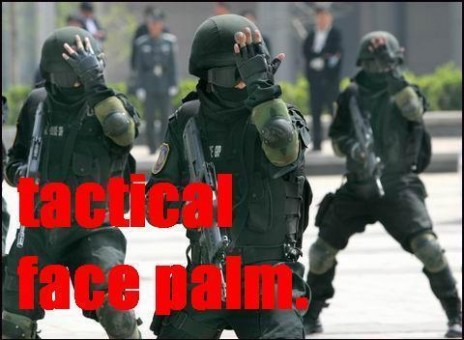
Damn there sure are a lot of experts on CGN...
Canadians kill people too..........
Amature.
I've tatically repositioned my fridge next to the couch so I can do super-fast reloads of my drink of choice.
DAMN! And I was told at my ninja rolling course that I was learning #### that government "operators" with 1000's of hours of training didn't want me to know!
Why didn't you tell me that before I ordered the god damned slippers!

Canadians kill people too..........
Isn't KevinB one of the Canadians who kill people?
Yes its called "a business", not "the communist ideal".
Not exactly, they move progressively from the very first vid and progress from there. Anyone thinking they are going to watch 5 DVDs and come aways as something more then a person who just watched 5 DVDs needs to manage their expectations. 90% of CGNers will find enough drills, and technique in the first DVD of AOTC1 to fill their lifetime of range visits. The rest if entertaining and meant for people who can maintain a level of comfort in combat/high stress situations IE beyond your average Infantryman.
Depending on your level of professionalism this is just one source from which you will draw knowledge and as is stated repeatedly "its not about doing it exactly like they do its about doing it the best way for you. Again this exceeds anything you will be taught at the basic levels of training most soldiers are given.
Agreed.. The videos have some great footage and are far from dry and boring.
TDC
- Status
- Not open for further replies.






















