Other options for collecting Civil War. Try the Auction Houses like Heritage and James Julia. They have archives that provide selling prices for past items. Also a good places to bid if you know what you are doing. Go to the big Civil War shows such as the annual shows in Franklin and Richmond. Big and small dealers have thousands of items on hundreds of tables. You can add a visit to a battlefield or two if you can convince your wife that this is a good holiday. Do your homework and learn. That's half the fun and even the most experienced dealers make mistakes and there are huge differences with respect to "mark-up" pricing. Get focused. You can spend your life learning and collecting just Confederate buttons. Try to purchase items with solid provenance. It is infinitely more rewarding to hold an item in your hand that you know with certainty is legit and has a definitive history to a person or battle. Well worth the extra dollar but the more history attached to a relic the more you have to be wary. And yes, do lots of reading. The effort up front will help you make good decisions.













































You are using an out of date browser. It may not display this or other websites correctly.
You should upgrade or use an alternative browser.
You should upgrade or use an alternative browser.
Back in 1989 and 1990 I was into Model 1851 and 1861 Colt Navy Revolvers.
- Thread starter drm3m
- Start date
=========================================================================================================NorthCoastBigBore
Years ago I got many pieces from John Denner.
Longarms (3), revolvers (3), swords (2)....many books.
First CW piece from him in 1994...last piece in 2006.
I think he occasionally offers CW stuff today.
NOTE;
As of today Dec 9 2013 he has a couple of CW pieces-----per his web site.
http://www.denner.ca/weapons/longguns/index.html
There is a fellow that usually has a table at the Montreal show...Nick Healey who often has CW revolvers.
antiqueguns@rogers.com
He lives near Ottawa.
I purchased/traded pieces from a private collector also in Ontario.
The '61 Colt Navy (1989) and Smith carbine (1993) came from the same collector/dealer in Montreal.
Three pieces came from U.S. dealers.
The CW holster came from a U.S. collector on eBay.
I have no idea how many CW collectors there are in Canada.
It is not like Luger collectors who are easier to identify.
The U.S. dealers are really the best retail option.....but expensive for nice pieces.
I am not really on the hunt anymore.......occasionally I trip over something but I have been out of the game for a while.
So after everything said....the best place to look is in your own backyard. (Your market)
For the most part....that has been my experience.
David
First piece purchased from Denner in 1971 when he had his retail store in Montreal.
This was before I really got into collecting CW stuff actively.
My father and I used to target shoot with this pistol.
Lock marked Wheeler & Son----I think that I paid $65 back in 1971.
I do not know much about Wheeler & Son----these is not mine.
A superb cased pair of Percussion Pistols, c1835 by Wheeler & Son, Fine quality, Fine condition
Please ask for full details £SOLD Stock No. 4283
This was quite an accurate rifle--purchased in 1965 from an antique dealer in Montreal.
My father at the range with this rifle back in 1966.


drm3m,
Thank you for posting pictures of some of your wonderful firearms.
It appears to me the rifle your father is holding at the range in the photo is different from the accurate rifle -- purchased in 1965 from an antique dealer in Montreal shown in the photos above it. The front sight, nosecap, spacing of the thimbles, and barrel length appear to be different.
I am curious about the accurate rifle -- purchased in 1965 from an antique dealer in Montreal.
I see that the lock plate is marked JOSEPH MANTON.
Do you know if this is the gunsmith Joseph Manton of Montreal active during the time period of the rifle pictured?
Regards,
Powderman

Do you know if this is the gunsmith Joseph Manton of Montreal active during the time period of the rifle pictured?
Powderman;
Are you sure you are not thinking of Marsden who was a canadian maker or marketer in the 1800s. What caught my eye was the word warranted on the lock of the Manton gun. The gun and the lock certainly look british but I usually associated "warranted" with belgian locks. One of the Mantons died I think in the early to mid 1840s (I am too lazy to look up which) and the firm carried on under the ownership of his widow and the supervision of his foreman. Later the foreman bought the firm and the name continued on as Manton and Co.
cheers mooncoon
Mooncoon,
Thank you for your reply,
From what I can find out, Joseph Manton was born in Birmingham, England on March 10, 1830. He moved to Montreal, Quebec sometime in 1859. He had a brother, William Shakespeare Manton, born December 17, 1816 who moved to Kingston, Ontario sometime before 1844. Both men made firearms in Canada, but I believe Joseph was the only one to hold a patent for firearms.
I have a single shot breach-loading rifle chambered in 577 Snider built to a patent granted to Joseph Manton of Montreal in 1871 which is marked on the barrel: JOSEPH MANTON MONTREAL
Regards,
Powderman
Thank you for your reply,
From what I can find out, Joseph Manton was born in Birmingham, England on March 10, 1830. He moved to Montreal, Quebec sometime in 1859. He had a brother, William Shakespeare Manton, born December 17, 1816 who moved to Kingston, Ontario sometime before 1844. Both men made firearms in Canada, but I believe Joseph was the only one to hold a patent for firearms.
I have a single shot breach-loading rifle chambered in 577 Snider built to a patent granted to Joseph Manton of Montreal in 1871 which is marked on the barrel: JOSEPH MANTON MONTREAL
Regards,
Powderman
I tripped over something today that I am trying to track down.
William "Billy" Sweger was a gunsmith in Perry County, P.A.
His great great great grandson Derek Sweger is a gunmaker today.
I found his web site but the email address which dates back to 2009 no longer functions.
I am trying to reach him through other means.
On the web site it shows a Joseph Manton Warranted marked lock.
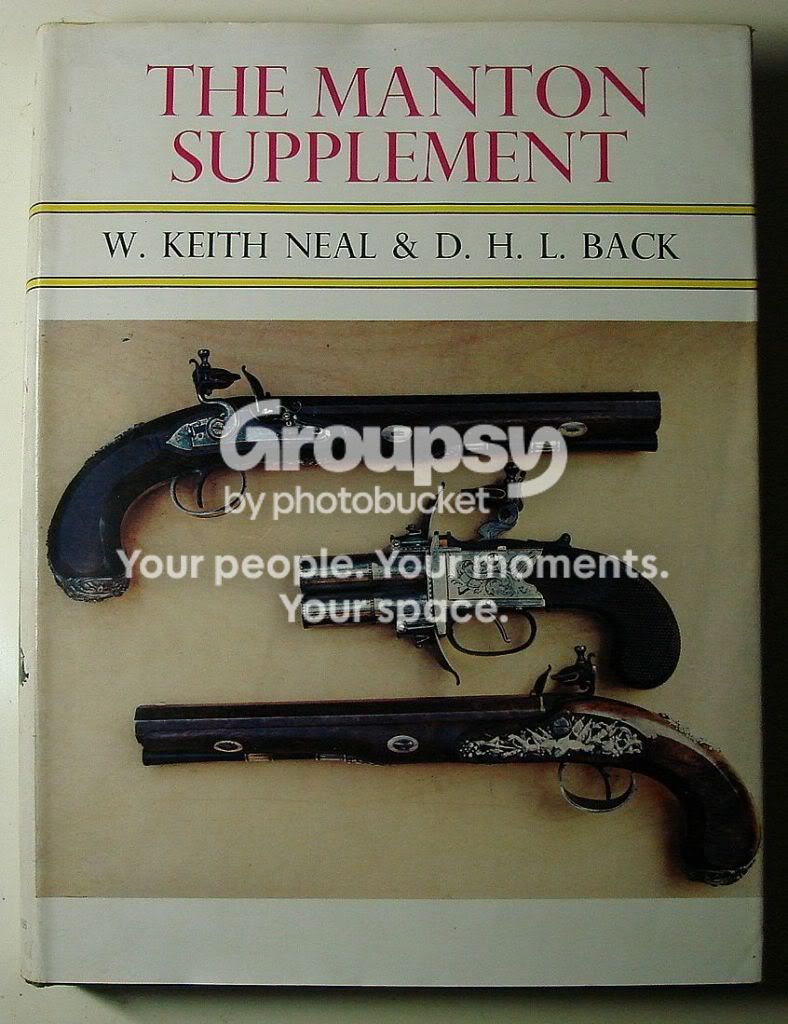
In a book that I have about the Mantons, Joseph Manton manufactured locks which 'might' have been sold to other gun makers.
The Joseph Manton story sounds rather turbulent....law suits...bankruptcies etc.
Joseph Manton died on June 29 1835 at the age of 70 in Maida Hill, England, and nothing suggests that he came to Canada. (According to the Manton book that I have)
William "Billy" Sweger -gunsmith-photo dates to 1890.

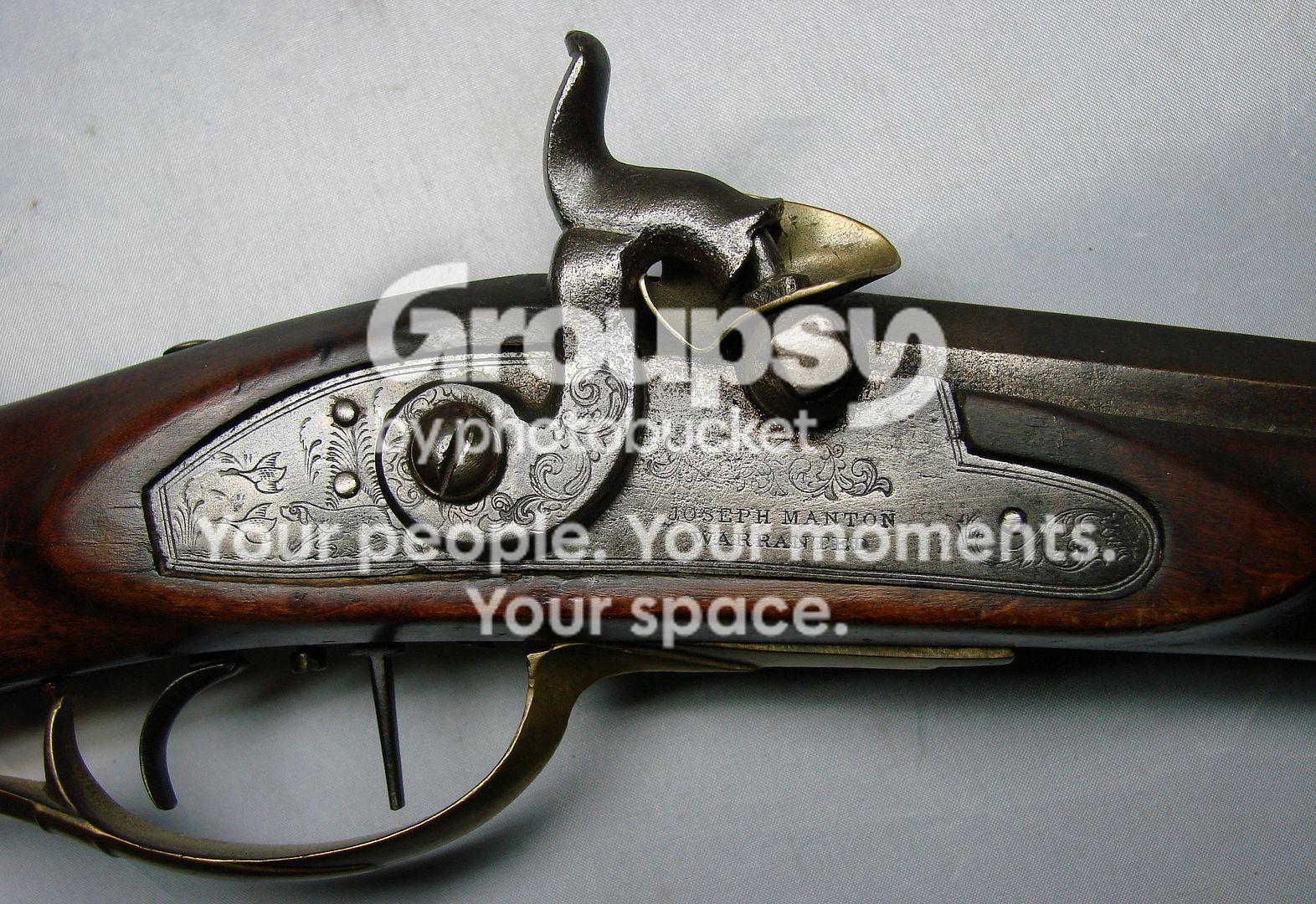
Photo of Joseph Manton Warranted lock off Derek Sweger's web site.
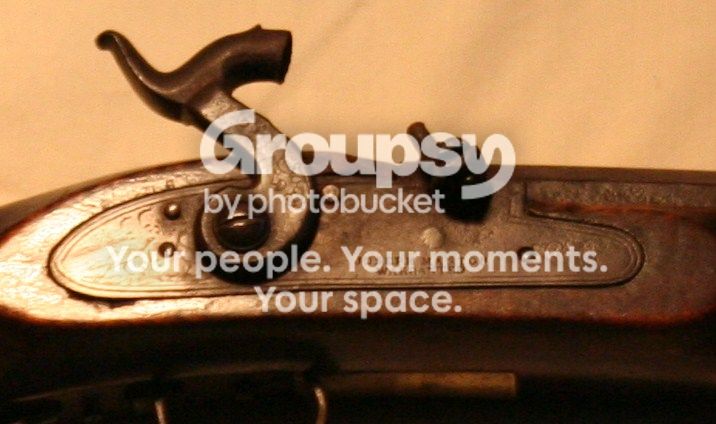
My Joseph Manton Warranted marked lock, with double-set triggers....45 cal.
This is the link to Derek Sweger's web site that tells the story.
I would like to contact him to see if the rifle that I have 'might' have been made by his great-great-great grandfather.
http://swegerarms.com/sweger_arms_history.htm
David
William "Billy" Sweger was a gunsmith in Perry County, P.A.
His great great great grandson Derek Sweger is a gunmaker today.
I found his web site but the email address which dates back to 2009 no longer functions.
I am trying to reach him through other means.
On the web site it shows a Joseph Manton Warranted marked lock.
In a book that I have about the Mantons, Joseph Manton manufactured locks which 'might' have been sold to other gun makers.
The Joseph Manton story sounds rather turbulent....law suits...bankruptcies etc.
Joseph Manton died on June 29 1835 at the age of 70 in Maida Hill, England, and nothing suggests that he came to Canada. (According to the Manton book that I have)

William "Billy" Sweger -gunsmith-photo dates to 1890.

Photo of Joseph Manton Warranted lock off Derek Sweger's web site.

My Joseph Manton Warranted marked lock, with double-set triggers....45 cal.

This is the link to Derek Sweger's web site that tells the story.
I would like to contact him to see if the rifle that I have 'might' have been made by his great-great-great grandfather.
http://swegerarms.com/sweger_arms_history.htm
David
Last edited:
I posted some questions about my Joseph Manton rifle on the ASSRA website:
http://www.assra.com/cgi-bin/yabb/YaBB.pl?num=1203530066/0
I got this reply from a collector in England about a connection to the English Mantons:
Powderman, I doubt if there is any connection between the Joseph Manton of London 1760-1835 and the Joseph Manton in Canada.
The London gunsmith went bankrupt in 1826 when the British Military failed to pay him for a series of improvements to cannon. He had spent all his fortune on these. The business was sold off to Joseph Lang.
I would be intersted to see if there were any proof marks on this rifle.
Provided it is still in a good tight condition, I see no reason why you shouldn't fire it. .577" Snider brass is available although not cheap, but a few dozen rounds shouldn't break the bank. There's plenty of info on loading the round on the British Military Forums, see:-
http://p223.ezboard.com/fbritishmilitariaforumsfrm2
http://www.assra.com/cgi-bin/yabb/YaBB.pl?num=1203530066/0
I got this reply from a collector in England about a connection to the English Mantons:
Powderman, I doubt if there is any connection between the Joseph Manton of London 1760-1835 and the Joseph Manton in Canada.
The London gunsmith went bankrupt in 1826 when the British Military failed to pay him for a series of improvements to cannon. He had spent all his fortune on these. The business was sold off to Joseph Lang.
I would be intersted to see if there were any proof marks on this rifle.
Provided it is still in a good tight condition, I see no reason why you shouldn't fire it. .577" Snider brass is available although not cheap, but a few dozen rounds shouldn't break the bank. There's plenty of info on loading the round on the British Military Forums, see:-
http://p223.ezboard.com/fbritishmilitariaforumsfrm2
powderman,
I found this on the Internet---Joseph Manton Montreal.
I suspect that this is the Manton that you have.
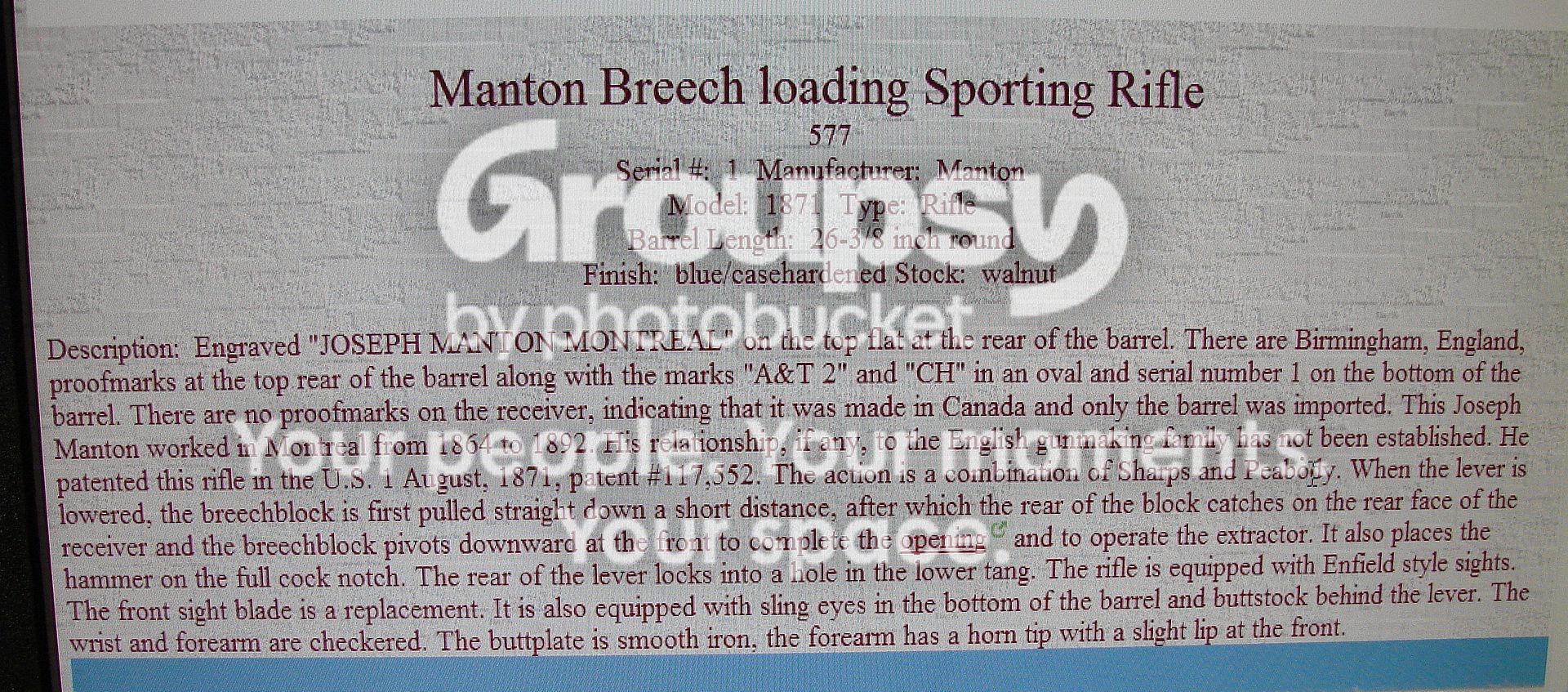


Other Manton lock markings.
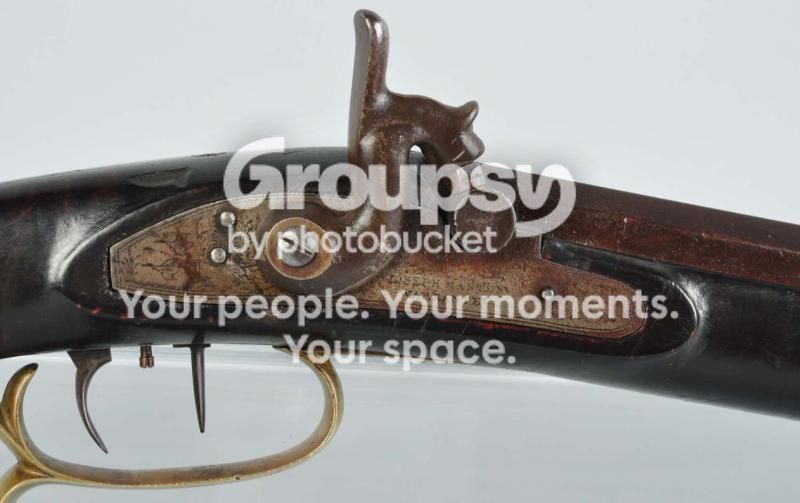
A Joseph Manton Warranted lock is shown on the rifle below.
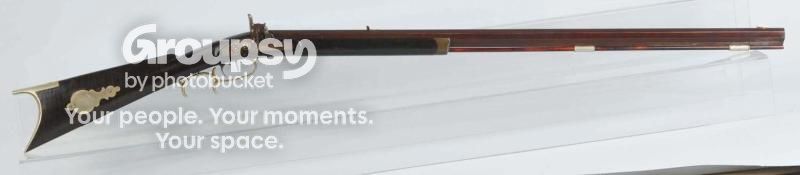
Philadelphia Half-Stock Rifle by W. Calderwood.
Description Overall length: 50”. Barrel length: 34”. Percussion half-stock rifle with full octagon .32 caliber rifled barrel marked “Calderwood”. Joseph Manton warranted lock. Silver cap box, 4 – 1/8” toeplate, and large silver five-pointed star on cheekpiece. Pewter nose cap and double set triggers. Williams Calderwood, born 1780 and died 1860, worked in Bucks County from 1808-1811. Listed on Germantown Road in Philadelphia from 1813-1818. Few of his rifles have survived. Finely engraved curly maple stock with “ebonized” finish. Hammer possibly replaced in period of use.
I found this on the Internet---Joseph Manton Montreal.
I suspect that this is the Manton that you have.


Other Manton lock markings.

A Joseph Manton Warranted lock is shown on the rifle below.
Philadelphia Half-Stock Rifle by W. Calderwood.
Description Overall length: 50”. Barrel length: 34”. Percussion half-stock rifle with full octagon .32 caliber rifled barrel marked “Calderwood”. Joseph Manton warranted lock. Silver cap box, 4 – 1/8” toeplate, and large silver five-pointed star on cheekpiece. Pewter nose cap and double set triggers. Williams Calderwood, born 1780 and died 1860, worked in Bucks County from 1808-1811. Listed on Germantown Road in Philadelphia from 1813-1818. Few of his rifles have survived. Finely engraved curly maple stock with “ebonized” finish. Hammer possibly replaced in period of use.


Last edited:
drm3m,
Thank you for your reply.
It has been years since I tried an internet search for Joseph Manton Montreal on the internet, and was unaware of the article you posted, and have never seen the photos in your posting.
The rifle I have is indeed the one in the photos you posted.
The text accompanying the photos in the article you posted has a few errors. Must be true. I read it on the internet, comes to mind.
The receiver of the rifle pictured does have a Birmingham view mark on the left side of the receiver by the barrel, it is faint, but it is there and can be seen in one of the photos I posted on the ASSRA Forum. A reply from a collector from England from the ASSRA thread:
Thanks for the info Powderman. The Proof Marks are typical of the time for BP rifles proved in Birmingham England, and as Canada was under 'British Law' at the time the rifle was made, and firearms couldn't be 'Proved' in Canada (they didn't have a Proof House then) any firearms would have had to be sent to England for the necessary testing.
So I am uncertain if my rifle was made in England or Canada.
Also, the breech blocks drops straight down for the full operation of the lever and at no point does the breechblock catch on the rear of the receiver and pivot downward!
This same rifle is illustrated by J. Kirton in "THE BRITISH FALLING BLOCK BREECHLOADING RIFLEFROM 1865" on pages 75 and 77, The Canadian Journal of Arms Collecting Vol. 10, No.4, and Arms Collecting Vol. 40, No.3.
Try posting a photo of your rifle with the Manton marked lock on the Americanlongrifles.org site: http://www.americanlongrifles.org/forum/
for the info you are seeking on William "Billy" Sweger / Derek Sweger
.
Hope this helps.
Regards,
Powderman
Thank you for your reply.
It has been years since I tried an internet search for Joseph Manton Montreal on the internet, and was unaware of the article you posted, and have never seen the photos in your posting.
The rifle I have is indeed the one in the photos you posted.
The text accompanying the photos in the article you posted has a few errors. Must be true. I read it on the internet, comes to mind.
The receiver of the rifle pictured does have a Birmingham view mark on the left side of the receiver by the barrel, it is faint, but it is there and can be seen in one of the photos I posted on the ASSRA Forum. A reply from a collector from England from the ASSRA thread:
Thanks for the info Powderman. The Proof Marks are typical of the time for BP rifles proved in Birmingham England, and as Canada was under 'British Law' at the time the rifle was made, and firearms couldn't be 'Proved' in Canada (they didn't have a Proof House then) any firearms would have had to be sent to England for the necessary testing.
So I am uncertain if my rifle was made in England or Canada.
Also, the breech blocks drops straight down for the full operation of the lever and at no point does the breechblock catch on the rear of the receiver and pivot downward!
This same rifle is illustrated by J. Kirton in "THE BRITISH FALLING BLOCK BREECHLOADING RIFLEFROM 1865" on pages 75 and 77, The Canadian Journal of Arms Collecting Vol. 10, No.4, and Arms Collecting Vol. 40, No.3.
Try posting a photo of your rifle with the Manton marked lock on the Americanlongrifles.org site: http://www.americanlongrifles.org/forum/
for the info you are seeking on William "Billy" Sweger / Derek Sweger
.
Hope this helps.
Regards,
Powderman
powderman,
I had just registerd on that forum and posted a clearer photo of the Joseph Manton Warranted lock markings on my rifle.
I am curious to know if this type of lock was used by many producers of these rifles.
I have not been able to connect with Derek Sweger at this point.
Derek Paul Sweger is on Face Book....I am not.
I had just registerd on that forum and posted a clearer photo of the Joseph Manton Warranted lock markings on my rifle.
I am curious to know if this type of lock was used by many producers of these rifles.
I have not been able to connect with Derek Sweger at this point.
Derek Paul Sweger is on Face Book....I am not.
Last edited:
drm3m,
I am also not on facebook.
Try posting your questions about Derek Paul Sweger in the Contemporary Longrifle Collecting section of the ALR website.
Also, try posting questions about William "Billy" Sweger AND Derek Paul Sweger in the Antique Gun Collecting section of the ALR site.
I think between the two sections of the ALR site, somebody might have some of the info you seek.
Regards,
Powderman
I am also not on facebook.
Try posting your questions about Derek Paul Sweger in the Contemporary Longrifle Collecting section of the ALR website.
Also, try posting questions about William "Billy" Sweger AND Derek Paul Sweger in the Antique Gun Collecting section of the ALR site.
I think between the two sections of the ALR site, somebody might have some of the info you seek.
Regards,
Powderman
powderman,
I was initially drawn to William Sweger as a possible manufacturer of my rifle as I found a photo of a Joseph Manton Warranted lock on Derek Sweger's web site that was on one of the rifles that his great-great-great grandfather had built.
I am beginning to believe that these locks many have been used by 'numerous' American rifle makers.
I was hoping to get some feedback to that effect on the ALR Forum.
So far nothing to suggest that based on the response.
This is a more fancy rifle than mine with a Joseph Manton Warranted lock that sold at auction in the U.S.
The link with take you to 9 photos of this rifle.
Another Joseph Manton Warranted lock.
Price realized $5,100
http://morphyauctions.auctionflex.c...weiid=6238806&lso=pricedesc&pagenum=1&lang=En
Description: Philadelphia Half-Stock Rifle by W. Calderwood.
Description Overall length: 50”. Barrel length: 34”. Percussion half-stock rifle with full octagon .32 caliber rifled barrel marked “Calderwood”. Joseph Manton warranted lock. Silver cap box, 4 – 1/8” toeplate, and large silver five-pointed star on cheekpiece. Pewter nose cap and double set triggers. Williams Calderwood, born 1780 and died 1860, worked in Bucks County from 1808-1811. Listed on Germantown Road in Philadelphia from 1813-1818. Few of his rifles have survived. Finely engraved curly maple stock with “ebonized” finish. Hammer possibly replaced in period of use. Scarce piece. Very good condition.
--------------------------------------------------------------------
It appears that some American rifle manufacturers used these Joseph Manton Warranted locks.
David
The only two responses on the ALF Forum so far.
----------------------------------------------------
Joe Manton had absolutely nothing to do with that lock unless it was to make him turn over in his grave.
An inexpensive Birmingham-made export product... probably marked expressly for the American market where it could be reasonably assumed that almost no one would be familiar with a real Manton gun but enthusiastic shooters might have read Hawker's book and recognized the name. There were also plenty of faked Manton guns sold in England, but most come as lot closer to looking like the real thing.
J V Puleo
---------------------------------------------------------------
Maybe another Joseph Manton trading on a famous name.
Looks like an Ohio lock to me and I have a plate pattern'like it.
Easier to inlet than a rounded lock plate's progressive radius.
Bob Roller
-------------------------------------------------------------------
Someone made these locks----and they appear on some American rifles of this period used by some American rifle builders.
The auction for the rifle shown above took place in Lancaster County, Pennsylvania ----the birth place of these rifles. (May 2011)
I was initially drawn to William Sweger as a possible manufacturer of my rifle as I found a photo of a Joseph Manton Warranted lock on Derek Sweger's web site that was on one of the rifles that his great-great-great grandfather had built.
I am beginning to believe that these locks many have been used by 'numerous' American rifle makers.
I was hoping to get some feedback to that effect on the ALR Forum.
So far nothing to suggest that based on the response.
This is a more fancy rifle than mine with a Joseph Manton Warranted lock that sold at auction in the U.S.
The link with take you to 9 photos of this rifle.
Another Joseph Manton Warranted lock.
Price realized $5,100
http://morphyauctions.auctionflex.c...weiid=6238806&lso=pricedesc&pagenum=1&lang=En
Description: Philadelphia Half-Stock Rifle by W. Calderwood.
Description Overall length: 50”. Barrel length: 34”. Percussion half-stock rifle with full octagon .32 caliber rifled barrel marked “Calderwood”. Joseph Manton warranted lock. Silver cap box, 4 – 1/8” toeplate, and large silver five-pointed star on cheekpiece. Pewter nose cap and double set triggers. Williams Calderwood, born 1780 and died 1860, worked in Bucks County from 1808-1811. Listed on Germantown Road in Philadelphia from 1813-1818. Few of his rifles have survived. Finely engraved curly maple stock with “ebonized” finish. Hammer possibly replaced in period of use. Scarce piece. Very good condition.
--------------------------------------------------------------------
It appears that some American rifle manufacturers used these Joseph Manton Warranted locks.
David
The only two responses on the ALF Forum so far.
----------------------------------------------------
Joe Manton had absolutely nothing to do with that lock unless it was to make him turn over in his grave.
An inexpensive Birmingham-made export product... probably marked expressly for the American market where it could be reasonably assumed that almost no one would be familiar with a real Manton gun but enthusiastic shooters might have read Hawker's book and recognized the name. There were also plenty of faked Manton guns sold in England, but most come as lot closer to looking like the real thing.
J V Puleo
---------------------------------------------------------------
Maybe another Joseph Manton trading on a famous name.
Looks like an Ohio lock to me and I have a plate pattern'like it.
Easier to inlet than a rounded lock plate's progressive radius.
Bob Roller
-------------------------------------------------------------------
Someone made these locks----and they appear on some American rifles of this period used by some American rifle builders.
The auction for the rifle shown above took place in Lancaster County, Pennsylvania ----the birth place of these rifles. (May 2011)
Last edited:






















