












































You are using an out of date browser. It may not display this or other websites correctly.
You should upgrade or use an alternative browser.
You should upgrade or use an alternative browser.
BackYard Moose
- Thread starter Norm99
- Start date

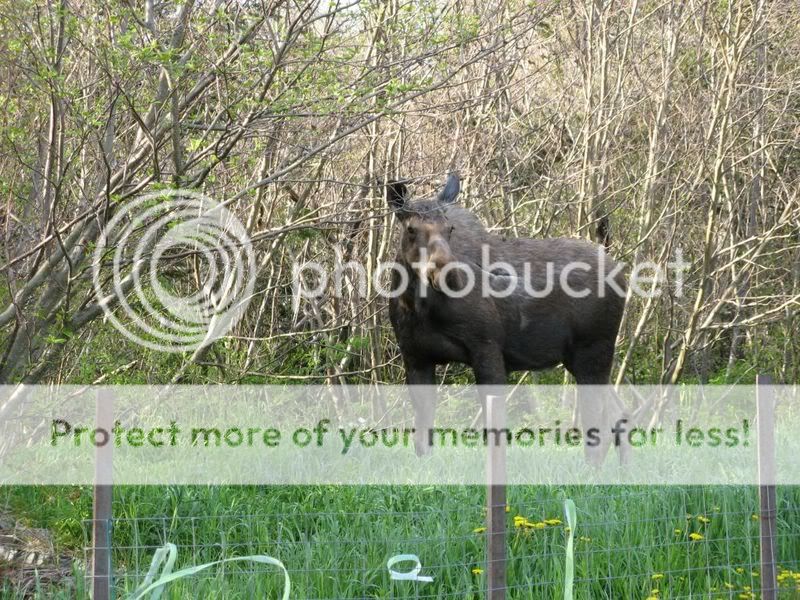




Well, if the mark is a stick, it'd have to be one hell of a stick! Their fur/skin is definately tough. I'd say maybe a fight, but it'd be doubtful she was fighting with a bull.....or maybe she likes it rough...
Regardless, nice lookin moose. You should leave some food out for her...then start feeding her pasta until opening day!
Regardless, nice lookin moose. You should leave some food out for her...then start feeding her pasta until opening day!


- Location
- British Canuckistan
if I may pop in a question. what kind of moose makes the best moose for eating? a young moose? an older moose? bull or cow? I ask because I know in our area there's a two prong season for young moose. not nearly as much meat, mind you...but I'm more about taste and flavor then amount.

- Location
- Vancouver Island BC
if I may pop in a question. what kind of moose makes the best moose for eating? a young moose? an older moose? bull or cow? I ask because I know in our area there's a two prong season for young moose. not nearly as much meat, mind you...but I'm more about taste and flavor then amount.
The dead ones are best to eat,you might get your head kicked if you try eatin' a live one.

Hello again, Mr. Friendly. In BC there is a great variation in the quality of the meat of moose. In the Kootenays is the sub specie known as the Yellowstone, they are the smallest of the moose varieties and without doubt, the poorest quality meat.
Throughout most of BC is the standard, Canada moose, the same as found, I think, all across Canada. In far northern BC, the Yukon and Alaska, is the largest of the sub species, the Alaska moose. These are by far the best quality for eating. Whether the moose are in the north or the south in BC, has a lot to do with the quality of the meat. I can atest that the moose of northern Saskatchewan are, at least were, of choice quality.
I have had personal eating experience in BC with the moose, from the south to the north, so I don't base this information on hear say. However, Jack O'Connor often wrote the same thing as I am saying. The farther north you go, the better are the moose.
Throughout most of BC is the standard, Canada moose, the same as found, I think, all across Canada. In far northern BC, the Yukon and Alaska, is the largest of the sub species, the Alaska moose. These are by far the best quality for eating. Whether the moose are in the north or the south in BC, has a lot to do with the quality of the meat. I can atest that the moose of northern Saskatchewan are, at least were, of choice quality.
I have had personal eating experience in BC with the moose, from the south to the north, so I don't base this information on hear say. However, Jack O'Connor often wrote the same thing as I am saying. The farther north you go, the better are the moose.
Last edited:
- Location
- British Canuckistan
that might explain why I enjoyed the Moose a friend got in the Chilcotin (north of Prince George) so much. that aside tho, I was talking more about how the age and ### of the animal affects the quality of the meat. I understand why you wouldn't want anything while in rut and how you need to be careful of the glands, period. anyhow, like I said...age as in does a young bull/cow taste better then an older bull/cow or visa versa?Hello again, Mr. Friendly. In BC there is a great variation in the quality of the meat of moose. In the Kootenays is the sub specie known as the Yellowstone, they are the smallest of the moose varieties and without doubt, the poorest quality meat.
Throughout most of BC is the standard, Canada moose, the same as found, I think, all across Canada. In far northern BC, the Yukon and Alaska, is the largest of the sub species, the Alaska moose. These are by far the best quality for eating. Whether the moose are in the north or the south in BC, has a lot to do with the quality of the meat. I can atest that the moose of northern Saskatchewan are, at least were, of choice quality.
I have had personal eating experience in BC with the moose, from the south to the north, so I don't base this information on hear say. However, Jack O'Connor often wrote the same thing as I am saying. The farther north you go, the better are the moose.

Yes, age generally means a lot. We've probably all heard about the old bull so tough you couldn't push your fork in the gravy. Strangely though, a northern bull, even a large one, shot between about August 15th and about ten days into September, when they are rolling fat and before they rut, can be the choicest of all moose meat. Of course, the killing and butchering is everything. Cleanly shot, quickly cleaned and very important is to get them hung, skinned if you possibly can, so they will cool as soon as possible.
A calf is certainly good eating, right up until late fall, but maybe not the texture of a mature animal. The young bull you mention, is hard to beat, as would be a young cow, or maybe a dry cow. but what I said about butchering them applies to them all. It is amazing how fast the meat can sour from not being able to cool properly.
By the way, the moose in the picture looks to be in tremendously good shape for spring.
In this day and age of so many restrictions, it is not likely to get a great deal of selection in a moose you shoot. But, if you can, select one that looks good. That is, shiny black and sleak looking, filled right out with no outline of bones under the skin. Avoid one that has scruffy looking hair, or if they look thin. There is a great deal of difference in animals in the bush.
A calf is certainly good eating, right up until late fall, but maybe not the texture of a mature animal. The young bull you mention, is hard to beat, as would be a young cow, or maybe a dry cow. but what I said about butchering them applies to them all. It is amazing how fast the meat can sour from not being able to cool properly.
By the way, the moose in the picture looks to be in tremendously good shape for spring.
In this day and age of so many restrictions, it is not likely to get a great deal of selection in a moose you shoot. But, if you can, select one that looks good. That is, shiny black and sleak looking, filled right out with no outline of bones under the skin. Avoid one that has scruffy looking hair, or if they look thin. There is a great deal of difference in animals in the bush.

Had a pretty similar moose meander through the neighbors back yard last night.
It crossed the road from across the street, stopping a couple of female joggers in their tracks (one was my wife).
It paused momentarily, presenting a good shot, and took its sweet time moving on.
Don't see as many as I used to since the neighborhood is building up. Record was three in the back yard munching on alders for a good 15 minutes. I could have it them with a rock.
It crossed the road from across the street, stopping a couple of female joggers in their tracks (one was my wife).
It paused momentarily, presenting a good shot, and took its sweet time moving on.
Don't see as many as I used to since the neighborhood is building up. Record was three in the back yard munching on alders for a good 15 minutes. I could have it them with a rock.






















