Barrel Soldering

mooncoon

CGN Ultra frequent flyer
Rating - 100%
22   0   0
Location
Vancouver Island
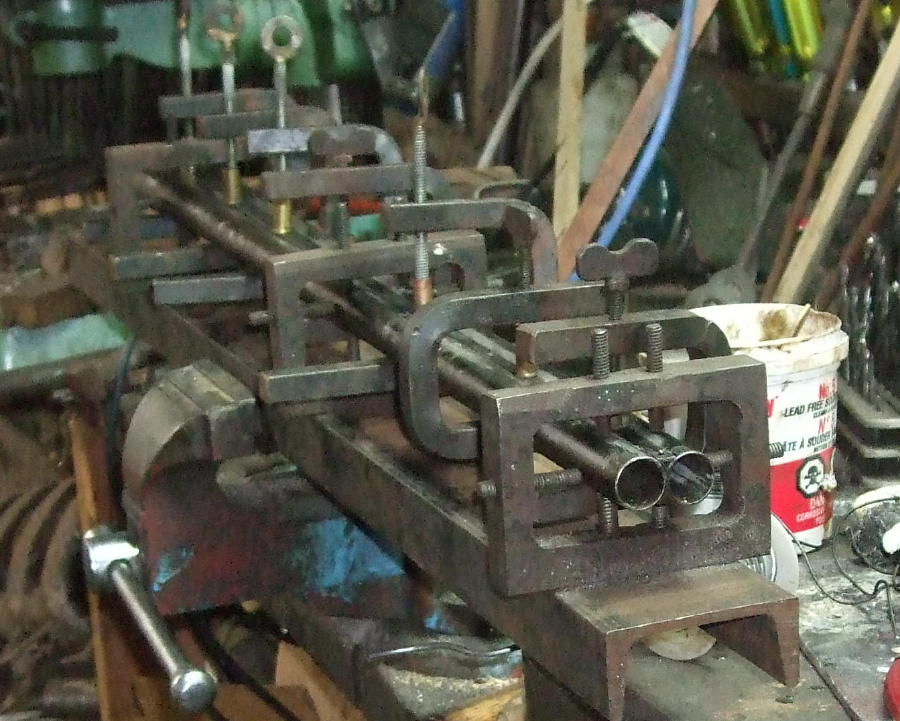
A suggestion for those tempted to reattach the ribs on double guns. In the past I have soldered ribs on with the barrels (and jig) laying flat (ie the way you would shoot them). The reason was that I could solder both sides of the rib at the same time. The problem that I have had was that because I tinned all of the void space, the solder would wick away and accumulate below the intended joint. That was exacerbated because I used the cutting head on my oxy propane torch, which tended to heat more of the barrel and permit the solder to run farther down or around the inside surface of the barrel. Most recently, I thought of trying to solder with the barrels on a 45 degree angle and using the welding tip on my torch. I do about 6 inches on one side then 6 on the other and advance another 6 until the job is finished. This method is only of use on the upper rib because the lower rib tends to be very small or narrow. The jury is still out but the method appears to be no worse than before and probably better.
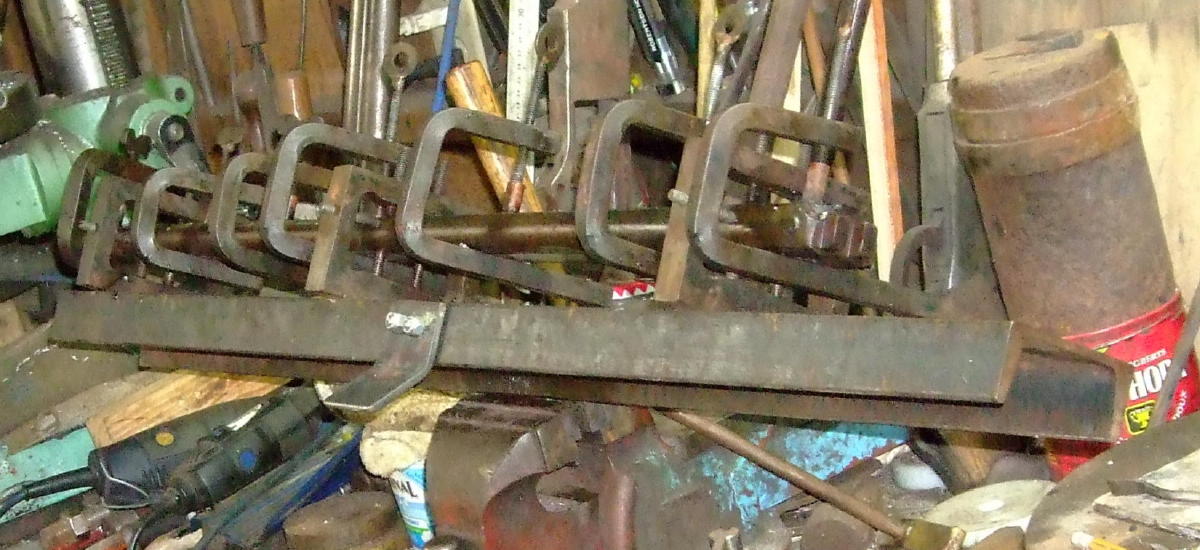
I have posted photos of the rib clamps some time ago but am including a photo again to give a clearer view of the clamps that I use to hold the rib in place while soldering. There are empty brass cartridge cases between the clamp and the rib, to prevent scratching of the rib

cheers mooncoon


Last edited:
I have read that in the "good old days", gunsmiths used a very large copper soldering iron to fasten the barrels. I find myself wondering how they were able to transfer enough heat to do the job. Even with a torch, it still takes a fair bit of heating before the solder will run. Certainly, all of the original solder joints that I have seen on 1800s vintage barrels have been a very narrow strip of solder which is probably why it is not that uncommon to see ribs that have separated. Belgium with its brazed barrels must have put the pair of barrels in a large furnace / oven to get them hot enough for the brazing to melt and flow.

cheers mooncoon
 
Impressive, I can’t say I’d want to give it a go though lol. I soldered on a set of rifle sights on a shotgun barrel this spring and it was a mild pita to line up and clamp them down prior to the torch, it was a success thankfully.
 
Magnificent jig, did you make it yourself?

Just some scrap metal that I had lying around. The time consuming part was making the "square donuts" with the adjustment screws for supporting the barrels. What I added recently were the 45 degree angle tabs on each side so that I can clamp the jig in the vice at an angle. Also a minor but important point; you do not want the angle tabs to be directly below the middle "donut" . The reason is that when you have the jig in the non angled position, you want to be able to support the jig in the open vice jaws with the portion of the donut which extends outside the channel iron base. That allows you to open the jaws wider than the jig, rest the jig on the jaws while you tighten them up

cheers mooncoon
 
I'm definitely impressed. Good on you and thanx for the pics.

I often look at the soldering jobs done 150 years ago and am also impressed. Early Enfield magazines and black powder dbl bbl shotgun ribs definitely stand out, as do sight bridge installs.

Zero excess run over, just a nice clean joint.

Soldering and welding are not only a skill set but take an artist's touch to do it properly by hand. Robo welder/solderers not so much.
 
Back
Top Bottom