Haven't had a chance yet to get out and test wax slugs... haven't had a chance to try my first shotgun for that matter, thanks to the continued lockdown around here. But it'll happen. Meantime I've made half a dozen of the things using 2-3/4" Remington 'Gun Club' target #7.5 shells and have made a few discoveries which may be of use:
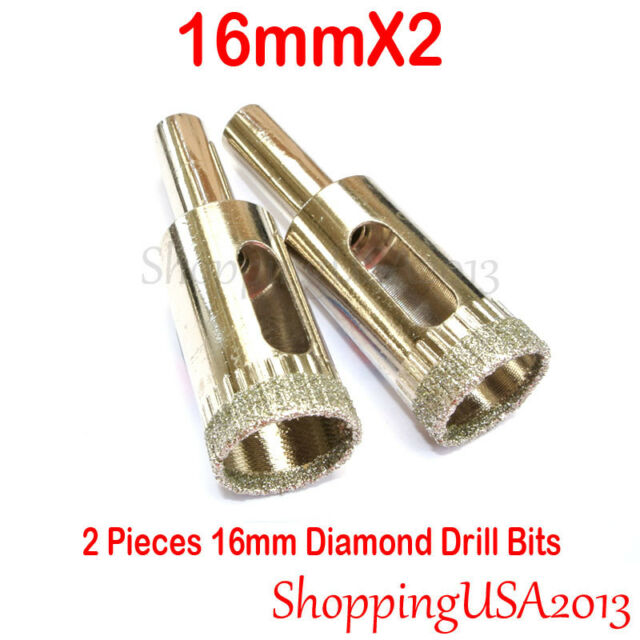
- Drilling was messy and almost inevitably tossed a few BBs out, mixed in some plastic, making for inconsistent weight. Twist bit, spade bit with shortened guide tip (something I'd modified to use on Delrin plastic), didn't make much difference, just messy. I didn't bother buying the recommended 16mm diamond core drill as it had become obvious that any drill, no matter how sharp, was just going to move the soft shell plastic too much resulting in a messy finished product.
- Cutting out the plastic just inside the folded lip was very easy using a small #8 sweep 10mm out-cannel gouge. I have lots of carving tools handy, so it occurred to me that a gouge might easily slip through the plastic, avoiding any lost BB and making zero plastic mess - worked perfectly with a light push and wiggle, no need for any sort of jig, just hold them in one hand and poke the gouge in around the perimeter with the other. The feeling of the gouge blade slipping through plastic and hitting a couple of BBs is clear enough, then withdraw it and make another cut starting partially into the first cut, then carry on for 6 or 7 total cuts until the newly formed 'lid' just lifts out, freeing the contents but preserving the fold to restrain the cup intact.
- Emptying the BBs into a collective container for mixing with molten wax made no sense in terms of reliably restoring full projectile weight in each shell, so I opted for a single empty/mix with wax/refill approach using small blobs of wax melted with a little propane torch in the same small folded pellet tin as the lead BBs.
- Beeswax is very sticky and less subject to fracturing in cooling than paraffin, and I had a bunch on hand, so went with beeswax. Smells nice too. Seems to me beeswax might have a better chance of staying in one piece under the shock of firing compared to brittle paraffin, more likely to stay as a slug until initial contact with some obstacle, whereupon it would of course deform, convert loss of momentum into heat energy and melt, allowing the waxy BBs to fling wherever they do and dump energy quickly.
- Once melted until I see just a wisp of smoke and all the wax (about a teaspoon worth when solid) is melted among the lead, I pour from the folded pellet tin through the spout formed at one end directly into the open shell, coaxing the lead to move with a small stick to keep the level of molten, clear wax just a bit higher than the level of lead as it fills. Biggest difficulty I've found with the wax is having too much mixed in - you really want just enough to wet the lead plus a bit of a puddle around it. Too much wax tends to pour too soon, starting to congeal at the base on contact with the cool plastic cup, preventing enough lead from getting inside before the thing is full. There's one in my picture showing this - I managed to get the whole collection back in but they're sitting a bit high, level with the plastic rim. Much easier to top up with a bit of extra wax later than to try and prevent it flowing in at the same time as the shot.
- I don't quite fill them, instead leaving about 1mm from the top, then as it begins to cloud over to some depth I use a matched dowel to press gently, making sure there are no air bubbles. I then top it off to level with another few drops of melted beeswax and let fully cool. About half of them develop a tiny crack near the middle, so I'll heat that briefly with the little torch and dribble another drop or two on to seal it again. The finished wax can be from level to slightly lower than the plastic rim. They feed into the barrel exactly as easily as normal shells when pumping (Remington 870 Tac-14) so there's no issue with face shape or any distortion of the nose with hot wax. I think the cup preserves the size well enough. Without it, the shell itself seems rather fragile and prone to distortion.


The only problems I can see with this would be that the slightly sticky nature of beeswax might very slightly increase resistance of the wad from leaving the shell. But as there's not likely much leakage outside the petals of the cup this shouldn't be significant - still, not something I'd want to push by using on a full power load, perhaps better left to target loads. There's probably going to be a significant drop in muzzle velocity. These shells are rated at 1,200fps for a normal length shotgun barrel, so I'd guess maybe they lose 50fps through my 12.5" barrel. The added weight of the wax likely takes another 50fps off the muzzle velocity but if it stays intact in flight would preserve more momentum further out as it would behave more like a standard 1oz non-rifled slug. So I'll have to test for close range cohesion, longer range cohesion, then dispersion rates after striking a barrier of some sort, and finally penetration/destruction in a 'meat target' of some sort. Accuracy is a bit of a secondary consideration through a smooth bore with something as inherently sub-optimal as a wax slug, but I'll have to see if I can reasonably hold to POA to at least 20 yards. Should be fun!