bolt head

The numbering only refers to the #4 and #5 and later Enfields. The higher numbers are indicative of wear on the gun or else some tolerance during the breeching up in the first place. Most new guns had a 0 or a 1.
The increasing tolerance can be indicative of wear at the breech, on the bolt, or on the receiver, or a combination of all three.

Just because a rifle you look at has a low number (0 or 1) does not mean the wear is not there. It may just mean nobody has guaged it. On the other hand, if the rifle has a 3 on it, and it closes OK onto a case or headspace guage, then it may be in need of some serious repair in the near future.
 
I am looking at a couple of rifles right now. One has a #3 and the other has a #2 bolt head. If it has a number 3, should I look elsewhere for a lower # or is it still worth purchasing?

Can you go into further detail about the #3 bolt head and work required. I know nothing at all about Enfields (I may buy both as well).

 
If the headspace is ok(wont close on a .074 field gage) you will not wear it out. The number on the bolt head is irrelevant unless it won't pass a field gage. On factory assembly, a bolt head that would give the correct headspace was fitted. That could be a 0,1,2, or whatever.
 
Ok, so is there a difinitive answer

Ok, so does it really matter in the end than? I'm looking at getting a No5 Mk1 with a #3 bolt head. It hasn't had the headspacing checked in about 15 years, but the headspacing hasn't been a problem for the individual. The other is a No4 Mk1 with a No2 bolt head. No headspacing issues, but its never been checked either. This headspacing/bolt head issue is the only thing holding me up on buying either one or both at this point.
If I buy these firearms, would I have to take them in for servicing anytime soon or not? By anytime soon I mean within the next few years if I shoot this rifle on a semi regular basis (2-3 times a month, every couple of months, more of course if going to use this for competition).
 
Last edited:
If the rifle is within spec. with the #2 head, it is unlikely you are going to wear it to the point that it would need a #3. If you ever did, a new head could be installed - although #3s are the most expensive, being the last chance to get headspace within limits.
A rifle with a #3 head that swallows a .074" gauge has problems that may be difficult to remedy.
You have no way of knowing what has been done to one of these rifles. It is 60 odd years old with an unknown history. The bolthead number doesn't really tell you a lot if the rifle is not tested with gauges. Parts get swapped around.
Headspace specs for Lee enfields are generous. The military didn't reload. For civilian use, especially if reloading, headspace closer to minimum may be preferable. It is not unusual to observe incipient separations in brass fired in No. 4 rifles which are in service use.
I wouldn't worry about a #2 head. But then again, I have the gauges, and could check right on the spot.
 
No4/No5 Boltheads

If you play with these a lot the other thing to do is to keep a number of spare bolts on hand-cheaper than the long boltheads nowadays.If headspace checks with a spare bolt and whatever bolthead(the shorter the better),then it's just a matter of swapping out the bolt components,making sure of course that the bolt head does'nt over/under-index and that firing pin protrusion is OK.For the fastidious you can also re-number the replacement bolt to the rifle by grinding/filing off the bolt number and re-stamping with the rifle number-then re-bluing or re-parking if necessary.In addition to holding headspace within safety parameters,you are not corrupting history either.The E.M.E.I.s for the No4 address bolt replacement and re-numbering.I recently did this with a rifle which passed the "field" gauge check OK with a #3 head,but did'nt qualify on the commercial "no-go" gauge.I wanted headspace a bit tighter to minimize case stretching,so I installed a different bolt which checked OK on the "no-go" with a #0 head.
 
One thing to watch is the rim thickness of your ammo.

As these rifles were made, they were correctly factory headspaced for ammunition with a rim thickness of maximum .063". By FAR the greatest portion of the Canadian-made ammunition, and War-time ammo in general, was very close to this dimension. The problem is that some commercial companies have decided to literally make cheap ammo...... and I have actually encountered commercial cartridges with rims FAR too thin.

And even if your rifle is headspaced correctly, and your ammo gives you another 15 thou or so....... you are shooting a rifle with 15 thou excess headspace. Hmmm....... Yet most of the rifles just keep chugging along.

Headspace is not as critical as some people will insist, but it IS important. To minimize problems, always make sure that your cartridge is being gripped by the extractor. This is NOT a cure for anything, but it can add a little safety in a situation full of unknowns.

But have your rifle's headspace checked, by all means, but also be aware of the fact that there has been some commercial sporting .303 ammunition produced, with rims thin enough to give you problems.
 
summerside sniper said:
I know nothing at all about Enfields (I may buy both as well).

In the Milsurp Knowledge Base, there's the "Technical Articles for Milsurp Collectors and Re-loaders"http://www.milsurps.com/forumdisplay.php?f=25 forum.

It contains a very good article with animations from Parashooter........

Headspace 101 for .303's (click here)http://www.milsurps.com/showthread.php?t=10

Regards,
Badger

--------------------------------------------------------------------------
MKLBannerMarch292007.gif

Milsurp Knowledge Library (Click HERE)
 
BadgerDog said:
In the Milsurp Knowledge Base, there's the "Technical Articles for Milsurp Collectors and Re-loaders"http://www.milsurps.com/forumdisplay.php?f=25 forum.

It contains a very good article with animations from Parashooter........

Headspace 101 for .303's (click here)http://www.milsurps.com/showthread.php?t=10

Regards,
Badger

--------------------------------------------------------------------------
MKLBannerMarch292007.gif

Milsurp Knowledge Library (Click HERE)


Thanks Badger. That was really helpful. I really need to get on there in regards to this rifle. I have no idea how to do anything with it yet.
 
Also in the Technical Articles for Milsurp Collectors and Re-loaders (click here)http://www.milsurps.com/forumdisplay.php?f=25, get this excellent publication .... Basic Manual of Military Small Arms by W.H.B. Smith (Expired Copyright 1943) (click here)http://www.milsurps.com/showthread.php?t=1122. This is general to all firearms and is a nice quick reference to have on your computer as a collector.

In the England - Milsurp Knowledge Library (click here) http://www.milsurps.com/forumdisplay.php?f=12, download the 1942 Small Arms Rifle Training Manual (Vol.1 No.3) (click here)http://www.milsurps.com/showthread.php?t=103, which has a lot of specifics on Enfields.

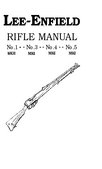
Not up in the MKL as yet, but here's the basic Lee-Enfield Rifle Manual for the No.1, No.3, No.4 and No.5.


These will get you started.

Regards,
Badger

--------------------------------------------------------------------------
MKLBannerApril42007.gif

Milsurp Knowledge Library (Click HERE)

 
Last edited:
Back
Top Bottom

































































