Canadian Military Insignia.....What do I have?

Dantforth

CGN frequent flyer
GunNutz
Rating - 100%
108   0   0
I purchased a bunch of stuff recently which had belonged to a Doctor who had served in the Canadian Forces. I have done some research and the collar badges are from the 5th Royal Scots regiment....I think! Any help from "Insignia Gurus" would be appreciated. David


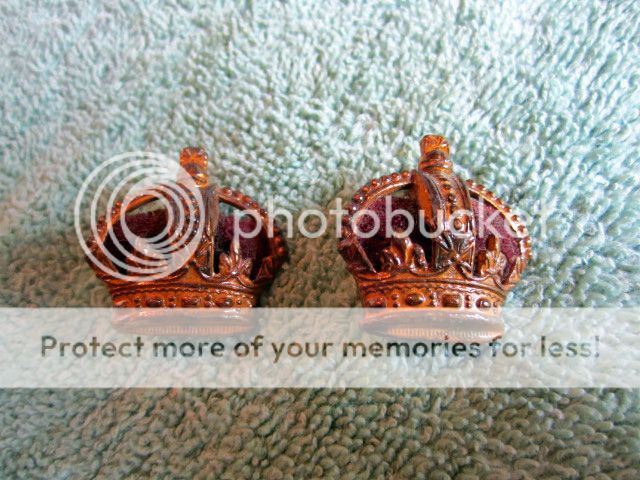
Think the crowns might be pips insignia for a major. They go on the epaulets of a regimental uniform .
 
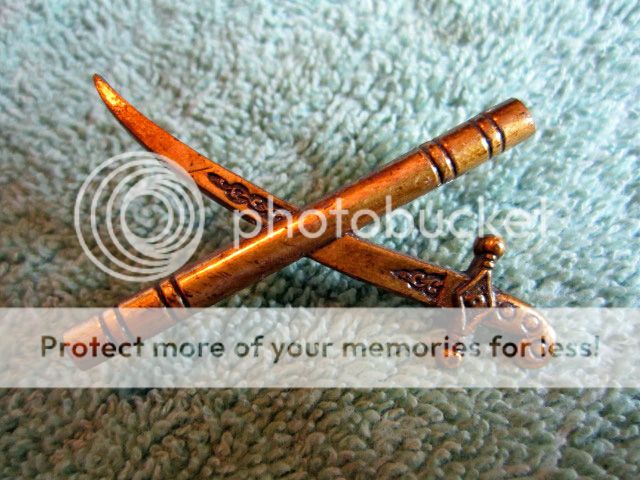
The first is a crossed sword and baton rank insignia worn by various general officer ranks in the Brit Army and pre-integration Cdn Army. When worn with a "pip" or star it designates a major-general, with a crown a lieutenant-general, and with a crown and a pip, a general. These are worn on the uniform epaulettes.

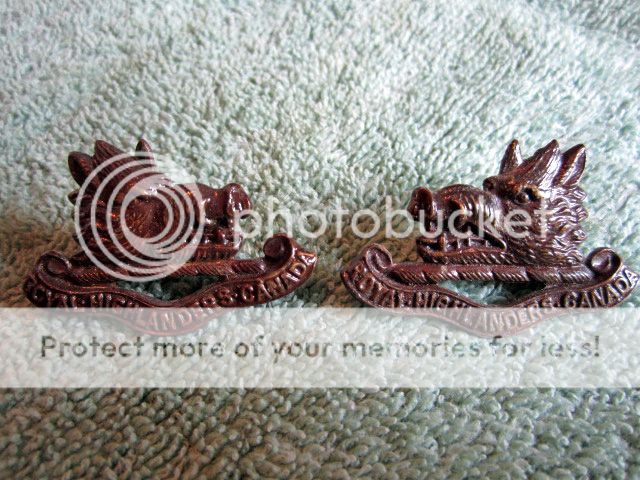
The second is a pair of regimental "collar dogs" worn on the uniform lapels.

The third is a crown rank insignia worn on the uniform epaulettes, again in the Brit Army and pre-1968 Cdn Army. A single crown designates a major, a crown and a pip for a lieutenant-colonel, a crown and 2 pips for a colonel, a crown and 3 pips for a brigadier, a crown with a crossed sword and baton, a lieutenant-general.

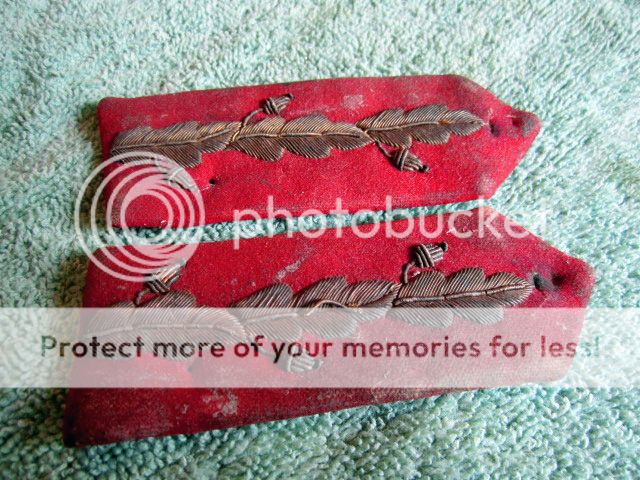
The fourth is a set of gorget patches worn on uniform lapels by general officers, again in the pre-1968 Cdn Army. Full colonels and brigadiers wore a similar, but less ornate, gorget patch. There was a button fastened to the top of the patch.

 
The collar dogs are from the Royal Highlanders of Canada, AKA The Black Watch (Royal Highland Regiment) of Canada. They likely date from the First World War when they were more commonly known as the RHC. Original the Regiment, raised in Montreal in 1862 was called the 5th Royal Scots. In 1905 it became allied with The Black Watch of Scotland and in 1907 changed its name to the 5th Regiment The Royal Highlanders of Canada (Black Watch). The short title of RHC is still in use today. The boar's head collar dog appears to have been used up to some time early in the First World War when the 'wee man', i.e. St Andrew holding his diagonal cross, appears in photographs showing collar dogs.

 
Back
Top Bottom