The challenge of collecting percussion Colt revolvers.
-Condition, including clear markings and clarity of the cylinder scene.
-Matching serial numbers on the relevant components.
-Remaining original blue finish—case colors.
There is no original finish remaining on this '51 Navy---but it has a clear cylinder scene.


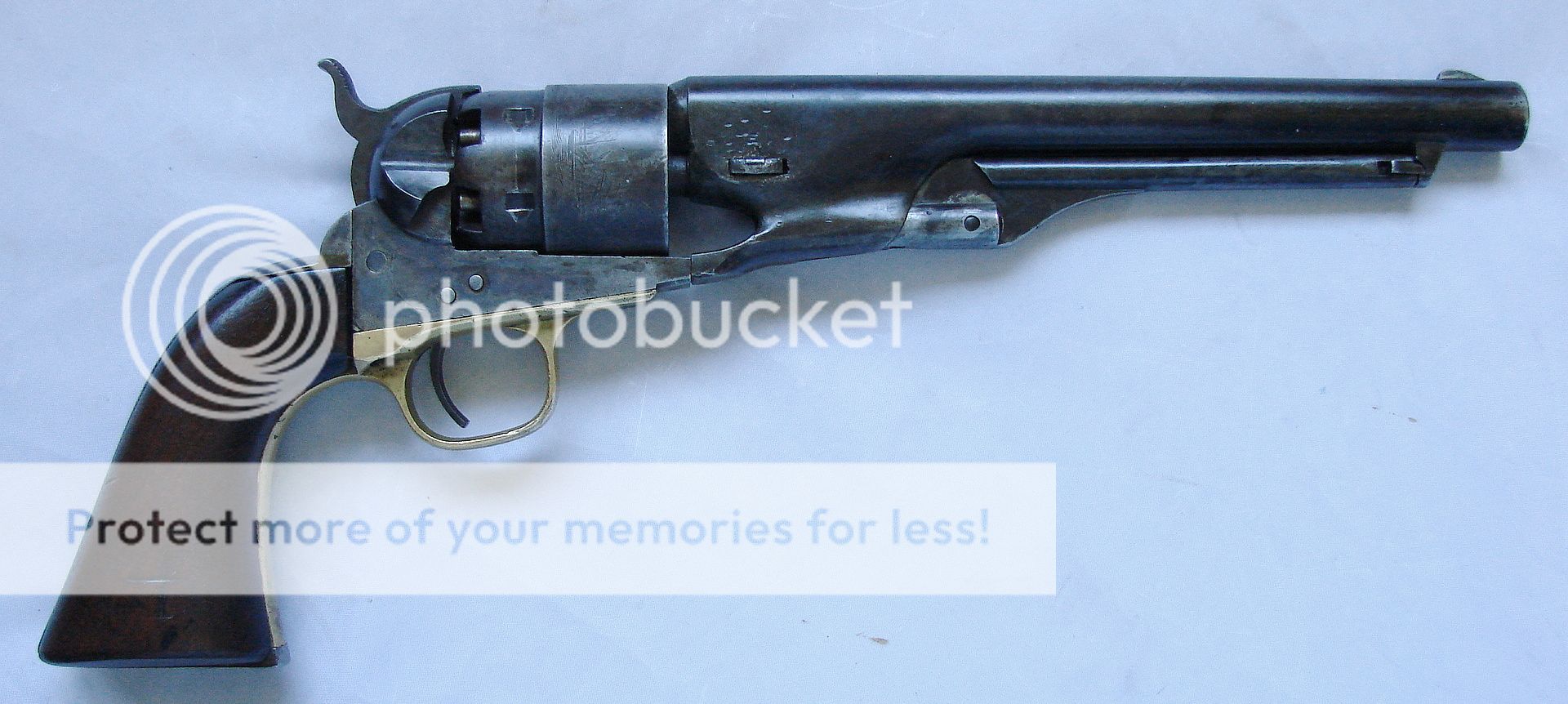
Naval Engagement Scene on the cylinder of this Model 1860 Colt Army.
Mfg’d in 1863 this revolver has plenty of original blue finish remaining on the barrel.

This is an interesting book on Colt cylinder scenes. (I don’t own this book.)
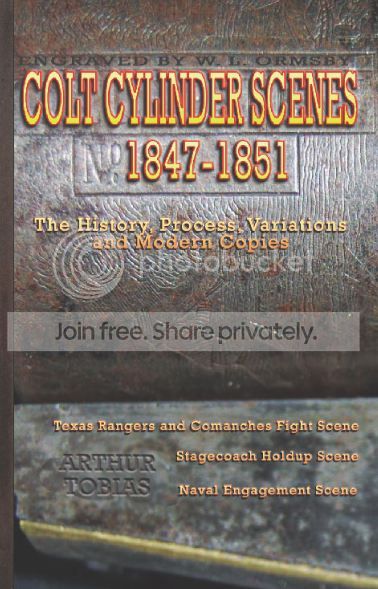
This is a book about the three most widely known cylinder Scenes engraved by Waterman Lilly Ormsby for Sam Colt, used on some of the most popular products of that illustrious gun maker. In the order in which they appeared on the historical stage they are the Texas Rangers and Comanches Fight (Rangers), the Stagecoach Holdup (Stagecoach) and the Naval Engagement (Naval) Scenes. This book is also about Ormsby the artist and engraver and his methods. His ingenuity, creativity and personality are central to the story of the Colt Scenes and therefore the revolvers they graced.
Concurrent with Colt’s new arms venture in the late 1840s W. L. Ormsby had begun developing his anti-counterfeiting schemes involving unique, engraved images. These ideas would come to closely support the patents that Colt had actively protected since 1835. Ormsby’s ideas were publicly promoted in his 1852 book Bank-Note Engraving. The sole, stated purpose of the large tome was to promote a method to defeat the efforts of mid-19th century America’s numerous banknote counterfeiters. Though much talked about at the time, in the end Ormsby’s proposal had little impact on banknote design.
Texas Rangers and Comanches Fight (Rangers) scene on Colt Dragoon revolvers.

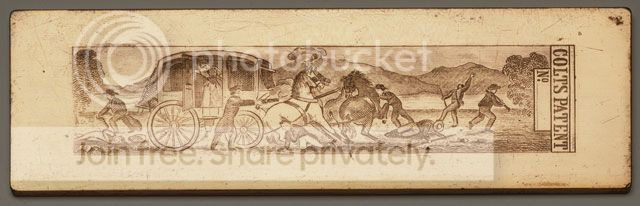
Stagecoach Holdup (Stagecoach) scene on '49 Colts.
Naval Engagement (Naval) scene--found on '51 & '61 Colt Navies and 1860 Colt Armies.

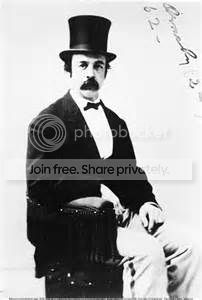
W.L. Ormsby in 1875.
Sam Colt died January 10 1862---age 47.
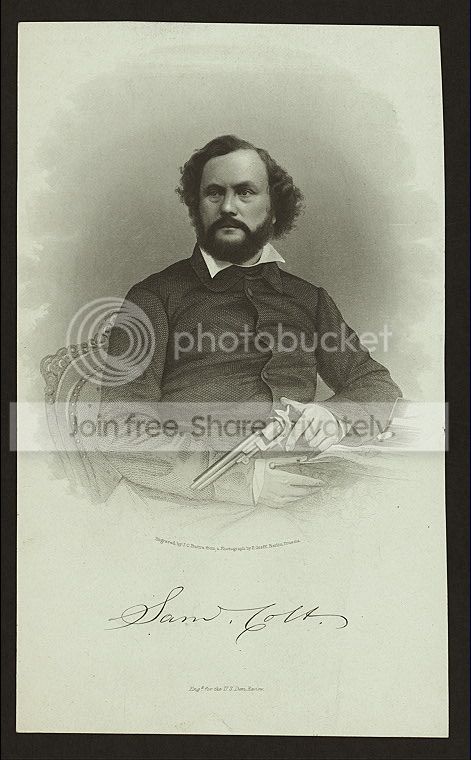
What happened to Colt after Sam died.
Samuel Colt's health began to fail in 1860 as the country moved toward Civil War. Prior to the actual declaration of war, Colt continued to ship his product to customers in southern states, but as soon as war was official, Colt supplied only the Union forces. The Armory was running at full capacity by year-end 1861, with more than 1,000 employees and annual profits exceeding $250,000. Samuel Colt died on January 10, 1862, at the age of only 47, having produced in his lifetime more than 400,000 guns. His estate was reportedly worth $15 million, a fantastic sum for the time.
Following Sam Colt's death, control of the company remained in the capable hands of Mrs. Elizabeth Colt and her family until 1901, when the company was sold to a group of investors. During that 39-year period, a number of significant events and developments impacted the Colt product line.
The Colt Armory and adjacent office structure burned to the ground in 1864, causing the suspension of all but limited military production for almost three years. The factory was rebuilt and, at Mrs. Colt's direction, was constructed to be as fireproof as possible. In 1867, the company began production of Dr. R.J. Gatling's machine gun, a semiautomatic firearm operated by a hand crank that turned a cluster of six to ten barrels while feeding ammunition into the breech.
Further change and growth came in the 1870’s. In 1872, Colt began to manufacture its first breech-loaded revolver that used self-contained metallic cartridges. That gun became world-famous as the Single Action Army Model 1873 and it was designed to use metallic ammunition that contained its own primer. In the years just prior to introduction of the 1873, thousands of percussive Colt revolvers had been converted to use a front-loaded, center-fired cartridge and there was pent-up demand for a gun designed for the new cartridge. The Single Action Army was an immediate sales success. Eventually, it became the stuff of legend as the “Peacemaker” and "the gun that won the West." Between 1873 and 1941, Colt produced more than 350,000 Single Action Army revolvers of varying caliber, including almost 40,000 of the .45 caliber model sold to the U.S. government.
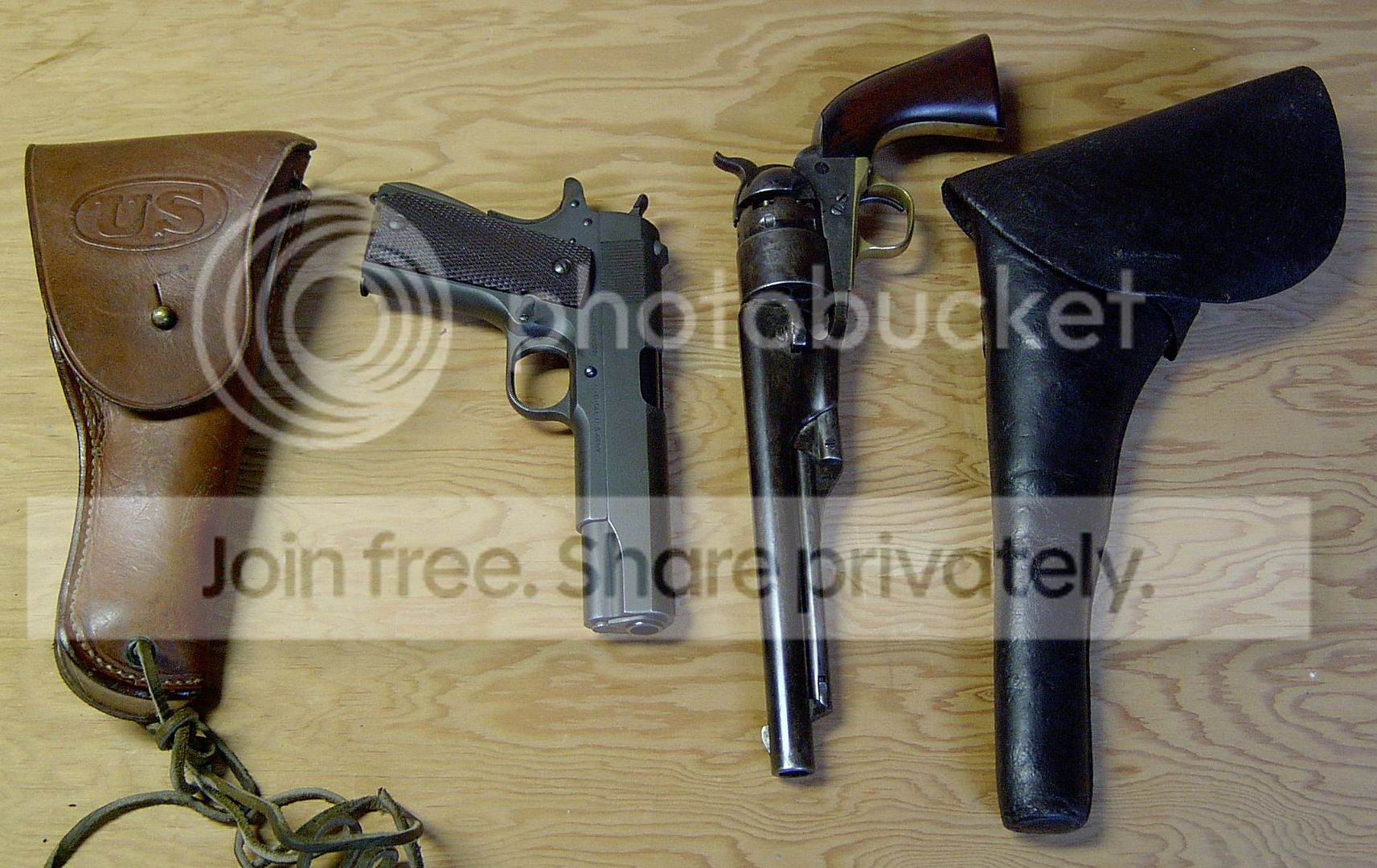
The older Colt (1863) and the newer Colt (1942) ---changing times.
David





































































