













































stencollector
CGN Ultra frequent flyer
- Location
- shilo MB, the armpit of Canada
I had the 1919 out on the weekend for Shilos Battle of the Bulge, and during the first match the gun worked fairly flawlessly. My team finished in 6 minutes, and I had one round left in the chamber and 4 rounds on the belt, out of a belt of 250 rounds. That 6 minutes included running up to the start point, waiting for my sniper to countersnipe the opening target (1 minute), clear the first lane, move to the second lane through the obstacle course, reset up the gun, and continue firing. So 245 rounds in that amount of time was pretty good. (This is why gunasaurus fears this gun so much.  )
)
But the second match was not so good. I couldn't even get the gun to accept a round initially, and then when it would shoot, it was sporadic, with lots of jams. I tried opening up the headspace using my trusty Enfield bayonet, but alas, too little too late and the match was lost, and we had to settle for second place. During a bit of fun shooting afterwards, a ruptured case ended the day.
A quick check once I was home showed that the screw holding the "cam, lock, breech" had worked itself loose. I had this happen once before, and thought I had peened it in place good enough to do the job. But after only a few thousand rounds, the problem had come back to haunt me in the final of a match.
Extracting the broken 8mm case proved to be a bit of a challenge as well. My 303 and 308 extractor tools were both a bit short or a bit small to do the job. But a 7/16 bolt threaded nicely into the ruptured case and a whack in the vice knocked it out.
The gun was filthy, and since I was going to run it out to the shop anyway, I decided it was time to add the one thing that this gun was really missing to remind me of my youth: install the Canadian cocking handle.
I had first worked with the C1 GPMG when I was in the militia at 16. The Canadian guns all had a rather large ring on the side of the gun which allowed you to #### the gun with the arctic mitts on. The cocking handle also acts as a hold open device, a feature missing on the US version of the gun.
Before anyone else starts drilling holes in the sides of their M1919, best have a look at the diagram below. If you can't read some of the measurements, just ask and I'll be happy to read them off to you.

This next photos a bit dark, but here i am threading the 10-32 holes in the sideplate that I drilled out with a #21 drill bit.

Below are the components required for the Canadian cocking handle. I had to do a bit of searching around town to find the slot head screws. Everybody sells Robertson these days, and even the military NSN converted over to phillips. I actually found them at Cdn tire, believe it or not.

Note that the screws were plated. This would not do so I heated them to red, and quenched them in oil. Then I heated them again and rubbed them against a woolen sock. They come out nice and black.

Next came the repair to the cam. I cleaned the parts with brake cleaner, and applied loctite to the screw.

Note that this screw does not get tightened right down. The screw should float, with about .020 (+-.005) clearance between the bottom plate and the cam. Stake the heck out of this screw from the inside, never the bottom. TNW failed to do this on my gun in the first place.

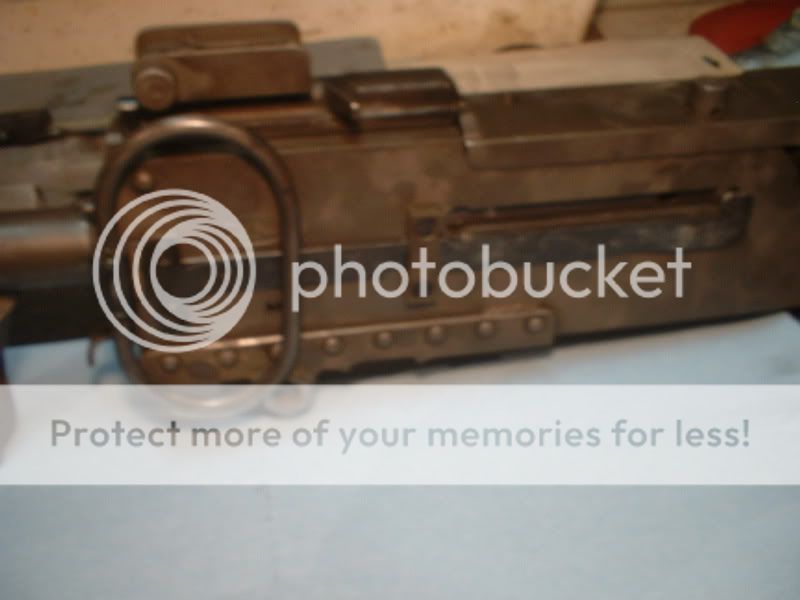
Now, with the gun assembled, here is the cocking handle in the stowed position. The Canadian latest style (C5A1) top cover latch can be seen, which has an independant rear plate latch.
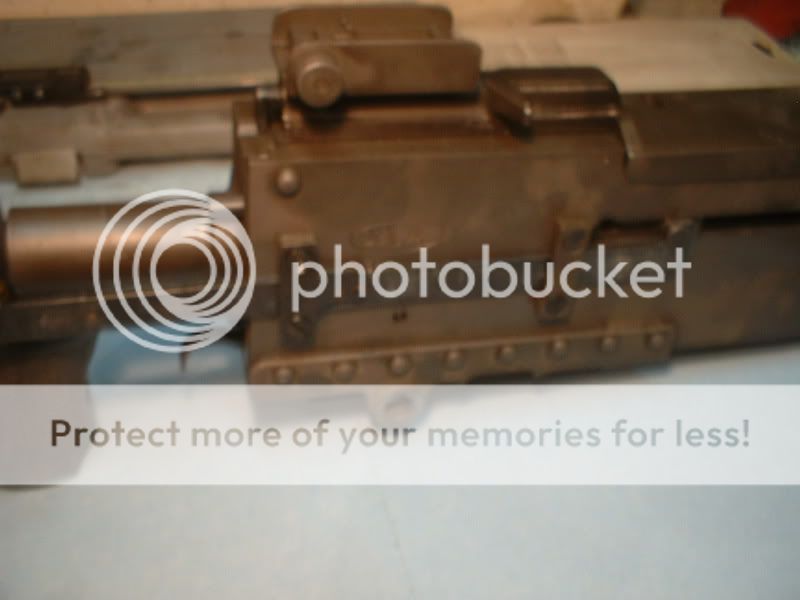
In the next photo is the handle in the retracted and locked open position. This is kind of handy for range use.
Our next milsurp match here in Shilo should be the D-day match in June. I'll be better prepared next time.
)But the second match was not so good. I couldn't even get the gun to accept a round initially, and then when it would shoot, it was sporadic, with lots of jams. I tried opening up the headspace using my trusty Enfield bayonet, but alas, too little too late and the match was lost, and we had to settle for second place. During a bit of fun shooting afterwards, a ruptured case ended the day.
A quick check once I was home showed that the screw holding the "cam, lock, breech" had worked itself loose. I had this happen once before, and thought I had peened it in place good enough to do the job. But after only a few thousand rounds, the problem had come back to haunt me in the final of a match.
Extracting the broken 8mm case proved to be a bit of a challenge as well. My 303 and 308 extractor tools were both a bit short or a bit small to do the job. But a 7/16 bolt threaded nicely into the ruptured case and a whack in the vice knocked it out.
The gun was filthy, and since I was going to run it out to the shop anyway, I decided it was time to add the one thing that this gun was really missing to remind me of my youth: install the Canadian cocking handle.
I had first worked with the C1 GPMG when I was in the militia at 16. The Canadian guns all had a rather large ring on the side of the gun which allowed you to #### the gun with the arctic mitts on. The cocking handle also acts as a hold open device, a feature missing on the US version of the gun.
Before anyone else starts drilling holes in the sides of their M1919, best have a look at the diagram below. If you can't read some of the measurements, just ask and I'll be happy to read them off to you.
This next photos a bit dark, but here i am threading the 10-32 holes in the sideplate that I drilled out with a #21 drill bit.
Below are the components required for the Canadian cocking handle. I had to do a bit of searching around town to find the slot head screws. Everybody sells Robertson these days, and even the military NSN converted over to phillips. I actually found them at Cdn tire, believe it or not.
Note that the screws were plated. This would not do so I heated them to red, and quenched them in oil. Then I heated them again and rubbed them against a woolen sock. They come out nice and black.
Next came the repair to the cam. I cleaned the parts with brake cleaner, and applied loctite to the screw.
Note that this screw does not get tightened right down. The screw should float, with about .020 (+-.005) clearance between the bottom plate and the cam. Stake the heck out of this screw from the inside, never the bottom. TNW failed to do this on my gun in the first place.
Now, with the gun assembled, here is the cocking handle in the stowed position. The Canadian latest style (C5A1) top cover latch can be seen, which has an independant rear plate latch.
In the next photo is the handle in the retracted and locked open position. This is kind of handy for range use.
Our next milsurp match here in Shilo should be the D-day match in June. I'll be better prepared next time.
























