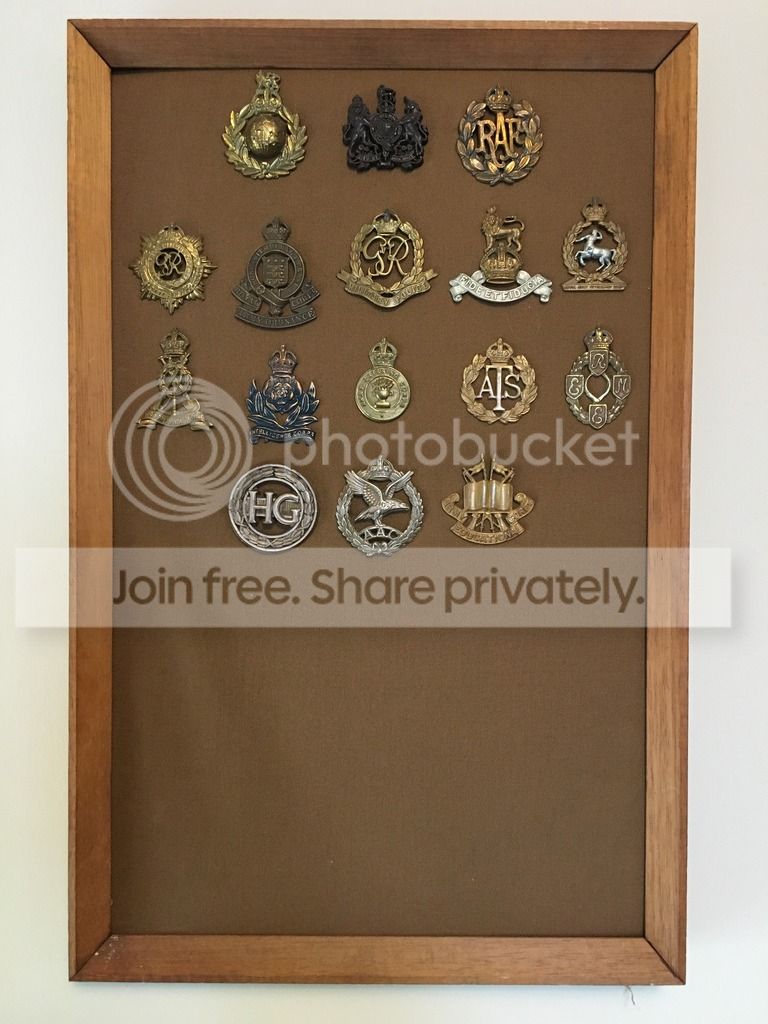
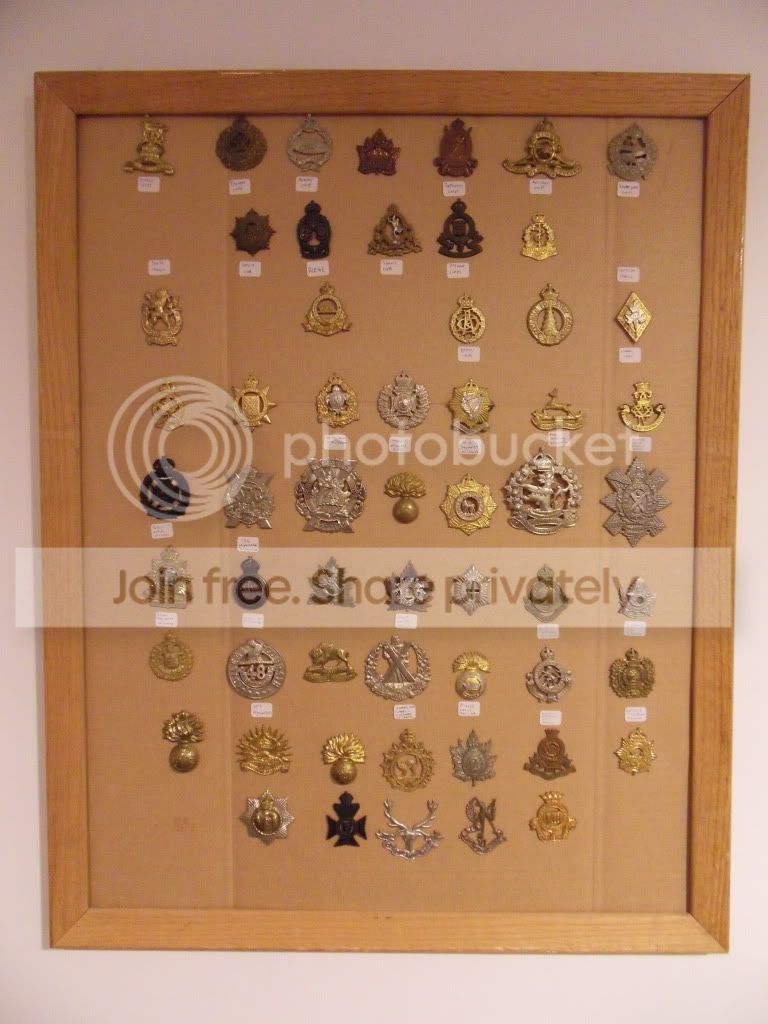
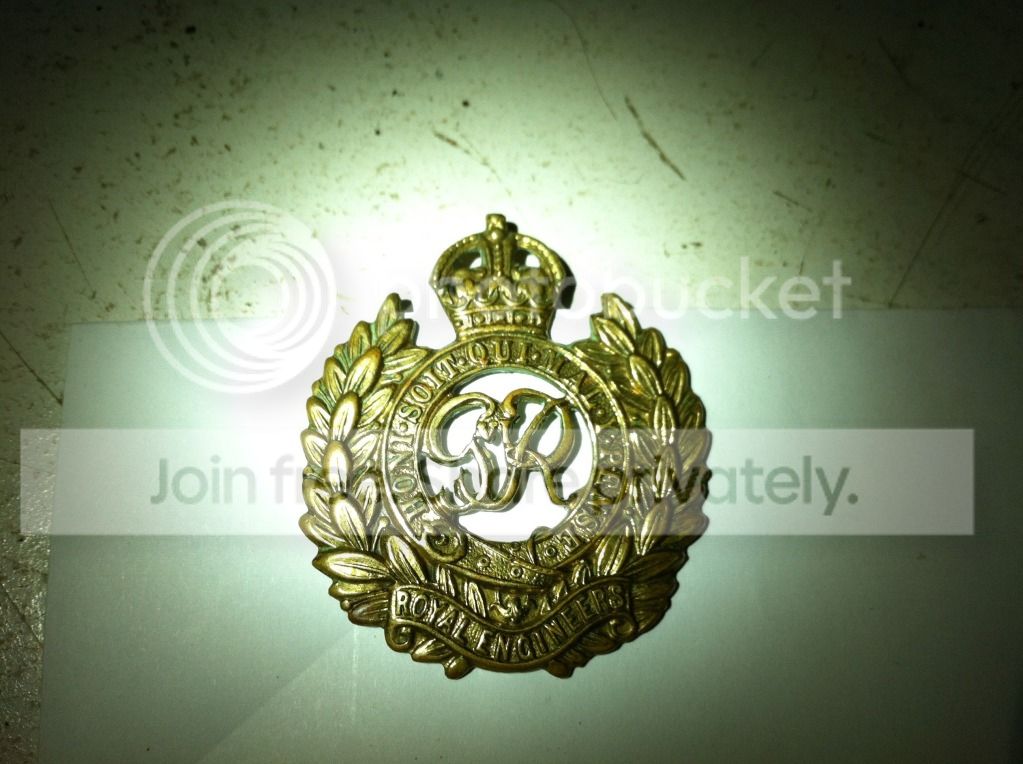
I also started collecting WW2 British cap badges a few years ago - just based on numbers that requires a few more frames than Canadian! Generally speaking I find the British badges are a little more expensive than the Canadian ones, I think mostly because they're more widely collected outside of Canada. For the same reason there's also huge numbers of fakes out there - there are certainly fake Canadian badges but it seems much less of a problem.
Regular army infantry badges - again more or less in order of precedence with the Scottish badges on the bottom - gaps are for badges I'm still missing, except for the one short row which is just due to the numbers not perfectly fitting the frame.
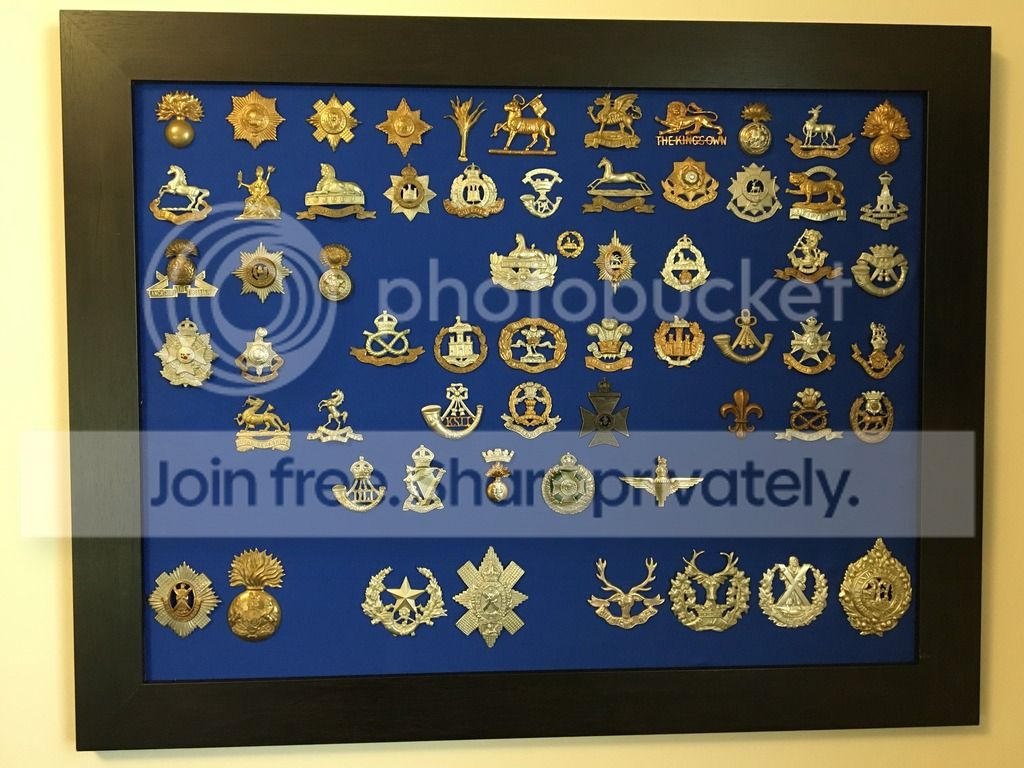
Territorial infantry badges - not so many of these as most territorial units were just battalions of regular regiments, not many had their own distinct identity. Not yet in any kind of order.
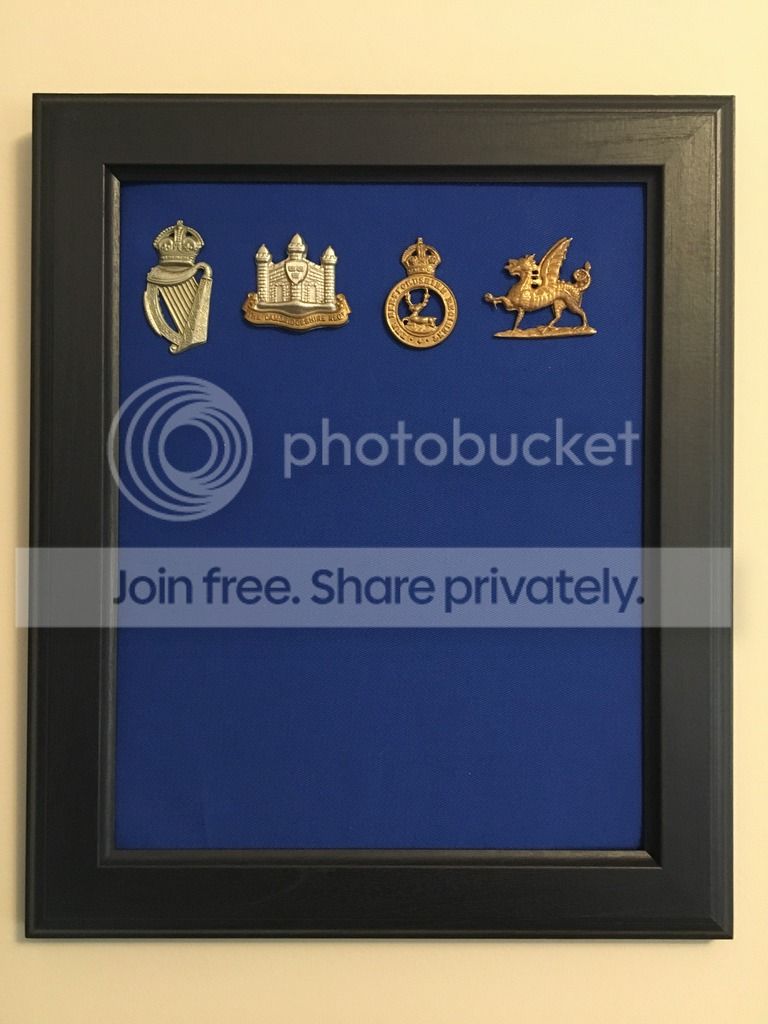
Armoured units, both regular and Yeomanry units that served in the armoured role. Again in no particular order other than the two patterns of Royal Armoured Corps badges up top. When I have enough that it won't look totally random I'll redo them in order of precedence.
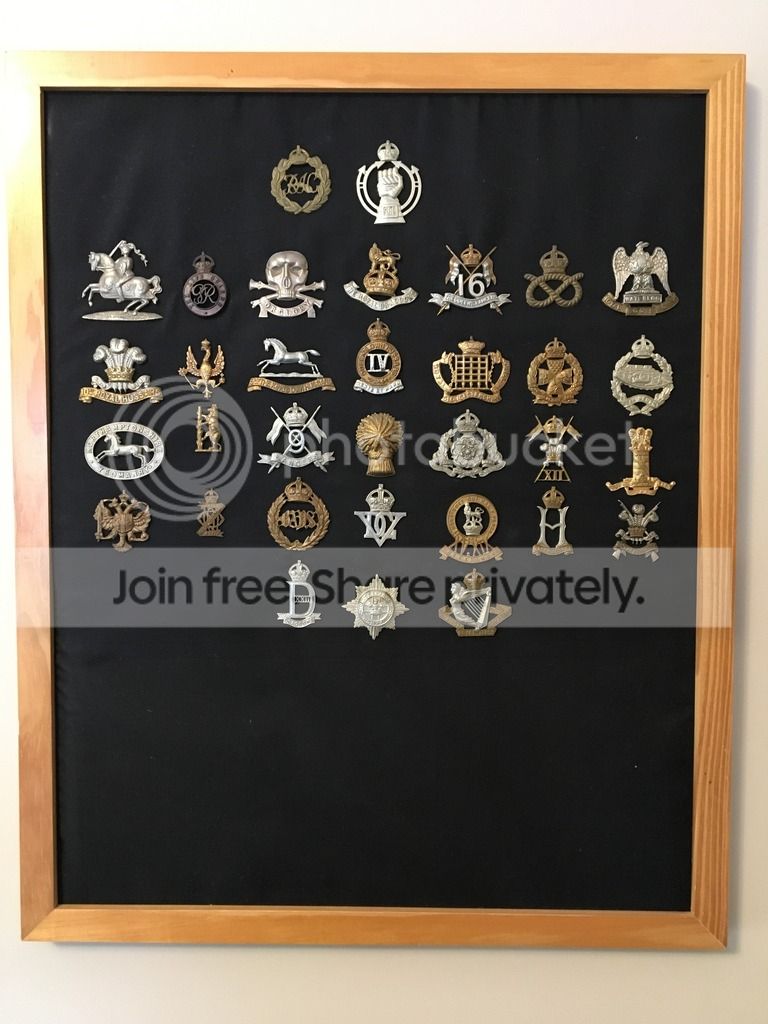
Artillery, Signals and Engineers units and their associated Corps badges. Regular units always wore the Corps badge but a number of Territorial Infantry and especially Yeomanry units were rerolled after WW1 when the British realised they needed less cavalry and infantry and more support troops, but some of them got to maintain their old regimental identity.
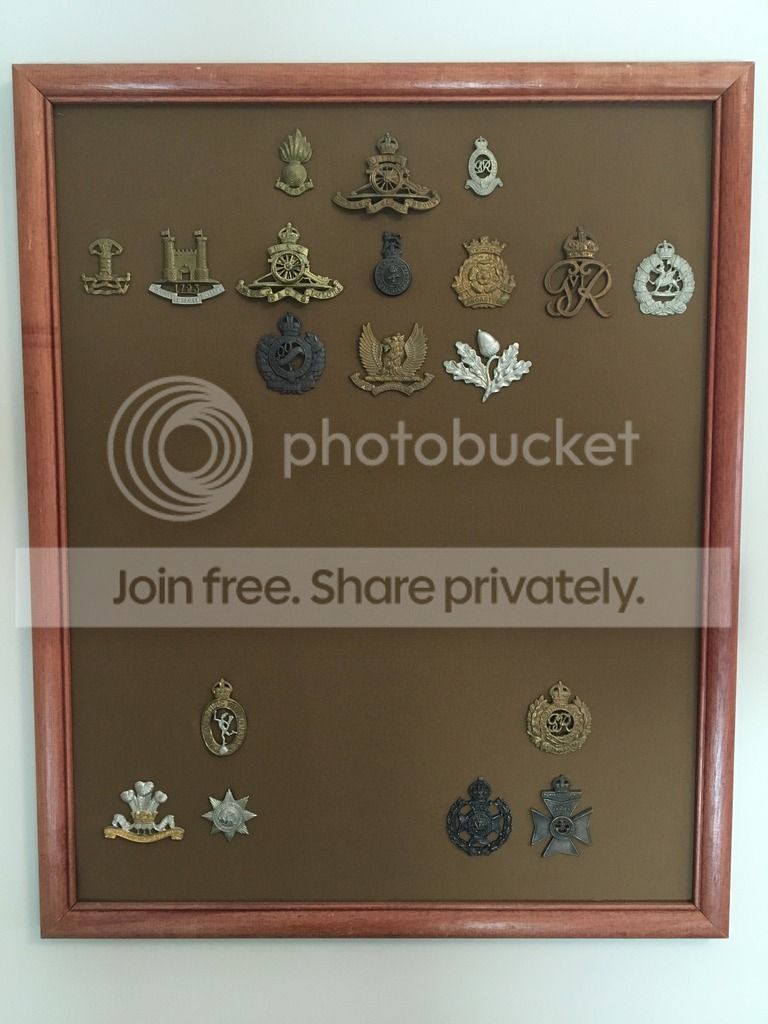
Support trades, with the Royal Marines, British Army general service and RAF badges up top. Note the plastic economy general service badge - a number of badges were issued in plastic during WW2 but I generally stick to metal, I just wanted to have one representative plastic one and that seemed a good choice. The plastic Home Guard badge was actually intended as a lapel badge for female auxiliaries, actual Home Guard units were generally supposed to wear their associated county regimental badge but a lot of these apparently were worn as cap badges.