












































- Location
- Northeastern Ontario
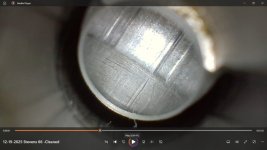
Many shooters are familiar with the problem of carbon rings in .22LR shooting. What follows below is for those who may be less familiar with them. Pictures of a carbon ring are shown in posts below to illustrate what one may look like. A description of how this particular carbon ring was reduced and removed is included.
A carbon ring typically develops in the leade area, just ahead of the chamber. It is the result of burning powder and very small amounts vaporized lead from the base of the bullet that cool, some of which begins to stick to the leade area. As a result, in some cases it can be a carbon/lead ring. Unless it's removed, the carbon builds over time until it can become of such size as to interfere with the bullet itself. Some bores may develop them sooner than others.
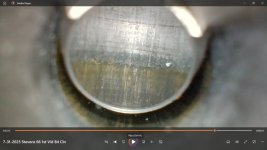
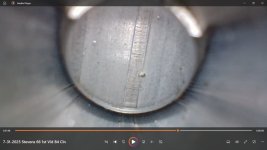
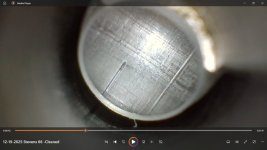
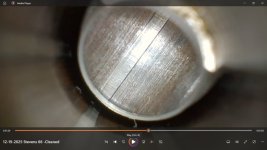
I recently came across a rifle that had the worst carbon ring I've seen. Below are images of the area just ahead of the chamber. The black is carbon deposits (perhaps also lead).
Continued in next post.


A carbon ring typically develops in the leade area, just ahead of the chamber. It is the result of burning powder and very small amounts vaporized lead from the base of the bullet that cool, some of which begins to stick to the leade area. As a result, in some cases it can be a carbon/lead ring. Unless it's removed, the carbon builds over time until it can become of such size as to interfere with the bullet itself. Some bores may develop them sooner than others.
I recently came across a rifle that had the worst carbon ring I've seen. Below are images of the area just ahead of the chamber. The black is carbon deposits (perhaps also lead).
Continued in next post.


 (but I see your point). And having a barrel that likes to run dirty is kind of a blessing.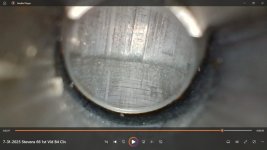
 Took me a lot of research to find out the "How" of this.





















