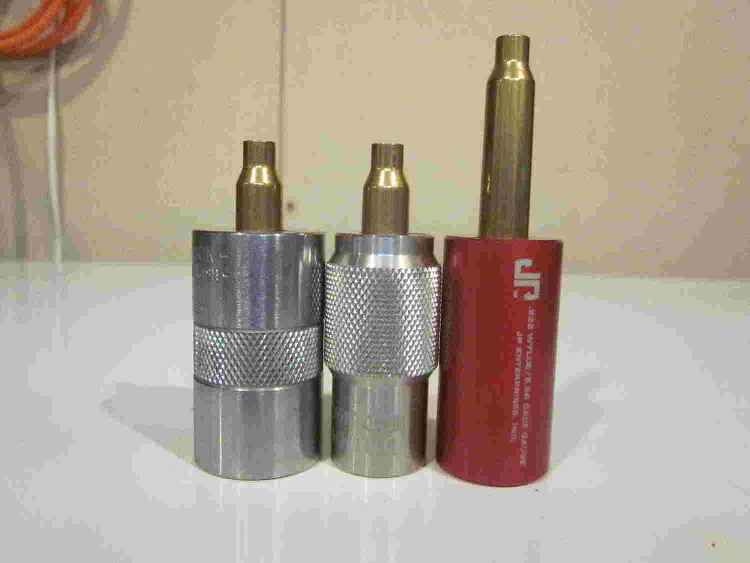
What brand of case gauge are you using, most case gauges have an inside diameter close to the maximum SAAMI diameter.
Below a Wilson, Dillon, and JP Enterprise .223 case gauges with the case placed in base first. And this shows that the JP Enterprise gauge is closer to the minimum case diameter.
If the case rim has a ding it can prevent the case from dropping all the way into the gauge. I keep a small fine file on my reloading bench to file down any dings.
If you are using range pickup brass fired in other rifles, the brass spring back after sizing can effect using a gauge.
A small base die or pausing at the top of the ram stroke for a few seconds will reduce brass spring back. Meaning if the case body is the problem try pausing at the top of the ram stroke before buying a small base die.
Chambers and dies vary in size and you might have a die on the plus side of manufacturing tolerances. For example I have a Lee .223 die that will reduce the case body diameter more than my RCBS small base die.
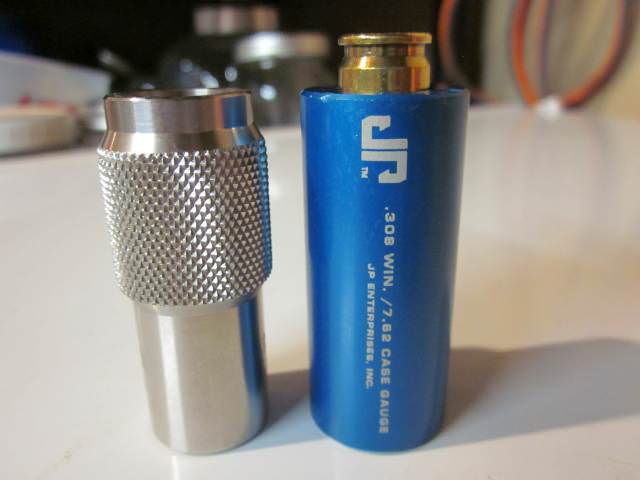
Another example with .308 case gauges below, in the Dillon gauge is a "FIRED" 7.62 Lake City case.
Below the same "FIRED" Lake City case in a JP Enterprise gauge showing its smaller case body diameter.
Does some brass just expand ever so slight after resizing?
"YES" the brass can spring back after sizing, and the harder the brass the more it will spring back. This is also why range pickup brass can give you problems, the case wants to spring back to its fired diameter. I buy bulk once fired Lake City 5.56 and 7.62 brass fired in a multitude of different chambers. And I size the cases the first time using a small base die and check the resized case in my JP Enterprise gauges. If the case fits in the JP Enterprise gauge it will chamber in any rifle.
And again most case gauges are on the max side of case body diameter and only check headspace length. So reverse the problem cases and put them in base first and see if they fit in your gauge, you might just have a ding on the case rim.