Case flaring for accuracy?

TedNugent

CGN Ultra frequent flyer
Rating - 100%
85   0   0
Location
SW Onterriowe
I've read a few topics about this, juat wondering if people here flare their case mouths before seating their bullets?
I have a bolt .308 I'm loading up for some target shooting this summer and if it'll help, I'd have to pick up a flaring die.
Anyone recommend one?
 
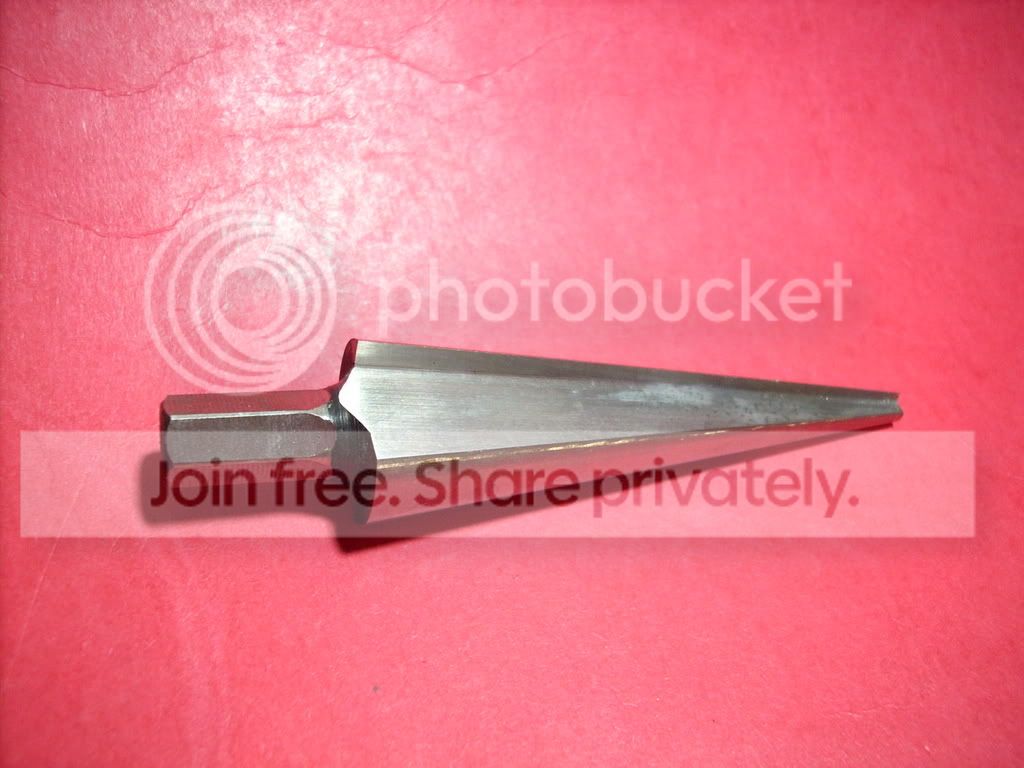
For normal loading of match ammo, I use a taper reamer to put a gradual champfer on the case moths. This stops the bullets from getting scratched.

For high volume loading on the Dillon (say over 10,000 rounds) I don't have time to champfer, so I flare. I install a 303 decapper die in position one, and use the expander button to kiss the case moth enough to give it a little flare. The last die uses enough crimp to take the flare off. I only load virgin brass, so there is little variation in case length to cause issues.
 
For normal loading of match ammo, I use a taper reamer to put a gradual champfer on the case moths. This stops the bullets from getting scratched.

For high volume loading on the Dillon (say over 10,000 rounds) I don't have time to champfer, so I flare. I install a 303 decapper die in position one, and use the expander button to kiss the case moth enough to give it a little flare. The last die uses enough crimp to take the flare off. I only load virgin brass, so there is little variation in case length to cause issues.

Something like this?
https://www.kmshooting.com/catalog/new-products/controlled-depth-tapered-reamer-large-6mm-338.html

And I guess I should ask, is it worth getting if I reuse my brass?
Can I afford to lose material by reaming if I am aiming to get 10 or so reloads out of my brass?
 
TedNugent

I associate case flaring or belling the case mouth with cast lead bullets in rifles and handguns and "some" jacketed pistol bullets depending on bullet shape and caliber. Normally with jacketed rifle bullets deburring the case mouth is all you need to do. The first picture below is the the Lyman type M expander die that creates a "step" inside the case mouth to insure the bullet doesn't "tilt" when seated. The second photo below is a more descriptive illustration.

NOTE: The patent for Lymans M type die expired and many die makers are using the design now.


mtype_zpsd7a1881f.jpg


bulletseatingflaresands_zps1aff9c57.jpg


I never flare or bell a case mouth on rifle cases with jacketed bullets because it is NOT needed, if you do have a seating problem it normally is caused by the seater plug not holding the bullet straight when seating.

Case flaring for accuracy for a rifle and jacketed bullets would be a - "oxymoron" a figure of speech in which apparently contradictory terms appear in conjunction. Meaning you do not need to do it or even think about it.

Read the webpage below for Nosler custom brass and what they do to prep their high quality brass.

http://www.nosler.com/brass/

A picture is worth a thousand words and they do not flare or bell the case mouth.

Brass-case-mouths_zpsccdbd40b.jpg
 
Another quick question while I'm at it, I noticed on some of my dies
that there is a decent amount of 'slop' or wiggle room on the threads
of the dies themselves - the inner threads that is. A good friend of mine believes
that it is normal, as it aligns itself upon normal operation in a press.
Any comments on concerns about this? They are RCBS .308 dies.
I just bought an older CH 30-06 neck die and it's roughly the same.
 
TedNugent

I use Redding competition shell holders that have five shell holders from .002 to .010 taller than standard shell holders to control shoulder bump. The reason I use them is because I want the shell holder to make hard contact with the base of the die (press cam over)

Simple way to center the die in the press threads.

Do not lock down and set the lock ring on the die until you have a lubed case in the shell holder and the press cams over. The pressure of the shell holder and the lubed case will "center" the die in the press threads. Now tighten and set the lock ring, this makes sure the shell holder is always aligned with the die and the die with the press.

A second method is like the Lee dies that have a rubber o-ring at the base of the lock ring, this allows the die to float and be self centering. This is the best method when the die doesn't touch the shell holder when the die must be raised for the proper shoulder bump.

And third and the most important, more ammunition is hand loaded with excessive neck runout because the decapping rod/expander button is locked down "off center" than any other reason. And the cure is another rubber o-ring under the decapping rod locknut and allow the rod to float and self center.

The key to adjusting your dies is having a runout gauge to check neck runout and checking your dies for proper setup and adjusting your dies for minimum runout.

sinclairgauge_zpse8618264.jpg
 
I use a taper reamer I bought at Lee Valley for under $20. I chuck it up in a hand drill and touch each case mouth to it.

DSCN0398.jpg


It has no effect on case life.

Excuse me Ganderite but from the size of it in the photo it looks like your took the tip off your spear after you were discharged from the Roman legion and building Hadrian's wall.

roman_soldier_1_zpsfd9f453d.jpg
 
Bottle necked rifle cases don't get flared. They get chamfered. Handgun cases get flared because their case mouth walls are relatively thin.
Yes they did do a good job building the walls. Not so good at keeping the Picts etc out though.
 
Wilson make a 22 degree chamfering tool for their cartridge held case trimmer. It works great. CH4D also make a similar trimmer with long angle chamfering cutters. Use of the chamfer tools for Wilson trimmers will help uniform neck tension.
 
Back
Top Bottom