Case runout after sizing.

yomomma

CGN Ultra frequent flyer
Rating - 100%
105   0   1
So I just had this little thing happen to me. Major runout after sizing. Hit the interweb and did some searching. I took out the decapping pin and resized a case. Came out looking good. Closely examine the pin and noticed a little ridge. Took some 600 grit and took off the ridge. Popped it back in and did a few cases. My Jerry-rigged run out measuring device tells me it's about 4 thousands. Good enough for the girls I go out with.

u8KeReS.jpg
 
Remove the expander from the full length die and size a case and check neck runout. This is the most concentric the case and neck will ever be.

Install the expander and full length resize the case again, if the runout increases the expander is pulling your necks off center.

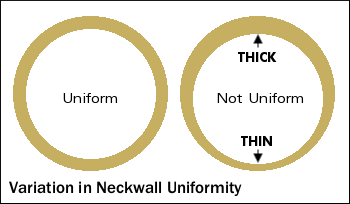
NOTE, with the expander in the die your runout will be the same as your neck thickness variations, plus what the expander causes.

neckwall4x350.png


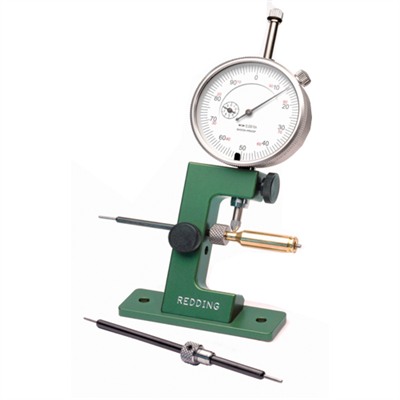
To get out of neck turning I sort my cases with a Sinclair neck thickness gauge. The neck runout after sizing should be the same as the neck thickness variation plus what additional runout is caused by the expander.

p_749101759_1.jpg


Bottom line, the checks above help to set up the die for the "least" amount of bullet runout and find out where it starts during sizing and seating.

The Forster full length dies with the high mounted expander are great at reducing or even correction neck runout.

The biggest cause of neck runout happens when the expander spindle is locked down off center.
 
Remove the expander from the full length die and size a case and check neck runout. This is the most concentric the case and neck will ever be.

Install the expander and full length resize the case again, if the runout increases the expander is pulling your necks off center.

NOTE, with the expander in the die your runout will be the same as your neck thickness variations, plus what the expander causes.


The biggest cause of neck runout happens when the expander spindle is locked down off center.

With the case all the way into the die, and the decapper pin sticking out the bottom, slacken off the decapper rod nut, wiggle it around and then re-tighten. This should true up the decapper rod. And less chance of breaking a pin, too.
 
With the case all the way into the die, and the decapper pin sticking out the bottom, slacken off the decapper rod nut, wiggle it around and then re-tighten. This should true up the decapper rod. And less chance of breaking a pin, too.

Actually if you loosen the lock nut and lower the case in the die until the expander just enters the neck, and then tighten the lock nut, this will center the expander in the die.
(this is in the old #9 Speer manual on how to adjust your dies for benchrest quality) ;)

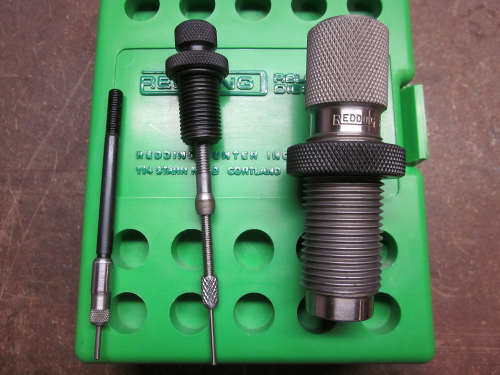
Or you can do like I did two nights ago and install a Forster spindle and expander assembly in a Redding die. A rubber o-ring is under the lock ring and allows the expander to float and self center. I could never understand why Redding used the oblong expanders and create so much drag inside the case neck when sizing.

kWbieba.jpg


I can't say enough about how well the high mounted expander works on Forster dies. I'm in the process of converting all my RCBS and Redding dies over to the Forster expander and spindle assemblies.
 
I found that case runout when full length resizing is kind of all over the place, and doesn't always relate to just one thing. I've found that the amount of lube or distribution of lube inside the neck can cause the necks to pull all over the place, or not. Also experimented with pushing the expander into the sized neck instead of pulling it out and had the same inconsistent results. Freshly annealed brass can act different, possibly getting pulled or pushed around more making correct lubrication even more finicky. I consistently get the least case run-out by using a Redding body die and a Lee collet die. No need to lube inner or outer necks. I set the body die to bump the shoulders back the same amount each time and the collet die does not seem to add to run-out. Any run-out I have now appears to be directly related to uneven neck and case wall thickness. It's an inexpensive setup and my hand loads have improved since I started doing it this way.
 
I found that case runout when full length resizing is kind of all over the place, and doesn't always relate to just one thing. I've found that the amount of lube or distribution of lube inside the neck can cause the necks to pull all over the place, or not. Also experimented with pushing the expander into the sized neck instead of pulling it out and had the same inconsistent results. Freshly annealed brass can act different, possibly getting pulled or pushed around more making correct lubrication even more finicky. I consistently get the least case run-out by using a Redding body die and a Lee collet die. No need to lube inner or outer necks. I set the body die to bump the shoulders back the same amount each time and the collet die does not seem to add to run-out. Any run-out I have now appears to be directly related to uneven neck and case wall thickness. It's an inexpensive setup and my hand loads have improved since I started doing it this way.

Buy a Forster full length die for your favorite rifle and see the difference in runout. I see no reason to size a case twice, once with a body die and again with the Lee collet die.

Reloaders love their Forster Co-Ax press but seem to forget to use Forster dies and do not understand why their dies induce neck runout.
 
Buy a Forster full length die for your favorite rifle and see the difference in runout. I see no reason to size a case twice, once with a body die and again with the Lee collet die.

Reloaders love their Forster Co-Ax press but seem to forget to use Forster dies and do not understand why their dies induce neck runout.

I believe you and someday I might just do that, but for now my system is working good with my inexpensive dies and 43 yr old RCBS rockchucker press;)
 
kWbieba.jpg


I can't say enough about how well the high mounted expander works on Forster dies. I'm in the process of converting all my RCBS and Redding dies over to the Forster expander and spindle assemblies.

yomomma nothing to add again, apologies. Ed, a picture says a thousand words or so to speak. For myself it explains a lot. Out of all the diagrams and images I've seen in your posts I missed this one. Thanks for that.

Regards
Ronr

Edit PS. Good "one photo explains it all" about your question yomomma.
 
Last edited:
Ed, a picture says a thousand words or so to speak. For myself it explains a lot. Out of all the diagrams and images I've seen in your posts I missed this one. Thanks for that.

Regards
Ronr

Thats because I just took the Redding die photo tonight, I have to stay ahead of Ron AKA cut and paste 50 years of reloading experience postings.
 
Because of run out issues I do not used resizing die expanders at all.
If there is any issue with neck and shoulder junction as far as brass thickness it will create run out.
I have also found pulling the brass over the expander also messes with head space.
At least this is what I have found.
If I am full length sizing I use Lyman M dies to expand the neck and have found that reduces neck run out.
I also mostly neck size my brass using Lee collet dies.

David
 
Last edited:
Actually if you loosen the lock nut and lower the case in the die until the expander just enters the neck, and then tighten the lock nut, this will center the expander in the die.
(this is in the old #9 Speer manual on how to adjust your dies for benchrest quality) ;)

Or you can do like I did two nights ago and install a Forster spindle and expander assembly in a Redding die. A rubber o-ring is under the lock ring and allows the expander to float and self center. I could never understand why Redding used the oblong expanders and create so much drag inside the case neck when sizing.

kWbieba.jpg


I can't say enough about how well the high mounted expander works on Forster dies. I'm in the process of converting all my RCBS and Redding dies over to the Forster expander and spindle assemblies.

Which Forster part?
Is it what they call the de capping unit?

Great idea if they just screw into standard redding FL dies...
 
I had to cut down the Forster .243 threaded spindle in length to fit the Redding die and add a rubber o-ring under the lock ring to make it float.

I had ordered a carbide expander for this die but the expander was .2428 and not small enough for proper bullet grip.:bangHead:

The Forster expander and spindle assembly will fit RCBS dies without modification.

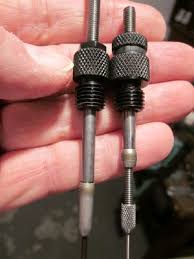
Below on the left a RCBS .223 expander raised as high as it will go, on the right a Forster .223 expander and spindle assembly.

5kfnKwd.jpg


I converted all my RCBS dies and I'm starting to convert my Redding dies.

Forster Decapping Units for FL & Neck Sizing Dies
http://www.forsterproducts.com/product-category/sizing-dies-decapping-units-for-fl-neck-sizing-dies/
 
The Forster expander and spindle assembly will fit RCBS dies without modification.

Below on the left a RCBS .223 expander raised as high as it will go, on the right a Forster .223 expander and spindle assembly.

5kfnKwd.jpg


Forster Decapping Units for FL & Neck Sizing Dies
http://www.forsterproducts.com/product-category/sizing-dies-decapping-units-for-fl-neck-sizing-dies/

Hey Ed, very interesting.

Just for clarity, :redface: and pardon any of my ignorance...I have NIB RCBS group A die set in 7-08 containing a fl die and seater...so I should be able to swap in the Forster assembly with out mod? And with die adjustment be able to conduct a shoulder bump of .001 to .002? Or will this setup produce a full length sizing operation?


Regards and Merry Christmas all.

Ronr
 
The Forster expander has no effect on shoulder bump with any die so you adjust the die as you normally would for the correct amount of bump.

The only problem you will have is expander hight adjustment with non-Forster dies. With a Forster die the bottom of the expander should be level with the lube vent hole in the die body.

Meaning you will need to go by feel when setting the expander ball height. You want the expander to enter the case neck while the neck of the case is still held and centered in the neck of the die.

Below from the Forster website and the vent hole in the die is shown.

Sizing_Die_Graphic-274x300.jpg


Above the “E-Z” Out Expander Ball is placed high on the Spindle in the Decapping/Expander Assembly, near the neck of the case. The figure at right shows the case being withdrawn from the die. Note how the elevated position of the “E-Z” Out Expander Ball supports the case neck in the neck sizing portion of the die, keeping the axis of the neck and the case in perfect alignment.

NOTE, from the Speer No.9 reloading manual, "the main cause of neck runout is from locking the expander spindle down off center with the die". And the high mounted floating Forster expander is aways centered in the case neck.
 
Last edited:
Back
Top Bottom