Caseless ammo military rifles

Sniper1

CGN Regular
Rating - 100%
50   0   0
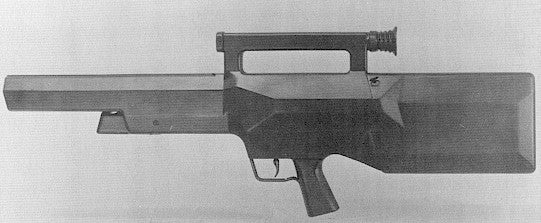
I was reading on the HK G11 on world.guns.ru
http://world.guns.ru/assault/as42-e.htm

g11_prototype13.jpg


It is written that the main reason why it was dropped by Germany was a lack of funding after the reunification of east/west.

The basic principal of caseless ammo seems to me like the natural evolution of modern small arms...
 
I have heard that there were heat issues as the ejected brass in cased ammo soaks up alot of heat.

However the reason for going caseless was that it allowed you to carry more ammo and in the G11 it allowed for incredibly high rates of fire. Needless to say that a G11 with only 5 rounds would be rather dull.

The G11 is actually prohibited by name if I am not mistaken which is odd that we would seek to prohitibit something that no longer exists.
 
Wasn't there issues with ammo durability? You can drop a box of cased ammo in a bucket of water and still shoot it. Didn't caseless have issues when exposed to water, weather, etc?

I think I'm talking out of my ass here.
 
The caseless ammo was suposedly pretty durable as is was actually a plastic explosive and it generally was not stored loosely like regular ammo.
 
The G11 project fell apart when the berlin wall came down and Germany unified,the funding was reallocated to pay for other things such as reducing the east German debt,training and equipping thousands of new recruits and many other administrative items caused by unification.On the plus side the German military did pick up some free Mig 29s,thousands of free AK74 variants,free T72 tanks,etc
 
I have a bunch of G11 ammo and it is funny stuff. The ammo was set off electronically if I am not mistaken. By the way the HKG11 was tube fed. The rifle was also extreamly dangerous after firing a few shots as the ammo could ignite in the chamber and fire without warning. Ammo was a mix of nitrocellulose, RDX, and nitroglycerine with a binder. There was good reason for stopping the project!!
 
When I was studying engineering, I did my second year report on the G11 and caseless ammunition. It's quite a remarkable system.
The ammunition actually drops down into the chamber, and it is then rotated 90 degrees into firing position. The firing rate was something absurd, around 2500 RPM if I recall correctly. It had a buffer system so that when you fired it on 3-round burst, the third round left the barrel before the impuls from the recoil reached your shoulder. For full-auto fire the rate was reduced to a more sane 600 RPM.
 
CZ fan said:
I have a bunch of G11 ammo and it is funny stuff. The ammo was set off electronically if I am not mistaken. By the way the HKG11 was tube fed. The rifle was also extreamly dangerous after firing a few shots as the ammo could ignite in the chamber and fire without warning. Ammo was a mix of nitrocellulose, RDX, and nitroglycerine with a binder. There was good reason for stopping the project!!

That was an issue with the prototype ammunition only,there was also problems with the binder agent falling apart.These problems were ironed out in the early ,90s with a brigade of German troops being told to get ready to receive the G11...then the Cold War ended.
 
CZ fan said:
Ammo was a mix of nitrocellulose, RDX, and nitroglycerine with a binder. There was good reason for stopping the project!!

:shock: :shock: :shock:

Sounds like the kind of stuff that would take off your arm if you even look at it the wrong way, let alone carry it on the battlefield. Give it a few decades of exposure to air, moisture, dust, sunlight, and god knows what else and I personally wouldn't be comfortable <breathing> in the same ROOM as this stuff ! Might be interesting as an anti-mouse land mine though :twisted: .
 
well not really, some military ammo we shoot has a small amount of RDX and NG in it as well. that's not really the issue..
The binder on my ammo is exactly as you say Reaper it is very flaky. and some rounds are deteriorated. Unwanted ignition is the main reason behind the abandonment of the G11. I asked about this gun after seeing one in Goslar Germany, not knowing what it was... strangest gun you ever saw..

Too dambed dangerous! I have heard stories about the rifle setting off all the rounds in the gun after as few as 5-10x from heat transfer. BS or not, the story really doesn't make me want to fire one. It is a really cool idea, just not practical! :? :!: :?:
 
The dip####s in Ottawa even banned careless ammo back under Bill C-17. I guess they were reading too many copies of "Soldier of Fortune" or "New Breed" at the time. How could you possibly ban something that at that time didn't exist commercially or even outside of military test laboritories?
 
http://www.sammlermunition.de/huelsenlose.htm

There are also some good books the the G11, including:
Seel, Wolfgang. 1993. Die G11 Story: Die Entwicklungsgeschichte Einer High-Tech-Waffe: The G11 Story: The Development Story of a High-Tech-Weapon. Journal Verlag Schwend GMBH.. Schwäbisch Hall, Germany. 161p.

And several good books on caseless developments over the years, including:
Dmitrieff, George. 1994. Caseless Ammunition for Small Arms. Zebrowski Historical Services Publishing Company. New York, U.S.A.. 108p. ISBN: 1880484072


Caseless had been around long before the G11 project, and the G11 focused on the development of an assault rifle that would use caseless ammunition. It stemmed from a Bundeswehr proposal/desire to have a rifle with a 3 round burst feature that would, as mentioned above, see the third round leaving the barrel before the recoil of the first round began to have effect on the shooter, in an attempt to retain accuracy and reduce muzzle rise, so common in most three and five round bursts.
HK felt that the this meant a RPM rate of 2100 for the three round burst, and then you would only need 600rpm for normal full auto fire.
The engineers came to the conclusion that in order to attain a 2100RMP cycle that they would need to short step the normal firing cycle and decided that ejection was a step to avoid. To get ejection out of the loop they opted for caseless.
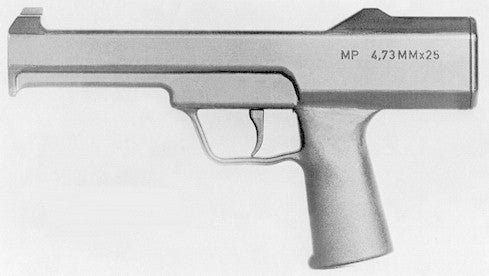
On the ammunition side there was alot of work with Dynamite Nobel, and various designs. Personally I preffer the 4,7X21, as it was the most cosmetically pleasing round of them all, with the later 4,7X33 looking much more soul-less.
The cookoff problem was pretty much dealt with, and one needs to bare in mind that development lasted over 2 decades. Various compounds were used and I am surprised to hear CZs are not holding up well. My 4,7X21s are doing amazingly well, and most of the rounds from then on are holding up quite well indeed. (As folks at the last CGN Maritimers shoot can attest, my old 4,7X21s look practically brand new).
As mentioned by Reaper the Bundeswehr just did not want to go through the cost of adopting the G11 fullscale, though it saw some use with some smaller more elite units. Cost wise it was too much to adopt, particularly when the rest of NATO showed no interest in leaving the 556.
Ultimately they have become curios, and yes the G11s are on the Prohib list :roll:

As for durability of caseless rounds they are reasonably durable, and the G11s were not meant for soldiers to handle. They were intended to be issued in chargers, and to avoid people needlessly handling them. That said, as mentioned they are quite durable. Additionally they represent a truely innovative step in caseless munitions, with the internal booster, the protective coatings, etc, etc.

Additionally Voere still sells thier caseless 223s, and IIRC they are the last.

As development proceeded, HK tried to sell the idea to other nations based on the rapid fire, and weigh savings. Repeatedly advertising the weight difference in 4,7 vs 5,56 vs 7,62 but no one else ever really seemed impressed. Ultimately I personally would describe it as innovative German engineering, for the sake of innovative German engineering.

Ballistically, I can only add that upon pressing Bartok5 for his opinion of going into battle with the 4,7 rather than the already puny 5,56 he was less than enthused with the idea :wink: :lol:

 
The demise of the G11 must have been heartbreaking for the H&K engineers. To put almost two decades of work into a project, only to have it dumped on the eve of its adoption? What a kick in the nuts that must have been. It's too bad, because it would have been the the first truly "revolutionary" firearm in ages. But like Dosing mentioned, the effectiveness of the 4.7mm round would have been questionable at best.
 
I seem to remember the Franco german Brigade parading down the Champs D'Ellyse in the late Eighties/early nineties. Another idea that the accountants got hold of!
 
Dosing mentioned the Voere UCC 5.56. I have one of those in my ammo collection. Ther was also a .30 cal. in the works, I believe, but I didn't get one of those. Last I heard, Voere had given up on it, due to poor US civilian sales, and high ammo cost.

Also, Daisy made a hybrid airgun/caseless amo thing called the Daisy VL. It is like a 29 gr .22 short bullet with the propellant molded to the back. The heat of the compressed air causes the ammo to light. I have some of these in my collection, also.
 
Back
Top Bottom