Civilian sporting guns turned Military / LE

It's a fascinating niche. Personally I'm on the fence about including things like the Russian Winchester 1895's, Montreal Home Guard Savage 1899's, and NWMP Winchester 1876's as they are military versions of civilian guns.

I remember seeing an ad in an old gun magazine about 4000 Winchester 1873 Muskets imported from South America, 2000 in New condition and 2000 in used condition.

Screenshot_20251202-125623.png
 
It's a fascinating niche. Personally I'm on the fence about including things like the Russian Winchester 1895's, Montreal Home Guard Savage 1899's, and NWMP Winchester 1876's as they are military versions of civilian guns.
Alternatively they were poorly selling military guns. At that time period I don’t think there was as much distinction between a civilian and military firearm as there is today. Fundamentally the technology was relatively the same and generally the main difference was the stock arrangement.
 
I would not agree, by the WW1 most countries either had their own selection processes in place for acceptance of military rifles, involving series of trials, expert commissions examinations and competition between models... or, other countries were simply relying on the choices made by other counties as in case with South America. Nevertheless, requirements for military rifles were quite different from typical sporting guns. Way different. No way in hell Winchester 1892, 94 or 95 or Remington 14 would pass them. It was always "we don't have enough guns so let's procure whatever best is available". Technology and quality of civilian vs military rifles were not different, agree. It is design of the gun and it's further development - this was a big difference between sporting/civilian use rifle and military purpose rifle.
 
Then you have the Boer Plezier Mausers.

Possible users of Winchesters that may be marked;

Dutch Planters in the East Indies
Tribal Police in the US

Collection Prison Rifles is probably a niche of it's own.
 
Most previous and current military handguns are just civilian ones adopted and taken into service by the military.

Even the M16 was a full auto version of the semi auto civilian sale AR-15.

The ArmaLite AR-15 is a gas-operated rifle manufactured in the United States between 1959 and 1964 by Armalite before being sold to Colt in 1959 and then converted into the Colt M16 rifle for military use and sales.

Colt re-branded it as their rifle, however, it still carried the Armalite markings due to contractual obligations to Armalite/Fairchild Aircraft Co. Colt marketed the redesigned rifle to various military services around the world and was eventually adopted by the U.S. military in January 1962 and subsequently designated as M16 rifle in December 1963, which went into production and military service in 1964.

Colt continued to use the AR-15 model and trademark for its line of semi-automatic-only rifles marketed to civilian and law-enforcement customers, known as the Colt AR-15. The original Armalite AR-15 is the parent of a variety of Colt AR-15 and M16 rifles.

1962 Colt AR-15 sporting/hunting rifle ad, two years before it was taken into US military service.


potd-old-timey-colt-ar-15-sporter-ad.jpg
 
Were these FN1900 even marked to identify Aéronautique Militaire property?

According to HENWOOD in his Model 8 reference book, yes, they were;
they were stamped "AVIATION MILITAIRE/No. _ _ _" - a two or three digit number corresponding to the aviation service number.

Since the 1900 only started production in 1910 (total of 4913 ever made) and the Germans occupied the FN plant by 1914, and there were only 2-300 rifles produced per year initially, it can be assumed that these would have been of the first few batches made.

The French also procured somewhere around 300 x Winchester 1907s and around 500 x 1910s according to HENWOOD
These were marked "ARMEE FRANCAISE"


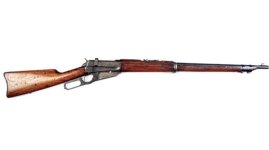
Love that Argentine carbine.
Agree - thats a dandy!


Heres one that might fit the theme...

https://joesalter.ca/products/savage-montreal-model-99-musket
 
Most previous and current military handguns are just civilian ones adopted and taken into service by the military.

Even the M16 was a full auto version of the semi auto civilian sale AR-15.

Just couple of weeks ago someone told me the opposite - that Stoner was aiming for military from the very beginning, but this is not my area of expertise, so let's say it was civilian design. What other civilian designs were adopted? Because you said "most", so I would assume there are more.

Classical surplus rifles:
Mauser family started with M1871 - originally designed as military rifle.
Mosin-Nagant started with M1891 - designed by military commission based on works of Nagant and Mosin.
Lee-Enfield started as Lee-Metford design, as far as I can find - again for military purpose.
Lebel rifle - military design of 1886
SVT-40 - military design
SKS-45 - military design (with anti-tank rifle background!)
Carcano - military design of Salvatore Carcano at the Turin Army Arsenal in the Kingdom of Italy in 1890

 
Just couple of weeks ago someone told me the opposite - that Stoner was aiming for military from the very beginning, but this is not my area of expertise, so let's say it was civilian design. What other civilian designs were adopted? Because you said "most", so I would assume there are more.

Classical surplus rifles:
Mauser family started with M1871 - originally designed as military rifle.
Mosin-Nagant started with M1891 - designed by military commission based on works of Nagant and Mosin.
Lee-Enfield started as Lee-Metford design, as far as I can find - again for military purpose.
Lebel rifle - military design of 1886
SVT-40 - military design
SKS-45 - military design (with anti-tank rifle background!)
Carcano - military design of Salvatore Carcano at the Turin Army Arsenal in the Kingdom of Italy in 1890

I said most handguns.

Many rifles or longarms besides shotguns were designed and made by government arms factories/arsenals.

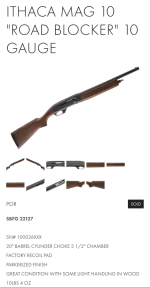
Most shotguns used by the military tend to be civilian versions either accepted as is or slightly modified for military use, a tradition right up to today.

Also the Lee rifle family started as a sporting/hunting rifle. I'm talking about the James Paris Lee designs that originated in North America before Enfield or Metford rifled versions. Even before his Remington M1879 version.


I do know the British Martini-Henry rifle is a version of the civilian Martini-Peabody design!

And same thing with Mannlicher rifles and Lebel rifles. They were modifications of civilian designs modified later for military service.

Mannlicher designed rifles would then be copied by others Like Ross who turned them into military models.

The Lebel was just a modification of two other rifles, the Kropatschek and Vetterli rifles. The repeating mechanism, derived from the French Mle 1884 Gras-Kropatschek repeating rifle, it was implemented by Albert Close and Louis Verdin at the Chatellerault arsenal. The bolt's two opposed front locking lugs, taken from the two rear locking lugs on the bolt of the earlier Swiss Vetterli rifle, were designed by Colonel Bonnet. The 8mm flat-nosed FMJ "Balle M" bullet was suggested by Tramond and designed by Lt. Colonel Nicolas Lebel after whom the rifle (and the caliber) are named. However, Lebel did not lead the team responsible for creating the new rifle. He amicably protested during his lifetime that Tramond and Gras were the two who jointly deserved that credit. The Kropatschek was accepted as the basis for the French Lebel M1886. Kropatschek was a contemporary of Ferdinand Mannlicher as they both worked together at Steyr, and his rifles often feature a tubular magazine under the barrel similar to a Winchester repeating rifle.

The Swiss Vetterli repeating rifles combined the American Winchester Model 1866's tubular magazine with a regular bolt featuring for the first time two opposed rear locking lugs. Vetterli was the son of the miller Jakob Vetterli and the Friederike, born Stierli. He completed an apprenticeship as a civilian gunsmith in Schaffhausen and his rifles were popular with hunters and target shooter of the period. His designs would later be adopted into military rifles in Switzerland and Italy among others.

The Mosin Nagant was a joint civilian/military design stolen from Nagant who was a mostly civilian gun designer.

Despite the failure of Nagant's rifle, he filed a patent suit, claiming he was entitled to the sum the winner was to receive. It appeared that Nagant was the first to apply for the international patent protection over the interrupter, although he borrowed it from Mosin's design initially. Mosin could not apply for a patent since he was an officer of the Russian army, and the design of his work was owned by the Government and had the status of a military secret.

A scandal was about to burst out, with Nagant threatening he would not participate in trials held in Russia ever again and some officials proposing to expel Nagant from any further trials, as Mosin borrowed the design of the interrupter after it was covered by the secrecy status given in Russia of that time to military inventions and therefore violated Russian law. Taking into consideration that Nagant was one of the few producers not engaged by competitive governments and generally eager to cooperate and share experience and technology, the Commission paid him a sum of 200,000 Russian rubles, equal to the premium that Mosin received as the winner. The rifle did not receive the name of Mosin, because of the personal decision taken by Tsar Alexander III, which was made based on the opinion of the Defence Minister Pyotr Vannovskiy: there are parts in this newly created design, invented by Colonel Rogovtzev, by Lt.-General Chagin's Commission, Captain Mosin and small-arms manufacturer Nagant, therefore it is only fair to call it the Russian 3-line rifle M1891. The Tsar himself dashed the word "Russian" from this document with his own hand. The decision to pay off Nagant proved wise, as he remained the major contractor for the Russian Government, and the Nagant M1895 revolver was subsequently adopted by the Russian army as its main sidearm.

The Carcano was often called "Mannlicher−Carcano", especially in American parlance as it was a modification of Mannlichers design. Even in Italy the rifle was commonly reported by army and civilian sources as "Carcano−Mannlicher".
 
Back
Top Bottom