I've ventured into the realm of Cap & Ball revolvers.
I held off on them orginally because of all the 'stuff' you have to drag to-from the range. And I did not like the thoughts of standing around measuring each cylinder load, when I could be shooting.
Then I discovered Combustable Cartridges on the YouTube.
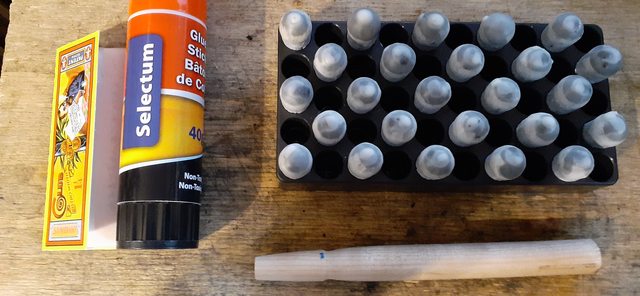
While I wait for his 44 kit, I put a 6" x 1/2" dowel into the drill chuck and filed/sanded it down to roughly the same shape.
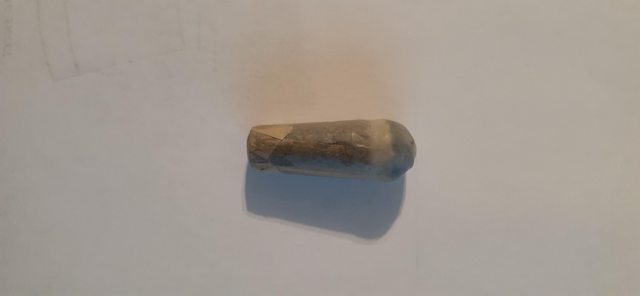
My first attempt, the cartridges where on the long loose side. I shortened up my dowel to where I was able to get a 30gn charge into the paper envelope.
Using my first attempt at home made 'lube' (2oz Bee's Wax, 2oz Parriffin Wax, 1oz of Lard, cap full of Olive Oil & a couple drops of Mr. Clean) I dipped the cartridges.
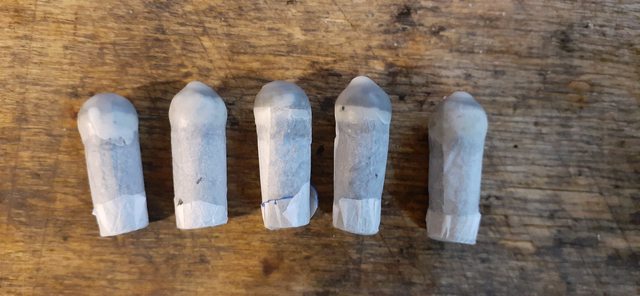
30gns Black Powder c/w lubed .457 Round Ball
I made up 20 of these short stubby loads and with the first 4 long loose ones headed to the range.
They worked. Fast and easy to load. AFAIK, they all sealed well. I did not have any chain fires. I did not have any 'hang' fires, the percusion cap burnt thru to the powder no problem.
I shot 15 of the short stubbies, 4 long ones and revolver was very dirty and I called it an afternoon.
Issues,
I did break one real bad, unburnt powder everwhere, and 2 not so bad. I was expecting a nasty chain fire with all the loose powder. The longer loose ones where easier to chamber.
- Going to increase the taper to easy inserting cartridge into chamber, this will reduce powder charge to about 25gns.
Really dirty, I'm going to expermint with the lube, It was a little on the thick side compaired to some on the on-line videos I've seen.
- Increase the temperature of lube and/or adjust receipe.
Cap 'sucking', the revolver pulled just about every #11 cap off the nipple causing issues with cap jams.
- Duelist1954 uses JB Weld on his Uberti revolver to solve the same problem. The 1862 has intermeadiate pins on the cylinder so there is a 'safe' spot to lower hammer while carrying 6 loaded chambers. The cut in the hammer for these pins is the issue. The preasure of the cap and/or powder form the cap right into the cut on the hammer.
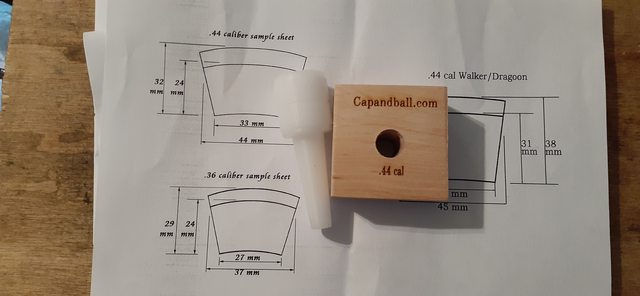
I found it a bit of a pain filling with the paper cartridge without the support provided by Capandball's or simalar block.
- Waiting for Kit, should make things faster and easier.
Left over Paper in Cylinder. Could not see anything in bottom of the dirt cylinders at the range, but I found left over paper when cleaning revolver. It appeared to be mostly where the bottom was glued to the sides. I found 3 bottoms in one cylinder when cleaning.
- I'm going to try a different brand/type of rolling papers & glue. Going to grab a can of 'Canned Air' and try to blow the paper bottoms out of cylinder at the range. Nitrated coffee filters is another option if I can get some potasium nitrate.
Anyone else using Combustable Cartridges in their Cap & Ball revolver? What are you finding sucess with?
I held off on them orginally because of all the 'stuff' you have to drag to-from the range. And I did not like the thoughts of standing around measuring each cylinder load, when I could be shooting.
Then I discovered Combustable Cartridges on the YouTube.
While I wait for his 44 kit, I put a 6" x 1/2" dowel into the drill chuck and filed/sanded it down to roughly the same shape.
My first attempt, the cartridges where on the long loose side. I shortened up my dowel to where I was able to get a 30gn charge into the paper envelope.
Using my first attempt at home made 'lube' (2oz Bee's Wax, 2oz Parriffin Wax, 1oz of Lard, cap full of Olive Oil & a couple drops of Mr. Clean) I dipped the cartridges.
30gns Black Powder c/w lubed .457 Round Ball
I made up 20 of these short stubby loads and with the first 4 long loose ones headed to the range.
They worked. Fast and easy to load. AFAIK, they all sealed well. I did not have any chain fires. I did not have any 'hang' fires, the percusion cap burnt thru to the powder no problem.
I shot 15 of the short stubbies, 4 long ones and revolver was very dirty and I called it an afternoon.
Issues,
I did break one real bad, unburnt powder everwhere, and 2 not so bad. I was expecting a nasty chain fire with all the loose powder. The longer loose ones where easier to chamber.
- Going to increase the taper to easy inserting cartridge into chamber, this will reduce powder charge to about 25gns.
Really dirty, I'm going to expermint with the lube, It was a little on the thick side compaired to some on the on-line videos I've seen.
- Increase the temperature of lube and/or adjust receipe.
Cap 'sucking', the revolver pulled just about every #11 cap off the nipple causing issues with cap jams.
- Duelist1954 uses JB Weld on his Uberti revolver to solve the same problem. The 1862 has intermeadiate pins on the cylinder so there is a 'safe' spot to lower hammer while carrying 6 loaded chambers. The cut in the hammer for these pins is the issue. The preasure of the cap and/or powder form the cap right into the cut on the hammer.
I found it a bit of a pain filling with the paper cartridge without the support provided by Capandball's or simalar block.
- Waiting for Kit, should make things faster and easier.
Left over Paper in Cylinder. Could not see anything in bottom of the dirt cylinders at the range, but I found left over paper when cleaning revolver. It appeared to be mostly where the bottom was glued to the sides. I found 3 bottoms in one cylinder when cleaning.
- I'm going to try a different brand/type of rolling papers & glue. Going to grab a can of 'Canned Air' and try to blow the paper bottoms out of cylinder at the range. Nitrated coffee filters is another option if I can get some potasium nitrate.
Anyone else using Combustable Cartridges in their Cap & Ball revolver? What are you finding sucess with?