Concentricity vs Seating Depth

Baldemar

Member
Rating - 100%
23   0   0
Location
NB
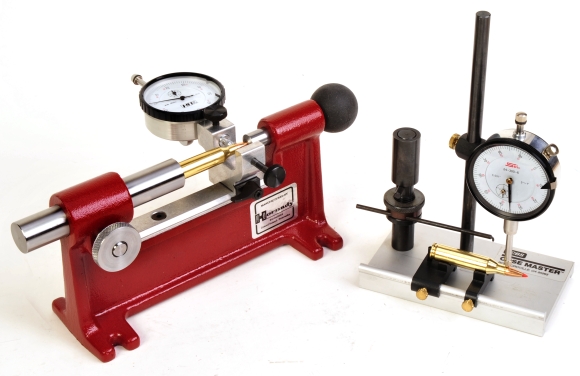
Just wondering if anyone has had any experience with the subject? I reload 6.5 Creedmoor, for long distance shooting. I tend to run low neck tension, around .002"

I've found that when I seat my bullets to all the same length, base to ogive, and then run them through the Hornady Concentricity Gauge, some of the bullets get pushed in a few thousands (even with the gauge set-up as loose as I possibly can set it).

For example: the bullet comparator measures 2.219" after I seat the bullets. After using the concentricity gauge, I get a variation from 2.216 to 2.219. If I don't use the concentricity gauge, I find the bullets to be off at most .005" from being concentric.

So, which would you rather have for better accuracy at long distance, the same seating depth or concentric bullets?
 
If your bullets move using the Hornady concentricity gauge they would also move with the push test on the bullet, meaning you need more bullet grip.

Are you using a bushing die or a standard die with a expander.

I have both the Hornady and RCBS concentricity gauges and my bullets do not move with the Hornady gauge.

ed6Mwd8.jpg
 
If your bullets move using the Hornady concentricity gauge they would also move with the push test on the bullet, meaning you need more bullet grip.

Are you using a bushing die or a standard die with a expander.

I have both the Hornady and RCBS concentricity gauges and my bullets do not move with the Hornady gauge.

ed6Mwd8.jpg


I have a FL die set with bushings, and have a neck sizing die with bushings on its way. However, I intentionally leave the neck tension loose, as I read somewhere that when firing bench rest bolt action, it is better to reduce the tension for better accuracy. I guess I should probably test neck tension variances at some point in the future, to see what difference that makes.
 
I intentionally leave the neck tension loose, as I read somewhere that when firing bench rest bolt action, it is better to reduce the tension for better accuracy. I guess I should probably test neck tension variances at some point in the future, to see what difference that makes.

I suppose it's possible depending on the rifle, most of what I've read states that a snugly seated bullet will improve consistency in how the powder burns, and therefore a more consistent load.
 
Depending on how you're measuring for neck tension, you may not have as much as you think. Some bullets are of a greater diameter at the start of the boattail than at the rest of the bearing surface. This greater diameter can expand the neck sightly while seating. Then when this wider dimension falls below the neck/shoulder junction, the neck tension will be less than expected. A smaller diameter neck bushing will solve the problem. The brass may also benefit from annealing, depending on it's condition.
 
Bullet seating depth, besides a round fitting the magazine and not into the lands on a hunting application, is used to adjust the pressure the cartridge will produce, especially the start pressure.
Neck tension is basically irrelevant so long as it is the same cartridge to cartridge. You will want enough to hold the bullet in place for handling and resist movement due to recoil in a hunting application.
Concentricity is important as you want the bullet to have a straight shot into the rifling, this causes less damage to the bullet giving it the ability to retain its BC and balance.
To tune the load for best accuracy use the powder charge with all other parameters constant. You will want to hit a barrel node (when the muzzle is at its least level of deformity 'tightest') .
 
Just wondering if anyone has had any experience with the subject? I reload 6.5 Creedmoor, for long distance shooting. I tend to run low neck tension, around .002"

I've found that when I seat my bullets to all the same length, base to ogive, and then run them through the Hornady Concentricity Gauge, some of the bullets get pushed in a few thousands (even with the gauge set-up as loose as I possibly can set it).

For example: the bullet comparator measures 2.219" after I seat the bullets. After using the concentricity gauge, I get a variation from 2.216 to 2.219. If I don't use the concentricity gauge, I find the bullets to be off at most .005" from being concentric.

So, which would you rather have for better accuracy at long distance, the same seating depth or concentric bullets?

If a measuring device materially changes my ammo, I would stop using that device... :)

A runout gauge should have ZERO impact on the dimensions of your ammo. If you are using good dies and proper brass prep, there is no point in measuring the ammo again. You can do it initially to confirm all is going well, then forget about it... spot check if you want but proper procedures and tooling lead to consistent results. And the target will most certainly tell you when things go astray.

WRT to OAL, if you are mag feeding, that determines the length you can use. Tune with powder charge. The 6.5 CM is very easy to dial in.

WRT to runout, most match bullets are more tolerant of a bit of runout then many now think about. If you are mag feeding and the bullet nose hits the feed ramp, how true do you think your ammo is now? go measure it and then stop worrying about it... and maybe fix the feeding/mag

WRT to neck tension, most competition shooters that single feed will use as little neck tension as possible. Mag feeding, you need a thou more but very little neck tension is actually needed to get the bullet into the chamber.... if the rifle is operating properly.

The goal is consistent... same, same, same. With proper neck prep, sizing and seating, AND powder charge, you will have ammo equal to what you and your barrel can launch the slugs.

By all means play with neck tension and seating depth... always good to see cause and effect.

Maybe a review on how you are making your ammo is important? If you are reaching the accuracy you want, then the process is working for you and that rifle.

Enjoy...

Jerry
 
The old standard for checking bullet grip was the push test on your loading bench. Meaning holding the case and pushing point first on the bullet, and if the bullet moves you do not have enough neck tension or bullet grip.

I have checked thousands of rounds on my Hornady concentricity gauge and never had a bullet move. If the bullets are that loosely held by the case neck then when the rifle was fired recoil will make the bullets move also.

The Hornady concentricity gauge isn't the problem but neck tension or bullet grip is the problem. At the Whidden custom die website they sell expander kits with five expanders, they range from bullet diameter to .004 under bullet diameter. And my point here is annealing, neck thickness and brass spring back will effect neck tension.


Neck Tension — Not Just Bushing Size
http://www.accurateshooter.com/technical-articles/reloading/neck-tension-not-just-bushing-size/

Bottom line don't shoot the messenger (the Hornady gauge) for telling you that you do not have enough neck tension.
 
The old standard for checking bullet grip was the push test on your loading bench. Meaning holding the case and pushing point first on the bullet, and if the bullet moves you do not have enough neck tension or bullet grip.

I have checked thousands of rounds on my Hornady concentricity gauge and never had a bullet move. If the bullets are that loosely held by the case neck then when the rifle was fired recoil will make the bullets move also.

The Hornady concentricity gauge isn't the problem but neck tension or bullet grip is the problem. At the Whidden custom die website they sell expander kits with five expanders, they range from bullet diameter to .004 under bullet diameter. And my point here is annealing, neck thickness and brass spring back will effect neck tension.


Neck Tension — Not Just Bushing Size
http://www.accurateshooter.com/technical-articles/reloading/neck-tension-not-just-bushing-size/

Bottom line don't shoot the messenger (the Hornady gauge) for telling you that you do not have enough neck tension.

I don't ever recall "shooting the messenger", I love the Hornady gauge. That gauge has nothing to do with my original question. Not to mention that I just read another article which stated the lower the neck tension the better for precision shooting.
 
I don't ever recall "shooting the messenger", I love the Hornady gauge. That gauge has nothing to do with my original question. Not to mention that I just read another article which stated the lower the neck tension the better for precision shooting.

If a measuring device materially changes my ammo, I would stop using that device... :)

Jerry

I think Jerry shot the messenger and missed the point when he said above he would stop using the Hornady gauge if the bullet moved. And if the Hornady gauge moved the bullet the problem is neck tension and not the gauge.

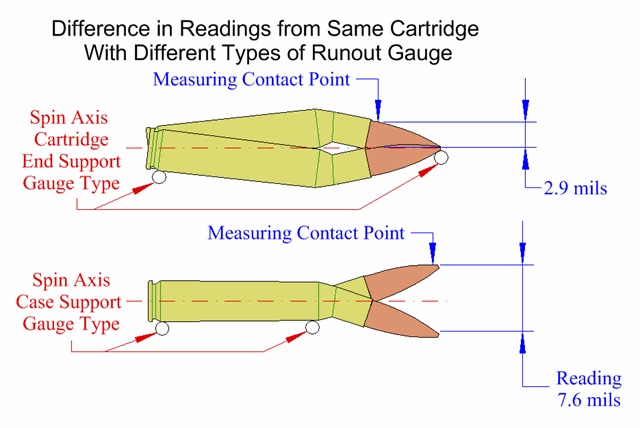
The Hornady gauge holds the case as it would be chambered in the rifle, meaning the rear of the case supported by the bolt face and by the bullet in the throat.

And the more standard type concentricity gauges spins the case on its body and a full length resized case body does not touch the chamber walls.

Below the top image is how the Hornady gauge holds the case and shows half the runout of the more standard type runout gauge in the bottom photo. But the problem with the bottom gauge is if the case does not have uniform wall thickness the thin side of the case will expand more when fired on its thin side. And if you are neck sizing your cases you will be spinning the case on a egg shaped body.

p4gKFHe.jpg


Bottom line, I have used my Hornady gauge on thousands of loaded rounds and I never had a bullet move when checking runout.
 
Back
Top Bottom