













































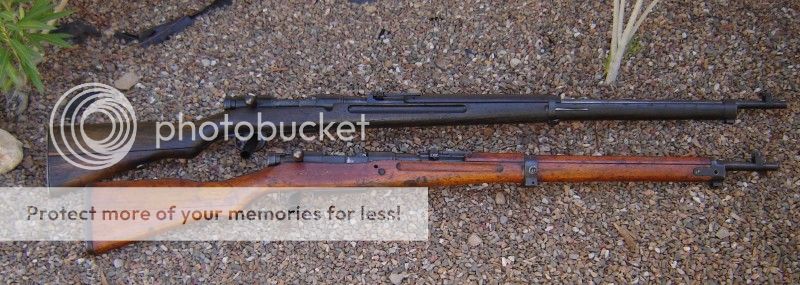
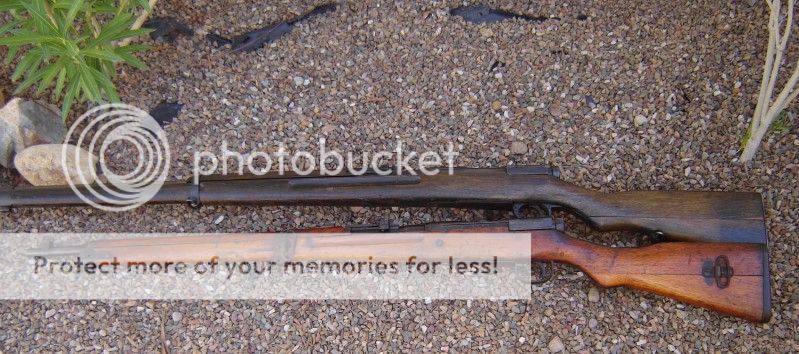
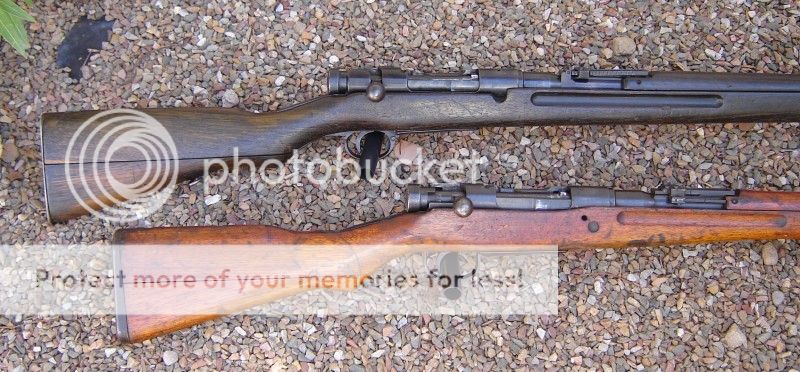
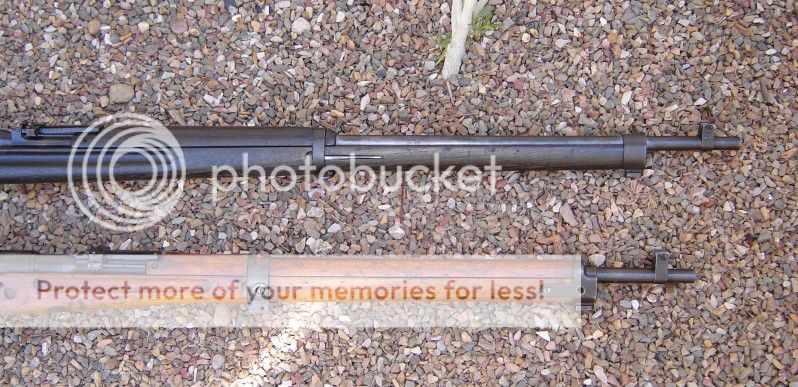
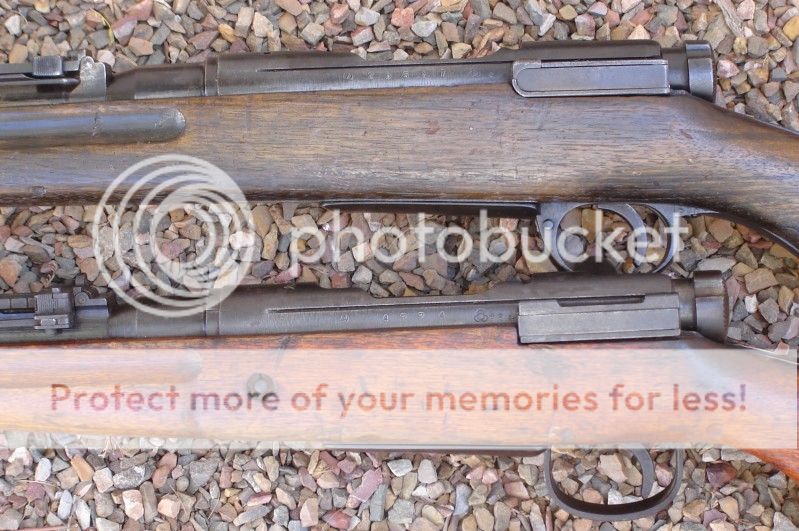
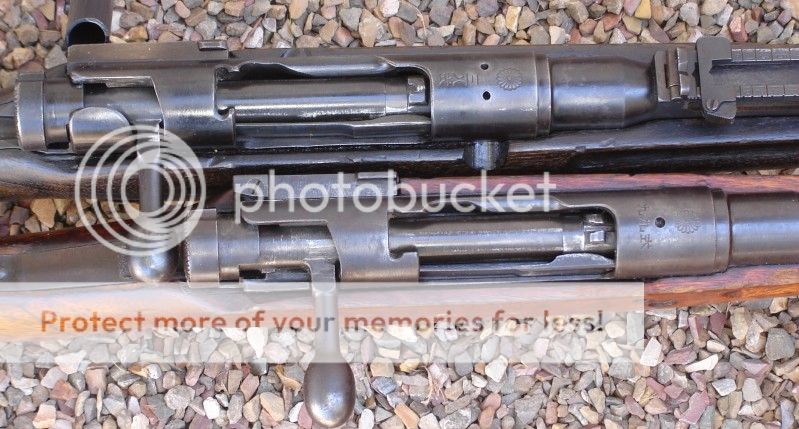
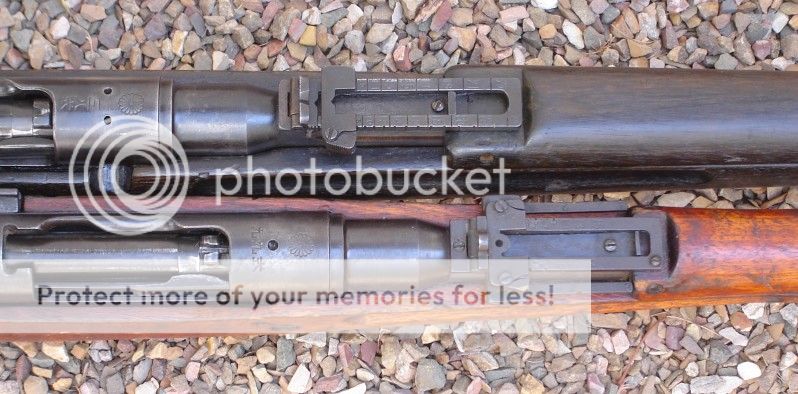
Unearth these two historical rifles the other day. Both were pretty dirty and really had not seen the light of day or even the light of a 40 watt light bulb for 40 years. After a little cleaning and some research I thought I would share them here on this site. The top rifle is a Arisaka Type 38, series 26 manufactured at the Koishikawa plant in Tokyo in the late 30s. The second rifle is the Arisaka type 99, series 23 manufactured at the Kokura Plant around 1942. This series would not have had the mono pod but has the correct barrel band for this attachment. It also has the famous but ineffective anti air craft rear sight.
The rare characteristic about these guns is the mum has not been defaced or removed as with almost all these survived rifles. At the end of WWII the chrysanthemum (mum) markings on the receivers of surrendered Japanese rifles were removed. The sixteen petal mum is the imperial symbol of the Japanese Emperor. The chrysanthemum was at least partially ground off on rifles which were surrendered after the war, apparently as a face-saving gesture. Rifles captured in the field, however, normally have the chrysanthemum symbol intact.
Top rifle is the Type 38 and bottom rifle Type 99
The rare characteristic about these guns is the mum has not been defaced or removed as with almost all these survived rifles. At the end of WWII the chrysanthemum (mum) markings on the receivers of surrendered Japanese rifles were removed. The sixteen petal mum is the imperial symbol of the Japanese Emperor. The chrysanthemum was at least partially ground off on rifles which were surrendered after the war, apparently as a face-saving gesture. Rifles captured in the field, however, normally have the chrysanthemum symbol intact.
Top rifle is the Type 38 and bottom rifle Type 99
























