









































CQB - Modified Prone

Ganderite

CGN Ultra frequent flyer
Rating - 99.7%
355   1   0
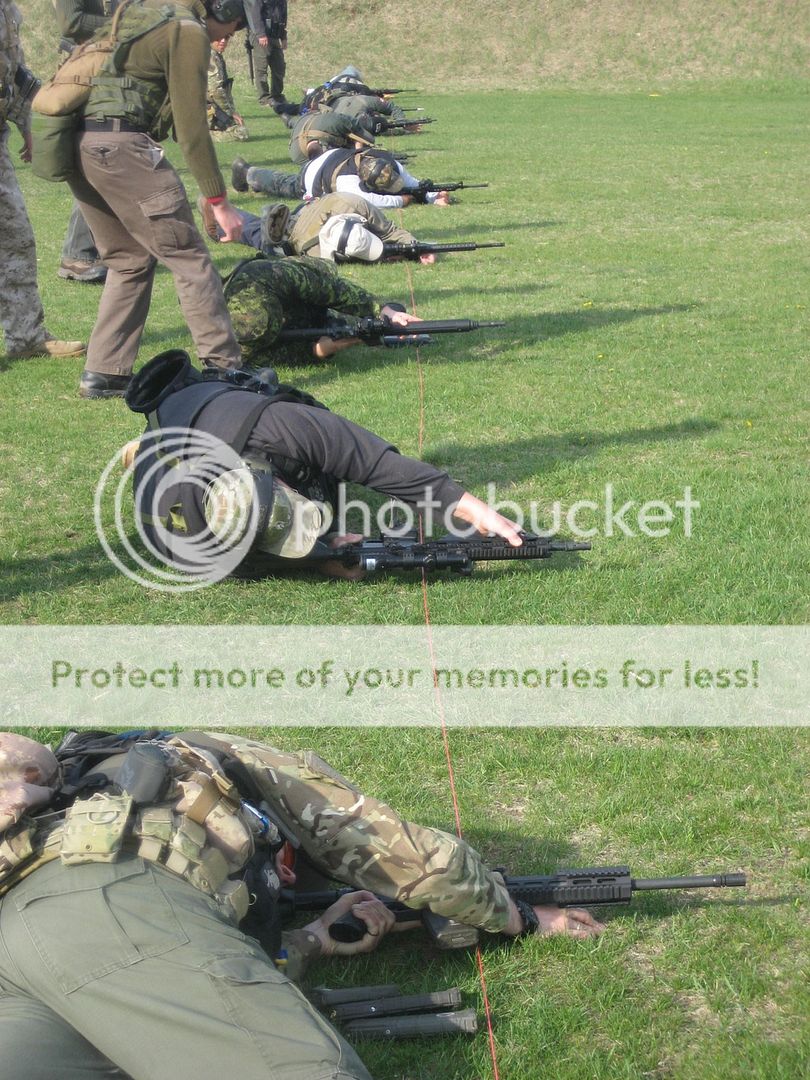
Modified prone. We lay on our strong side and hold the rifle sideways to the ground.
IMG_1600.jpg


I can get a very secure position and can aim very accurately. If I aim at the right place, 20 bulls are possible. BUT, I have to aim at the right place.

In theory, the bullet will hit at the crosshair. Good theory, but is not true for my rifle. Since each rifle has a different scope height, the bullet strike will be at a different place.

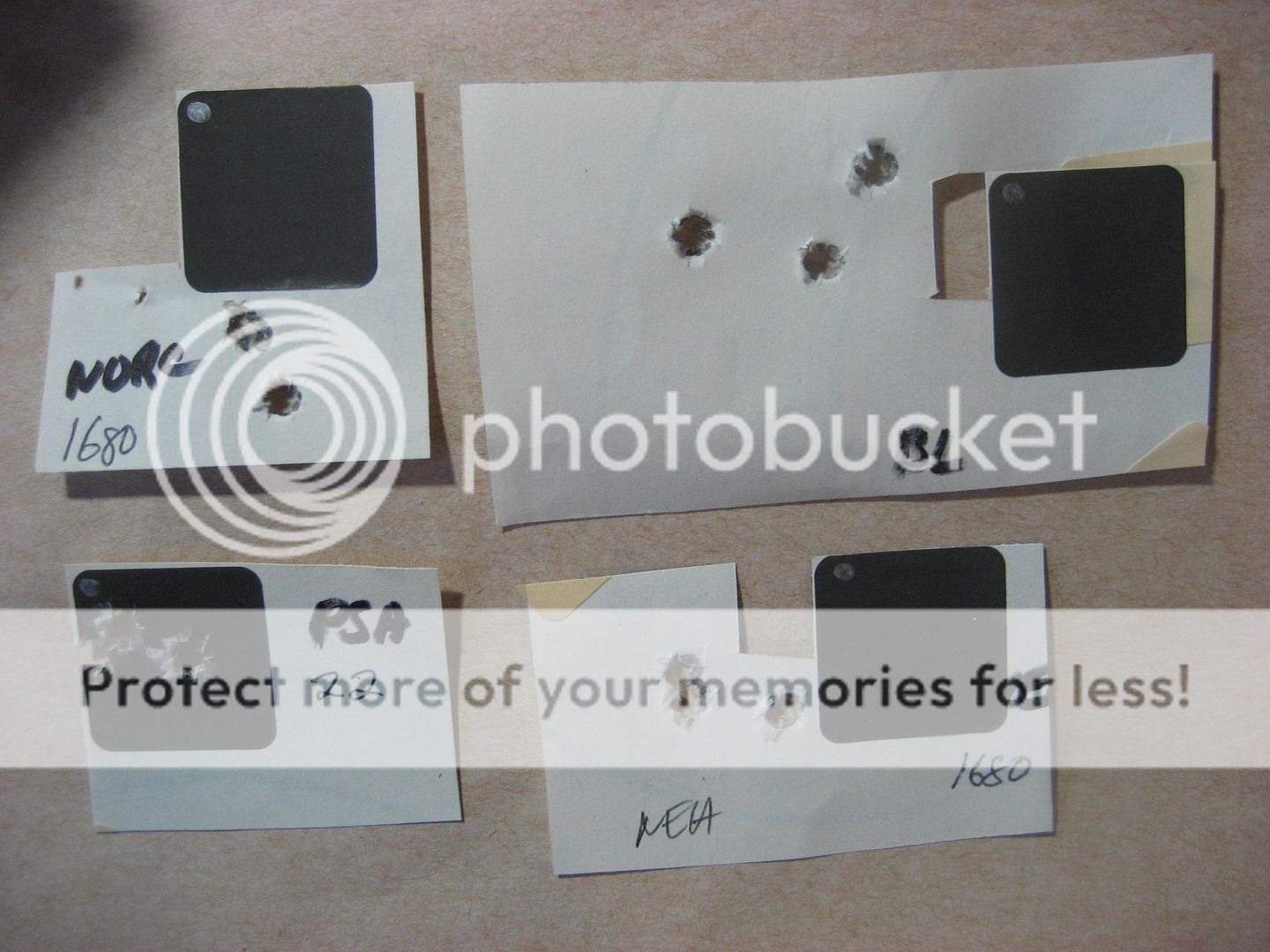
Today I took 4 different rifles, and shot them in modified prone. I aimed at the top left corner of the black patch. Each rifle had been previously carefully zeroed at 25 yards to hit at point of aim.
IMG_1889.jpg


I cut the patch/groups out of the target and then over-layed the patch on a figure 11 bull. From this I noted where I have to aim on the fig 11 to put the shots on the bull.
 
Any thoughts on why the 2 pictured on the right is shooting a bit high on a modified prone?

No. I don't know why.

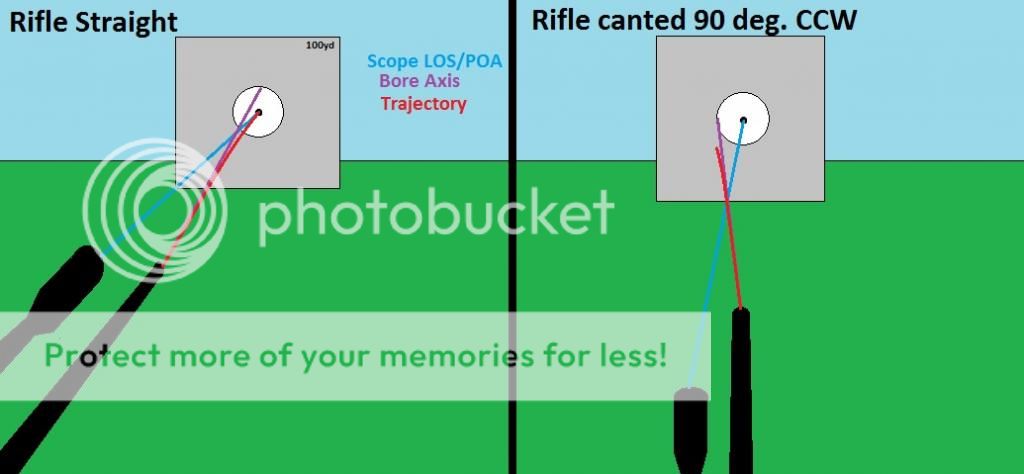
The rifle is sideways, so if the rifle was zeroed with the gun shooting left or right, that would become high or low in Modified Prone. These rifles were all carefully zeroed at 25 yards to start.

One variation between rifles is the height of the scope above the bore. This translates to a left-right error in MF. This is why I did this exercise. I stuck a little diagram on each rifle, noting where to aim in MF.
 
It's actually a very simple problem to solve. Scope height most definitely is a factor. It is a critical factor. Maybe not if your goal is minute of man at close distance, but if your goal is to make precision shots it is. And that is what you have trying to hit a patch at 25 yards

scopecant_zps613e374b.jpg


In some PRS-style matches, you have to shoot at targets that are hundreds of yards away in a modified prone position. Here is a nice video about German sniper training. Have a look at 0.45 and 1:38.

[Youtube]HlLFkNV2YAM[/Youtube]

Good ballistics calculators will have scope offset, in addition to scope height. In modified prone, you simply swap scope offset for scope height and account for the change in zero. Scope height becomes zero. Then trajectories can be calculated using the ballistics calculator. A good ballistics calculator will also have offsets for different ammo since those will also have shifts in zero. Some can also estimate the zero shift that you get when you cant the rifle, but it is usually off by a bit and is often different for a left cant than for a right one. I prefer to find my left and right cant zeros by testing. From here, I can calculate further distances or closer ones with the ballistic calculator. Or I can make a chart for different distances.

Here is a chart that shows what happens when I cant my 223 trainer 90 degrees left (in mils):


My 100 yard zero shifts 1 mil to the left and 0.9 mil down. So, now the elevation turret is the windage turret and the windage turret is the elevation turret. If I wanted to bring the POI back to the center, I would turn the windage dial 0.9 mils right and turn the elevation turret 1.0 mil down. Since my scope has a zero stop, I can't do that. So, I adjust for elevation (using the windage turret) and then hold off using the horizontal crosshair (which is really the vertical one). Wind holds and mover leads get added to this (another reason why you want FFP).

As with most things shooting related, its best to deal with it in angular measurements. Like movers, trying to think about it inches instead of MOA (or better yet mils) only complicates things.


First and second round hits at 200 (left), first round hit at 300 (right) with the rifle canted 90 degrees right. Settings calculated with AB Mobile using a separate rifle profile for this purpose.
 
Last edited:
This is how you would calculate a table in JBM:

The inputs for a normal data table would look like this with my trainer:


Now, there is a field there for Cant Angle. You could just enter 90 or -90 in that field and JBM would calculate the trajectory for you. But in my experience it is typically off around 0.2-0.3 mils at 100 yards in both directions. So, I prefer to check my zero and set things up manually.

I would enter this with a rifle canted 90 degrees left and my known zero of (-1.0, -0.9):


As a convention, left and down are negative. Scope height becomes zero, scope offset becomes the scope height value. We use the Zero Height and Zero Offset fields to enter our zero change when the rifle is canted. The real purpose of these are if you had some ammo that zeroed at a different location than your usual load and you didn't want to zero your turrets for that ammo. You would enter the offsets in and it would give you dope with the offsets rolled in.

A few critical things to get a good answer:
-Make sure Wind Speed is set to 0 (wind correction values and mover leads need to be added manually at firing time)
-Make sure "Elevation Correction for Zero Range" is checked
-Make sure "Windage Correction for Zero Range" is checked

I get a solution that looks like this:


If I wanted to shoot at 400 yards, I would turn the windage dial (now elevation) 3.4 mils R. And since I have a zero stop and can't zero out the horizontal offset, I would hold 1.5 mils right for a no wind condition. If there was wind, I would look at the value on my normal dope chart for a wind at that distance and I would add/subtract that value from 1.5 mils.

In AB mobile, and urban prone rifle profile can be programmed in a similar fashion.

This is how I always did it when I was shooting SR and CQB.
 
Knowing me, I would doze off :)

I often feel that way once in position.

Like Ganderite and Komb say, testing to see how your position/optic/rifle react in modifided prone is a key to getting good hits. Luckily for CQB we don't have to get into higher level math like Komb showed us (dude - you maybe over answered the question eh? ) :)

For me, I've always found that my 25 yrd "vertical" zero worked pretty close...but my rounds do tend to print a bit "high" or to my left since I shoot lefty. This is likely a bit to do with the rifle recoiling and not fighting gravity when it does. Muzzle rise is now to my left, rather than up.

For ORA CQB, take note of aim and POA during your practice stage (and practice at your home range before the event if you can) so you can correct any errors. Magnfied optics have an advantage is this sport in that you can see your hits (in theory) and make corrections. Magnified optics with zero stop are great so you can't get a full turn off (ask me how I know - :( )
 
Those tables are impressive.
But if it is close range, known distance, square range shooting, just determine POA and be done with it?
 
Sure you can do that if you wish. But it's like the difference between knowing how to solve a math problem and memorizing the answer to one specific problem. If you know how to solve the problem, you can use it on the square range or anywhere in any situation. The same is not true in reverse.
 
Back
Top Bottom