Curses, HBC Trade Gun back in the bucket list!

I found Chris Hirsch's lock page. He has a LH double breast ####, I figured it would be RH. that's a game changer! It sure would dress up a repro TG. Many kit builds are gooseneck cocks and maple stocks.

http://www.texasguntrade.com/leftygolcher.htm

I gotta ask, has anyone ever gerry rigged a different hammer to a lock?

Is hardening required?
 
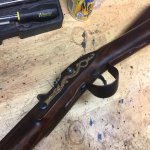
I agree that trade guns and english muzzleloading single shots were the most common guns on the early prairies. Here is a Barnett trade gun I built from bits and pieces including a piece of maple with worm holes. Great fun too shoot but the trade guns didn’t have much drop in the stock and I have a big head. Lots of the original trade guns and muskets had a scaloped area to get your head down to the plane of the barrel. I haven’t had the heart to do that to this one yet. It is nominally a 28 guage ~58 cal.

View attachment 387343View attachment 387344View attachment 387345View attachment 387346E4872A29-307D-4C9B-9E35-D39E3C555ED6.jpegView attachment 387348
 

Attachments

  • E4872A29-307D-4C9B-9E35-D39E3C555ED6.jpeg
    E4872A29-307D-4C9B-9E35-D39E3C555ED6.jpeg
    120.5 KB · Views: 84
That is about a 4 1/2" sporting lock that Texas Gun Trade sells.
Hammer will be about 1 3/8" throw.
The hammer must be fitted to the square tumbler shank, properly indexed.
 
One of these days I really need to send one of my hawk heads to Chris. He asked if I’d consider loaning him one to make
A copy of. Tiriaq have you seen the all steel, box lock pistol project he’s been working on?
 
No, I haven't seen it. I came across his website a while ago, probably while researching trade gun locks.
His locks and parts are made by using originals to produce the dies from which waxes are injection moulded. We went that route with ours. There are catches in doing this. There is a bit of shrinkage from wax to steel. The new parts will also incorporate every wart in the originals. This can show up in the working mechanical parts, unless the dies are adjusted to provide for a bit of extra metal for fitting. The original lockplate we copied had been held at one time by its edges in a vise. Everyone of our lockplates showed the vise marks. They cleaned off when the edges of the plates were finish filed, but it illustrates the degree of detail - both good and bad - that the lost wax process can incorporate.
John Clarke (York County Gun Works) had machined aluminum dies for his flintlock parts. The dies were beautiful, and so were the parts produced from them.
For absolutely remarkable work, research Jim Kibler. His locks are something else. Lockplates, cocks, frizzens are cast. Makes sense because of the contours. The mechanical parts are CNC machined, as is the finishing on the cast parts. His stocks are carved by CNC. The detail quality is incredible.
 
Last edited:
I know Jim. Follow his work closely. Chris explained exactly what you have to say about shrinkage, using the injection moulded dies. I’m not a fan of Clarkes locks. They’re excellent quality no argument there, but they aren’t 100% historically accurate. To many small screws. I have a pile of parts for his locks. Been hanging onto them, to possibly retro fit his frizzens to old locks that they’re broken or missing on. Ever need a replacement part just reach out to me. All I use is Chambers Davis and L&R. One of these days I’m going to try one of Jim’s. Have a pile of percussion lock parts too for larger late period locks for guns like the Hawken. I really need to build a few.
 
P.s me and Adam Daub had a conversation on the topic of Jims kits. Their so perfect and close to finished that you can’t say you built a gun.. it’s more correct to say you assembled a gun.
 
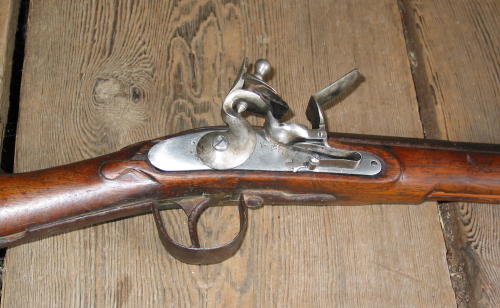
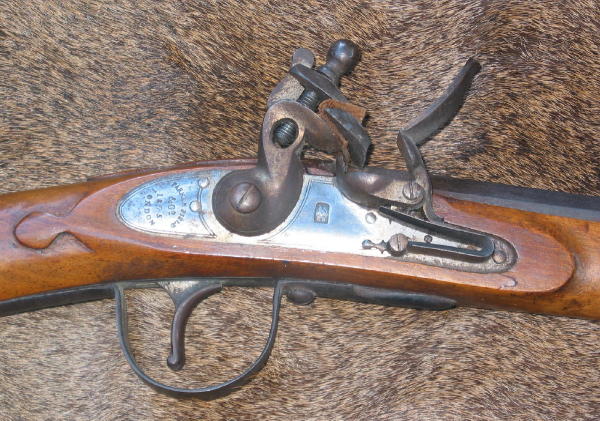
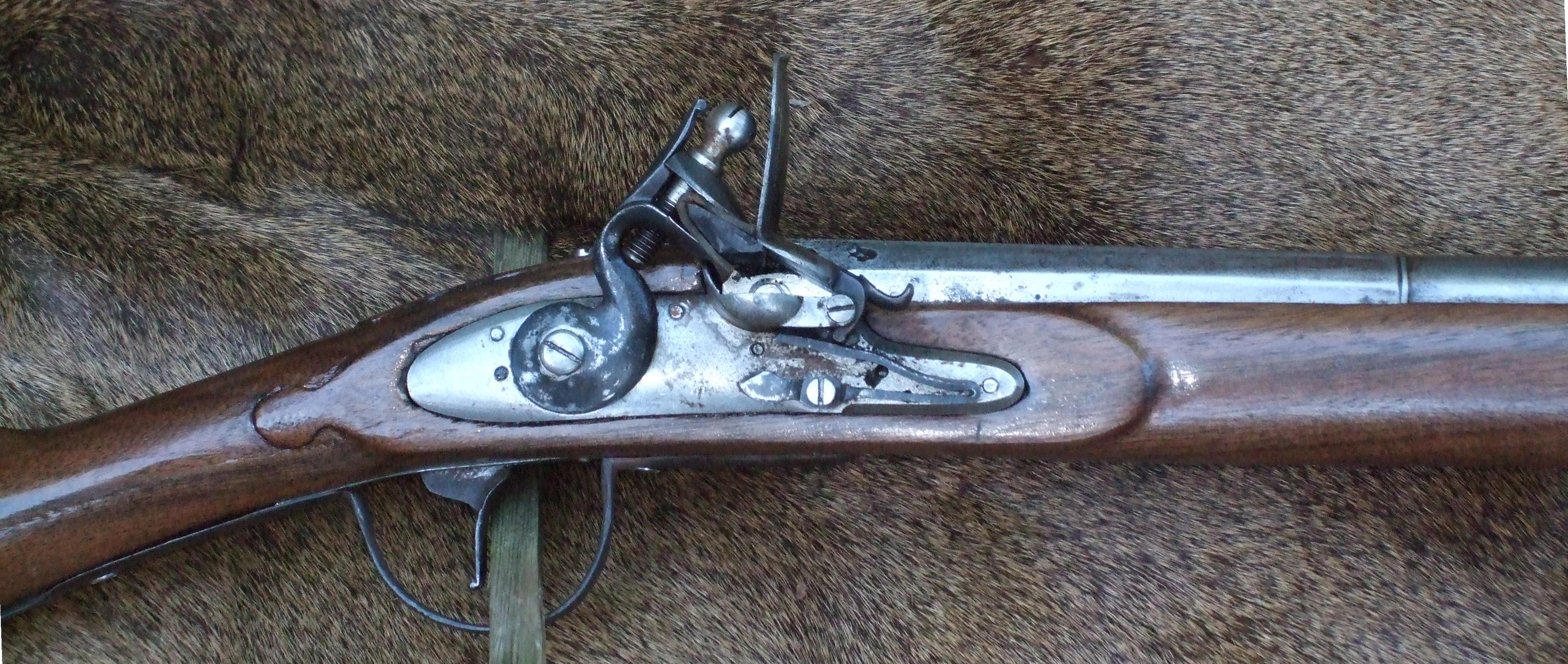
A lot of the photos I see of trade guns made in modern times show the lock with a pointed "tail" like a bess lock. The three photos below; one is a completely original Parker Field and Co trade gun, one is I am guessing, early 1800s original trade gun which was missing the lock and I copied the inletting to make the lock plate, and the third is an Italian bess lock that I modified to mimic the Parker Field lock as well as the profiles of several other originals that I have seen. Main point being that the original locks that I have seen have all had rounded tails on them. Also that if you have a hard time finding a lock profile that you like, you can modify a bess lock to the correct profile. I can't remember if I had to modify the sear spring on the bess lock, or not.

cheers mooncoon


A Kibler kit would be assembling and finishing, rather than than building, because of the remarkable detail in manufacture of the parts.
I wish that we had access to that kind of technology back in the early '70s when we were manufacturing those trade guns. We had access to a North Star 12 spindle carving machine. It badly needed a rebuild, and only six blanks could be carved at a time. And even then the reject rate was too high. We finally sent our aluminum master to Fajen, and got semi finished stocks from them.
Our frizzens and springs were cast from 6150. The locks I have are now pushing 50 years old, and I don't think the parts have lost any of their quality.
Bought barrel blanks from Numrich. Drove down to pick up a batch, Ira Trast gave me a tour of the place. Talked to him about getting stocks. He showed me a stock blank for a Navy Arms Brown Bess which had been carved in NY State. Apparently at that time the Besses weren't being imported in a finished state from Italy. Anyway, this stock had been carved by a company Wysowski Brothers, on tape controlled automatic machinery. The surface was sort of a spaghetti grain that could be finished by sanding. The only real carving needed to finish was an area on the bottom of the forend where the blank had been affixed to the machine. Sharpen the tail of the lock inlet, and the lock would pop into place. The faces of the lock moulding and opposite side were the sides of the plank. Quite an impressive piece of work. We couldn't consider this type of manufacture because of the numbers required to justify setup. Manually controlled pantograph carving machines are still used for limited production.
Getting barrel blanks was an adventure. No one was making trade gun style barrels so we had to work from blanks. Wanted to try for Canadian manufacture. It took Canadian Arsenals 6 weeks to decide they couldn't be bothered working up a quote for straight cylindrical blanks. A company in Toronto, General Deep Hole, would drill blanks if we supplied the steel, cut and faced. Drilled, not drilled and reamed. For $18. For a hole. They had a machine for boring 105mm barrel blanks. Interesting shop. Contacted Numrich. In four days they replied with a quote. 1137 steel, drilled, reamed twice, guaranteed spec. for bore finish. $7.32, FOB West Hurley. When I was talking to Ira, I told him about Canadian Arsenals. He laughed. Numrich had just filled an order for the CF for .50 Browning barrels.
The barrel blanks were 1 3/16 by 36 1/4 long. I profiled them tapered octagon to tapered round, threaded and breeched them. Took 2 1/2 hours each. I had made the die for wax casting the breech plugs; making this sort of die is actually quite straightforward. Hard part at the time was finding a foundry that was interested in doing the casting.

 
Back
Top Bottom