D. Wales 6 Gauge Shotgun Looking for some Facts and Figures

Army Issue

Regular
Rating - 100%
23   0   0
I have a D.(Durrant) Wales shotgun 6 Bore 7" shells "not for ball" Damascus barrel, half engraved, hammered, single barrel, break open shotgun.
It's huge, gotta be 5<feet long.
Made in England on Regent Street Great Yarmouth.
I found out that D. Wales was in business from 1868 to 1909.

I'm toying with the idea of getting ammo made for it but still a Little Chicken about it.
How do you figure out what this beast is valued at?
 
I have a D.(Durrant) Wales shotgun 6 Bore 7" shells "not for ball" Damascus barrel, half engraved, hammered, single barrel, break open shotgun.
It's huge, gotta be 5<feet long.
Made in England on Regent Street Great Yarmouth.
I found out that D. Wales was in business from 1868 to 1909.

I'm toying with the idea of getting ammo made for it but still a Little Chicken about it.
How do you figure out what this beast is valued at?

Post the pics and your questions on the Double Gun forums. Large bore shotguns have a limited but fanatical following and can often be worth a lot of money.
 
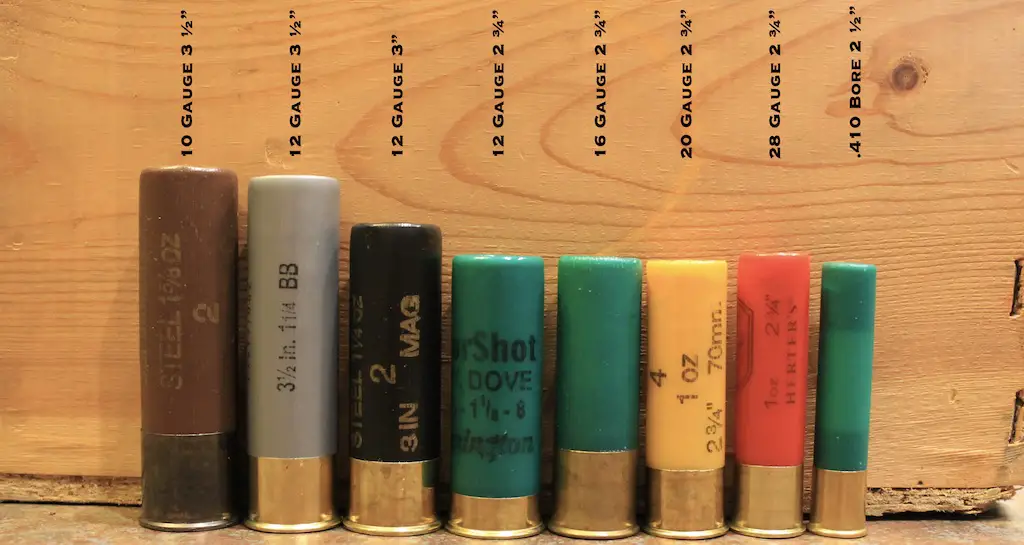
photo-of-shotgun-gauges.jpg


6G 7 inch long shells you may be out of the Stand pretty quick.
and Not For Ball I thought meant Shot loads only?
Would there be enough left for a Jar of Venison Jam? :)
 
What is the bore size in the gun, i have never saw a 6 gauge cartiage gun, i have a 4 double and the bore in it is .995 and an 8 rifle that is .842 bore. Since your gun is marked not for ball it should be choked and i believe they started using those marks around 1887 but would have to check
Gun looks good and a great piece of history

My 4 bore is also marked 4 inch brass case and the 8 bore is 3 1/2 inch, not sure what the 7 means on the barrel but don't think it will be a 7 inch case in my opinion but measuring would sort a lot of this out
 
Nice. That is so very cool. Condition including case colours and chambers looks very good. Not intended for 7" cartridges am sure. Bit of a mystery but maybe the length of the hex barrel or possibly that is minimum testicle diameter of operator should you wish to fire it. As much as find myself wanting it I don't qualify.
Yes, "not for ball" means muzzle has constriction. Mark in use 1875 to 1887 and following that the stamps said "choke".
 
If you look closely, it's 6B, 7M which means six gauge bore with a seven gauge muzzle, this was the way they marked a choked barrel 1875-1887. In other words the muzzle ( at 7 gauge) is smaller than the bore (at 6 gauge. It is unlikely to be a 7 inch case, more likely around 4". The only way to be certain of the chamber length is by using chamber gauges or a bore gauge.
 
Mayber the 7 refers to the bore diameter at 9" past the breech, similarly how 13 on the barrel flats of a 12 gauge refers to .730 inch diameter bore at 9" past the breech at the time of proofing.
 
Somewhere, I have/had a shell from an 8 or 6 bore gun that was used at a local iron mine to break up hangups of iron pellets in the chutes.It was much larger than even a 10-gauge, and was, IIRC, at least 4" long to the crimp, had a projectile that extended past the crimp by about 1", and was a plastic, high brass round. If I can remember where it is (maybe my son has it), I'll post a pic.
 
Somewhere, I have/had a shell from an 8 or 6 bore gun that was used at a local iron mine to break up hangups of iron pellets in the chutes.It was much larger than even a 10-gauge, and was, IIRC, at least 4" long to the crimp, had a projectile that extended past the crimp by about 1", and was a plastic, high brass round. If I can remember where it is (maybe my son has it), I'll post a pic.

That would be a round for an 8ga kiln gun. Large dropping block gun that fired a zinc slug. The brass head would be double thickness.
 
Waiting on the Double forum to grant me access. So I took a few more pic and posted them on the Flikr. It's matching the no 330 on all the parts but the barrel also has a serial #. Not postedšŸ™ƒ
The gun is 5 feet from stock to muzzle.
There is a rim inside the chamber and it appears to be 4ish inches in. The barrel does narrow. Did what I could with agape measure. Not an engineer here.
Thanks for all the interest and info so far Gunnutz.
 
Somewhere, I have/had a shell from an 8 or 6 bore gun that was used at a local iron mine to break up hangups of iron pellets in the chutes.It was much larger than even a 10-gauge, and was, IIRC, at least 4" long to the crimp, had a projectile that extended past the crimp by about 1", and was a plastic, high brass round. If I can remember where it is (maybe my son has it), I'll post a pic.

Look up "8 gauge industrial" made by winchester. They have a few different kinds and options and explain what theyre for. You can get lead and zink slugs, as well as buck shot. I have one in my collection, its pretty neat! I also have an old braaa 8 gauge spent casing from an old english BP double.
 
As stated, the 6 B is the measured bore size 9" from the breech end as made, when originally proofed. The 7 M is the measured muzzle diameter when made. 7 (or 10, or 12, or 20 gauge is of smaller diameter than 6 gauge) These are standard English proof markings for a six gauge gun with choked barrel during the 1875-1887 period when the increasingly common use of choked barrels made the proof houses acknowledge the constricted bores. If there was no choke originally in this gun it would be marked 6 B and
6 M. None of these large bores ( 8, 6. 4 ) were ever common, they were intended as a specialized waterfowl gun. Because of the intended use in frequently foul weather, salt air and water exposure, mud and hard knocks few of these guns have survived and most of the remaining specimens are in poor condition. Ammunition for them is also a collector's category now, very scarce and too valuable to shoot. No known new six gauge cases are available but a competent machinist could make a brass replacement ( for a price).
 
Just to complete some information, if you don't already have it... The Internet Gun Club database lists Durrant Wales as a gunsmith and ironmonger, operating from 1868 to 1909, as you previously stated.

Durrant Dutchman Wales was the son of Sarah. He was born in 1840 in Swaffham, Norfolk and was recorded in the 1861 census as a visitor staying with Robert Ringer, a gunmaker in Watton, Norfolk to whom he was probably apprenticed. Durrant was first recorded in business as a gunmaker in 1868 at 9 Northgate Street, Great Yarmouth. He may have traded before this. He was recorded in the 1871 census living on his own at this address. Between 1871 and 1874 he moved to 16 Regent Street where he remained until about 1909. The 1881 census records him as married to Louisa Sarah (b.1850 in Yarmouth). They had one daughter named Louisa Sarah (b.1874). The 1891 census records the same. By the time of the 1901 census the daughter had left home and in this census Durrant describes himself as a shop keeper as well as a gun maker, it seems he was an ironmonger. By the time of the 1911 census Durrant had retired and the business had closed. Durrant's wife had died and he was living with a housekeeper. The other detail in the IGC database is that the firm sold cartridges under the name "Creast" or possibly "Crest" (post 1900).

Interesting gun!
 
Back
Top Bottom