Deep throat?

MD

CGN Ultra frequent flyer
Rating - 100%
13   0   0
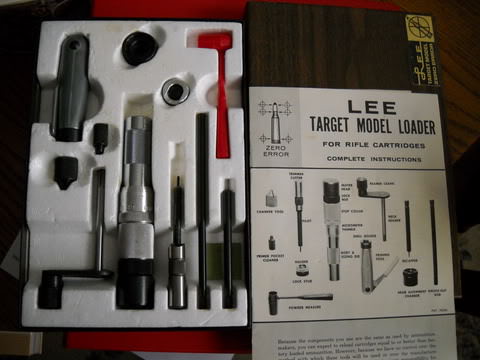
I am not a sophisticated reloader. I use the little Lee Loader kit plus a scale for accurate powder weight.

It's worked for me so far.

What I was thinking about though, is throat length.

I'm told that my 1955 Husqvarna rifle 7x57 was made with a long throat.

I just made up some loads using 175 grain bullets and made them the same length as factory loads.

I have got decent accuracy using 139 grain bullets but I seated them out way past the cannelure. In this case I had a box of the 175 grain bullets I wished to try and thought I'd seat them like a factory bullet to see what happens.

Was that a mistake?
 
Too funny! Just going through same commotion, also with a 1955 Husqvarna carbine in 7x57. I was more taken by the twist rate - only 1:12. Multiple on line calculators telling me that "normal" bullets are too long - won't be stabilized - so just ordered a pile of 140 grain Woodleigh Weldcore - they are supposed to be 1.112" long, which 3 on-line calculators say should be well stabilized. Let us know how those 175 grain work out - I would like to use heavier bullets, which therefore tend to be longer - but got "scared off" by the stabilizing thing.
For my other hunting rifles, I tend to load to length that fits magazine, first, then try to seat the bullet at least a bullet diameter deep into the neck, and try to be about .030" from hitting the lands. Has worked for many different chamberings. Will be interested to hear how you make out with yours...
 
How can you tell if they are touching the rifling?

What are consequences of not doing that?

Make a dummy round and chamber, if it's jamming it will be stiff closing the bolt, you can also put black marker on the bullet to see if its contacting the lands. Jamming the bullet in the lands will cause pressure issues.
 
A couple ways to find the lands - is covered in most reloading manuals - can colour your bullet with Jiffy marker - seat way long - try to chamber - if too long you will feel the bullet hit the lands - when you open the bolt there will be marks on the jiffy marker - the lands hitting the bullet ogive. Seat a little deeper - repaint, repeat - eventually it will chamber all the way - so now not quite reaching the lands. If you want to be detailed, do that in finer and finer increments to find exact length to just barely touching lands, then back off from that. Was / is a thing with target / bench rest shooters to put bullets, especially cast bullets, hard into the lands - was supposed to help them line up straighter I believe, but since bullet does not get a "running start", the pressures go up - have to reduce powder charge to stay at same pressure. Usually want to think in terms of .005" "jump" or more for hunting rounds - do not want an unusual one to get tight onto lands - pressures will go way high. Much more common, for me, to be .025" to .030" off the lands for my hunting rounds - is an opportunity to "tune" for your rifle - but be aware that with use, those lands are going to be eroding away - every couple hundred or so rounds, might have to load a smidgeon longer to keep the same "jump" - is called "chasing the lands".

If your Husqvarna carbine is like mine, you are going to be a long way from the lands with a round that fits into the magazine. but unless you measure on your rifle, you will never know.

Edited to clarify: "... a long way from the lands with a round, bullet seated at least one caliber deep, that fits into the magazine..."
 
Last edited:
Long range load development at 100 yards. (seating depth testing)
https://forum.accurateshooter.com/threads/long-range-load-development-at-100-yards.3814361/
Erik Cortina
Team Lapua Brux Borden Captain

Update: 9/17/14
Some of you have asked for more detailed instructions on how I do this. Here they are:
1. Find Jam by seating a bullet long on a dummy piece of brass (no primer nor powder) and apply die wax to the bullet ogive and record it's base to ogive length.
2. Chamber the round and close the bolt.
3. Snap the bolt open and measure the base to ogive measurement. If it is shorter than previous measurement, this is your jam. Do it a few times with different cases to make sure.
4. Load a known powder/primer/bullet combination. I load 4 of each powder charge in 0.5 gr. increments and seat bullets at jam - .020". I use one shot of each to get barrel fouled up and also keep an eye for max pressure at the same time. You can also use these rounds to break in a barrel if you are inclined to. If I encounter pressure on the hotter rounds, I will not shoot groups with the other loaded rounds and will pull bullets when I get back home. Do not shoot in round robin style because position and natural point of aim will be compromised.
5. Shoot 3 shot groups starting from lowest to highest. All groups are shot over a chronograph.
6. Examine target and find the place where consecutive groups line up vertically and ES is the lowest and speed increases the least from one group to the next.
7. Load to the middle of the powder node and do a seating depth test.
8. Load 3 shot groups starting from Jam - 0.005" all the way out to Jam - .040" in .003" increments.
9. When you find the seating depth test that shoots the best, load towards the longest side of the node to allow more room for throat erosion.
10. Final step is to load the new seating depth and load 5 shot groups in 0.1 gr. increments 0.5 gr. on each side of node (if pressure limits are not reached). This will cover an entire grain of powder and you will be able to pinpoint where the powder node starts and ends. In the summer, load towards the low end of the node, and do the opposite in the winter.

HAPPY SHOOTING!

Below a photo of Erik Cortina.:evil:

HJmzuZa.jpg


P.S. Don't tell anyone but below is what I first used when I started reloading. I only used it for about a month, neck sizing for a Remington 760 pump didn't work well. The third time I reloaded the cases they would not extract until the case cooled off. That night I bought a Rockchucker press and full length dies. ;)

Wst8fOL.jpg
 
Last edited:
How can you tell if they are touching the rifling?
There are a couple of reloading tools that allow one to find the OAL that lets the bullet touch the lands: (1) the Sinclair Bullet Seating Depth Tool and (2) the Hornady Lock-n-Load OAL Gauge (this was formerly the Stoney Point tool) that uses modified cases. I have both and have used them extensively. The Hornady tool is a little easier to use, but both give accurate measurements if used properly.

 
Use a Dremel tool, hacksaw, etc and cut the case neck into four sections. Bend the neck ends in so they hold the bullet without slipping. Chamber the test cartridge and measure several times getting the same length. This will be the max length with the bullets touching the lands. Back off .040 and make a workup load and find the most accurate load. After the most accurate load is found then test AOL as in Eric Cortinas test procedure.


images


There is nothing wrong with having a long throat, the longer the bullet travels before hitting the lands the lower your start pressure will be. Weatherby rifles are famous for long throats and higher velocitys.

When I first started reloading I seated my Hornady bullets to the cannelure and called it good enough.

In my opinion, you are over complicating reloading and using a simple Lee Loader. The closer you get to the lands the greater the chance you can have a pressure spike increasing your start pressure. My old worn .303 British Enfield rifles had cordite throat erosion and you could seat the bullets backwards and the base of the bullet never touched the rifling. And even these old rifles were accurate with a long jump, actually, it wasn't a jump it was a long slide down the bore until they found the rifling.
 
Last edited:
MD, you should be able to seat your bullets out as far as the magazine well in your rifle allows.

Correct me if I'm wrong but that mag well should be able to accept 30-06 standard length cartridges, which should allow you to seat the bullets out quite a ways.

The Husqvarna I had was similar to the one you describe with a very long throated chamber. I couldn't reach the leade with even the long 175 grain round nose, flat base bullets I was loading to maximum length for the mag well.

Mine was a model 640H, which is the 98 type action. It's predecessor would have been the Model 46 or 640, which is the 96 type action.

I don't remember the twist rate, but I believe it was 1-12 as well. The 175 grain bullets actually stabilized for me. I loaded hot enough so the recoil became uncomfortable and I knew I would flinch, when I least needed to do so, by sheer reflex. So I dropped back to 160 grain Speer SP/BT and then again back to 145 grain Hornady flat base spire points as they shot the best.

I was quite surprised that the long for caliber, heavy bullets stabilized.

I used 140 grain sp/bt hornady's, 49.0 grains of Win 760, over CCI magnum 250 LR primers, velocity was around 2800fps out of a 24 inch bbl. 39,700CUP (43,000 psi), which is safe for the pre 98 actions and has proven to be the accuracy node for many 7x57 rifles

The load for 175 grain round nose, used 51.8 grains of IMR4350 with CCI magnum primers. This was a stout load, the powder needed a 12 inch drop tube to get it down to the base of the neck. This load was safe in my rifle, developing around 50,000 psi and 2575fps.

Hope this helps
 
Thank you for all your advice folks.

Like I said, I made up a few samples using H4350 powder and even though they are seated quite deeply into the brass now, when I determine which are the most accurate, when I load the best one up I'll seat them out farther.

Have to wait for the snow to melt off this spring before I can get up to the bush to shoot though. Not a member anywhere and POCO does not take guests of day card users any more.
 
How can you tell if they are touching the rifling?

What are consequences of not doing that?

Take a cleaning rod and wrap the top in a layer of tape. Close the bolt and put the cleaning rod down the barrel on an empty chamber. Mark the muzzle location on the tape. Remove the rod and bolt. Drop a bullet, point toward the muzzle, into the throat and hold it tight to the rifling using an unsharpened pencil, eraser down. Then, re-insert the cleaning rod until it's touching the bullet and, while holding the bullet in the throat, mark the cleaning rod again. Remove all and measure the distance between the two marks with your caliper.

Note, Dewey rods work well for this with their little cap over the female threads.
 
Just an addendum to BUM's post. When you are checking and marking length on the closed bolt,
make sure that the gun is "cocked" so the firing pin protrusion does not mess up your measurements.
:) Dave.
 
That method is the crude ....caveman method. Your going to get within a few hundredths, based.on the nut holding the pencil and human error. Your literally measuring "jam". Hornadys OAL gauge is the next step up. Most start with 20-40 thou off the lands/jam. Realizing that three thousands is the thickness of scotch tape.

Each rifle is going to like a different COAL. My experience has been that COAL and precision powder charges are the most worthwhile reloading preps to dial in accuracy. I try to avoid concentration on chronograph numbers, the little holes tell more than numbers on a screen. Then theres all the neck turning.....concentricity.....bullet weight sorting....primer pocket prep. All of that is miniscule gains, and can often be within the error of the nut behind the trigger.
 
Then theres all the neck turning.....concentricity.....bullet weight sorting....primer pocket prep. All of that is miniscule gains, and can often be within the error of the nut behind the trigger.
The one prep step that does have an effect on accuracy, in my experience, is cartridge concentricity--or runout. I think I'd rate it above COAL in effect on precision.
 
Back
Top Bottom