Alright so I'm looking for some advice on how to improve my families woodlot for whitetail deer habitat. The bad thing about my property is its shared by many family members (99% of my problem), so unfortunately the chainsaw will be staying inside as much as possible. I want to keep the amount of destruction to a minimum as well, as most of the lot is comprised of valuable hardwoods (other 1% of my problem).
So to be fair to the rest of the family, I'm looking for minimally destructive ways to keep the whitetails hanging around that have the most effect. In the fall and winter months with little cover and bedding areas, they walk straight out of it and only pass through when they're pushed out of a public woodlot to the south.
The lot is an old sugar bush, so its about 70% mature sugar maple, 10% mature red pine, 15% mature mixed Carolinian mast producing trees, and 3% mature cottonwood, and 2% mixed scrubby brush. Overall, not an ideal combination for holding deer as the area is very open.
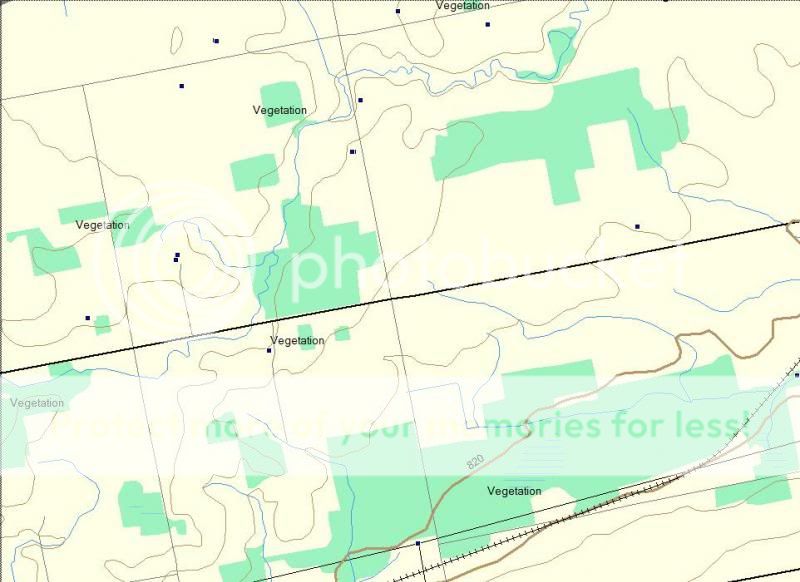
I've included a topo map screenshot of the area. The green areas on the map represent all of the surrounding woodlots. The tan color represents various bean/corn fields. My woodlot is the medium sized one just left of center in the middle of the map.
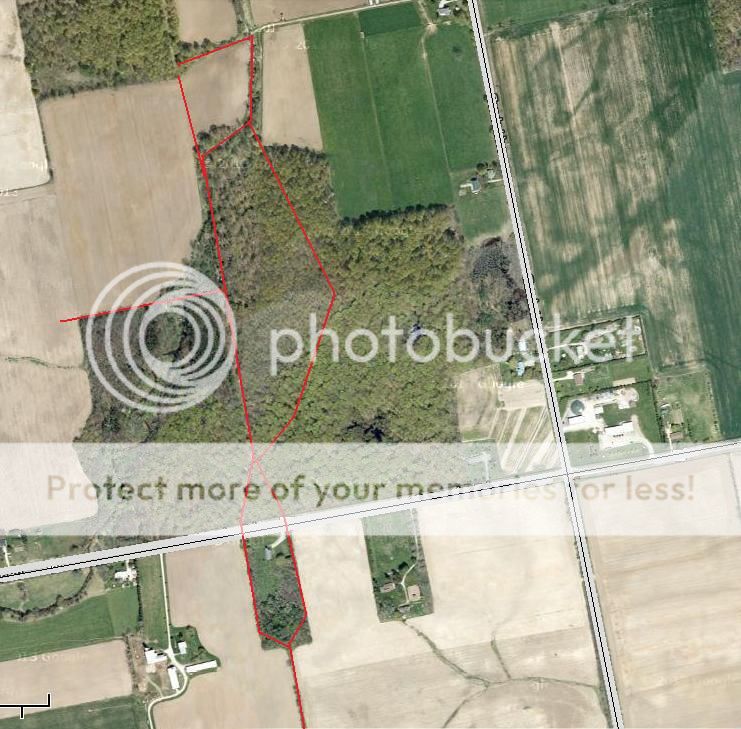
I've also included the main routes the deer do take when they're in the lot. They usually just walk straight on out when they do come in and don't stick around for long. They usually only enter the lot when they've been either chased or scared out of the lot to the south which is also a public block used for hunting as well. That lot contains a lot of nice bedding areas and consistently holds deer year round.
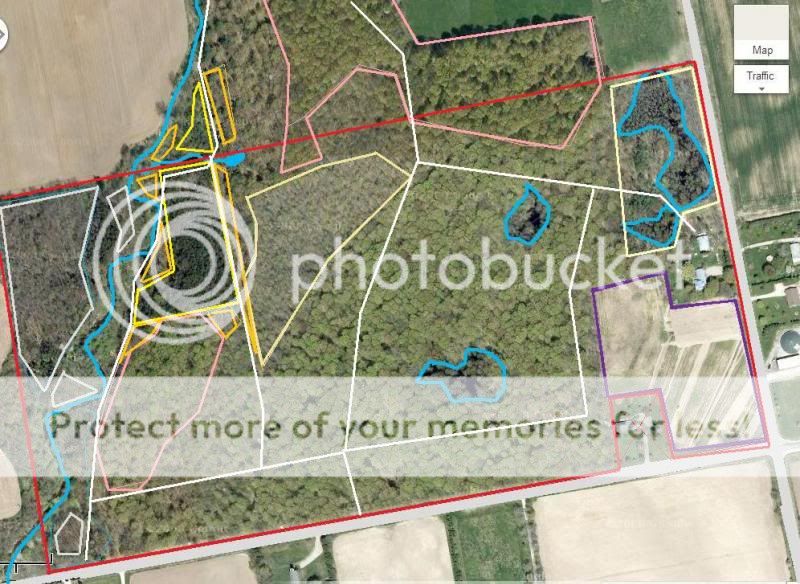
This next picture I've broken down most of the different forest types and other areas. And before it gets asked, no I did not let a three year old color this for me. All the lines were drawn with an extreme level of detail by myself.
Alright, so:
RED is the Property Line
BLUE is either standing water, or the creek
WHITE are different trails running through the woodlot
PINK is for very open hardwoods
YELLOW is for Red Pine
ORANGE is for the scrubby areas
TAN is for areas that are always wet, mostly mature trees
GRAY is for mixed cottonwood/immature maple/immature mast producers
PURPLE is for the field that grows mixed vegetables
The rest of the trees are just mature maples.
You probably noticed that I said "field that grows mixed vegetables". The deer hardly bother with it all season long. Its good in a way because the vegetables are used for sale at market, but surprising in another because its in a sense a large food plot. I'm assuming there's enough natural food in the woods, or they're eating the beans or corn in the surrounding fields.
I've thought about planting apple trees along their main routes of travel to encourage them to stay around for a snack. It would be effective at holding them in there longer for a few weeks a year, but it doesn't keep them stuck there from Mid-Sept to the end of December during the time I hunt.
Alright, so whats your opinion on this lot. Do I need to increase bedding areas, or just make some of the areas thicker? Should I try adding in a food source or food plot directly into the woods?
The overall size of the woodlot is approximately 2000ftx1500ft, or about 70 acres.
So to be fair to the rest of the family, I'm looking for minimally destructive ways to keep the whitetails hanging around that have the most effect. In the fall and winter months with little cover and bedding areas, they walk straight out of it and only pass through when they're pushed out of a public woodlot to the south.
The lot is an old sugar bush, so its about 70% mature sugar maple, 10% mature red pine, 15% mature mixed Carolinian mast producing trees, and 3% mature cottonwood, and 2% mixed scrubby brush. Overall, not an ideal combination for holding deer as the area is very open.
I've included a topo map screenshot of the area. The green areas on the map represent all of the surrounding woodlots. The tan color represents various bean/corn fields. My woodlot is the medium sized one just left of center in the middle of the map.
I've also included the main routes the deer do take when they're in the lot. They usually just walk straight on out when they do come in and don't stick around for long. They usually only enter the lot when they've been either chased or scared out of the lot to the south which is also a public block used for hunting as well. That lot contains a lot of nice bedding areas and consistently holds deer year round.
This next picture I've broken down most of the different forest types and other areas. And before it gets asked, no I did not let a three year old color this for me. All the lines were drawn with an extreme level of detail by myself.
Alright, so:
RED is the Property Line
BLUE is either standing water, or the creek
WHITE are different trails running through the woodlot
PINK is for very open hardwoods
YELLOW is for Red Pine
ORANGE is for the scrubby areas
TAN is for areas that are always wet, mostly mature trees
GRAY is for mixed cottonwood/immature maple/immature mast producers
PURPLE is for the field that grows mixed vegetables
The rest of the trees are just mature maples.
You probably noticed that I said "field that grows mixed vegetables". The deer hardly bother with it all season long. Its good in a way because the vegetables are used for sale at market, but surprising in another because its in a sense a large food plot. I'm assuming there's enough natural food in the woods, or they're eating the beans or corn in the surrounding fields.
I've thought about planting apple trees along their main routes of travel to encourage them to stay around for a snack. It would be effective at holding them in there longer for a few weeks a year, but it doesn't keep them stuck there from Mid-Sept to the end of December during the time I hunt.
Alright, so whats your opinion on this lot. Do I need to increase bedding areas, or just make some of the areas thicker? Should I try adding in a food source or food plot directly into the woods?
The overall size of the woodlot is approximately 2000ftx1500ft, or about 70 acres.